Columbus Asks State for 3 Things in 2027: Election Costs, Paramedic Care and a Raise for the Probate Judge

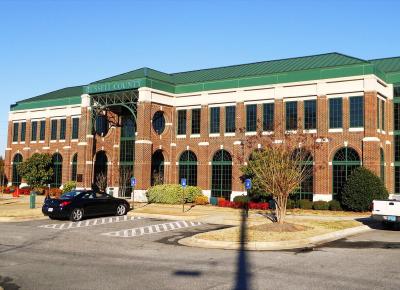
Columbus city leaders listed three requests for the 2027 Georgia legislative session on Oct. 28. Shown: a Columbus city plaque (file photo). Photo: Deutschlandreform / Wikimedia Commons (CC BY-SA 3.0)
COLUMBUS, Ga. - Columbus leaders are asking Georgia lawmakers to consider three priorities in 2027: state funding for election system changes, support for community paramedicine and higher pay for the probate judge. City councilors, state lawmakers and community partners discussed the requests Wednesday, Oct. 28, 2026, during the city's annual Hometown Connection legislative agenda meeting, according to WTVM. The meeting began the process of organizing Columbus' requests before the next state legislative session, with local lawmakers expected to meet again to determine who will handle each proposal.
1. What Columbus wants from the state in 2027
The meeting took place in the Sycamore Room at the Columbus Convention and Trade Center, according to WTVM. A city notice identified the gathering as the 19th annual Hometown Connection legislative agenda meeting, scheduled to begin at 11:30 a.m. The meeting brought together local government representatives and state lawmakers to discuss issues Columbus wants addressed in Atlanta.
The three requests reported by WTVM cover different responsibilities of local government:
- Election costs: State funding to cover additional expenses for counties and election boards if Georgia changes its voting system, potentially to paper ballots.
- Community paramedicine: State support for programs that provide medical treatment to patients without requiring an ambulance ride.
- Probate judge compensation: Higher pay for the probate judge.
The requests are part of Columbus' legislative agenda rather than measures already enacted by the General Assembly, according to WTVM's account of the meeting. State legislator Carmen Rice described the gathering as an organizational session for identifying priorities. The next stage will involve local lawmakers deciding how to divide responsibility for pursuing the requests.
2. Election equipment costs draw budget concerns
One of the priorities concerns the cost of changing Georgia's voting system, according to WTVM. Columbus wants the state to pay additional expenses that counties and election boards could face if Georgia adopts a different system, potentially one using paper ballots. The request centers on which level of government would be responsible for the added costs.
District 4 Councilor Toyia Tucker raised concerns about the financial effect on Columbus during the meeting, WTVM reported. Tucker described a voting system change as a "huge, heavy load for our budget." Her comments reflected the city's request for state assistance with expenses associated with a potential transition.
Georgia has already taken legislative action concerning its current ballot technology, although the statewide transition deadline has been extended. According to Ballotpedia, Gov. Brian Kemp signed SB 3EX on June 25, 2026, moving the deadline for eliminating QR-code ballot tabulation from July 1, 2026, to 2028. The legislation passed the Georgia House 94-79 and the Senate 36-16 on June 23, according to Ballotpedia.
3. The statewide voting deadline and $66 million estimate
The statewide debate includes an equipment cost estimate previously presented to Georgia lawmakers. According to The Current, Secretary of State Brad Raffensperger told legislators in 2025 that upgrading voting equipment to count ballots without QR codes would cost roughly $66 million. Lawmakers did not appropriate that funding before the midterm elections, The Current reported.
The $66 million figure concerns the statewide equipment changes discussed by Raffensperger, rather than a specific funding request from Columbus. WTVM reported that Columbus is seeking protection from additional expenses that counties and local election boards might face. Tucker's comments at the Oct. 28 meeting focused specifically on the potential burden on the local budget.
SB 3EX also contains a separate provision governing certain election recounts, according to Ballotpedia. The law requires automatic hand recounts for statewide executive races listed first or second on the ballot when the margin is less than 0.5%. Both that requirement and the extended QR-code deadline form part of the state's 2026 legislation concerning election administration.
4. Community paramedicine is the second request
Columbus also wants state support for community paramedicine, according to WTVM's report on the legislative meeting. Community paramedicine programs allow patients to receive treatment without necessarily requiring transportation by ambulance. The request places that type of medical care among the city's priorities for discussion with state lawmakers in 2027.
The distinction between providing treatment and transporting a patient is central to the request described by WTVM. Community paramedicine focuses on care that can be delivered without an ambulance ride. Columbus is seeking state support for that approach as part of its legislative agenda.
Unlike the election funding request, which is connected to a possible statewide voting system change, the paramedicine proposal concerns how medical services can be delivered. WTVM identified the program as one of the three priorities presented at the meeting. It stands alongside election administration funding and probate judge compensation in the city's requests for the coming session.
5. Columbus also seeks higher probate judge pay
The third priority involves compensation for the probate judge, according to WTVM. Columbus leaders included a request for higher pay for the position in their presentation to state lawmakers. The proposal was discussed as part of the same legislative agenda that includes election costs and community paramedicine.
WTVM identified the proposed pay increase as a separate request from the other two priorities. The election proposal concerns state responsibility for potential new costs, while the paramedicine request seeks support for a medical care program. The probate judge proposal focuses specifically on compensation for the judicial position.
The compensation request will proceed through the legislative organizing process described by Carmen Rice, according to WTVM. Local lawmakers are expected to determine which requests each legislator will carry after the session begins. That process also applies to the city's other priorities.
6. Several Columbus requests have appeared before
Not everything discussed in Columbus' annual legislative planning process is new. District 5 Councilor Charmaine Crabb said some proposals have returned after failing to receive legislative approval in previous years, according to WTVM. Crabb described many of the items as "repeat things that did not get all the way through."
The previous Hometown Connection meeting, held Oct. 15, 2025, also featured a list of local priorities, WTVM reported at the time. The leading request was to increase the homestead exemption for residents age 65 and older from $21,500 to $30,000. Other proposals included Next Generation 911 and a weapons ban in recreation centers.
The 2025 meeting was the city's 18th annual Hometown Connection gathering, according to WTVM. State Rep. Teddy Reese said at that meeting that legislation can require multiple attempts across more than one year. His comments help explain why the city's annual legislative agenda can include proposals that have been considered previously.
The latest meeting continues that annual process of presenting local priorities to the state delegation. Crabb's comments indicate that some requests remain on the agenda when earlier legislative efforts do not reach approval. The three priorities highlighted by WTVM for 2027 are election costs, community paramedicine and probate judge compensation.
7. Reese cites a property tax proposal affecting Muscogee County
Property taxes also came up during the Oct. 28 meeting, according to WTVM. State Rep. Teddy Reese discussed a proposal considered at the Georgia Capitol that would have reduced revenue going to Muscogee County. Reese said the measure would have cut more than $100 million from the county's revenue.
The property tax bill did not pass, WTVM reported. Reese's remarks nevertheless placed the size of the potential revenue reduction before local leaders and state lawmakers during their discussion. The amount he cited was more than $100 million for Muscogee County.
Reese's account concerned a bill that had already been considered rather than one of the three requests highlighted for 2027. His comments added a local revenue issue to the discussion of Columbus' relationship with state legislation. The meeting also featured Tucker's concerns about potential election costs and Crabb's observations about proposals carried forward from earlier years, according to WTVM.
8. What happens next for Columbus' legislative agenda
The Oct. 28 gathering was an organizational meeting rather than the final stage of the legislative process, according to Carmen Rice. WTVM reported that another meeting involving the delegation will follow to determine how lawmakers divide responsibility for the city's priorities. After the legislative session begins, local lawmakers will decide who carries each request.
The process described by Rice provides the next steps for the election funding, community paramedicine and probate judge compensation proposals. The requests were presented to lawmakers during the 19th annual Hometown Connection meeting. Responsibility for pursuing individual items will be assigned through the delegation's subsequent discussions, according to WTVM.
Columbus City Council also has regular meetings scheduled during November, according to the Columbus Consolidated Government's published council schedule. The next regular meetings are Tuesday, Nov. 10, at 9 a.m. and Tuesday, Nov. 24, at 5:30 p.m. The city's council information page says meetings are streamed live on YouTube and CCG TV.
The council's regular schedule provides public access to city government proceedings as the legislative planning process continues. According to the city, regular meetings occur on the second and fourth Tuesdays, with the November dates following that schedule. The Hometown Connection process, meanwhile, moves next to the state delegation's discussion of responsibility for the requests, as Rice outlined in WTVM's report.
The three 2027 priorities remain requests for state legislative consideration. WTVM's account identifies the upcoming delegation meeting and the assignment of individual requests as the next procedural steps. The city's election funding, community paramedicine and probate judge compensation proposals will be part of that process.
Source: Columbus Consolidated Government, WTVM, Ballotpedia, The Current
News organizations may republish this story with credit. See our guidelines.
Know someone who'd want to read this? Email it to a friend.
Own a Columbus business? 60,000+ page views a month. Ads from $125/month. See ad options Follow Columbus Times on FacebookLocal news, events and people, in your feed every day.Most read this week
- Georgia's 3 Amendments: Which Will Pass, Who's Against Them, and What Happens If They Fail
- Georgia's 3 Constitutional Amendments on the Nov. 3 Ballot, Explained in Plain English
- Early Voting in Columbus Starts Oct. 13: Every Site, the Hours, and What's on Your Ballot
- Georgia Election Forecast 2026: Who Is Projected to Win Every Major Race?
- Columbus Early Voting Ends Friday: 32,307 Muscogee Ballots Cast, 6% Ahead of 2022 Pace
More stories
 Real Estate Columbus Property Tax Bills: How to Read Yours, Check Exemptions and Pay by Dec. 1
 Community Preston's Tunnel to Towers 5K Is Nov. 7: A $50,000 Goal, 250 Runners and 343 First Responders Honored
 Outdoors Fort Benning Deer Hunting: 155,000 Acres Open, Alabama Firearms Season Starts Nov. 7, and 5 Steps to Get Permitted
 Sports Columbus State Basketball Opens at Home Nov. 9: 12 Men's and 13 Women's Home Games at the Lumpkin Center
Comments
Be respectful. No personal attacks, hate speech, spam or anyone's private information. Every comment is reviewed before it appears. Comment rules
No comments yet. Be the first to share your thoughts.