Georgia's 3 Constitutional Amendments on the Nov. 3 Ballot, Explained in Plain English
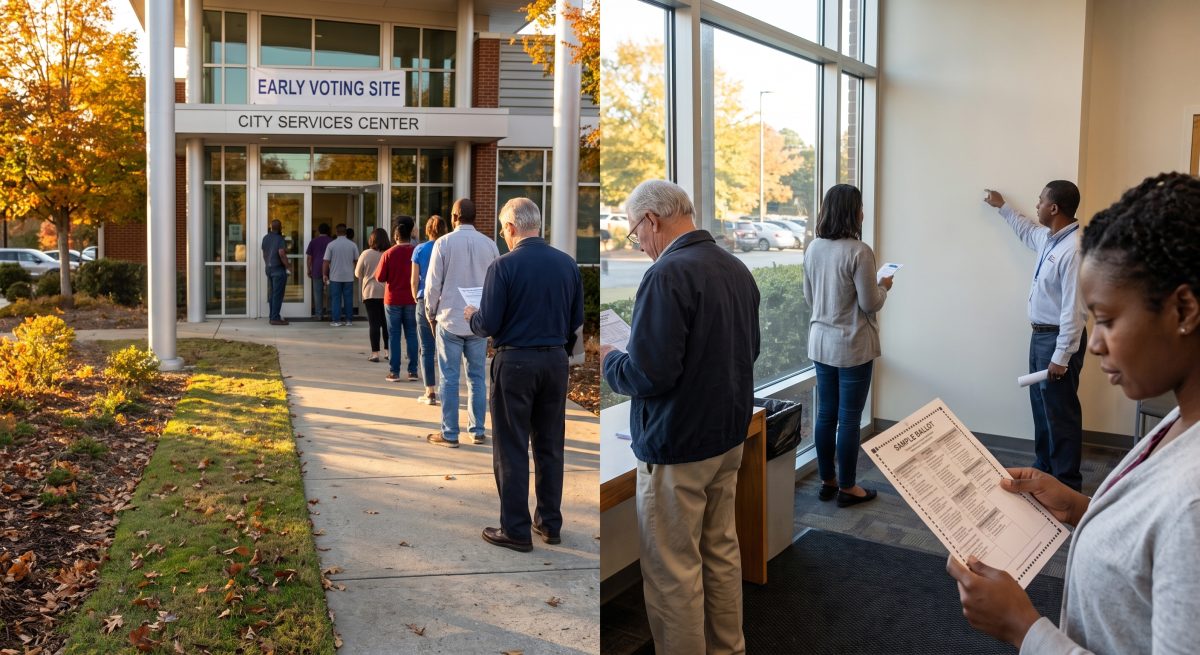
Illustration: AI-generated
When Columbus voters head to the polls this fall, they'll find three proposed changes to the Georgia Constitution near the bottom of the ballot, below the races for governor and U.S. Senate. Each one asks a simple yes-or-no question, but the official wording can be hard to follow.
New for early voting: Georgia's 3 Amendments: Which Will Pass, Who's Against Them, and What Happens If They Fail
Read next: Which of Georgia's 3 Amendments Is Most Likely to Pass? What the Votes, Supporters and History Say
Here's what each amendment would do, in plain English.
Amendments are listed in the order they appear on the ballot, according to the official state booklet of proposed amendments. You can preview your own sample ballot at mvp.sos.ga.gov.
Amendment 1: A bigger tax break for large farms and timberland
What it does: Raises the maximum amount of farm and timber land that can qualify for Georgia's "conservation use" property tax break, from 2,000 acres to 4,000 acres per owner.
How the tax break works: Land enrolled in the program is taxed at 40% of its value as farmland or timberland, rather than at what it might sell for to developers. Owners agree to keep the land in farming, timber or conservation.
What it would mean: Owners of larger farms and timber tracts could enroll more of their land in the tax break. Supporters see it as a way to protect farmland and green space from development. Because more acres would be taxed at the lower rate, it could also reduce the property tax collected on that land, which helps fund local governments and schools.
- A YES vote raises the limit to 4,000 acres.
- A NO vote keeps the 2,000-acre limit.
Amendment 2: Nonpartisan elections for probate judges
What it does: Requires all probate judges in Georgia to be elected on a nonpartisan basis, so candidates would no longer run as Democrats or Republicans.
Why it matters: Probate judges are currently the only judges in Georgia who still run in partisan elections. Every other judge in the state, from magistrate to the Georgia Supreme Court, already runs without a party label. Each county elects one probate judge to a four-year term.
What probate court does in Muscogee County: The probate court handles matters that touch many families: wills and estates, guardianships, marriage licenses and Georgia weapons carry licenses, among other duties.
Support: The amendment passed with strong support from both parties in the legislature, and former Govs. Nathan Deal (R) and Roy Barnes (D) have both backed it. In Columbus, six local leaders signed a letter supporting it. (Read our story: Six Columbus leaders support nonpartisan elections for probate judges.)
- A YES vote makes probate judge elections nonpartisan.
- A NO vote keeps partisan probate judge elections.
Amendment 3: Money for upgraded 911 systems
What it does: Allows the Georgia General Assembly to create a Georgia Next Generation 9-1-1 Fund and dedicate money to it. The money could be used only to expand, maintain and operate the state's 911 emergency system.
What "Next Generation 911" means: It's the upgrade from older phone-based 911 systems to digital ones that can better handle texts, photos and video and pinpoint where a caller is.
Why it needs an amendment: Georgia's constitution generally doesn't allow lawmakers to lock money into a fund for one purpose. This amendment makes an exception for 911, so the money can't be spent on something else.
Support: The amendment passed both the Georgia House and Senate unanimously.
- A YES vote allows the dedicated 911 fund.
- A NO vote keeps things as they are, with no dedicated fund.
How to vote in Columbus
- Early voting: Tuesday, Oct. 13, through Friday, Oct. 30, 7 a.m. to 7 p.m. Sites: City Services Center (3111 Citizens Way), Shirley Winston Recreation Center (5025 Steam Mill Road) and the Elizabeth Bradley Turner Center at Columbus State University (4225 University Ave.). Valley Healthcare (1600 Fort Benning Road) and Blackmon Road (7300 Blackmon Road) are open Oct. 24-30 only. Details at columbusga.gov/elections.
- Election Day: Tuesday, Nov. 3. Polls are open 7 a.m. to 7 p.m. at your assigned precinct.
- See your sample ballot and polling place: mvp.sos.ga.gov (Georgia's My Voter Page).
- Runoff (if needed): Tuesday, Dec. 1.
Source: Georgia Secretary of State (official amendment booklet); Ballotpedia

News organizations may republish this story with credit. See our guidelines.
Know someone who'd want to read this? Email it to a friend.
Own a Columbus business? 60,000+ page views a month. Ads from $125/month. See ad options Follow Columbus Times on FacebookLocal news, events and people, in your feed every day.Most read this week
- Georgia Spent $165.7 Million on Medicaid Work Requirement Program, but Only 18,527 Were Enrolled After 3 Years
- 8 Columbus Restaurants Got a C on Their Health Inspection in 2026, the Most of Any Year Since 2022. Here's Every One
- The Night Fight on the Chattahoochee: How Columbus Became the Site of What Many Call the Last Battle of the Civil War
- The 10 Best Mexican Restaurants in Columbus, Ga., Ranked by Diners
- Columbus' Top-Rated Barbecue: 12 BBQ Joints Ranked by Google Stars and Health Scores
More stories
 Politics Georgia Foster Care Spending Jumped $155 Million in 3 Years, and Children Costing Over $100,000 Quadrupled
 Politics How Columbus Has Voted: Muscogee County's Results in 19 Presidential Races Since 1952
 Politics Who's on Your Ballot? 5 Georgia House Districts and the Open Senate 15 Race in Columbus
 Politics 3,466 Columbus Voters Cast Ballots on Day One: Early Voting by the Numbers
Comments
Be respectful. No personal attacks, hate speech, spam or anyone's private information. Every comment is reviewed before it appears. Comment rules
No comments yet. Be the first to share your thoughts.