Columbus Commercial Properties That Sat Vacant for Years: What Happened to Them?
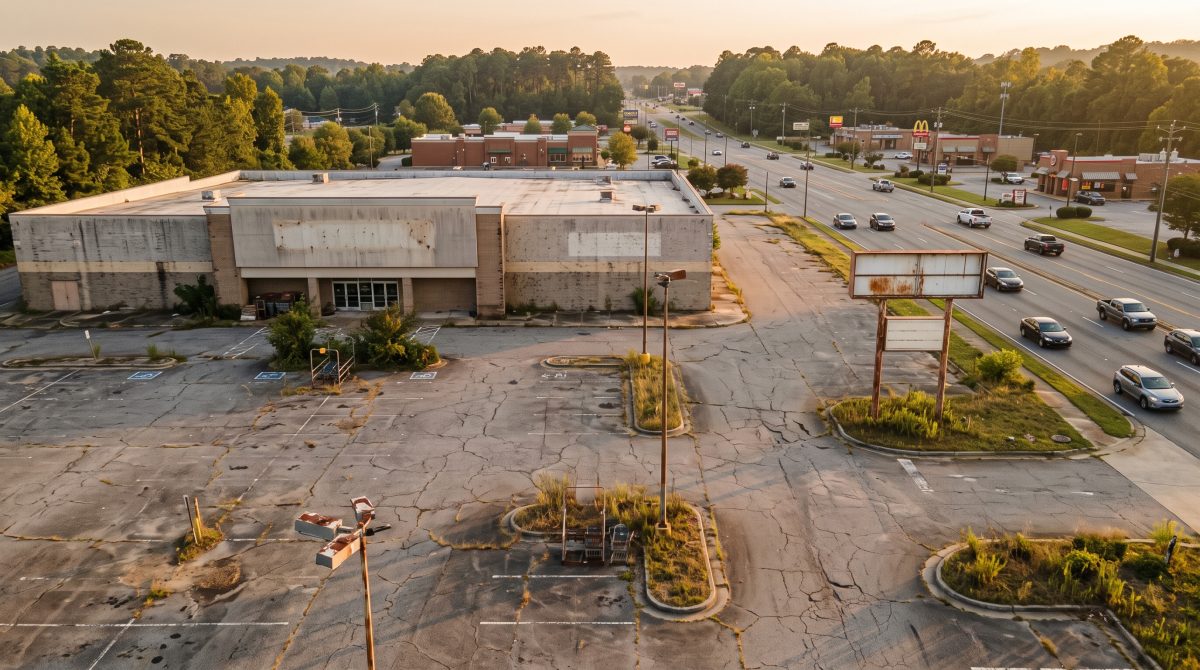
COLUMBUS, Ga. — Along some of Columbus’ busiest roads are commercial properties that once housed grocery stores, banks, automobile dealerships and major retailers. Some remained empty for years before finding new uses, while others have required demolition, environmental cleanup or substantial investment to become attractive for redevelopment.
The problem is not unique to Columbus, but it raises important questions about the city’s economic future. Why do some commercial buildings sit unused for years while new businesses open elsewhere? What prevents developers from converting vacant properties into something useful? And what happens to surrounding neighborhoods when a prominent building remains empty?
Columbus has experienced both sides of this trend. Former retail buildings have attracted new tenants, historic commercial spaces have been transformed into restaurants, and other properties have remained difficult to redevelop because of their size, condition or previous uses.
Commercial real estate listings provide a glimpse of the available space. As of October 7, 2026, PropertyShark identified 171 commercial properties listed for sale or lease in Columbus, including 61 office listings, 41 retail listings and 14 industrial listings for lease. These figures represent marketed properties, not a comprehensive count of vacant buildings, and some listings may involve partially occupied properties. (PropertyShark)
1. The Former Georgia State Farmers Market: Vacant Since 2017
One of Columbus’ most significant examples of long-term commercial abandonment is the former Georgia State Farmers Market at 318 10th Avenue.
The 14.67-acre property operated as a farmers market until 2017. Its buildings included former restaurant, office, warehouse, vehicle maintenance and loading facilities. After the market closed, the property became a redevelopment challenge because of environmental contamination associated with its previous uses.
Columbus acquired the site from the state in 2018 and began exploring ways to return it to productive use. Environmental assessments identified issues requiring cleanup, including petroleum contamination and other hazardous materials. The city subsequently obtained federal assistance for remediation and demolition.
By November 2025, approximately $1.6 million had been spent on cleanup and demolition using federal funding sources. Columbus Council approved transferring the property back to the state so it could potentially be subleased to a private soccer organization.
The site illustrates how a property can remain unused long after its original business closes. Unlike an ordinary vacant storefront, contaminated land may require years of planning, environmental studies and cleanup before redevelopment can proceed.
The soccer proposal represented a potential new chapter for the former market, although the final development status in October 2026 could not be independently confirmed. (Columbus Ledger-Enquirer)
2. The Former Sears at Columbus Park Crossing
The former Sears department store at Columbus Park Crossing is another example of how difficult it can be to replace a major national retailer.
Sears was once an anchor tenant at the shopping center, occupying substantial retail space along one of the city’s busiest shopping corridors. The store closed in 2017 as the company reduced its national retail operations.
Large department-store buildings present unusual redevelopment challenges. Their floor plans, loading areas, utility systems and parking arrangements were designed for major retailers, making them more expensive to convert for smaller businesses.
The Columbus location remained an example of this problem for years, although portions of the former Sears space were reportedly reused by 2024.
The broader shopping center has also undergone significant changes. A commercial mortgage securities filing from 2026 reported that Columbus Park Crossing was approximately 86% leased as of October 22, 2025, compared with 100% leased in November 2015.
The property contained approximately 587,000 square feet of retail space and 51 tenants in the more recent filing. Its tenants included national retailers such as Burlington, Marshalls, Ross Dress for Less, HomeGoods and Barnes & Noble.
An 86% leasing rate does not mean 14% of the storefronts were empty, because leasing percentages are generally calculated by floor area. Nevertheless, the difference illustrates how changing retail conditions can affect even established shopping destinations. (SEC)
3. The Former Blue Cross Blue Shield Building on Warm Springs Road
The former Blue Cross Blue Shield property on Warm Springs Road offers another example of a major Columbus commercial building that remained vacant after losing its longtime occupant.
The insurance company opened its facility in 1958 and later relocated its Columbus operations to Muscogee Technology Park. By 2020, the former headquarters had been vacant for approximately five years.
The property initially attracted interest from the U.S. Department of Veterans Affairs, which announced plans in 2018 for a $62.4 million medical facility at the location. Those plans eventually changed, with the VA selecting a different site in north Columbus.
In December 2020, a new developer moved toward purchasing the 10.9-acre property. Plans called for converting the former office building into a combination of office space, storage facilities and parking for recreational vehicles.
The proposed redevelopment demonstrated that older office properties can sometimes find new purposes without being demolished. However, the process can take years, especially when the original building was constructed for a large corporate employer rather than multiple smaller businesses.
The site’s more recent occupancy and redevelopment status would require updated property and business records to establish. (https://www.wtvm.com)
4. The Former Kmart on Macon Road
The former Kmart property at 3200 Macon Road demonstrates how a large retail vacancy can eventually attract a replacement tenant.
Kmart closed its Columbus location in March 2017, leaving behind a substantial commercial building in an established retail corridor. For more than two years, residents speculated about what business might occupy the space.
In June 2019, the Ledger-Enquirer reported that Roses Discount Store was preparing to move into the former Kmart location.
The transition showed how discount retailers can reuse buildings originally designed for traditional big-box department stores. Instead of requiring entirely new construction, an existing property can accommodate another retailer with a similar need for open floor space and parking.
However, the Kmart property’s history also shows that even buildings along heavily traveled roads are not necessarily easy to lease. A location may have strong visibility and established infrastructure but still remain vacant while owners seek tenants capable of occupying a large amount of space. (Columbus Ledger-Enquirer)
5. The Former Regions Bank and Ray’s Body Shop Near Uptown
One of Columbus’ more successful commercial transformations occurred near the intersection of 13th Street and Second Avenue.
Two properties that had remained unused for years became part of the Highside Market redevelopment. The former Ray’s Uptown Body Shop had been vacant since approximately 2013, while a neighboring former Regions Bank building had been vacant since 2018, according to redevelopment documents.
The Cotton Companies acquired property in the area beginning in 2018 and worked to transform the former commercial buildings into a destination for restaurants, shopping and entertainment.
The project eventually grew from approximately 25,000 square feet to 55,000 square feet as additional property was incorporated into the development.
Highside Market celebrated its grand opening in December 2023, with additional businesses opening afterward. Today, the development includes restaurants, retail shops, fitness businesses and other tenants.
The project demonstrates one approach to addressing long-term vacancies: preserving existing structures while adapting them to uses that reflect changing consumer demand. Rather than replacing the buildings with another traditional office or retail complex, developers created a destination combining several types of businesses.
That transformation also shows how investment in one group of properties can encourage additional commercial activity along a previously underused corridor. (Midtown Columbus)
6. A Former Regions Bank on Veterans Parkway Could Be Demolished
Another former Regions Bank property has attracted redevelopment interest, this time along Veterans Parkway.
At an April 15, 2026, meeting of the Columbus Planning Advisory Commission, developers received approval for a rezoning request involving approximately 0.85 acres at 5385 Veterans Parkway.
The proposal involved demolishing a vacant former Regions Bank building and replacing it with a convenience store and gasoline sales operation.
The project represents a different approach from the Highside Market redevelopment. Rather than preserving the original commercial structure, the applicant proposed removing the building and constructing a business designed for the current property market.
The approval was an important planning step, but it did not establish that demolition or construction had been completed by October.
The site also illustrates a broader pattern in commercial redevelopment. Former bank properties often occupy prominent corners with road access, parking and established utility connections, making the land potentially attractive for other businesses even when the original structure is no longer suitable. (MyTownView)
7. A Former Chevrolet Dealership on Manchester Expressway
A more recent commercial vacancy is the former Chevrolet dealership at 3615 Manchester Expressway.
Unlike the other properties examined, this site has not been vacant for years. The dealership reportedly vacated the approximately 100,000-square-foot building in June 2026.
However, the property represents one of Columbus’ larger commercial redevelopment opportunities.
A real estate listing identifies approximately 22.28 acres available for redevelopment, with an existing dealership building containing a showroom, offices, vehicle service areas and other commercial facilities.
According to the listing, the property previously generated approximately $64,000 in monthly rental income.
The site is being marketed as an opportunity for investors or developers interested in reusing the existing buildings, dividing the land or pursuing new commercial construction.
Its future will depend on whether a buyer or tenant can make productive use of the large property. Because the vacancy is recent, it should be viewed as an emerging redevelopment opportunity rather than an example of long-term abandonment. (LoopNet)
Why Do Commercial Buildings Remain Empty for Years?
Several factors can make vacant commercial buildings difficult to reuse, even when they occupy desirable locations.
One of the biggest problems is building size. Former department stores, supermarkets and corporate offices may contain tens of thousands of square feet, making them unsuitable for many small businesses without substantial renovation.
The cost of converting older buildings can also be significant. Changes may be needed to electrical systems, plumbing, heating and cooling, accessibility, parking and interior layouts. Some properties require environmental testing or cleanup before construction can begin.
Ownership and financing create additional challenges. Property owners may be unwilling to sell at prices developers consider reasonable, while lenders may require signed tenants or substantial financial commitments before financing redevelopment.
Consumer behavior has also changed. Online shopping, shifts in restaurant demand and changes in office employment have altered the types of commercial space businesses need.
These factors do not affect every property equally, but they help explain why some buildings are reused quickly while others remain vacant for extended periods.
What Is Columbus Doing About Vacant Properties?
Columbus has several programs intended to encourage redevelopment and address abandoned or underused properties.
The city’s Community Reinvestment and Planning departments administer programs involving enterprise zones, opportunity zones and tax allocation districts. These programs can provide eligible developments with incentives or financing mechanisms intended to encourage investment.
Tax allocation districts, for example, can use certain increases in future property tax revenue to finance qualifying redevelopment improvements.
Columbus also has a Land Bank Authority, established in 1992, that works to return certain vacant, abandoned, deteriorated and tax-delinquent properties to productive use.
However, these programs do not guarantee that every vacant commercial building will find a tenant. Many properties remain privately owned, and redevelopment decisions depend on market demand, financing, ownership and regulatory requirements. (Columbus Consolidated Government)
What Happens Next to Columbus’ Empty Commercial Buildings?
The history of Columbus’ vacant commercial properties offers several possible outcomes.
Some former retail spaces eventually attract new businesses, as happened with the old Kmart. Others require extensive renovation and a different business model, as demonstrated by Highside Market. Properties with environmental problems, such as the former Georgia State Farmers Market, may require public investment and years of preparation before reuse becomes possible.
Still others may be demolished because the underlying land is more valuable or practical for a new development than the original building.
The future of Columbus’ commercial corridors will depend partly on how effectively property owners, developers and local officials can adapt existing sites to changing economic conditions.
For residents, the issue extends beyond the appearance of empty buildings. Vacant commercial properties can represent opportunities for new businesses, employment and neighborhood investment, but realizing that potential can require substantial money and time.
Columbus has already demonstrated that some long-unused buildings can become productive again. The question is which properties will be next—and how long residents will have to wait to see them transformed.
Source: Columbus Consolidated Government Planning Department; Columbus Land Bank Authority; Midtown Columbus redevelopment records; Columbus Ledger-Enquirer;
News organizations may republish this story with credit. See our guidelines.
Know someone who'd want to read this? Email it to a friend.
Own a Columbus business? 60,000+ page views a month. Ads from $125/month. See ad optionsPlan your weekend with Columbus Times
Get This Weekend in Columbus every Thursday: the best local events, free things to do and family fun, plus each evening's local news. Free, and you can unsubscribe anytime.
Most read this week
- Georgia's 3 Constitutional Amendments on the Nov. 3 Ballot, Explained in Plain English
- Georgia's 3 Amendments: Which Will Pass, Who's Against Them, and What Happens If They Fail
- Early Voting in Columbus Starts Oct. 13: Every Site, the Hours, and What's on Your Ballot
- USDA Awards $3.3 Billion Loan for Georgia Power Plant to Meet Rising Electricity Demand
- Which of Georgia's 3 Amendments Is Most Likely to Pass? What the Votes, Supporters and History Say
More stories
 Business 6 Restaurant and Retail Developments Columbus, Georgia, Residents Should Know About in 2026
 Business $408 Million in New Investment. Is Columbus Growing in the Right Direction?
 Business Are Local Wages Keeping Up With Housing Costs in 2026 in Columbus, Georgia?
 Business The Columbus Businesses People Would Hate to Lose
Comments
Be respectful. No personal attacks, hate speech, spam or anyone's private information. Every comment is reviewed before it appears. Comment rules
No comments yet. Be the first to share your thoughts.