Columbus Diesel Is $2.27 Higher Than a Year Ago as Fuel Prices Become Trucking's No. 1 Worry
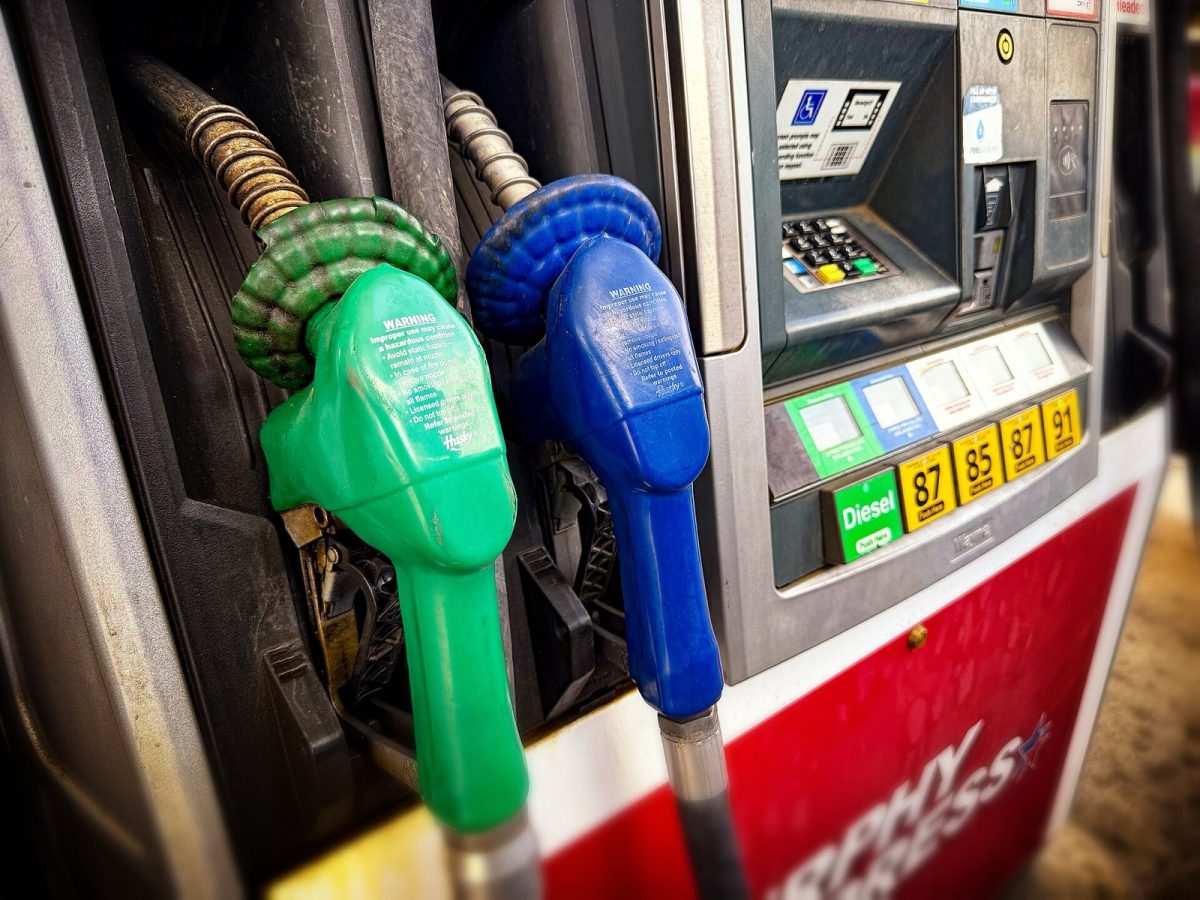
A diesel pump nozzle (file photo). Fuel prices are the trucking industry's top concern in ATRI's 2026 survey. Photo: Tony Webster / Wikimedia Commons (CC BY 2.0)
COLUMBUS, Ga. - Diesel prices in Columbus are $2.27 per gallon higher than a year ago, a roughly 65% increase that comes as the trucking industry ranks fuel prices as its No. 1 concern. The American Transportation Research Institute's latest national survey puts fuel costs ahead of workforce shortages and economic concerns. Although local diesel prices have fallen from September's record highs, truck operators still face substantially higher fuel expenses than they did last fall.
AAA reported an average diesel price of $5.746 per gallon in Columbus on Saturday, Oct. 24, down from $6.218 a month earlier but well above the $3.474 average recorded a year ago. Columbus drivers are paying less than the national diesel average of $6.337, but the difference offers limited relief from the sharp annual increase. The national trucking survey suggests that rising operating costs have become a major concern for companies and drivers moving freight across the country.
Columbus Diesel Prices: Today vs. a Year Ago
Diesel prices in Columbus reached a record $6.239 per gallon on Sept. 19, 2026, according to AAA. Since then, the local average has fallen nearly 49 cents, including a small decline over the past week. Even with those reductions, prices remain more than $2 above where they stood in October 2025.
| Columbus diesel prices | Average price |
|---|---|
| Oct. 24, 2026 | $5.746 |
| Yesterday | $5.754 |
| One week ago | $5.776 |
| One month ago | $6.218 |
| One year ago | $3.474 |
| Record high, Sept. 19, 2026 | $6.239 |
Georgia's statewide diesel average stands at $5.726, slightly below Columbus's average. Statewide diesel cost $6.330 a month ago and $3.475 a year ago, with a record high of $6.355 recorded on Sept. 19. Nationally, diesel averages $6.337, down from $6.514 a month ago but substantially higher than last year's $3.640.
The latest figures show that diesel prices have moved downward since September, but the annual comparison tells a different story. Columbus diesel remains about 65% more expensive than it was one year earlier. That increase matters for trucking operations because fuel is an ongoing expense that grows with every mile driven.
What Higher Diesel Prices Could Mean for One Truck
The impact of higher diesel prices becomes clearer when looking at how much fuel a tractor-trailer might consume over a year. A truck that travels tens of thousands of miles can use thousands of gallons of diesel. Even a relatively small change in the price per gallon can produce a large difference in annual fuel spending.
Example based on assumptions, not an actual trucking company's expenses: If a tractor-trailer averages 6.5 miles per gallon and travels 100,000 miles annually, it would consume approximately 15,385 gallons of diesel. Applying Columbus's year-over-year diesel price increase of about $2.27 per gallon produces an additional annual fuel expense of approximately $35,000 per truck. This example assumes the same annual mileage and fuel economy and compares fuel purchases at the two reported average prices.
| Example truck fuel calculation | Amount |
|---|---|
| Assumed annual mileage | 100,000 miles |
| Assumed fuel economy | 6.5 mpg |
| Estimated annual diesel use | 15,385 gallons |
| Columbus diesel increase per gallon | $2.272 |
| Estimated additional annual fuel cost | About $35,000 |
Actual trucking costs depend on how far vehicles travel, their fuel efficiency and the prices paid when purchasing diesel. The calculation does not represent a verified expense for any Columbus trucking company. It illustrates why changes in diesel prices can significantly affect businesses that depend on large quantities of fuel.
Ben Banks, president of TCW, described the pressure on trucking companies in the ATRI report's announcement. "Just as we started to see some positive signs in the freight economy, the cost of diesel topped $6.50 per gallon," Banks said. "With operating costs continuing to climb overall, this spike in fuel costs is particularly painful for small- to mid-size fleets."
Columbus Car Owners Are Paying More, Too
The increase is not limited to commercial diesel users, although regular gasoline prices have risen by a smaller amount. AAA reports that regular gasoline averages $3.627 per gallon in Columbus, compared with $2.742 a year earlier. That represents an increase of nearly 89 cents per gallon for drivers filling their personal vehicles.
For a driver buying 15 gallons of regular gasoline, today's Columbus average translates to approximately $13.27 more per fill-up than a year ago. Regular gasoline prices have also declined recently, falling from $4.112 a month ago to $3.627 today. Georgia's statewide regular gasoline average is $3.670, while the national average is $4.296.
The difference between gasoline and diesel increases is substantial when measured over the past year. Columbus regular gasoline has risen $0.885 per gallon, while diesel has climbed $2.272. Both types of fuel are cheaper than a month ago, but neither has returned to its year-ago price.
Fuel Prices Top Trucking Industry's 2026 Concerns
The American Transportation Research Institute released its 22nd annual Top Industry Issues report on Oct. 18, identifying fuel prices as the industry's leading concern. The organization is a nonprofit transportation research group with offices in Atlanta, Minneapolis, Washington and Sacramento. Its findings were presented at the 2026 American Trucking Associations Management Conference and Exhibition.
Nearly 3,100 industry stakeholders participated in the survey, including trucking executives, company personnel, drivers and other freight industry participants. More than 48% of respondents were motor carrier executives and personnel, while truck drivers accounted for 26%. Another 26% represented other freight stakeholders, including suppliers, driver trainers and law enforcement.
ATRI's announcement gave exact ranks for five of the top 10 issues. Fuel prices hold the top spot, and three of the other ranked issues involve the driver workforce. The ranked issues are shown below.
| Rank | Industry concern |
|---|---|
| No. 1 | Fuel Prices |
| No. 5 | Driver Shortage |
| No. 6 | Economy |
| No. 9 | Driver Compensation |
| No. 10 | Driver Retention |
Other concerns identified in the industry's top 10 include Lawsuit Abuse Reform, the federal Compliance, Safety, Accountability program, and Insurance Cost/Availability. Artificial Intelligence in Trucking and Diesel Emissions Regulations also remained in the top 10 after first appearing on the list in 2025. The available report announcement did not specify the exact rankings of those issues.
One notable change involved the Economy, which had been the industry's top concern for three consecutive years. It dropped to sixth place in the 2026 survey, a change ATRI described as reflecting cautious optimism among motor carriers. Fuel prices instead moved to the top of the industry's concerns as diesel costs climbed sharply.
Truck Drivers and Carriers Have Different Priorities
The survey also found differences between the issues that concern individual drivers and trucking companies. Owner-operators and company drivers ranked Fuel Prices, Truck Parking and Driver Compensation as their three leading issues. That puts both everyday operating expenses and earnings among the most important concerns for drivers.
Motor carriers identified Lawsuit Abuse Reform, Fuel Prices and the Driver Shortage as their top three concerns. Their ranking places legal issues and workforce availability alongside the cost of operating trucks. Driver Retention also returned to the overall top 10, suggesting that workforce concerns continue to occupy a significant place in the industry's priorities.
Law enforcement respondents offered another perspective, identifying Electronic Logging Device fraud as their leading issue. Their responses differed from those of drivers and carriers, whose top concerns centered on fuel, legal issues, parking and employment. The report included state-specific analyses where enough responses were available, but the provided information does not establish Georgia's individual rankings.
Transportation Jobs in Muscogee County
The trucking industry's concerns have a local workforce connection through transportation employment in Muscogee County. According to the U.S. Census Bureau's 2020-2024 American Community Survey five-year estimates, approximately 3,633 employed Muscogee County residents worked in transportation occupations. That represented about 4.3% of the county's 83,959 employed residents.
The Census category is broader than trucking alone and includes truck drivers, bus drivers, delivery drivers and other transportation occupations. The figure therefore should not be interpreted as the number of truck drivers working in Columbus. It measures employed county residents in the broader transportation occupational category rather than the number of trucking jobs at local companies.
Statewide, the Census Bureau estimated that 226,704 Georgia residents worked in transportation occupations out of 5,213,857 employed residents. That also represents approximately 4.3% of the employed population. The figures provide workforce context for the industry's concerns about driver shortages, compensation and retention without establishing how individual Columbus transportation employers are affected.
What to Watch as Diesel Prices Fall
The immediate direction of diesel prices offers some relief for Columbus drivers and fleets. The local average has declined from its Sept. 19 record of $6.239 to $5.746 on Oct. 24, a reduction of roughly 49 cents per gallon. Prices also moved lower over the past month, week and day, according to AAA's figures.
The longer-term comparison remains considerably less favorable for fuel buyers. Columbus diesel is still $2.272 more expensive per gallon than a year ago, while the national average remains above $6 per gallon. Those prices help explain why fuel costs displaced the economy as the trucking industry's top concern in the latest survey.
For Columbus, the key figures to follow are the local diesel average, its movement relative to September's record and its difference from last year's prices. The September-to-October decline shows that fuel costs have eased from their peak, but the annual increase remains substantial. As long as that gap persists, the cost of keeping trucks fueled remains an important issue for transportation businesses and drivers.
How We Did This
Columbus Times used the American Transportation Research Institute's Oct. 18, 2026, announcement of its 22nd annual Top Industry Issues report to identify the trucking industry's national concerns and survey findings. Local, state and national fuel prices came from AAA's daily gas price averages as of Oct. 24, 2026, while workforce estimates came from the U.S. Census Bureau's 2020-2024 American Community Survey, table C24010. The truck fuel-cost calculation is an illustrative example based on stated assumptions, not reported expenses from a local trucking company.
Source: American Transportation Research Institute (Oct. 18, 2026); AAA (prices as of Oct. 24, 2026); U.S. Census Bureau ACS

News organizations may republish this story with credit. See our guidelines.
Know someone who'd want to read this? Email it to a friend.
Own a Columbus business? 60,000+ page views a month. Ads from $125/month. See ad optionsPlan your weekend with Columbus Times
Get This Weekend in Columbus every Thursday: the best local events, free things to do and family fun, plus each evening's local news. Free, and you can unsubscribe anytime.
Most read this week
- Georgia Spent $165.7 Million on Medicaid Work Requirement Program, but Only 18,527 Were Enrolled After 3 Years
- 8 Columbus Restaurants Got a C on Their Health Inspection in 2026, the Most of Any Year Since 2022. Here's Every One
- The Night Fight on the Chattahoochee: How Columbus Became the Site of What Many Call the Last Battle of the Civil War
- The 10 Best Mexican Restaurants in Columbus, Ga., Ranked by Diners
- Columbus' Top-Rated Barbecue: 12 BBQ Joints Ranked by Google Stars and Health Scores
More stories
 Business The 7 Columbus-Area Industries That Could Create the Most Jobs by 2031
 Business USDA Awards $3.3 Billion Loan for Georgia Power Plant to Meet Rising Electricity Demand
 Business 10 of the Best Businesses to Start in Columbus, Georgia
 Business 6 Restaurant and Retail Developments Columbus, Georgia, Residents Should Know About in 2026
Comments
Be respectful. No personal attacks, hate speech, spam or anyone's private information. Every comment is reviewed before it appears. Comment rules
No comments yet. Be the first to share your thoughts.