Columbus Airport Could Get Air-Taxi Landing Pad and Charger Under $2.2 Million Plan
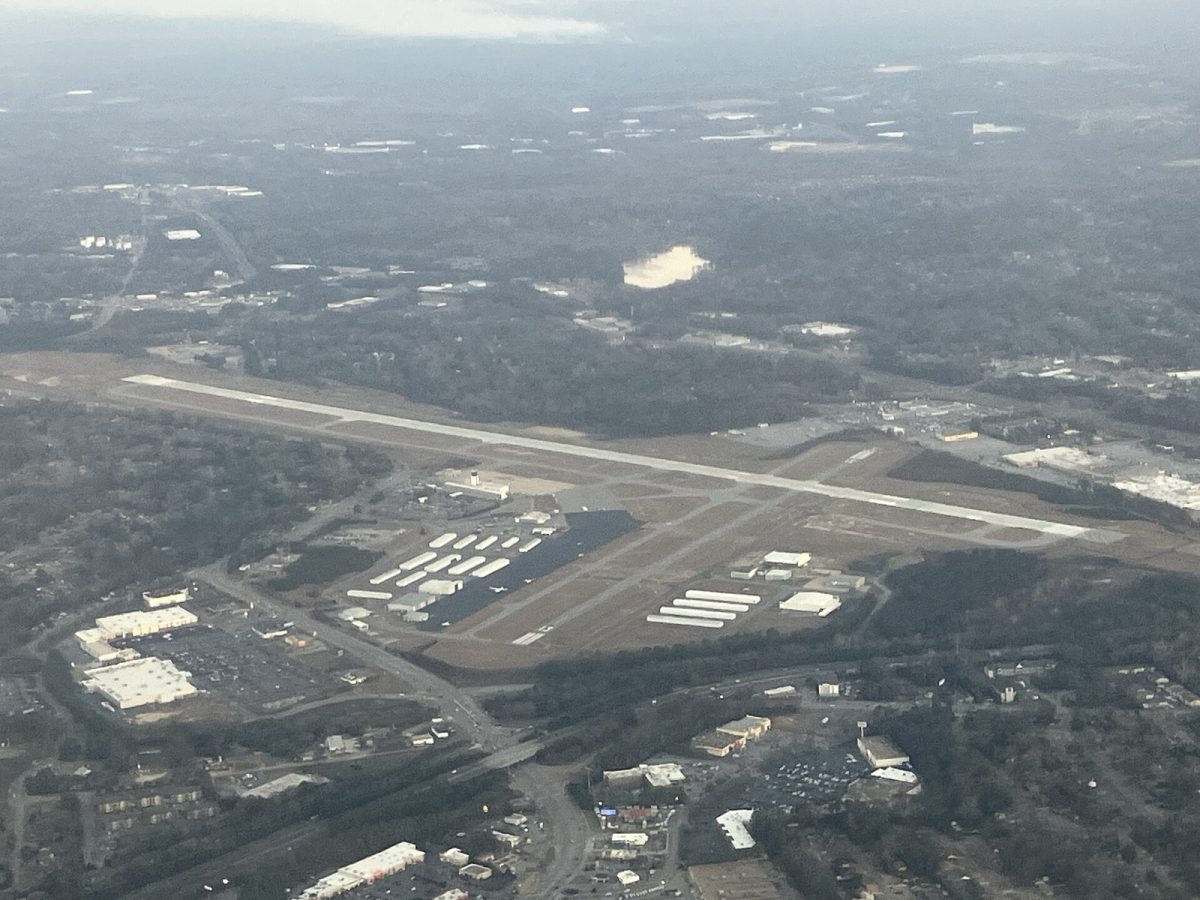
Columbus Airport seen from the air to the west (file photo). Photo: Mccunicano / Wikimedia Commons (CC BY-SA 4.0)
COLUMBUS, Ga. - Columbus Airport could get a dedicated landing facility for electric air taxis and an electric aircraft charging station under a $2.2 million project going before Columbus Council on Tuesday, Oct. 27. The proposal would add an airside electric charging station and a vertiport designed for electric vertical takeoff and landing aircraft, commonly called eVTOL aircraft. Council members are scheduled to consider an agreement with the Columbus Airport Commission at their 5:30 p.m. meeting.
The project is part of an effort to prepare Columbus for Advanced Air Mobility, a developing transportation system focused on moving passengers and cargo at low altitudes. City officials envision the airport becoming a regional hub for electric aircraft that could serve urban and suburban areas. However, the proposal does not identify an aircraft operator, announce passenger service or establish a construction schedule.
What the $2.2 Million Would Build
The proposed agreement would authorize the city and Columbus Airport Commission to move forward with two pieces of infrastructure. The first is an airside electric charging station intended to support electric aircraft operations. The second is a dedicated vertiport, a facility designed to accommodate aircraft that take off and land vertically.
Unlike the conventional airplanes that use airport runways, eVTOL aircraft are designed for vertical takeoffs and landings. The proposed vertiport would provide a dedicated location for that type of aircraft at Columbus Airport. The charging station would provide the electrical infrastructure contemplated in the city's plan.
The proposal focuses on building airport infrastructure rather than establishing a passenger transportation service. The council agenda does not identify which aircraft would use the proposed facilities or which companies might operate there. It also does not specify how much of the $2.2 million would go toward the charging station compared with the vertiport.
Where the Money Would Come From
Columbus Council has already approved $2.2 million in funding for the project through Resolution 172-26. The money comes from discretionary TSPLOST funds, which are generated through the transportation special purpose local option sales tax. According to the council agenda packet, the funding is available in the city's fiscal year 2027 budget.
Tuesday's action concerns the proposed intergovernmental agreement between the city and the Columbus Airport Commission. The agreement would provide the framework for developing the charging station and vertiport at the airport. The City Attorney will review the related documents as part of the process.
The previously approved appropriation establishes the amount of city funding identified for the project. The agenda materials do not provide a construction timetable or a detailed breakdown of anticipated expenditures. Those missing details leave questions about how the infrastructure would be developed and when it might become available for aircraft operations.
Why Columbus Wants to Prepare for Electric Aircraft
The city describes Advanced Air Mobility as a way to move people and cargo at low altitudes within urban and suburban areas. The goal is to expand transportation connections between cities and throughout regions. Columbus officials view the proposed airport infrastructure as a way to participate in that developing transportation system.
In its analysis, the city says the project "will posture Columbus to serve as the regional hub for eVTOL aircraft." That statement describes the city's intended role in the industry rather than an announced commercial operation. The agenda does not identify any company that has committed to providing electric aircraft service at Columbus Airport.
The council packet identifies several potential benefits associated with Advanced Air Mobility. These include shorter emergency response times, improved access to urban areas, expanded disaster response capabilities and better connections between rural communities and urban opportunities. The document presents those outcomes as reasons for pursuing the initiative, not as benefits already demonstrated by the proposed Columbus project.
The city also points to broader activity involving electric aircraft in Georgia. According to the agenda packet, the Georgia Department of Transportation conducted a study in 2024 to assess Advanced Air Mobility and develop a statewide action plan. The packet states that four Georgia airports currently have airside electric charging stations, placing the proposed Columbus installation within a developing statewide effort.
Electric Air Taxis and Georgia's Aviation Plans
The city expects electric vertical takeoff and landing aircraft to become part of the nation's commercial aviation landscape. Its agenda analysis states that "the first commercial eVTOL aircraft will take flight in the U.S. this year." The statement appears in the city's justification for developing the facilities at Columbus Airport.
The agenda also describes significant industry interest in Georgia. It connects that interest with the state's work on Advanced Air Mobility and the development of charging infrastructure at airports. However, the packet does not name an aircraft manufacturer, an airline or an air-taxi company planning to operate in Columbus.
That distinction matters because infrastructure approval and commercial service are separate developments. Columbus could approve and build the proposed facilities without immediately receiving regularly scheduled electric aircraft service. The council materials provide no date for passenger air-taxi flights or other commercial eVTOL operations at the airport.
The project therefore represents preparation for potential future demand rather than an announcement that electric air taxis will soon begin carrying Columbus passengers. City officials have identified a regional transportation opportunity, and the proposed infrastructure is intended to support that opportunity. The timeline for actual aircraft operations remains unspecified.
What the Plan Means for Columbus Airport
Columbus Airport already serves as an aviation facility northeast of downtown Columbus. The airport covers 680 acres, sits approximately four miles from downtown and has an elevation of 397 feet. It opened in 1944 and operates under the Columbus Airport Commission.
The airport has two conventional runways that serve its existing aviation operations. Runway 6/24 measures 6,997 feet long and 150 feet wide and has a concrete surface. Runway 13/31 measures 3,997 feet long and 150 feet wide and has an asphalt surface.
Commercial passenger service is currently provided by Delta Connection, the airport's only commercial carrier. The airline operates two to three daily flights between Columbus and Atlanta. Federal Aviation Administration records show that Columbus Airport recorded 84,387 passenger boardings in 2022.
The proposed vertiport would introduce dedicated infrastructure for a different category of aircraft alongside the airport's existing facilities. However, the council packet does not say where on the 680-acre property the vertiport would be located. It also does not explain how the proposed charging station and landing facility would be positioned relative to the airport's existing runways.
Who Would Oversee the Project?
The Columbus Airport Commission owns and operates Columbus Airport. Its five commissioners are appointed by Columbus Council and serve five-year terms. The commission does not have the authority to collect taxes.
Those arrangements help explain why the project is coming before Columbus Council as an intergovernmental agreement. The city has already appropriated transportation sales tax funding, while the commission manages the airport where the improvements would be constructed. The proposed agreement would connect those responsibilities for the electric aircraft infrastructure project.
The City Attorney's review is another step identified in the council materials. The agenda does not provide a schedule for completing that review or beginning construction. Council's consideration Tuesday is therefore an important step in the proposal, but it does not establish a date when the facilities would open.
What We Still Don't Know
Several details remain unanswered in the Oct. 27 council agenda packet. Although the city has identified the amount of funding and the two proposed facilities, the materials do not provide a specific location within Columbus Airport. They also do not identify a construction start date, a completion target or an expected opening date.
The proposed aircraft users are another unknown. No eVTOL manufacturer or operator is identified as having committed to Columbus Airport, and the materials do not name a company that would provide passenger air-taxi service. The council packet also contains no timeline for when Columbus residents might be able to use such a service.
For now, the proposal centers on developing the airport infrastructure needed to support a potential new form of transportation. The $2.2 million appropriation has already been approved, but council consideration of the intergovernmental agreement remains on Tuesday's agenda. The outcome of that consideration will help determine the project's next administrative step, while its construction and operating schedules remain unresolved.
How We Did This
The Columbus Times reviewed information from the Columbus Council agenda packet for the Oct. 27, 2026, meeting, including City Manager's agenda item 1 and its discussion of the proposed intergovernmental agreement. Funding information, the stated transportation benefits, the Georgia Department of Transportation study and the project's unresolved details came from the council materials. Airport background information, including its history, runway dimensions, governing commission and commercial passenger operations, came from Wikipedia's "Columbus Airport (Georgia)" entry, which cites FAA boarding records.
Source: Columbus Council agenda packet, Oct. 27, 2026 (City Manager item 1); Columbus Airport background (Wikipedia, FAA)

News organizations may republish this story with credit. See our guidelines.
Know someone who'd want to read this? Email it to a friend.
Own a Columbus business? 60,000+ page views a month. Ads from $125/month. See ad options Follow Columbus Times on FacebookLocal news, events and people, in your feed every day.Most read this week
- Georgia Spent $165.7 Million on Medicaid Work Requirement Program, but Only 18,527 Were Enrolled After 3 Years
- 8 Columbus Restaurants Got a C on Their Health Inspection in 2026, the Most of Any Year Since 2022. Here's Every One
- The Night Fight on the Chattahoochee: How Columbus Became the Site of What Many Call the Last Battle of the Civil War
- The 10 Best Mexican Restaurants in Columbus, Ga., Ranked by Diners
- Columbus' Top-Rated Barbecue: 12 BBQ Joints Ranked by Google Stars and Health Scores
More stories
 Business Columbus Commercial Properties That Sat Vacant for Years: What Happened to Them?
 Business The 7 Columbus-Area Industries That Could Create the Most Jobs by 2031
 Business USDA Awards $3.3 Billion Loan for Georgia Power Plant to Meet Rising Electricity Demand
 Business 10 of the Best Businesses to Start in Columbus, Georgia
Comments
Be respectful. No personal attacks, hate speech, spam or anyone's private information. Every comment is reviewed before it appears. Comment rules
No comments yet. Be the first to share your thoughts.