Columbus Has More Than $1.2 Billion in Public Infrastructure Projects. Here Are the Most Expensive
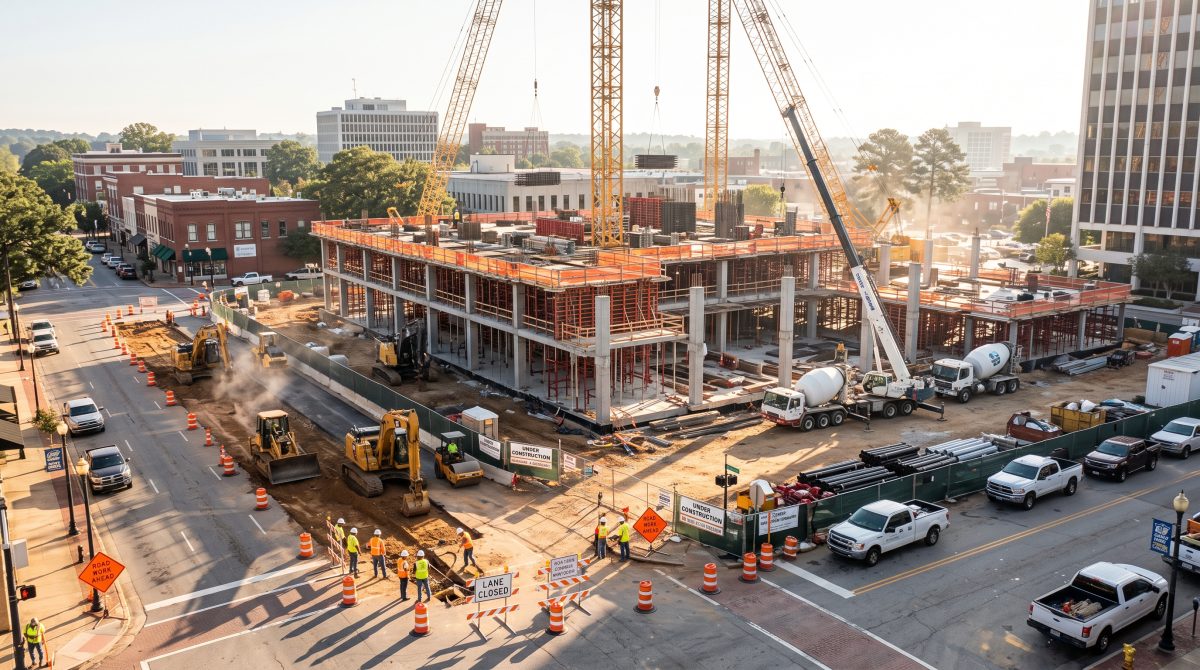
COLUMBUS, Ga. — From a new downtown courthouse to major highway interchanges, road expansions and drainage improvements, Columbus is undergoing one of its largest periods of public infrastructure investment in recent years.
More than $1.2 billion in infrastructure projects were underway or moving through development earlier this year, according to Columbus Consolidated Government officials. The investments include improvements to transportation, public safety, government buildings, parks and stormwater systems, with funding coming from local sales taxes, state transportation programs, bonds and other public sources.
Some projects are already under construction, while others remain in engineering, design or preparation for future construction. Together, they represent a significant investment in how Columbus residents travel, access government services and use public facilities.
A review of the city’s March 31, 2026, capital project report identifies several projects with budgets exceeding $50 million, along with numerous smaller improvements that could reshape neighborhoods across Muscogee County. The figures below reflect reported project budgets rather than final construction costs, and completion schedules remain subject to change.
1. New John D. Allen Judicial Center — $218.6 Million
The most expensive individual project in the city’s March report is the new John D. Allen Judicial Center in downtown Columbus, with a reported budget of approximately $218.6 million.
The 342,000-square-foot facility will bring together courts and legal offices previously housed in the aging Government Center. It is designed to accommodate Superior Court, State Court, Probate Court, Juvenile Court and other judicial functions, along with district attorney, public defender and court administration offices.
The project represents a major modernization of Columbus’ judicial infrastructure, providing updated security, courtroom facilities and space for government operations. Its construction is being financed through municipal bonds and general government funding.
The city’s March report listed construction as underway, with completion anticipated in winter 2026. More recent reporting indicates that the building is nearing occupancy, with a ribbon-cutting ceremony scheduled for October 30 and court offices expected to relocate in phases through December 19. The former Government Center is expected to be demolished after the transition, creating additional parking space.
2. Spiderweb Road Project — $75.9 Million
One of Columbus’ largest transportation investments is the $75.9 million Spiderweb project, a long-running effort to improve connectivity through the city’s road network.
The project is part of the region’s transportation improvement program and is funded through transportation sales tax revenue and Georgia Department of Transportation resources.
City records show that design, right-of-way acquisition and utility work had been completed as of March 31, while construction remained underway. Approximately $75.2 million had been committed against the project’s budget.
Completion was projected for spring 2027, making it one of the largest transportation projects scheduled to continue into next year. Its scale also illustrates why major road improvements can take years to complete, particularly when multiple construction phases and utility systems are involved.
3. U.S. Highway 27 Widening — $72.4 Million
The U.S. Highway 27 widening project carries a reported budget of approximately $72.4 million, placing it among the most expensive road projects in the Columbus area.
The project is administered by the Georgia Department of Transportation and supported through the region’s transportation sales tax program.
Highway widening projects are intended to improve traffic capacity and accommodate transportation demand, particularly along corridors serving commuters, commercial vehicles and regional travelers.
The March report listed the project as under construction, with design, right-of-way and utility phases completed. At that time, the projected completion date was spring 2026. Because that date has passed, the report does not establish whether all work has since been completed.
4. Cusseta Road Interchange — $72 Million
The $72 million Cusseta Road interchange project is another major transportation investment intended to improve traffic movement through an important Columbus corridor.
The project is administered by the Georgia Department of Transportation using transportation sales tax funding. It involves substantial interchange improvements designed to address traffic flow and transportation infrastructure.
According to the March capital project report, approximately $54.8 million had been committed to the project, with construction underway and completion projected for spring 2027.
For residents traveling through southern Columbus, improvements to the Cusseta Road corridor could eventually provide more efficient connections between neighborhoods, employment centers and major transportation routes. However, motorists may continue encountering construction-related disruptions while the work progresses.
5. Buena Vista Road Interchange Improvements — $52.7 Million
The Buena Vista Road diverging diamond interchange project has a reported budget of approximately $52.7 million.
A diverging diamond interchange is designed to move traffic more efficiently through a highway interchange by temporarily shifting vehicles to the opposite side of the roadway at controlled intersections. The configuration can reduce certain turning conflicts and improve traffic flow.
The Buena Vista Road project is part of Columbus’ larger transportation investment program and is being administered by the Georgia Department of Transportation.

As of March, approximately $46 million had been committed, with construction underway and completion anticipated in winter 2026. The improvements could affect one of the city’s important east-west transportation corridors, particularly for residents traveling between residential neighborhoods, businesses and regional highways.
6. Bradley Park Diverging Diamond Interchange — $21.6 Million
The Bradley Park interchange project represents another substantial investment in Columbus transportation, with a reported budget of approximately $21.6 million.
Located in one of the city’s major commercial corridors, the interchange serves an area that includes retail destinations, restaurants, offices and residential communities.
The project involves a diverging diamond interchange configuration intended to improve how vehicles enter, exit and cross the highway interchange.
The Georgia Department of Transportation is administering the work. The March project report identified construction as ongoing, with completion projected for winter 2026.
For residents who regularly travel through the Bradley Park area, the long-term objective is more efficient vehicle movement, although construction can temporarily affect travel patterns and commute times.
7. Miller Road and Manchester Expressway Bridges — $21.2 Million
Bridge improvements involving Miller Road and Manchester Expressway carry a combined project budget of approximately $21.2 million.
Bridges are among the most expensive transportation assets to maintain because replacement and major rehabilitation work must account for structural safety, traffic management, drainage, utilities and long-term durability.
The Georgia Department of Transportation is responsible for administering the project, which was listed as under construction in the city’s March report.
Completion was projected for winter 2027. Although bridge projects may attract less attention than new buildings or major highway expansions, they are essential to maintaining reliable transportation connections throughout Columbus.
8. Nineteenth Street Flood Abatement — $14.9 Million
Not every major public construction project involves roads or buildings. Columbus is also investing approximately $14.9 million in the 19th Street flood abatement project.
The project addresses stormwater management and flooding concerns, an issue that can affect streets, homes, businesses and public infrastructure during periods of heavy rainfall.
According to the March report, construction was underway and approximately $14.8 million had been committed to the project. Completion was projected for winter 2026.
Flood prevention improvements can be especially valuable in established neighborhoods where aging drainage systems and developed land create challenges during major rain events. Although these projects are often less visible than new construction, they can help reduce future property damage and infrastructure repair costs.
Other Major Columbus Projects Moving Toward Construction
Beyond the projects already identified as under construction, Columbus has several expensive improvements in the planning and design pipeline.
The city’s March report identified a $36.7 million County Line Road interchange project, with construction then projected to begin in summer 2030. Other planned projects included $22.5 million in Steam Mill Road improvements, $18.7 million for Williams Road improvements, $18.2 million for Second Avenue improvements and $15.4 million for Forrest Road widening.
Additional investments include $12.8 million for Whitesville Road improvements, $12.5 million for Riverwalk repaving, $12 million for Morris Road improvements and $10.1 million for South Lumpkin Road improvements.
Several of these projects were still in design or other preliminary phases in March, meaning their budgets should not be interpreted as money already spent on physical construction. Together, however, they demonstrate that Columbus’ infrastructure investment program extends well beyond the projects residents currently see along major roads.
How Columbus Is Paying for the Construction
Much of Columbus’ infrastructure investment is financed through special-purpose sales taxes approved for transportation and capital improvements.
The Transportation Special Purpose Local Option Sales Tax, commonly called TSPLOST, provides funding for eligible road, bridge and transportation projects. SPLOST revenue supports other public investments, including facilities, parks, public safety improvements and infrastructure.
The city also relies on municipal bonds, general government revenue and funding administered through the Georgia Department of Transportation.
These funding sources allow Columbus to undertake projects that would be difficult to finance through annual operating budgets alone. However, public construction carries long-term financial considerations, including maintenance expenses, potential cost increases and debt obligations associated with certain projects.
The distinction between an approved budget, money committed to contracts and actual expenditures is important. A project with a $70 million budget does not necessarily mean $70 million has already been spent, and some projects may undergo budget or schedule revisions before completion.
What the Construction Boom Means for Columbus Residents
The scale of Columbus’ infrastructure program reflects several priorities: modernizing aging public buildings, improving transportation capacity, addressing drainage problems and preparing public facilities for future use.
For commuters, the most noticeable changes will likely come from highway interchanges, road widening and bridge improvements. For residents who interact with the courts, the new Judicial Center represents a substantial change in how judicial services are organized and delivered downtown.
Other projects, including parks, public safety facilities and stormwater improvements, may have a more direct effect on individual neighborhoods.
The construction activity also creates opportunities for engineering firms, contractors, equipment suppliers and skilled trades. However, the number of local jobs directly generated by these projects has not been established in the reviewed records.
Ultimately, the value of these investments will depend on whether they are completed within reasonable budgets, deliver the intended improvements and remain useful for decades.
What Happens Next?
Several of Columbus’ largest projects were scheduled to reach important milestones before the end of 2026, while others are expected to remain active through 2027 or later.
The new Judicial Center is preparing for its first occupants, major road projects continue toward completion, and additional transportation improvements are advancing through preliminary engineering and design.
The city’s March project report provides an important snapshot of this work, but it does not confirm the current October status of every project. Updated construction schedules and spending totals will be needed to determine which projects have finished, which remain underway and whether costs have changed.
For Columbus taxpayers, the central question is not simply how much money is being invested, but what the community receives in return.
With more than $1.2 billion in public infrastructure projects underway or in development earlier this year, Columbus is making investments that could influence traffic, public services and neighborhood infrastructure for years to come.
Sources: Columbus Consolidated Government Capital Projects Status Report, March 31, 2026; Columbus Consolidated Government FY2025 Annual Comprehensive Financial Report; Columbus Ledger-Enquirer infrastructure reporting, April 6, 2026; WTVM Judicial Center update, September 3, 2026.
Source: Columbus Consolidated Government Capital Projects Status Report, March 31, 2026; Columbus Consolidated Government FY2025 Annual Comprehensive Financia

News organizations may republish this story with credit. See our guidelines.
Know someone who'd want to read this? Email it to a friend.
Own a Columbus business? 60,000+ page views a month. Ads from $125/month. See ad optionsPlan your weekend with Columbus Times
Get This Weekend in Columbus every Thursday: the best local events, free things to do and family fun, plus each evening's local news. Free, and you can unsubscribe anytime.
Most read this week
- Georgia's 3 Constitutional Amendments on the Nov. 3 Ballot, Explained in Plain English
- Georgia's 3 Amendments: Which Will Pass, Who's Against Them, and What Happens If They Fail
- Early Voting in Columbus Starts Oct. 13: Every Site, the Hours, and What's on Your Ballot
- USDA Awards $3.3 Billion Loan for Georgia Power Plant to Meet Rising Electricity Demand
- Which of Georgia's 3 Amendments Is Most Likely to Pass? What the Votes, Supporters and History Say
More stories
 Local Columbus’ 10 Highest-Paid Government Employees Earn Up to $192,476 a Year
 Local Columbus Electric Bills Average $239 a Month. How Does That Compare With Other Georgia Cities?
 Local How Much Do Columbus Police Officers, Firefighters and Teachers Really Earn?
 Local Columbus Police Chief Is Retiring: What Happens Next?
Comments
Be respectful. No personal attacks, hate speech, spam or anyone's private information. Every comment is reviewed before it appears. Comment rules
No comments yet. Be the first to share your thoughts.