Six Governments Signed a Chattahoochee Valley Disaster Pact: The 72-Hour Kit Fort Benning Recommends
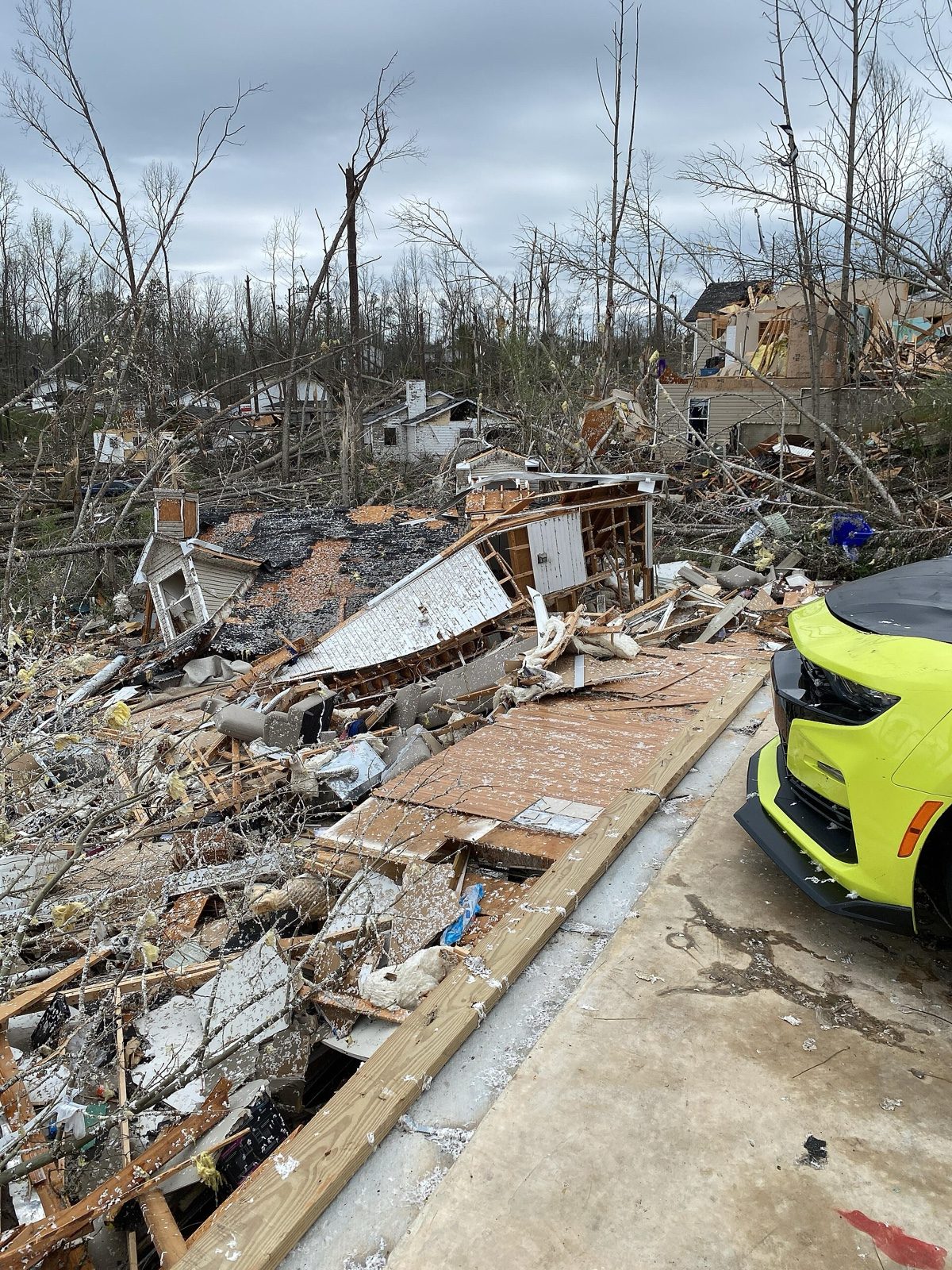
Six governments signed a Chattahoochee Valley disaster agreement. Shown: EF4 tornado damage in Newnan, Georgia, in 2021 (file photo, not the Columbus area). Photo: National Weather Service Peachtree City GA / Wikimedia Commons (Public domain)
COLUMBUS, Ga. - Six local governments in Georgia and Alabama joined Fort Benning in a regional disaster preparedness agreement, while Army emergency management officials are urging families to maintain enough water, food, medicine and other supplies for at least 72 hours. The Chattahoochee Valley Regional Disaster Resiliency Partnership Agreement concluded a July 21-22, 2026, conference in Columbus, according to a U.S. Army article published Aug. 13. In a separate Sept. 18 announcement, Fort Benning outlined emergency planning steps, household supply recommendations and communication tools intended to help families prepare for severe weather and other emergencies.
The regional agreement establishes principles for cooperation among neighboring governments and Fort Benning, according to the Army. The household preparedness guidance focuses on actions individuals can take before an emergency, including selecting meeting locations, establishing communication arrangements and assembling emergency supplies. Together, the two Army announcements describe preparedness efforts at both the community and household levels.
Six Governments Join Regional Disaster Preparedness Agreement
The Georgia-Alabama Partnership for Sustainability, known as GAPS, held a two-day conference titled "Disaster Resilience Across the Chattahoochee Valley" on July 21-22, 2026. The gathering took place at the Columbus Convention & Trade Center, according to the U.S. Army's Aug. 13 report. It concluded with a ceremonial signing of the Chattahoochee Valley Regional Disaster Resiliency Partnership Agreement proclamation.
The agreement sets out principles of joint preparedness, timely communication, mutual support, continuous collaboration and long-term resilience, the Army reported. Those principles establish a framework for cooperation among communities in the region. The document was signed by representatives of six local governments and Fort Benning.
The Army identified seven signatories representing those governments and the military installation. Columbus, Phenix City, Smiths Station and Buena Vista were represented by their mayors, while Russell County, Alabama, and Chattahoochee County, Georgia, were represented by county commissioners. Fort Benning participated through its executive deputy to the commanding general.
The agreement was presented as part of the broader regional disaster preparedness effort described in the Army's August report. Its focus is on maintaining cooperation and communication among participating communities. This story does not include details on what the agreement requires financially.
The Seven Officials Who Signed the Agreement
According to the U.S. Army, the Chattahoochee Valley Regional Disaster Resiliency Partnership Agreement proclamation was signed by the following officials:
| Signatory | Government or organization |
|---|---|
| Mayor Skip Henderson | Columbus, Georgia |
| Mayor Eddie Lowe | Phenix City |
| Mayor Richard Cooley | Smiths Station |
| Mayor Kevin Brown | Buena Vista |
| Commissioner Chance Corbett | Russell County, Alabama |
| Commissioner Charles Coffee | Chattahoochee County, Georgia |
| Robert Stone, executive deputy to the commanding general | Fort Benning |
The six local governments are represented by four mayors and two county commissioners, according to the Army's report. Fort Benning's participation brought the total number of signatories to seven. The agreement connects government representatives on both sides of the Georgia-Alabama state line.
Fort Benning already maintains a range of partnership arrangements, according to Elizabeth Guzman, the installation's Intergovernmental Support Agreement manager. The Army reported that the installation has 24 active partnerships involving 12 partners, including eight in Georgia, three in Alabama and regional agreements. Those existing partnerships provide additional context for the installation's participation in the disaster resilience effort.
Karl Nagel, Fort Benning's installation emergency manager, emphasized using ordinary days to establish relationships among participating organizations. According to the Army's August report, Nagel identified tabletop exercises and joint training as important components of preparedness. The comments connected ongoing coordination with the regional agreement's emphasis on collaboration.
Fort Benning's Four Steps for Emergency Readiness
In a separate article published Sept. 18, 2026, Fort Benning outlined its approach to emergency preparedness during National Preparedness Month. Nagel said severe weather, including tornadoes and thunderstorms, can develop quickly in the region. The installation's guidance uses the Army's Ready Army program as a framework for household and community preparation.
The Army identifies four pillars of the Ready Army program: be informed, make a plan, build a kit and get involved. Each pillar addresses a different part of emergency readiness. The Sept. 18 announcement connects those actions with preparation for situations that could affect families and military personnel.
Being informed is the first pillar, and the Army's guidance names several alert systems for the installation. Making a plan focuses on family communication and meeting arrangements. Building a kit addresses essential supplies, while getting involved includes attending a monthly community meeting and talking with neighbors.
The Army's guidance emphasizes preparation before an emergency occurs. Its recommendations include discussing emergency protocols and identifying arrangements for situations in which family members are in different locations. The program also highlights supplies that can support people and pets when normal routines are disrupted.
How to Make a Family Emergency Plan
Fort Benning recommends that households discuss emergency protocols before they are needed, according to the Army's Sept. 18 announcement. Families should identify one meeting place near their home and another outside the local area. The guidance also calls for selecting an out-of-town relative or friend to serve as a single point of contact.
The two meeting locations provide separate arrangements for different circumstances. Having one place near home and one outside the area gives a family two options. The designated out-of-town contact provides a central person for family communication.
The Army also recommends planning for emergencies that occur while parents are at work or children are at school. Those situations are specifically included in Fort Benning's family preparedness guidance. The objective is to establish household arrangements before family members face an emergency while separated.
The planning recommendation forms one of the four Ready Army pillars. It is separate from assembling emergency supplies but works alongside the kit and information-gathering components. Fort Benning's September article presents these preparations as parts of a coordinated household approach.
What to Put in a 72-Hour Emergency Kit
Fort Benning recommends maintaining emergency supplies sufficient to sustain people and pets for at least 72 hours. The Army's Sept. 18 guidance addresses kits kept at home and in vehicles. Its supply recommendations cover water, food, medical needs, communication equipment, sanitation materials and important documents.
The Army identifies the following supplies for household emergency preparation:
- Water: One gallon per person per day for three days.
- Food: Three days of nonperishable food requiring no cooking, plus a manual can opener.
- Medical supplies: A first aid kit and essential prescription medications.
- Infant and pet supplies: Formula, diapers, pet food, water and important pet documents.
- Lighting and communication: Flashlight, NOAA weather radio, battery-powered phone charger and extra batteries.
- Sanitation: Moist towelettes, disinfectants, garbage bags and a five-gallon bucket with bags for use as a portable toilet.
- Other essentials: Local maps, small-denomination cash and important documents stored in waterproof packaging.
The recommended water supply can be calculated directly from the Army's daily amount. For a family of four, one gallon per person per day for three days equals 12 gallons of drinking water. That calculation covers the four people and does not include additional water for pets.
The three-day food recommendation focuses on nonperishable items that do not require cooking, according to Fort Benning. A manual can opener is included among the supplies. The guidance also addresses special household needs through its recommendations for infant items, prescriptions and pet provisions.
The Army includes sanitation materials alongside food and medical equipment. Its list also calls for storing important documents in waterproof packaging and maintaining small-denomination cash. These items are part of the same 72-hour supply recommendation for homes and vehicles.
Emergency Alerts and Communication at Fort Benning
Fort Benning's Sept. 18 preparedness announcement identifies several systems used to communicate emergency information on the installation. Those include Giant Voice for outdoor announcements and Little Voice for indoor communications. The Army also identifies ALERT!, NOAA Weather Radios and the MyArmyPost app, known as MAPA.
The ALERT! system provides notifications through email and phone, according to the Army. Giant Voice and Little Voice are identified by their outdoor and indoor communication roles. NOAA Weather Radios and MAPA are additional sources included in Fort Benning's emergency communication guidance.
The installation encourages soldiers and families to register for ALERT! and use the MAPA app. According to the Army, MAPA is available through the App Store and Google Play. These systems are identified specifically in connection with Fort Benning's on-post emergency preparedness arrangements.
Fort Benning's guidance presents alert systems as one part of emergency readiness alongside family plans and emergency supply kits. The alert systems named are for Fort Benning's on-post arrangements. The September article also identifies NOAA weather radio equipment among the items recommended for a household kit.
Community Involvement and Regional Coordination
The fourth Ready Army pillar, getting involved, includes participating in community preparedness activities and maintaining connections with neighbors. Fort Benning recommends attending its monthly Community Information Exchange and talking with neighbors about preparedness. These activities appear in the Army's Sept. 18 guidance.
Tina Sandell, an emergency planning specialist, emphasized the importance of advance preparation in the Army's September announcement. "It is better to have a plan and not need it, than need a plan and not have one," Sandell said. Sandell's statement accompanied the installation's recommendations for emergency planning and household readiness.
The emphasis on community involvement also appears in the regional agreement reported by the Army on Aug. 13. That agreement includes continuous collaboration and mutual support among its guiding principles. Nagel's recommendations for tabletop exercises, joint training and relationships built during normal conditions reflect the same preparedness approach.
The two Army announcements address different levels of emergency readiness within the Chattahoochee Valley. The August report documents a cooperative framework involving six governments and Fort Benning, while the September report provides specific preparation measures for families and installation personnel. Additional information about the Ready Army preparedness program is available at army.mil/ready.
Source: U.S. Army - Fort Benning, Georgia and Alabama Leaders Team Up to Strengthen Emergency Preparedness; U.S. Army - Fort Benning Urges Community Readiness
News organizations may republish this story with credit. See our guidelines.
Know someone who'd want to read this? Email it to a friend.
Own a Columbus business? 20,000+ page views in 30 days. Ads from $125/month. See ad options Follow Columbus Times on FacebookLocal news, events and people, in your feed every day.Most read this week
- Phenix City and Russell County Voters See School Taxes Again Nov. 3: 4 Mills and 4.5 Mills
- Fort Benning Ceremony Calendar: 12 Graduations, 20 Turning Green Events and 2 Turning Blue Ceremonies Through Dec. 17
- Georgia's 3 Amendments: Which Will Pass, Who's Against Them, and What Happens If They Fail
- Georgia's 3 Constitutional Amendments on the Nov. 3 Ballot, Explained in Plain English
- Veterans Day 2026 in Columbus: Free Meals, Deals and Events Honoring Those Who Served
More stories
 Local Buying a Used Car From a Private Seller in Columbus: 7 Steps, the 7% Title Tax and a 7-Day Deadline
 Local Columbus Road Work Through Winter: Cherokee Avenue Lane Shut to Mid-November, Buena Vista Road Closed Until April 2027
 Local $56 Columbus Marriage License Drops to $16 With 6 Hours of Premarital Classes: How to Apply
 Local 5,850 Acres North of Columbus: Lake Harding by the Numbers, From a 2,052-Foot Dam to 187 Megawatts
Comments
Be respectful. No personal attacks, hate speech, spam or anyone's private information. Every comment is reviewed before it appears. Comment rules
No comments yet. Be the first to share your thoughts.