Buying a Used Car From a Private Seller in Columbus: 7 Steps, the 7% Title Tax and a 7-Day Deadline
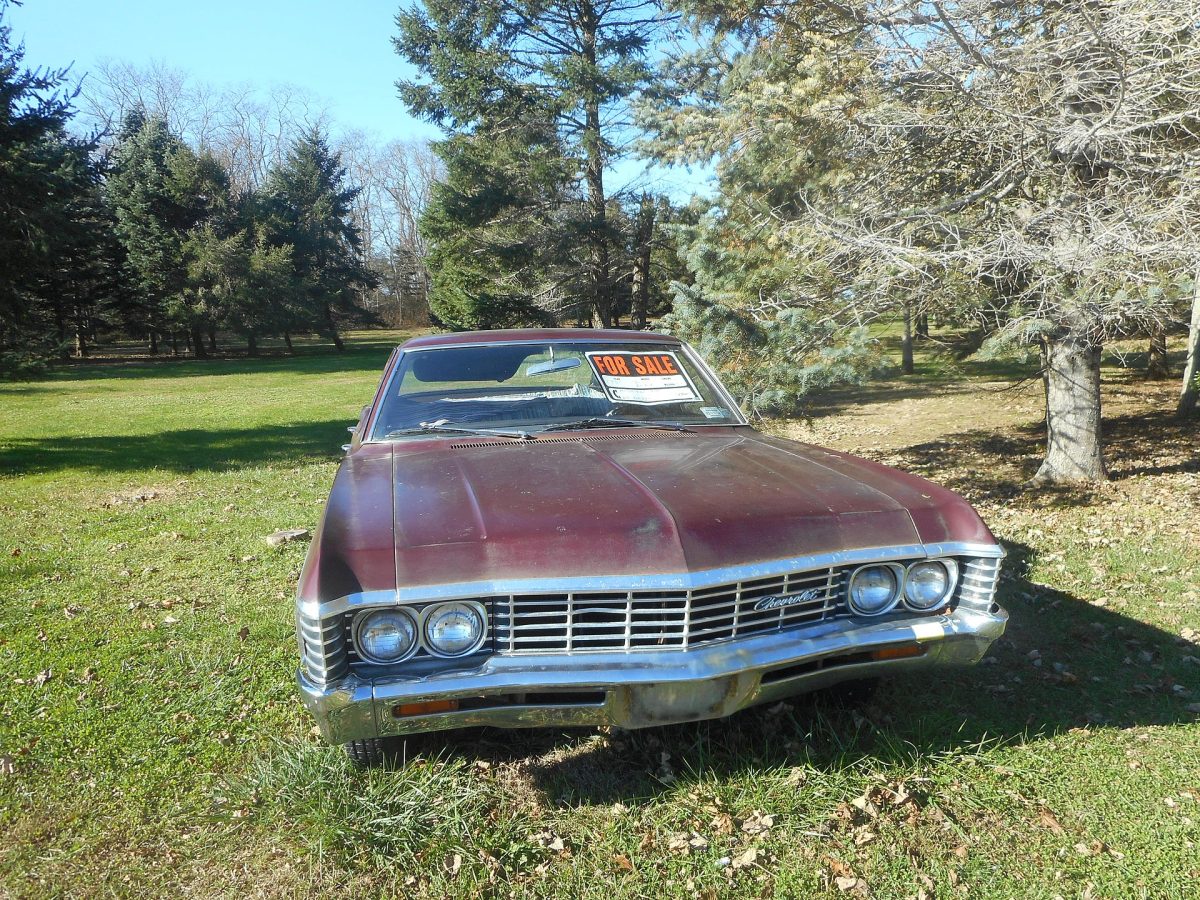
A car with a for-sale sign in the windshield (file photo). Photo: DanTD / Wikimedia Commons (CC BY-SA 4.0)
COLUMBUS, Ga. - Buying a used car from a neighbor, a coworker or an online listing can save money, but in Georgia the paperwork lands on the buyer. There is no dealer to file the title, collect the tax or hand over a temporary tag. The buyer has to take the signed title to the county tag office, pay a one-time title tax and register the car, and the clock starts on the day of the sale.
The Georgia Department of Revenue calls a sale between private individuals a "casual sale." Its rules give the buyer seven business days from the purchase date to title and register the vehicle at the tag office in the county where the buyer lives. In Columbus, that is the Muscogee County Tax Commissioner's Motor Vehicle Division.
Here is how the process works, step by step, using the state's own rules and fee schedule. The figures below come from the Department of Revenue and the Muscogee County Tax Commissioner. Buyers with an unusual situation, such as an out-of-state title or a salvage vehicle, should call the tag office before the sale.
The numbers at a glance
| Item | Amount or deadline |
|---|---|
| Deadline to title and register after a casual sale | 7 business days |
| Title Ad Valorem Tax (TAVT) | 7% of the vehicle's fair market value |
| TAVT between immediate family members | 0.5% (with Form MV-16, if TAVT was paid before) |
| Title fee | $18 |
| Standard license plate fee (passenger car or light pickup) | $20 |
| Penalty for not applying for a title within 30 days | $10 |
| Penalty for casual-sale TAVT not paid within 30 days | 10% of the tax, plus 1% a month |
| Late registration fines | Up to $100 |
Step 1: Check the title before any money changes hands
The Department of Revenue tells buyers to look at the title before paying and make sure the seller's name is printed on it as the owner. It also recommends a vehicle identification number (VIN) check. If a bank or lender still holds a lien against the seller, that lien has to be released in the space provided on the title, or the buyer will not get a clean title in his or her own name.
Model year matters, too. The state says titles are generally required for 1986 and newer vehicles. For a 1985 or older vehicle that does not require a title, a bill of sale serves as proof of ownership, and the state publishes a bill of sale form, Form T-7. A bill of sale is also a useful record for any private sale, since it shows the date and price both sides agreed to.
Step 2: Fill out the back of the title together, and never leave it blank
The seller completes the assignment section on the back of the original title, and both the buyer and the seller sign it. The buyer acknowledges the odometer reading by printing and signing his or her name in the odometer section, unless the vehicle is exempt under the federal Truth in Mileage Act. The state says the mileage must increase through each owner in the chain.
The state is blunt on one point: "Never sign a title that has been left blank." Under Georgia Code Section 40-3-91(c), giving or accepting a title that was signed without the buyer's name filled in is a misdemeanor. The penalty is a fine of up to $100 or up to 30 days in jail for each title.
Step 3: Get insurance in place
Georgia requires proof of insurance before it will register a vehicle. According to the Department of Revenue, that proof can be filed electronically by the insurance company in the state's database, or the buyer can bring an insurance binder showing liability coverage. Buyers who plan to drive the car home should line up coverage before the sale, since the seller's plate does not come with the car.
Step 4: Know what the 7% tax is based on
Most vehicles bought in Georgia on or after March 1, 2013, are subject to a one-time Title Ad Valorem Tax, or TAVT, instead of the yearly ad valorem tax that older vehicles still pay. The current rate is 7% of the vehicle's fair market value. It is due when the buyer applies for the title, and the buyer pays it to the county where he or she lives.
For a used car, fair market value is not simply the price on the bill of sale. The Department of Revenue says it is "the value identified in the state motor vehicle assessment manual," which averages wholesale and retail values. If a vehicle is not listed in the manual, the state uses a used-car guide chosen by the revenue commissioner. A buyer who gets a bargain can still owe tax on the state's higher value.
There is also no trade-in break in a private sale. The state's TAVT rules reduce the taxable value for a trade-in when the sale is made by a dealer, "but not when the sale was made by a private individual." For example, a car valued at $10,000 in the state manual would carry $700 in TAVT, plus the $18 title fee and $20 plate fee, for $738 at the counter. The state's online TAVT estimator, on the DRIVES e-Services site, gives a figure for a specific vehicle.
Step 5: Check for a lower rate or an exemption
A transfer between immediate family members can qualify for a 0.5% rate instead of 7%. The state's family-transfer affidavit, Form MV-16, covers spouses, parents, children, stepchildren, siblings, grandparents and grandchildren. The reduced rate applies when the vehicle already has a Georgia title and TAVT was paid on it before.
Inherited vehicles already in the TAVT system also pay 0.5%, using Form T-20. Some veterans are exempt from TAVT, including those with a 100% disability rating, former prisoners of war, and Purple Heart and Medal of Honor recipients, who file Form MV-30 with military documents. Nonresident service members stationed in Georgia file Form PT-472NS, which matters in a county next to Fort Benning.
Step 6: Take the paperwork to the Muscogee County tag office
The Department of Revenue's checklist for a casual sale includes a valid Georgia driver's license or ID card, the original title assigned to the buyer, and Form MV-1, the Title/Tag Application. MV-1 can be printed at home or picked up at the tag office, and it must be signed by the applicant. If the vehicle was not previously registered in Georgia, the buyer also needs Form T-22B, a certification of inspection.
The Muscogee County Tax Commissioner's Motor Vehicle Division is at 3111 Citizens Way, Columbus, GA 31906. The county lists its hours as 8:30 a.m. to 4:30 p.m. Monday through Friday, and its motor vehicle phone number is 706-653-4208. Emissions inspections are required only in 13 metro Atlanta counties, and Muscogee is not one of them, so most Columbus buyers do not need an emissions certificate.
Step 7: Pay on time to avoid stacking penalties
The registration deadline after a casual sale is seven business days, and the state warns that late registration can bring fines of up to $100. Separate penalties apply to the title and the tax. Failing to apply for a Georgia title within 30 days of purchase costs $10, and casual-sale TAVT not paid within 30 days carries a penalty of 10% of the tax after day 30, plus 1% a month.
On the $10,000 example above, a buyer who waits past 30 days would owe an extra $70 in TAVT penalty right away. Each month after that adds another 1% of the tax. Going in during the first week avoids all of it.
What the seller has to do
The seller's job does not end when the buyer drives away. The Department of Revenue says a seller must transfer ownership on the back of the title and cancel the vehicle's registration, either online through DRIVES e-Services or in person with Form MV-18J at the tag office in the seller's county. Both steps are separate from anything the buyer files, so a seller should not count on the buyer to handle them.
The license plate stays with the seller, not the car. Georgia law makes it illegal to move a plate from the vehicle it was issued for, but the state allows an owner to transfer a valid plate to another vehicle he or she buys, if both need the same class of plate and the transfer is done at the county tag office. A seller who is not putting the plate on another vehicle can surrender it using the state's Form T-158.
Where to find more information
The Georgia Department of Revenue's guide to titling and registering a vehicle bought in a casual sale lists the required documents, and its fees, fines and penalties page shows current charges. TAVT rates and exemptions are explained on the state's vehicle taxes page. Local office details are on the Muscogee County Tax Commissioner's website, and buyers with questions about a specific vehicle can call the Motor Vehicle Division at 706-653-4208.
Source: Georgia Department of Revenue (accessed Oct. 29, 2026); Muscogee County Tax Commissioner (accessed Oct. 29, 2026)

News organizations may republish this story with credit. See our guidelines.
Know someone who'd want to read this? Email it to a friend.
Own a Columbus business? 60,000+ page views a month. Ads from $125/month. See ad options Follow Columbus Times on FacebookLocal news, events and people, in your feed every day.Most read this week
- 12 Famous People From Columbus, Ga.: A Hall of Fame Slugger, a Grammy-Winning Bluesman and America's First Black Military Pilot
- 12 Columbus Seafood and Fish Restaurants Ranked by Google Stars, With Latest Health Scores
- Georgia's 3 Amendments: Which Will Pass, Who's Against Them, and What Happens If They Fail
- Phenix City's 1954 Turning Point: The Murder of Albert Patterson, 734 Indictments and a Hollywood Movie
- Columbus Restaurant Inspections: 19 Perfect Scores, 2 B Grades and a 97 Average (Oct. 17 to 23)
More stories
 Local Columbus Weekend Forecast: 82 Degrees Friday, 60% Rain Sunday as Clocks Fall Back an Hour
 Local Columbus's Linwood Cemetery at 198: The 1828 Burial Ground and Its Estimated 14,000-18,000 Graves
 Local The Columbus Times Launches Weekly 8-Page Print Edition: What's Inside the First Paper
 Local Coca-Cola Space Science Center by the Numbers: 30 Years, $17 Million in NASA Artifacts and 4 Flight Simulators
Comments
Be respectful. No personal attacks, hate speech, spam or anyone's private information. Every comment is reviewed before it appears. Comment rules
No comments yet. Be the first to share your thoughts.