Where Columbus' Tap Water Comes From: 10 Questions About Lake Oliver, 2 Treatment Plants and a $200 Million PFAS Plan
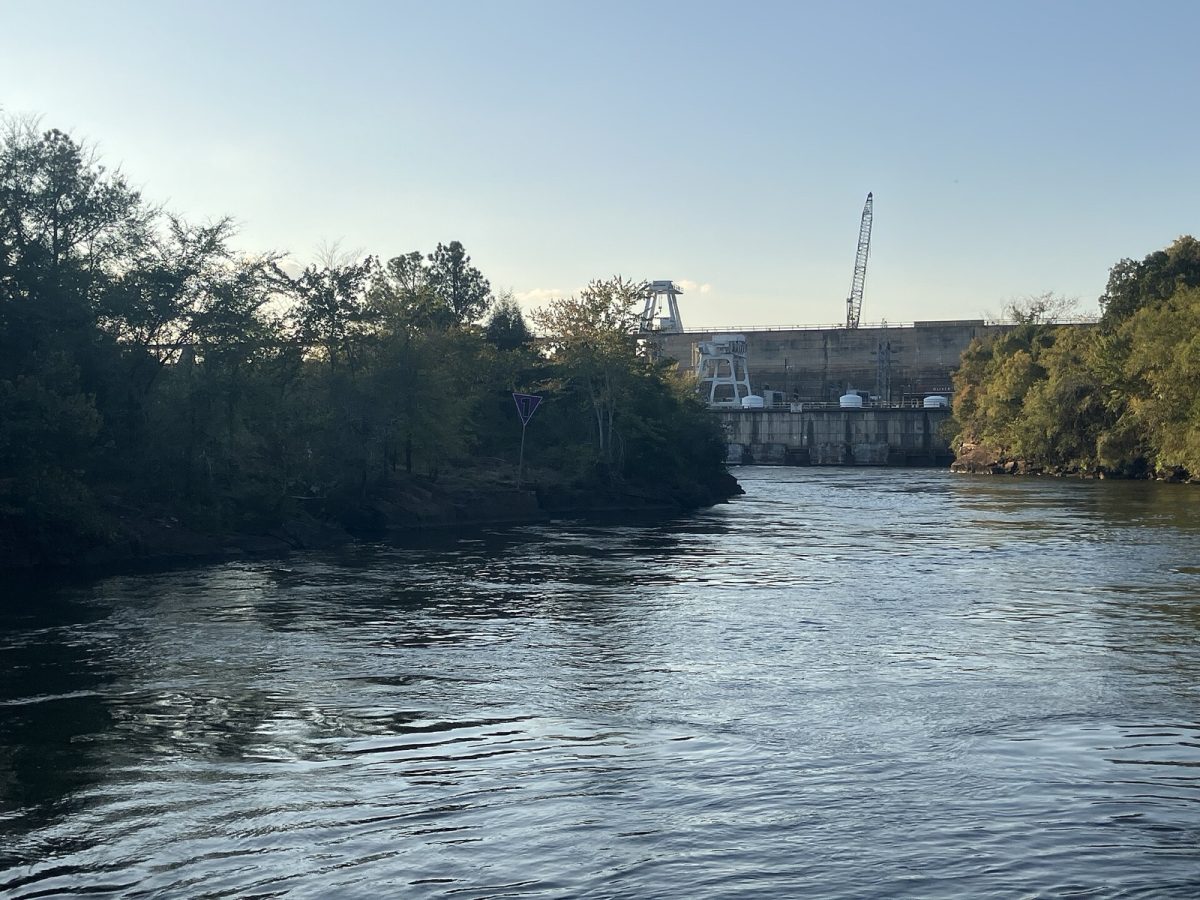
Oliver Dam on the Chattahoochee River north of Columbus (file photo). Photo: Mccunicano / Wikimedia Commons (CC BY-SA 4.0)
COLUMBUS, Ga. - Columbus Water Works draws raw water from Lake Oliver on the Chattahoochee River and operates drinking water treatment facilities in North Columbus and at Fort Benning. The utility is planning approximately $200 million in improvements to those facilities to meet federal requirements for removing certain chemicals from drinking water. The work is part of a broader infrastructure planning effort that also includes a proposed $750 million wastewater treatment facility.
Columbus Water Works, commonly known as CWW, provides water and wastewater services throughout the Chattahoochee Valley. Its 2025 Annual Report, titled "Planning Today for a Better Tomorrow," describes the systems that support those services and the investments required to maintain and improve them. Here are 10 questions and answers about the region's water infrastructure, the challenges ahead and the projects the utility is planning.
1. Where does Columbus get its drinking water?
Columbus Water Works has a Raw Water Pump Station at Lake Oliver, which sits along the Chattahoochee River. The station is part of the utility's infrastructure for obtaining water before treatment. CWW also operates drinking water facilities that prepare water for its service system.
Lake Oliver's importance extends beyond its role as a raw water source because the pump station is also a focus of emergency planning. CWW examined how it could continue providing limited service if the station became unavailable. That work included a test completed in 2025 to evaluate an alternative pumping arrangement.
2. Where is Columbus' drinking water treated?
Columbus Water Works identifies two drinking water facilities in its annual report: the North Columbus facility and the Fort Benning facility. Both are included in the utility's planning for future water treatment improvements. Together, they account for approximately $200 million in estimated advanced treatment needs.
The facilities face different estimated project costs under the utility's current planning. CWW estimates approximately $150 million in improvements at North Columbus and another $50 million at Fort Benning. Those estimates reflect the advanced treatment needed to address new federal drinking water standards.
3. What are PFAS, and why must Columbus address them?
PFAS stands for per- and polyfluoroalkyl substances, a group of chemicals addressed by new Environmental Protection Agency drinking water regulations. The federal standards require utilities to remove these substances at extremely low concentrations, measured in parts per trillion. Under the requirements described in the CWW annual report, compliance is required by 2031.
For Columbus Water Works, meeting those requirements means investing in advanced treatment technology. The utility has already evaluated different treatment approaches and identified significant infrastructure needs at its two drinking water facilities. The regulations are a major factor behind the approximately $200 million investment outlined in the report.
4. How much will PFAS treatment cost Columbus Water Works?
CWW estimates that advanced treatment improvements will cost approximately $200 million across its two drinking water facilities. The North Columbus facility accounts for the larger share, with an estimated cost of $150 million. The Fort Benning facility accounts for the remaining estimated $50 million.
These figures represent planned treatment investments rather than a report of completed construction spending. The utility's estimates reflect the work required to meet federal drinking water standards. CWW has identified the projects as part of its longer-term infrastructure needs while preparing for the 2031 compliance deadline.
5. Has Columbus Water Works tested treatment technology?
Yes, Columbus Water Works began testing treatment technologies in 2023 and completed that evaluation process in 2025. The work focused on technologies capable of addressing the new federal PFAS requirements. CWW also evaluated approaches that could address other contaminants subject to future regulation.
The testing period gave the utility an opportunity to examine advanced treatment options before proceeding with the major investments identified in its annual report. That planning covers both the North Columbus and Fort Benning facilities. The report connects the completed technology evaluations with the utility's broader effort to prepare for changes in drinking water requirements.
6. What would happen if the Lake Oliver pump station stopped operating?
Columbus Water Works tested an emergency pumping arrangement in 2025 to determine how it could respond if the Raw Water Pump Station at Lake Oliver became unavailable. The test bypassed the existing station using temporary piping and rental pumps. CWW reported that the exercise demonstrated an ability to restore limited water service within days.
The scenario considered the loss of the pump station because of a natural disaster or another event. Rather than relying entirely on the existing pumping infrastructure, the utility tested a separate arrangement intended to restore some service. The test established a possible emergency response method, although the report described limited restoration rather than full service.
7. What is happening with Columbus' wastewater treatment plant?
Columbus Water Works operates an existing wastewater treatment facility that was built in 1964. Secondary treatment was added in 1974, and the facility has served the area for more than 60 years. According to the utility, the plant is approaching both its operational capacity and the end of its useful life.
The facility also sits in a floodplain, adding another consideration to long-term infrastructure planning. Georgia's Environmental Protection Division plans to lower nutrient limits for wastewater discharges along the Chattahoochee River. Those anticipated regulatory changes are another reason CWW is evaluating how to meet future wastewater treatment requirements.
8. Why is Columbus Water Works planning a $750 million wastewater facility?
CWW estimates that upgrading the existing wastewater treatment plant would cost more than $250 million. Instead of pursuing that approach, the utility plans to construct a new wastewater treatment facility with an estimated cost of approximately $750 million. The proposed facility would provide additional capacity, address new treatment standards and support future growth.
The decision involves more than the age of the existing plant. CWW must consider its approaching capacity limits, floodplain location and expected changes to wastewater discharge requirements. The proposed replacement is intended to address those challenges through a new facility rather than improvements to the more than 60-year-old plant.
The wastewater project is separate from the approximately $200 million proposed for advanced drinking water treatment. The two investments address different responsibilities within the same utility system. One focuses on drinking water treatment requirements, while the other addresses wastewater capacity, infrastructure age and discharge standards.
9. How much has Columbus Water Works already invested in infrastructure?
From 2020 through 2024, Columbus Water Works reported more than $101 million in infrastructure investment across completed projects, construction activity and design work. That total included $17.7 million in completed projects and $62.2 million in projects under construction. Another $21.5 million was associated with projects in design.
Those figures show how CWW organizes investment across different stages of infrastructure development. Some projects had already been completed, while others were still being constructed or designed during the reporting period. The utility separately identified the much larger planned investments in advanced drinking water treatment and a replacement wastewater facility.
The investment program also reflects the utility's ongoing planning process. CWW reports maintaining a disciplined planning program for more than 30 years. Its current five-year strategic plan includes 23 strategic goals.
10. Who oversees Columbus Water Works, and where can residents find more information?
Jeremy Cummings serves as president and chief executive officer of Columbus Water Works. Other listed leaders include Brittany Brossett, chief of staff; Gwen Ruff, chief of strategy; and John Peebles, chief of water resource operations. The leadership team also includes Vic Burchfield, executive vice president and chief compliance officer, and Vickie Clark, chief of finance.
The utility's 2025 Annual Report provides information about its infrastructure investments, planning priorities and future treatment needs. Residents seeking information specifically about drinking water quality can find CWW's annual water quality report on its website. The reports serve different purposes, with the annual report describing infrastructure and strategy while the water quality report provides drinking water information.
Columbus Water Works makes its publications available through cwwga.org. The 2025 annual report outlines the approximately $200 million in advanced drinking water treatment improvements, the proposed $750 million wastewater facility and the utility's recent infrastructure investments. Those plans describe how CWW is preparing its water and wastewater systems for regulatory requirements and future service needs.
How we did this
This Columbus Times explainer is based on the Columbus Water Works 2025 Annual Report, "Planning Today for a Better Tomorrow," published through cwwga.org and reviewed October 26, 2026. The report provided the information about Lake Oliver, the North Columbus and Fort Benning drinking water facilities, PFAS treatment planning, emergency pumping tests, wastewater infrastructure and capital investments. The article uses the utility's reported figures and project descriptions without adding independent water quality measurements or estimates beyond those provided in the source.
Source: Columbus Water Works 2025 Annual Report (cwwga.org)

News organizations may republish this story with credit. See our guidelines.
Know someone who'd want to read this? Email it to a friend.
Own a Columbus business? 60,000+ page views a month. Ads from $125/month. See ad options Follow Columbus Times on FacebookLocal news, events and people, in your feed every day.Most read this week
- Georgia Spent $165.7 Million on Medicaid Work Requirement Program, but Only 18,527 Were Enrolled After 3 Years
- 8 Columbus Restaurants Got a C on Their Health Inspection in 2026, the Most of Any Year Since 2022. Here's Every One
- The Night Fight on the Chattahoochee: How Columbus Became the Site of What Many Call the Last Battle of the Civil War
- The 10 Best Mexican Restaurants in Columbus, Ga., Ranked by Diners
- Columbus' Top-Rated Barbecue: 12 BBQ Joints Ranked by Google Stars and Health Scores
More stories
 Local How to Report a Problem to the City of Columbus: 6 Steps to Using Columbus 311
 Local Georgia's Hands-Free Driving Law: 12 Questions About $50 to $150 Fines, Points and What You Can Still Do
 Local Columbus Has 17,377 Veterans: 1 in 8 Adults Served, and They Earn $19,000 More Than Neighbors
 Local The Eagle and Phenix Mills: How a Columbus Factory Burned in 1865 and Became One of the South's Largest
Comments
Be respectful. No personal attacks, hate speech, spam or anyone's private information. Every comment is reviewed before it appears. Comment rules
No comments yet. Be the first to share your thoughts.