Are Electric Cars Worth Buying in Columbus, Georgia? Here’s What the Numbers Show
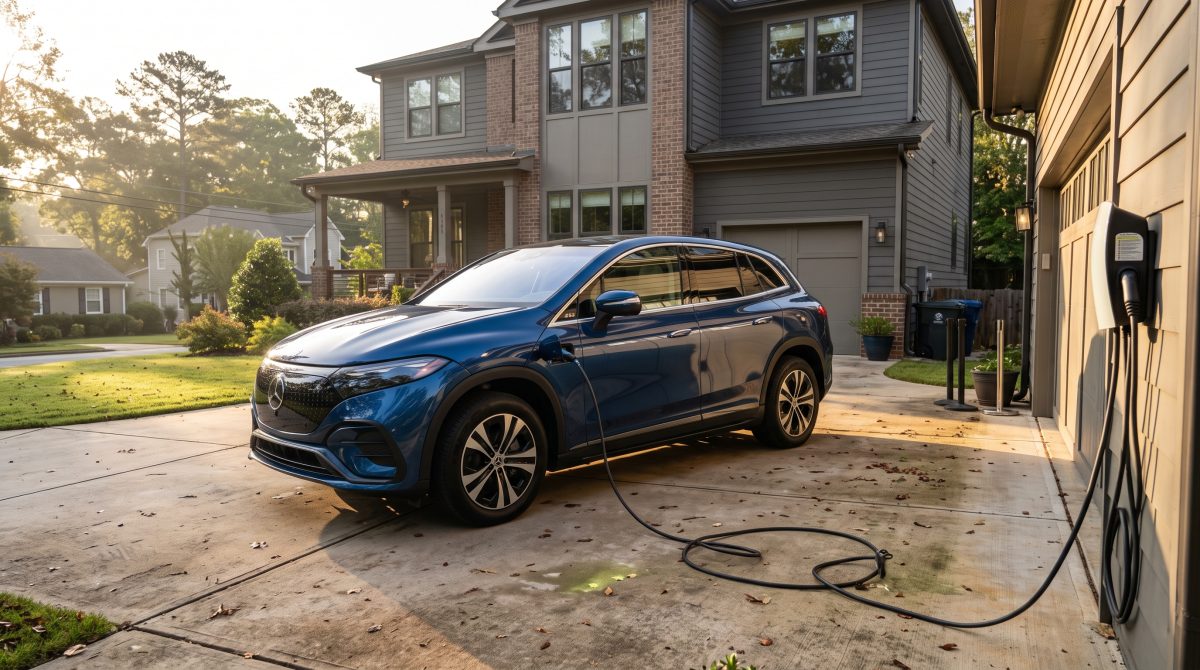
Electric vehicles are becoming a more practical option for Columbus residents, but whether purchasing one makes financial sense depends on considerably more than the price displayed on a dealership window. With gasoline prices fluctuating, electricity rates changing and more used electric vehicles entering the market, drivers have several factors to consider before replacing their gasoline-powered cars. For some households, switching to electricity could save thousands of dollars over several years. For others, higher insurance premiums, depreciation and public charging expenses could eliminate much of the financial advantage.
In Columbus, where many residents commute to Fort Benning, travel throughout Muscogee County or regularly drive to Auburn, Atlanta and nearby communities, transportation expenses can represent a substantial portion of the household budget. Gasoline, vehicle maintenance, insurance and registration fees can easily add up to several thousand dollars annually. Electric vehicles offer an opportunity to reduce some of those costs, particularly for drivers who can charge at home. However, Georgia’s additional electric vehicle registration fee and the expiration of federal EV purchase tax credits have changed the economics of ownership in 2026.
How Much Could Columbus Drivers Save on Gasoline?
One of the strongest arguments for purchasing an electric vehicle is the difference between gasoline and electricity costs. Using a hypothetical gasoline price of $3.77 per gallon and an average fuel economy of 28 miles per gallon, a Columbus resident driving 12,000 miles annually would spend approximately $1,616 on gasoline. An electric vehicle consuming 30 kilowatt-hours per 100 miles would require approximately 3,600 kilowatt-hours of electricity to travel the same distance. At an illustrative residential electricity rate of 14 cents per kilowatt-hour, that amounts to just $504 annually before accounting for charging losses and other applicable electricity charges.
The difference is substantial. Under those assumptions, the electric vehicle would save approximately $1,112 annually in energy expenses alone. Even after including Georgia’s additional annual electric vehicle registration fee of approximately $239, the driver would still save roughly $873 per year. Over five years, the cumulative savings could approach $4,365, assuming energy prices, annual mileage and the registration fee remained unchanged. That estimate does not include differences in purchase price, financing, insurance, maintenance or depreciation, which could significantly change the overall result.
Estimated Annual Driving Costs in Columbus
Expense Gasoline Vehicle Electric Vehicle Annual mileage 12,000 miles 12,000 miles Vehicle efficiency 28 MPG 30 kWh/100 miles Energy price $3.77 per gallon $0.14 per kWh Annual energy expense $1,616 $504 Additional Georgia EV fee $0 $239 Annual energy cost plus EV fee $1,616 $743 Five-year total $8,080 $3,715
These calculations are illustrative, not a comparison of verified October 2026 prices. Charging losses, taxes, financing, repairs, insurance and depreciation are excluded. Both vehicles would also be subject to applicable ordinary registration charges.
The financial advantage generally increases as annual mileage rises because every mile driven on comparatively inexpensive electricity replaces a mile that would otherwise require gasoline. A Columbus resident driving 18,000 miles annually could potentially save considerably more than someone traveling just 6,000 miles. However, these calculations depend on access to affordable electricity, which is why the location and method of charging are among the most important considerations before purchasing an EV.
Charging at Home Makes the Biggest Financial Difference
For Columbus homeowners with garages or driveways, charging an electric vehicle at home may be one of the most convenient aspects of ownership. Instead of stopping at a gasoline station several times a month, drivers can plug in when they return home and begin the next day with a charged battery. Many electric vehicles can travel between 250 and 350 miles on a full charge, although actual range depends on the model, battery condition, driving speed, weather and use of climate controls. For residents whose daily driving is limited to commuting, shopping and local errands, a single charge could provide several days of transportation.
Georgia Power also offers an Overnight Advantage electricity rate plan designed partly for customers who can shift electricity consumption to nighttime hours. Under the plan’s published rate structure, electricity consumed between 11 p.m. and 7 a.m. receives a substantially lower energy charge than electricity used during peak hours. This can make overnight vehicle charging particularly economical, although fuel adjustments, taxes and other charges still apply. Households considering the plan should also examine their daytime electricity consumption because higher peak-period rates could increase the cost of running air conditioners and appliances during summer afternoons.
Installing a dedicated Level 2 home charger can make ownership more convenient, but installation represents an additional expense that buyers should include in their calculations. Depending on the home’s electrical system, installation may require relatively minor work or more extensive electrical upgrades. Some drivers can manage with an existing household outlet, particularly if they travel relatively short distances, but charging through a standard 120-volt outlet is considerably slower. For homeowners planning to keep an electric vehicle for several years, the convenience of faster home charging may justify the initial investment.
What About Columbus Residents Who Cannot Charge at Home?
The financial calculation changes significantly for apartment residents and others who must rely on commercial charging stations. Public fast chargers typically cost more per kilowatt-hour than residential electricity, and pricing varies by charging network, location and sometimes time of day. Using an illustrative public charging rate of 40.6 cents per kilowatt-hour, an electric vehicle consuming 30 kilowatt-hours per 100 miles would cost approximately $12.18 in electricity to travel 100 miles. A gasoline vehicle averaging 28 miles per gallon would cost about $13.46 to cover the same distance at $3.77 per gallon.
Under that scenario, annual public charging expenses for 12,000 miles would reach approximately $1,462. Adding Georgia’s additional registration fee brings the total to roughly $1,701, slightly exceeding the gasoline vehicle’s estimated $1,616 fuel expense. These figures illustrate why residents without reliable home or workplace charging should carefully evaluate their options before purchasing an EV. Although public charging stations are available around Columbus, their convenience depends on charging speed, connector compatibility, cost and whether equipment is functioning when needed. Drivers should check current station locations and reliability through services such as PlugShare or individual charging-network applications.
For households with only one vehicle, charging access becomes particularly important. Someone who regularly travels long distances or cannot conveniently recharge near home may find a conventional gasoline vehicle or hybrid more practical. Electric vehicles remain capable of handling long-distance travel, but drivers must account for charging stops and the possibility of waiting for an available station. The convenience advantage of home charging can become a disadvantage when a household depends entirely on public infrastructure.
Georgia’s Annual EV Fee Reduces the Savings
Georgia requires owners of qualifying fully electric vehicles to pay an additional annual registration fee because these vehicles do not contribute to road funding through gasoline purchases in the same way as conventional vehicles. For the registration period beginning July 1, 2026, the state established a noncommercial alternative fuel vehicle fee of $238.59. The amount is separate from ordinary registration charges and is subject to periodic adjustments.
For someone driving 20,000 miles annually, this fee may represent a relatively small portion of the money saved on gasoline. However, a driver traveling only 5,000 miles annually may see much of the energy savings offset by the additional charge. Georgia’s registration policy is therefore an important consideration for low-mileage drivers, particularly retirees, remote workers and households that use a second vehicle primarily for local errands. Prospective buyers should also consider Georgia’s title and vehicle tax requirements when calculating the purchase cost.
Electric Vehicles May Cost Less to Maintain
Electric vehicles generally require less routine maintenance because their propulsion systems have fewer moving components than traditional gasoline engines. Owners do not need engine oil changes, spark plugs, conventional exhaust-system repairs or many of the services associated with combustion engines. Regenerative braking can also reduce wear on brake pads and rotors by allowing the electric motor to perform part of the vehicle’s braking. For drivers keeping a vehicle over an extended period, eliminating several recurring maintenance expenses can provide meaningful savings.
However, electric vehicles still require tires, suspension maintenance, windshield wipers, cabin air filters and other repairs. Some models experience faster tire wear because of their weight and acceleration characteristics, while specialized components can be expensive to replace. Battery condition is another important consideration, especially when purchasing a used EV. Although manufacturers commonly provide battery warranties lasting eight years or longer, buyers should review the specific warranty terms and investigate battery health before purchasing an older vehicle. Insurance premiums also deserve attention because repair costs and replacement parts can make certain electric vehicles more expensive to insure than comparable gasoline models.
Purchase Prices and Depreciation Can Change Everything
While electricity and maintenance savings attract considerable attention, a vehicle’s purchase price and resale value can have a greater effect on total ownership expenses. A driver who purchases an electric vehicle for $40,000 instead of a comparable gasoline model costing $30,000 begins with a $10,000 price difference that may take years to recover through lower operating expenses. Financing costs can increase that gap, particularly when buyers take out long-term loans. On the other hand, manufacturer discounts and lower prices on used electric vehicles can make the comparison considerably more favorable.
The used EV market deserves particular attention from Columbus residents seeking affordable transportation. Some electric vehicles have experienced substantial depreciation, creating opportunities for buyers to purchase relatively modern models at prices considerably below their original sticker prices. However, depreciation can work against consumers who purchase new vehicles and trade them after only a few years. Buyers should compare actual transaction prices, insurance quotes, expected maintenance costs and resale values rather than assuming an electric vehicle will automatically be less expensive because electricity costs less than gasoline.
Another important change is the expiration of the former federal electric vehicle purchase tax credits. Legislation enacted in July 2025 ended the federal credits for qualifying vehicles acquired after September 30, 2025. Those incentives previously provided up to $7,500 for eligible new vehicles and up to $4,000 for certain used vehicles. Their expiration means Columbus residents purchasing an EV in October 2026 generally cannot rely on those federal credits to reduce the cost. Manufacturer promotions and dealer discounts may still be available, but consumers should distinguish those offers from government incentives when comparing prices.
Are Electric Vehicles Practical for Driving Around Columbus?
For most routine driving within Columbus, modern electric vehicles provide more than enough range. A resident commuting between North Columbus and Fort Benning, traveling along Veterans Parkway or making regular trips to Midland and Harris County is unlikely to exhaust a typical EV battery during a normal day. Columbus’ relatively mild winters also reduce some of the cold-weather range concerns experienced by drivers in northern states, although air-conditioning use during Georgia’s hot summers can still affect efficiency.
Longer trips require more preparation. Atlanta is approximately 100 miles from Columbus, depending on the destination, making a round trip possible in many modern electric vehicles without recharging under favorable conditions. However, highway speeds, weather, traffic and battery capacity can reduce actual range. Drivers traveling regularly to Jacksonville, Savannah or destinations farther away should examine fast-charging locations along their routes. Charging speed is particularly important because two vehicles with similar advertised ranges can require very different amounts of time at a charging station.
For families with two vehicles, an electric car may work especially well as a primary commuting vehicle while a gasoline or hybrid vehicle remains available for longer trips. Other households may find that a single long-range electric vehicle meets nearly all their transportation needs. The practical decision depends less on Columbus itself than on each household’s driving patterns and access to reliable charging.
Could a Hybrid Be a Better Financial Choice?
Conventional hybrid vehicles offer another option for Columbus residents interested in reducing gasoline expenses without depending on charging stations. A hybrid combines a gasoline engine with an electric motor to improve fuel efficiency, particularly in city traffic. Many hybrid sedans achieve fuel economy approaching or exceeding 50 miles per gallon, allowing drivers to reduce fuel consumption substantially compared with conventional gasoline models.
At 50 miles per gallon, a hybrid traveling 12,000 miles annually would consume approximately 240 gallons of gasoline. At the illustrative price of $3.77 per gallon, the annual fuel expense would be about $905. That represents roughly $711 in savings compared with the gasoline sedan used earlier in this analysis. A conventional hybrid also avoids the additional Georgia registration fee applicable to fully electric vehicles and does not require access to charging equipment, although its gasoline engine still requires routine maintenance.
For residents living in apartments, driving long distances or purchasing a vehicle primarily for convenience, a hybrid may offer an attractive balance of fuel efficiency and practicality. Electric vehicles generally have the advantage in energy expenses when charged at home, but hybrids can be financially competitive when purchase prices, registration fees and charging costs are considered together.
Which Columbus Drivers Are Most Likely to Save Money?
The strongest financial case for an electric vehicle generally involves a driver who travels at least 12,000 to 15,000 miles annually, charges primarily at home and purchases a vehicle at a competitive price. These drivers have the opportunity to replace substantial gasoline expenses with lower-cost electricity while benefiting from reduced routine maintenance. Keeping the vehicle for several years can also help spread the cost of home charging equipment and other initial expenses over a longer ownership period.
The situation is different for someone who drives only a few thousand miles annually, relies heavily on public charging or purchases an expensive new EV with high insurance premiums. For those households, the total ownership cost could equal or exceed that of a gasoline or hybrid vehicle. Before making a purchase, Columbus residents should compare the full five-year cost of ownership, including the purchase price, financing, electricity or gasoline, insurance, maintenance, registration fees and expected depreciation. A vehicle with lower monthly energy expenses is not necessarily the vehicle that costs the least over its lifetime.
The Bottom Line: Are Electric Cars Worth Buying in Columbus?
Electric vehicles can be a financially sound purchase for Columbus residents, particularly those who have reliable home charging and drive substantial distances every year. Lower electricity costs, reduced routine maintenance and the growing availability of affordable used models can make EV ownership competitive with traditional gasoline vehicles. Columbus’ generally mild climate and manageable daily commuting distances also make electric vehicles practical for many households.
However, the financial benefits are not automatic. Georgia’s additional annual registration fee, the loss of federal purchase incentives, potentially higher insurance premiums and the cost of public charging can reduce or eliminate the savings. Conventional hybrids remain a strong alternative for residents who want better fuel economy without depending on charging infrastructure.
For Columbus drivers who can charge at home, purchase at a reasonable price and keep their vehicles for several years, an electric car could save thousands of dollars. For those without home charging, a fuel-efficient hybrid may make more financial sense. Ultimately, the decision should come down to total ownership costs rather than gasoline savings alone.
Source: AAA Gas Prices; Georgia Power residential electricity rates and Overnight Advantage program; Georgia Department of Revenue alternative fuel vehicle re

News organizations may republish this story with credit. See our guidelines.
Know someone who'd want to read this? Email it to a friend.
Own a Columbus business? 60,000+ page views a month. Ads from $125/month. See ad optionsPlan your weekend with Columbus Times
Get This Weekend in Columbus every Thursday: the best local events, free things to do and family fun, plus each evening's local news. Free, and you can unsubscribe anytime.
Most read this week
- Georgia's 3 Constitutional Amendments on the Nov. 3 Ballot, Explained in Plain English
- Georgia's 3 Amendments: Which Will Pass, Who's Against Them, and What Happens If They Fail
- Early Voting in Columbus Starts Oct. 13: Every Site, the Hours, and What's on Your Ballot
- USDA Awards $3.3 Billion Loan for Georgia Power Plant to Meet Rising Electricity Demand
- Which of Georgia's 3 Amendments Is Most Likely to Pass? What the Votes, Supporters and History Say
More stories
 10 Things Columbus, Georgia, Has That Many Cities Its Size Don’t
 Local Columbus Electric Bills Average $239 a Month. How Does That Compare With Other Georgia Cities?
 Local How Much Do Columbus Police Officers, Firefighters and Teachers Really Earn?
 Real Estate Columbus’ 10 Most Expensive Neighborhoods: Home Values Reach $600,000 and Beyond
Comments
Be respectful. No personal attacks, hate speech, spam or anyone's private information. Every comment is reviewed before it appears. Comment rules
No comments yet. Be the first to share your thoughts.