Volkswagen's Best-Seller: An In-Depth Look at the 2026 Tiguan, and Whether It Belongs in Your Driveway
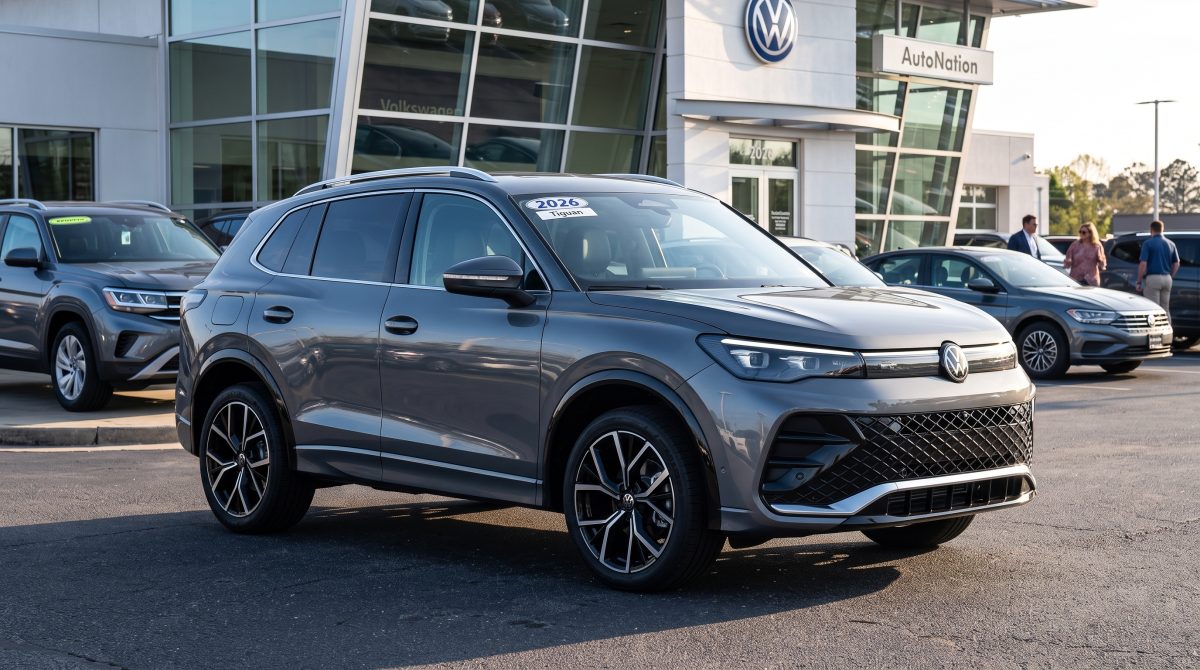
Illustration: AI-generated
When most people think of Volkswagen, they still picture a Beetle or a Jetta. But in 2026, the vehicle carrying VW in America is a compact SUV: the redesigned Tiguan.
Volkswagen sold 52,930 Tiguans in the United States in the first half of 2026, nearly double the 26,901 it sold in the same months of 2025. In the first quarter alone, the Tiguan outsold every other Volkswagen in the country by a wide margin:
| Model | Q1 2026 U.S. sales |
|---|---|
| Tiguan | 23,928 |
| Atlas | 16,361 |
| Jetta | 11,565 |
| Taos | 9,995 |
| Atlas Cross Sport | 8,093 |
That's a big change for a brand that has had a rough stretch in the U.S. Volkswagen's overall sales fell in the first quarter, and VW ended U.S. production of its ID.4 electric SUV after sales collapsed. The Tiguan helped pull the brand back up: VW's U.S. sales rose 2.3% for the first half of the year, with Tiguan deliveries up more than 150% in the second quarter.
So what's driving the surge, and is the Tiguan a smart buy for Columbus families? We dug into the prices, the specs, the safety tests, the recalls and the real cost of ownership.
A third generation, built from the ground up
The Tiguan first arrived in America for the 2009 model year as a sportier, more upscale alternative to the Honda CR-V and Toyota RAV4. It never sold in big numbers early on. A larger second generation arrived for 2018 with an optional third-row seat.
The current third-generation Tiguan launched for the 2025 model year with a new design, more power and much more technology. It also made one big trade-off: the third row is gone, and Volkswagen has said it isn't coming back. Families who need seven seats are now steered to VW's larger Atlas.
Dropping the third row cut about 170 pounds, and the new Tiguan rides on a longer wheelbase, which gives the two remaining rows more room. The base engine also got stronger, going from 184 horsepower to 201.
The U.S. Tiguan is built at Volkswagen's plant in Puebla, Mexico.
The trims and what they cost
The 2026 Tiguan comes in four trims. All prices below include the $1,475 destination charge:
| Trim | Front-wheel drive | All-wheel drive | Highlights |
|---|---|---|---|
| S | $32,280 | $33,780 | 12.9-inch touchscreen, digital gauges, IQ.DRIVE driver assists |
| SE | $35,080 | $36,580 | Leatherette seats, ambient lighting |
| SE R-Line Black | $38,720 | $40,220 | Leather-wrapped steering wheel, unique interior trim, head-up display |
| SEL R-Line Turbo | n/a | $44,560 | 268-hp engine, 15-inch screen, leather, Harman Kardon audio |
Kelley Blue Book's Fair Purchase Price, what shoppers are actually paying, ranges from about $31,000 to $43,100 depending on trim. That means many buyers are paying at or a little below sticker price.
How it compares with the big names
The Tiguan competes in the most crowded part of the car market. Here's how its base price and fuel economy stack up against two of America's best-selling SUVs:
| 2026 VW Tiguan S | 2026 Honda CR-V LX | 2026 Toyota RAV4 LE | |
|---|---|---|---|
| Starting price | $32,280 (with destination) | $32,315 (with destination) | $31,900 (before destination) |
| Powertrain | 2.0L turbo, 201 hp | 1.5L turbo | Hybrid, 226 hp |
| EPA combined mpg (FWD) | 29 | 30 | Up to 43 (Toyota estimate) |
The Tiguan and the CR-V are priced almost exactly the same. The RAV4, now sold only as a hybrid for 2026, is the fuel-economy champion. If saving gas is your top priority, the Tiguan isn't the leader. Where the Tiguan stands out is in its standard tech and its more upscale feel.
Behind the wheel
Most trims use a turbocharged 2.0-liter four-cylinder with 201 horsepower, paired with an eight-speed automatic transmission. Kelley Blue Book's reviewers called it a "punchy turbo-4" that's responsive once you're moving, though it takes "a beat" to get going from a stop.
The top SEL R-Line Turbo gets a stronger 268-horsepower version of the engine and standard all-wheel drive. KBB measured it at under 7 seconds from 0 to 60 mph and said it feels "almost like a tall GTI," a nod to Volkswagen's popular hot hatchback.
The lighter body and independent suspension also help the ride. KBB's reviewers said the Tiguan soaks up bumps well and handles noticeably better than the last generation, which matters on Columbus's rougher stretches of road.
Inside the cabin
Even the $32,280 base Tiguan S comes with:
- A 12.9-inch touchscreen with large, backlit icons
- A 10.25-inch digital gauge display
- Apple CarPlay and Android Auto
- IQ.DRIVE driver-assist technology, including automatic emergency braking with pedestrian detection, adaptive cruise control and lane-keeping assist
That's more standard tech than many buyers expect at this price.
Not everything is a win. KBB listed a "convoluted infotainment interface" and the touch-sensitive climate sliders among the Tiguan's biggest drawbacks. Temperature is adjusted by sliding a finger instead of turning a knob or pressing a button, which takes some getting used to. Try them on your test drive.
Space: The back seat offers 40.2 inches of legroom, generous for the class, and the 60/40 split rear seat reclines. Cargo space is 33.8 cubic feet behind the back seat and 69.8 cubic feet with it folded, according to Volkswagen. KBB called that "on the smaller side" for the class. That's still plenty for groceries, strollers and ball-team gear, but compare it in person if you haul a lot.
Fuel economy
The EPA ratings for the 2026 Tiguan:
| Version | City | Highway | Combined |
|---|---|---|---|
| Tiguan S, front-wheel drive | 26 | 34 | 29 |
| Other front-wheel-drive trims | 25 | 32 | 28 |
| All-wheel drive (4Motion) | 22 | 30 | 25 |
| SEL R-Line Turbo (AWD) | 22 | 29 | 25 |
For most drivers around Columbus, front-wheel drive is enough. It costs $1,500 less and gets better mileage. All-wheel drive makes more sense if you often drive rural or dirt roads, steep driveways, or in heavy rain.
The safety picture
This is the one area where buyers should look closely.
The Insurance Institute for Highway Safety gave the 2026 Tiguan its top rating of Good in the small-overlap front crash test and the updated side test. But it scored Poor in the institute's updated moderate-overlap front test. That test now includes a crash-test dummy in the back seat.
The driver was well protected, earning Good ratings across the board. The problem was in the back: the rear passenger's restraints and how the dummy moved during the crash were rated Poor, and chest protection was rated Marginal.
Headlights earned a Good rating on the SEL R-Line and Acceptable on the S and SE. Because of the rear-seat result, the Tiguan did not earn an IIHS Top Safety Pick award.
What that means for you: if the back seat is mostly for groceries or young children in properly installed car seats, the Tiguan's front-seat protection is strong. If you regularly carry teenagers or adults in back, compare its results with other SUVs on your list at iihs.org.
Recalls
The 2025 Tiguan, the first year of this generation, has had two safety recalls:
- About 50,000 vehicles built between March and August 2025 for body-control-module software that can reset and cause the engine to stall. Dealers update the software for free.
- About 3,100 vehicles for a wiring problem in the front passenger seat that could switch off the passenger airbag when it should be on. Dealers repair the wiring for free.
If you're shopping for a used 2025, or already own one, enter the vehicle identification number (VIN) at nhtsa.gov/recalls to make sure the work was done. Recalls can be issued at any time, so check any 2026 model the same way.
What it really costs to own
The sticker price is only the start. Kelley Blue Book estimates the five-year cost to own a 2026 Tiguan at about $53,200. That includes about $18,200 in depreciation (the value the vehicle loses) and about $35,000 in fuel, insurance, maintenance, repairs and other costs.
Volkswagen helps with the first two years:
- Carefree Maintenance: the first two scheduled services (at 1 year/10,000 miles and 2 years/20,000 miles) are included.
- New-vehicle warranty: 4 years or 50,000 miles.
- Roadside assistance: 3 years or 36,000 miles.
The bottom line
The Tiguan is a strong choice if you want:
- More standard technology than most rivals offer at the same price
- A comfortable, composed ride with a more upscale feel
- A roomy back seat and good highway fuel economy, especially in the front-wheel-drive S
- Two years of included maintenance
Look elsewhere if you need:
- The best possible fuel economy (the hybrid RAV4 is far ahead)
- Top-rated rear-seat crash protection
- A third row (step up to the Atlas)
- Maximum cargo space
Our advice: for most buyers, the best value is the Tiguan S or SE with front-wheel drive. You get the same 201-horsepower engine and full suite of driver assists as the pricier trims for thousands less. Ask the dealer about current incentives and financing offers, which change monthly and are listed at vw.com.
Where to test-drive one in Columbus
AutoNation Volkswagen Columbus, at 3000 North Lake Parkway, is the area's Volkswagen dealer. On your test drive:
- Try the climate sliders and touchscreen while parked and while moving.
- Sit in the back seat and check headroom, legroom and the seat belt fit.
- Load your real stuff, like a stroller or golf bag, to make sure the cargo area works for you.
- Ask for the VIN and check it for open recalls.
Source: Volkswagen of America; EPA (fueleconomy.gov); Insurance Institute for Highway Safety; NHTSA; Kelley Blue Book
News organizations may republish this story with credit. See our guidelines.
Know someone who'd want to read this? Email it to a friend.
Own a Columbus business? 60,000+ page views a month. Ads from $125/month. See ad options Follow Columbus Times on FacebookLocal news, events and people, in your feed every day.Most read this week
- Georgia Spent $165.7 Million on Medicaid Work Requirement Program, but Only 18,527 Were Enrolled After 3 Years
- 8 Columbus Restaurants Got a C on Their Health Inspection in 2026, the Most of Any Year Since 2022. Here's Every One
- The Night Fight on the Chattahoochee: How Columbus Became the Site of What Many Call the Last Battle of the Civil War
- The 10 Best Mexican Restaurants in Columbus, Ga., Ranked by Diners
- Columbus' Top-Rated Barbecue: 12 BBQ Joints Ranked by Google Stars and Health Scores
More stories
 Arts & Culture National Civil War Naval Museum by the Numbers: A 225-Foot Ironclad, 96 Years Underwater and $12 Admission
 Local Eufaula Day Trip From Columbus: 47 Miles, 738 Historic Buildings, 2 House Museums and a 640-Mile Shoreline
 Local West Point Lake by the Numbers: 25,900 Acres, 525 Miles of Shoreline and 4 Corps Campgrounds Upriver From Columbus
 Arts & Culture Westville by the Numbers: 17 Historic Buildings, a 40-Mile Move From Lumpkin and 8 Structures Open Now
Comments
Be respectful. No personal attacks, hate speech, spam or anyone's private information. Every comment is reviewed before it appears. Comment rules
No comments yet. Be the first to share your thoughts.