12 Overlooked Places to Visit in Columbus, GA, Including an 8-Museum Collection and a 7-Acre Art Wonderland

Columbus, Georgia, has no shortage of attractions, but some of its most interesting destinations are easy to overlook. While the Chattahoochee RiverWalk, Uptown restaurants and National Infantry Museum receive plenty of attention, the city and its surrounding communities offer smaller historical sites, unusual museums, outdoor spaces and cultural landmarks that deserve a place on more local itineraries.
Some of these destinations tell stories about the people who helped shape Columbus. Others preserve pieces of the region’s industrial past, celebrate the arts or provide an opportunity to step away from the usual weekend routine. Whether you have lived in Columbus for decades or are planning your first visit, these places offer a different way to experience the city and its surroundings.
1. Heritage Park: A Small Park With a Big Story
Located along West Seventh Street in Uptown Columbus, Heritage Park offers a glimpse into the industrial history that helped transform Columbus into an important manufacturing center. The park features granite pools, outdoor sculptures and interpretive displays that explore the industries, workers and entrepreneurs connected to the city’s development between 1850 and 1910.
The Chattahoochee River played a major role in the growth of Columbus, providing waterpower for mills and supporting industries that shaped the local economy. Heritage Park helps bring that history into focus without requiring visitors to spend hours inside a museum. Its location near downtown restaurants, shops and other historic attractions also makes it an easy addition to a walking tour.
For residents who regularly pass through Uptown but rarely stop to explore its historical features, Heritage Park offers a reminder that the city’s story extends well beyond its modern entertainment district. Admission is free, making it an appealing option for families, history enthusiasts and anyone looking for an inexpensive afternoon activity.
2. The Columbus Collective Museums: An Unexpected Collection Under One Roof
Some museums preserve priceless works of art or major historical artifacts. Others celebrate subjects that people might never expect to find in a museum. The Columbus Collective Museums bring together an assortment of specialized collections that explore everything from classic cars and radio broadcasting to the history of familiar consumer products.
One of the collection’s most unusual attractions is the Lunch Box Museum, which features thousands of lunch boxes, trays and thermoses. The colorful displays offer a nostalgic look at popular television characters, cartoon heroes and childhood favorites from different generations. For visitors who grew up carrying character-themed lunch boxes to school, the collection can be as much a trip down memory lane as a museum visit.
The larger collection also highlights the region’s connections to broadcasting, automobiles and beverage brands. Rather than focusing on a single subject, the museums offer several different experiences in one location, making them particularly appealing to families and visitors who enjoy unusual attractions. It is the kind of destination that can surprise even people who believe they have already explored most of Columbus.
Before visiting, check the museums’ current operating hours and admission information to determine which collections are open.
3. The Bo Bartlett Center: An Art Destination Along the River
Columbus has a cultural scene that extends beyond its theaters and larger museums. The Bo Bartlett Center, located at Columbus State University’s RiverPark campus, provides an opportunity to explore contemporary art in a setting connected to the city’s historic riverfront.
Housed in a former textile warehouse, the center features rotating exhibitions and works connected to artist Bo Bartlett, a Columbus native known for his representational paintings. The space also supports educational programs and opportunities for visitors to engage with art from different perspectives.
The center offers a different experience from a traditional history museum. Instead of concentrating on the city’s industrial past, it encourages visitors to consider how artists interpret people, places and experiences. Its location near other cultural attractions makes it a worthwhile stop for anyone planning an afternoon devoted to Columbus’ arts scene.
For residents who associate the city’s downtown primarily with restaurants, shopping and river activities, the Bo Bartlett Center provides another reason to explore the area’s cultural offerings.
4. Oxbow Meadows Environmental Learning Center: A Different Side of Columbus
Columbus is known for its riverfront, but the region’s natural environment offers plenty of opportunities to explore beyond the busy downtown corridor. Oxbow Meadows Environmental Learning Center provides an educational introduction to the plants, animals and ecosystems found in the Chattahoochee Valley.
The center focuses on environmental education and local wildlife, offering visitors an opportunity to learn more about the natural systems that support the region. Its exhibits and educational activities can make the destination especially appealing to families with children, students and adults interested in conservation.
Unlike a traditional zoo or amusement attraction, Oxbow Meadows emphasizes learning about the environment and the importance of protecting natural habitats. The experience can also help visitors better understand the relationship between the Chattahoochee River, nearby wetlands and the wildlife that depends on them.
For anyone looking for an outing that combines nature and education, Oxbow Meadows offers an alternative to shopping centers, movie theaters and more familiar tourist attractions. Check its current schedule before planning a visit, as programs and access may vary.
5. The Columbus Botanical Garden: A Quiet Place to Recharge
Not every worthwhile destination needs a packed schedule or a long list of activities. Sometimes, the appeal of a place is simply the opportunity to slow down, walk through a garden and spend time outdoors.
The Columbus Botanical Garden offers visitors a chance to experience cultivated landscapes, seasonal plantings and natural surroundings away from the busier parts of the city. Walking paths and garden areas provide a setting for photography, quiet reflection and leisurely exploration, while educational programs can introduce visitors to gardening and horticulture.
The garden is particularly appealing to people who enjoy outdoor activities but prefer a relaxed pace to strenuous hiking or organized recreation. It can also be an option for couples seeking a quieter outing or residents looking for somewhere different to spend part of a weekend.
Because gardens change throughout the year, the experience can vary by season. Visitors may encounter different blooms, foliage and garden displays depending on when they arrive. Checking the garden’s current hours and event calendar before leaving home is a good idea.
6. Heritage and History Along the Chattahoochee RiverWalk
The Chattahoochee RiverWalk is hardly an unknown attraction, but many people experience only a small portion of it. The riverfront path stretches for miles, connecting scenic views with access to downtown, historical locations and recreational areas.
The overlooked opportunity is to explore beyond a familiar entrance or favorite section. Different portions of the RiverWalk offer different perspectives on the river, the city’s built environment and the relationship between Columbus and the Alabama community across the water. Visitors can take a leisurely walk, ride a bicycle or simply find a place to enjoy the scenery.
The river itself is central to understanding Columbus. Long before the city became a modern center for business, entertainment and outdoor recreation, the Chattahoochee helped determine where industry developed and how the community grew. Walking along its banks offers a tangible connection to that history.
The RiverWalk also makes it easy to combine several activities into one outing. Visitors can explore the waterfront, stop for a meal in Uptown and visit nearby historical or cultural attractions without having to plan a separate trip for each destination.
7. The Gertrude ‘Ma’ Rainey House and Blues Museum: Columbus’ Musical Legacy
Columbus has a meaningful place in American music history, and one of its most important cultural figures is Gertrude “Ma” Rainey. Born in Columbus in 1886, Rainey became one of the pioneering performers of classic blues and earned recognition as the “Mother of the Blues.”
Her influence extended beyond her own recordings and performances. Rainey helped shape a musical tradition that influenced generations of blues singers and contributed to the development of American popular music. Her story also connects Columbus to the broader history of Black entertainment, touring performers and the cultural life of the early 20th century.
The Ma Rainey House and Blues Museum is associated with preserving and interpreting that legacy. For visitors interested in music, Black history or the city’s cultural heritage, it represents an important destination beyond the better-known downtown attractions.
Important visitor note: The museum has been listed as undergoing renovations. Check its current status before making plans to visit. Even when the house is not open to the public, Rainey’s connection to Columbus remains an important part of the city’s story and a reason to explore its broader Black heritage.
8. Pasaquan: One of the Region’s Most Unusual Art Destinations
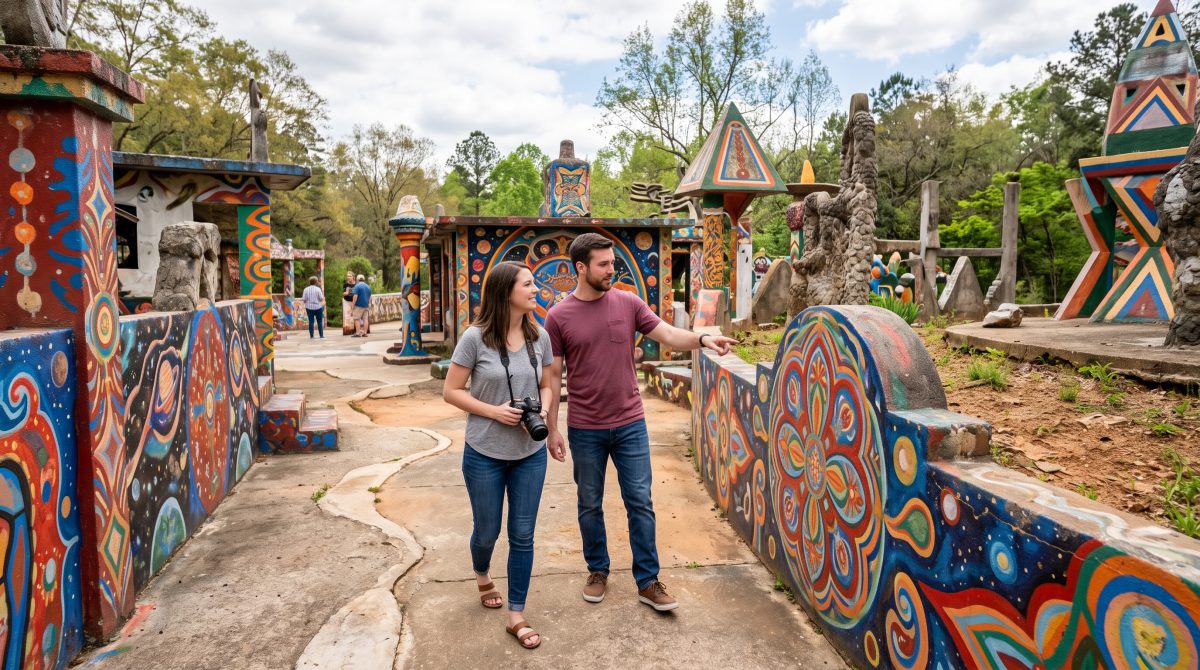
For visitors willing to venture outside Columbus, Pasaquan offers an experience unlike a conventional art gallery or museum. Located near Buena Vista, Georgia, the unusual art environment was created by Eddie Owens Martin, who became known as St. EOM.
Martin transformed his property into a vivid landscape of painted walls, sculptural elements and distinctive structures decorated with intricate designs. The result is an immersive art environment that combines bold colors, unusual imagery and an intensely personal artistic vision.
Pasaquan is listed on the National Register of Historic Places and is recognized as an important example of visionary art. Its distinctive appearance makes it a compelling destination for photographers, art enthusiasts and travelers who enjoy places that are difficult to compare with anything else.
Although Pasaquan requires a drive outside Columbus, it can make a memorable addition to a regional day trip. Visitors should verify opening days, admission requirements and access arrangements before traveling, particularly if they are planning a visit around a specific date.
For people who have already visited Columbus’ major museums, Pasaquan offers a chance to discover a different side of the area’s cultural landscape.
9. The Bradley Olmsted Garden: A Green Escape at the Columbus Museum
The Columbus Museum is one of the region’s established cultural attractions, but visitors who concentrate entirely on its indoor exhibitions may miss the appeal of its outdoor surroundings.
The Bradley Olmsted Garden provides a landscaped setting where visitors can enjoy greenery, winding paths and seasonal plant life. It offers a different atmosphere from the museum galleries and provides an opportunity to combine an art and history visit with time outdoors.
Gardens can also reveal a different side of a city than its commercial districts. Instead of focusing on buildings, traffic or entertainment, they invite visitors to pay attention to landscaping, plants and the changing seasons. That makes the garden a worthwhile stop for anyone looking to build a more relaxed afternoon around the museum.
Combining the outdoor space with the museum’s exhibitions can create a well-rounded visit without requiring an elaborate itinerary. Check the museum’s current visitor information to confirm access and any restrictions affecting the garden.
10. Lakebottom Park: A Local Favorite Worth Exploring
Some overlooked destinations are not hidden at all. They are simply so familiar to local residents that people stop thinking of them as places worth visiting.
Lakebottom Park, also known as Weracoba Park, is a well-established green space in Midtown Columbus. The park provides an outdoor setting for walking, running, recreation and spending time with family. Its paths and open areas make it a useful destination for residents who want to get outside without traveling far from the city.
Parks can be particularly appealing because they offer flexibility. A visitor can spend 20 minutes walking, meet a friend for an outdoor conversation or make the park part of a longer day exploring nearby neighborhoods. Unlike attractions that require tickets or advance reservations, a public park can often fit into a schedule with little planning.
For newcomers to Columbus, Lakebottom Park offers a glimpse of the city’s everyday community life. For longtime residents, it is a reminder that some of the most accessible outdoor experiences are right in familiar neighborhoods.
11. The Springer Opera House: A Historic Venue With More Than a Famous Name
The Springer Opera House is one of Columbus’ best-known cultural landmarks, but its significance can be easy to overlook if visitors think of it only as a place to attend a performance.
Founded in 1871, the Springer has a long history as a performing arts venue and is designated the State Theatre of Georgia. Its productions connect the city to a broader theatrical tradition while giving residents access to live performances close to home.
A visit built around a show offers more than an evening of entertainment. It provides an opportunity to experience a historic building and support the local arts community. Depending on the schedule, visitors may find plays, musicals and other productions that appeal to different interests.
The Springer also helps illustrate how Columbus has maintained a cultural identity that goes beyond its military history and industrial past. For anyone planning a weekend in the city, checking the theater’s performance calendar can reveal an experience that might otherwise be missed.
12. The Soft Drink Heritage Trail: A Quirky Way to Explore Local History
Columbus’ history is not limited to military institutions, textile mills and historic homes. The city also has connections to the development and marketing of familiar consumer products, including soft drinks.
The Soft Drink Heritage Trail offers a way to explore that part of the region’s commercial history. Along with the collections at the Columbus Collective Museums, it provides context for understanding how beverage brands and other businesses became part of the area’s identity.
The appeal is partly historical and partly nostalgic. Familiar products can open a window into changing advertising styles, manufacturing practices and everyday life across different generations. They also demonstrate how regional businesses can leave a lasting mark on popular culture.
For visitors who enjoy unusual roadside attractions or stories about the companies behind familiar products, the trail offers an alternative to a conventional sightseeing itinerary. Check the latest visitor information to identify accessible stops and determine how best to explore the route.
Discovering Columbus Beyond the Usual Attractions
Columbus has plenty of major attractions, but the city’s character becomes clearer when visitors explore places that receive less attention in everyday conversations about things to do. A small historical park can explain how the city developed, an unusual museum can preserve a forgotten corner of popular culture, and a garden can provide a quiet break from a busy week.
These destinations also demonstrate that exploring Columbus does not have to mean spending a great deal of money or planning an elaborate vacation. Several options offer free or relatively inexpensive experiences, while others can be combined into a weekend itinerary that includes food, outdoor recreation and cultural activities.
Residents can approach the list as a challenge to revisit their own city. Choose a destination you have never explored, bring a friend or family member and spend a few hours learning something new about the community. Visitors can use the same approach to build an itinerary that extends beyond the most familiar attractions.
The best discoveries are not always the places with the biggest signs or the most visitors. Sometimes they are the destinations that reveal a story, preserve a piece of local history or provide a fresh perspective on a city people think they already know.
News organizations may republish this story with credit. See our guidelines.
Know someone who'd want to read this? Email it to a friend.
Own a Columbus business? Reach 40,000+ monthly readers. Ads from $125/month. See ad optionsPlan your weekend with Columbus Times
Get This Weekend in Columbus every Thursday: the best local events, free things to do and family fun, plus each evening's local news. Free, and you can unsubscribe anytime.
More stories
 Arts & Culture From Washington Heights to war and back: Salvador 'Matalian' Mendez
 Arts & Culture Tyler Perry's Netflix drama 'Doing Life' Drops Oct. 2
 Arts & Culture Seven Black Artists and Scholars Named 2026 MacArthur Fellows
 Arts & Culture Netflix Adds Legend Andrés Cantor to Broadcast Team for FIFA Women’s World Cup 2027