Ma Rainey's Columbus Story: 10 Milestones in the Life of the 'Mother of the Blues'
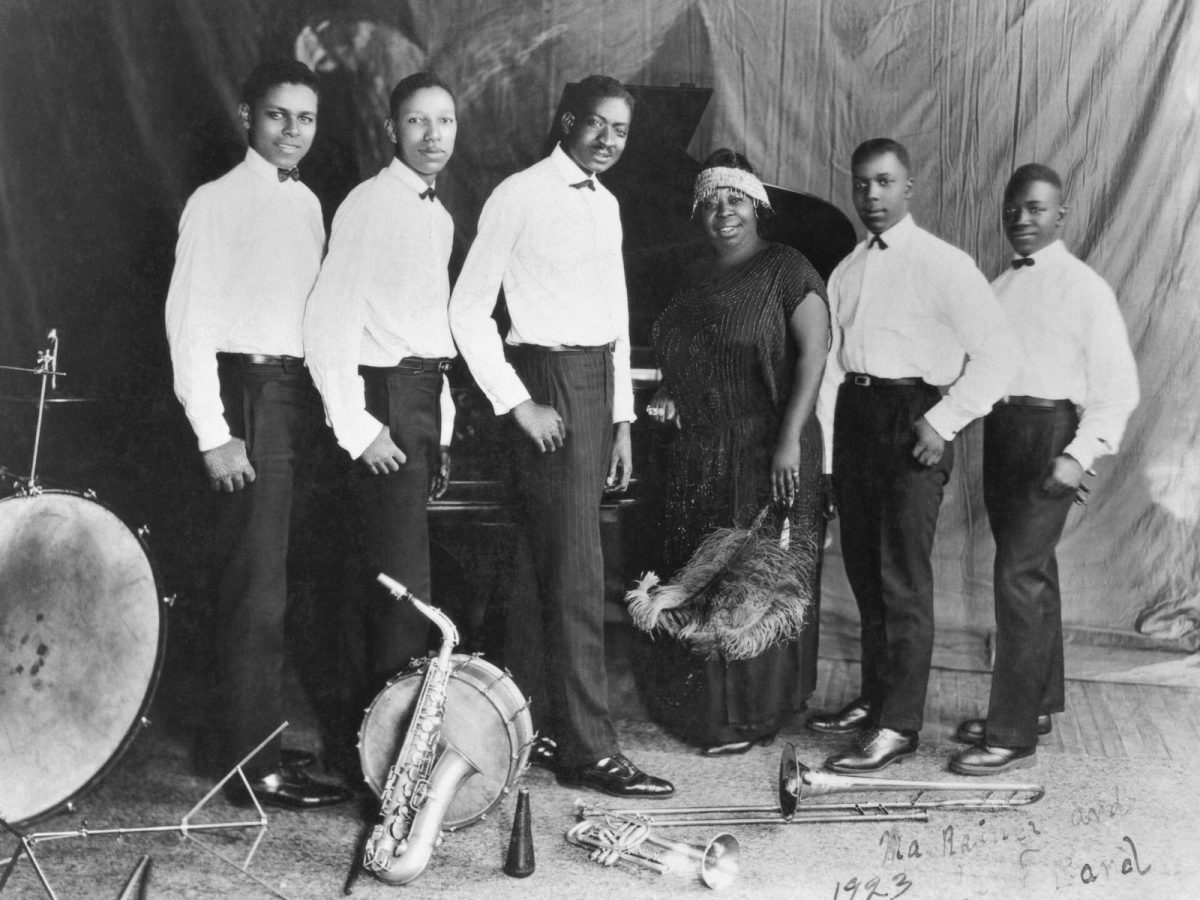
Ma Rainey in 1923, the year Paramount Records producer J. Mayo Williams discovered her. Photo: unknown photographer, 1923 / Wikimedia Commons (public domain)
Columbus, Ga. - Ma Rainey, the legendary singer known as the "Mother of the Blues," began performing as a young girl in Columbus before recording 94 songs and becoming one of the most influential names in blues history. Her connection to Columbus continued throughout her life, from her early performances to her return in 1935 and her death in the city in 1939.
Born Gertrude Pridgett, Rainey helped bring the blues to audiences through traveling shows, theater performances and recordings. Her legacy remains visible in Columbus through a museum, a music festival and a school bearing her name.
Here are 10 milestones that tell her story and explain why Columbus remains an important part of her history.
1. Her birthplace and birth date remain disputed
Ma Rainey's early life includes a historical question that researchers have not fully resolved.
Most sources list her birthday as April 26, 1886. The 1910 census identifies Columbus, Georgia, as her birthplace, while the 1900 census suggests she was born in September 1882 in Alabama. Researchers have pointed to Russell County, Alabama, as a possible birthplace.
Her parents were Thomas and Ella (Allen) Pridgett, both from Alabama. She had at least two brothers and a sister named Malissa Pridgett Nix.
Although the exact date and place of her birth are debated, Columbus played a major role in her childhood, career and later life.
2. She began performing in Columbus as a teenager
Rainey's entertainment career began when she was about 12 to 14 years old.
Her first known performance took place at a talent show in Columbus. That appearance marked the beginning of a career that would eventually take her onto stages and into recording studios.
She was also a member of First African Baptist Church in Columbus.
These early connections help explain why Columbus holds such an important place in Rainey's story, regardless of the unresolved questions about her birthplace.
3. Her marriage gave her the name Ma Rainey
In February 1904, Gertrude Pridgett married William "Pa" Rainey.
Her professional nickname, "Ma," was a play on her husband's nickname, "Pa." Together, they became a performing couple.
Beginning in 1906, the Raineys toured with the Rabbit's Foot Company. By 1914, they were appearing under the memorable billing "Rainey and Rainey, Assassinators of the Blues."
The couple separated in 1916, but she kept performing as Ma Rainey. She also had an adopted son, Danny Rainey.
4. She encountered the blues around 1902
Rainey said she first heard the blues around 1902, years before the recording career that would make her famous.
She built a career performing the music and became associated with another important blues singer, Bessie Smith. The two met sometime between about 1912 and 1916, although the exact date is uncertain.
By the time recording companies became interested in her work, Rainey already had years of experience entertaining live audiences.
5. Her recording career began in 1923
Rainey entered a new phase of her career when Paramount Records producer J. Mayo Williams discovered her in 1923.
Her first recording sessions took place that December in Chicago. She recorded eight songs during those sessions, including "Bad Luck Blues," "Bo-Weevil Blues" and "Moonshine Blues."
Between December 1923 and October 1928, Rainey recorded 94 titles. Some accounts describe her output as more than 100 recordings, reflecting differences in how the recordings are counted.
| Recording milestone | Date or number |
|---|---|
| Discovered by J. Mayo Williams | 1923 |
| First recording sessions | December 1923 |
| Songs recorded in first sessions | 8 |
| Recorded titles | 94 |
| Recording career covered | 1923-1928 |
| "See See Rider Blues" | 1924 |
| "Ma Rainey's Black Bottom" | December 1927 |
| "Prove It on Me" | 1928 |
6. She performed with major musicians and earned $350 a week
Rainey worked with musicians who would become important names in American music.
She recorded with Louis Armstrong in 1924. Thomas Dorsey served as her bandleader from 1924 to 1926.
Beginning in April 1924, she toured the Theater Owners Booking Association circuit, known as TOBA. Her work on that circuit continued until about 1928, and she earned $350 a week during that period.
Her billings included "Mother of the Blues," "Songbird of the South," "Gold-Neck Woman of the Blues" and "Paramount Wildcat."
Rainey was also a songwriter, writing at least a third of the songs she performed.
7. Her recordings became part of blues history
Several songs became closely associated with Rainey during her recording career: "See See Rider Blues," recorded in 1924; "Soon This Morning" in 1927; "Ma Rainey's Black Bottom" in December 1927; and "Prove It on Me" in 1928.
In 2004, "See See Rider Blues" was recognized by both the Grammy Hall of Fame and the National Recording Registry, 80 years after she recorded it.
8. She returned to Columbus and operated three theaters
In 1935, Rainey returned to Columbus. She lived in a house she had built for her mother and went into the theater business.
Rainey operated three theaters: the Liberty in Columbus and the Lyric and Airdrome in Rome, Ga.
She lived in the Columbus house from 1935 until 1939. Rainey died of a heart attack in Columbus on Dec. 22, 1939. She was 53.
9. Columbus preserved her legacy through a museum, festival and school
In 2007, the house where she lived during her final years became a small museum.
Columbus hosted the first annual Ma Rainey International Blues Festival in April 2016 near her former home.
In 2017, Rainey-McCullers School of the Arts opened. The Columbus school honors both Rainey and author Carson McCullers.
10. Her influence continued through major honors, books and films
Rainey received many honors after her death.
| Year | Recognition |
|---|---|
| 1983 | Blues Hall of Fame |
| 1990 | Rock and Roll Hall of Fame |
| 1993 | Georgia Women of Achievement |
| 1994 | 29-cent U.S. postage stamp |
| 2004 | Grammy Hall of Fame and National Recording Registry ("See See Rider Blues") |
| 2023 | Grammy Lifetime Achievement Award |
Her story also inspired writers and filmmakers.
Sterling A. Brown wrote the poem "Ma Rainey" in 1932. Sandra Lieb published "Mother of the Blues: A Study of Ma Rainey" in 1981, the first full book about Rainey.
August Wilson's 1982 play "Ma Rainey's Black Bottom" later became a 2020 film starring Viola Davis, who was nominated for the Academy Award for best actress.
Mo'Nique played Rainey in the 2015 television film "Bessie," earning an Emmy nomination.
Rainey also inspired Alice Walker as she developed characters for "The Color Purple."
What Ma Rainey's story means for Columbus
Rainey's life connects Columbus to a much larger chapter of American music history.
Her earliest performances, her membership at First African Baptist Church, her later theater business and her final years all form part of the city's cultural history. The museum, festival and arts school keep that connection visible for new generations.
For local residents, Ma Rainey's story is both a musical legacy and a hometown history worth remembering.
How we did this
This article uses the biographical information, recording history, career milestones and honors documented in Wikipedia's "Ma Rainey" entry, reviewed Oct. 23, 2026.
It notes the uncertainty around Rainey's birth date and birthplace, when she first met Bessie Smith and differing counts of her recordings. Museum hours, admission and the street address are left out because they were not verified.
Source: Wikipedia, "Ma Rainey" (reviewed Oct. 23, 2026)

News organizations may republish this story with credit. See our guidelines.
Know someone who'd want to read this? Email it to a friend.
Own a Columbus business? 60,000+ page views a month. Ads from $125/month. See ad optionsPlan your weekend with Columbus Times
Get This Weekend in Columbus every Thursday: the best local events, free things to do and family fun, plus each evening's local news. Free, and you can unsubscribe anytime.
Most read this week
- Georgia Spent $165.7 Million on Medicaid Work Requirement Program, but Only 18,527 Were Enrolled After 3 Years
- 8 Columbus Restaurants Got a C on Their Health Inspection in 2026, the Most of Any Year Since 2022. Here's Every One
- The Night Fight on the Chattahoochee: How Columbus Became the Site of What Many Call the Last Battle of the Civil War
- Georgia's 3 Amendments: Which Will Pass, Who's Against Them, and What Happens If They Fail
- The 10 Best Mexican Restaurants in Columbus, Ga., Ranked by Diners
More stories
 Arts & Culture From Washington Heights to war and back: Salvador 'Matalian' Mendez
 Local Callaway Gardens by the Numbers: 2,500 Acres, 1,000 Butterflies and a 10-Mile Bike Trail Near Columbus
 Food 18 Columbus Coffee Shops Ranked by Google Stars and Health Inspection Scores
 Food 12 Columbus Seafood and Fish Restaurants Ranked by Google Stars, With Latest Health Scores
Comments
Be respectful. No personal attacks, hate speech, spam or anyone's private information. Every comment is reviewed before it appears. Comment rules
No comments yet. Be the first to share your thoughts.