The Battle of Columbus: The April 16, 1865, Night Fight a Week After Lee Surrendered
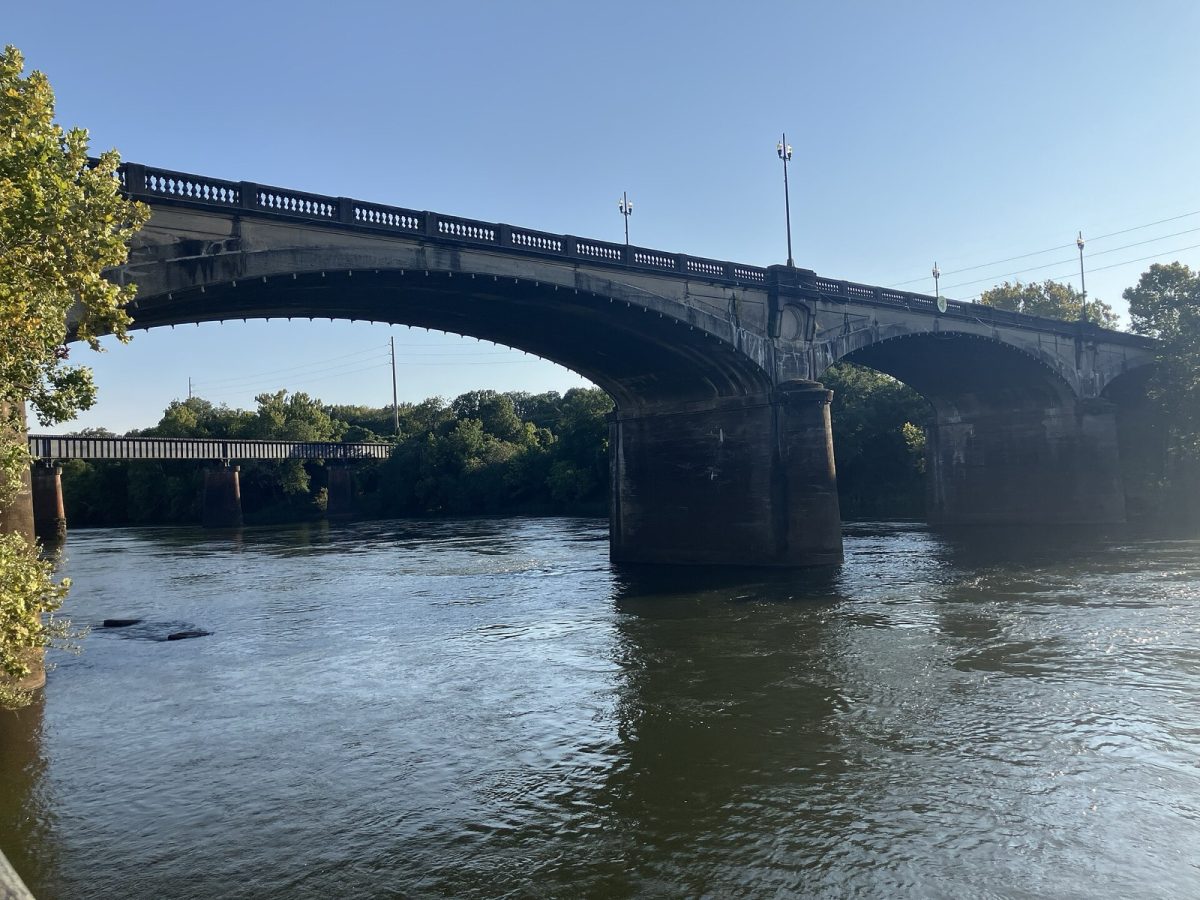
The Dillingham Street Bridge over the Chattahoochee River in Columbus, near the 1865 battle's bridge crossings (file photo). Photo: Mccunicano / Wikimedia Commons (CC BY-SA 4.0)
COLUMBUS, Ga. - On April 16, 1865, Union cavalry attacked Confederate defenses across the Chattahoochee River in a battle that continued into the night, exactly one week after Confederate Gen. Robert E. Lee surrendered at Appomattox. The Battle of Columbus, also called the Battle of Girard, took place on Easter Sunday in Columbus, Georgia, and Russell County, Alabama. Union commander James H. Wilson did not know about Lee's April 9 surrender when his cavalry reached the city.
The fighting became one of the final significant battles of the Civil War and brought destruction to Columbus, a major Confederate manufacturing center. Confederate forces defended the Alabama side of the river, attempting to prevent Union soldiers from crossing two covered bridges into Georgia. The battle ended with Union troops capturing Columbus and destroying much of the city's wartime industrial infrastructure.
April 9, 1865: Lee Surrenders, but Wilson Keeps Moving
Confederate Gen. Robert E. Lee surrendered to Union Gen. Ulysses S. Grant at Appomattox on April 9, 1865. Wilson's cavalry, conducting a campaign through Alabama and Georgia known as Wilson's Raid, had not received news of the surrender. According to Wikipedia, Wilson also had not learned that President Abraham Lincoln had been shot April 14 and died April 15.
Wilson commanded a large mounted force equipped with repeating rifles. The New Georgia Encyclopedia describes his force at Columbus as 13,500 cavalrymen, while its account of Wilson's Raid lists 13,480 horsemen for the larger campaign. Wikipedia gives approximately 13,000 men in its narrative but estimates about 9,000 engaged in the battle.
Columbus remained an important Confederate industrial center despite the approaching end of the war. Its facilities included the Columbus Arsenal, Confederate Naval Iron Works, a Navy Yard, clothing and wagon factories, and what the New Georgia Encyclopedia identifies as the South's largest shoe factory. Those operations made the city a significant target during Wilson's advance.
April 16, 1865: Confederate Defenses in Girard
Confederate Maj. Gen. Howell Cobb organized the defense of Columbus on the west side of the Chattahoochee River, in Girard, Alabama, now Phenix City. According to Wikipedia, Cobb's approximately 3,500 defenders included Georgia and Alabama home-guard units and civilian volunteers. Many of the defenders had never experienced combat, according to the New Georgia Encyclopedia.
Cobb's forces established trenches, breastworks and earthen forts in Girard to protect two covered bridges connecting Alabama with Columbus. The bridges had been designed by Horace King, a builder born into slavery in 1807 who later earned his freedom and served as an Alabama legislator, according to Wikipedia. Holding those crossings was central to the Confederate defense because they provided access across the river into Columbus.
The Confederate force included Georgia Reserves and military units associated with the District of Georgia and District of Alabama. The 1938 Battle of Columbus monument also identifies cavalry from the Department of Alabama, Mississippi and East Louisiana, along with the 20th Louisiana Infantry. These units faced Union cavalry that had already advanced through Alabama as part of Wilson's campaign.
1:30 to 2 P.M.: The Battle Begins
According to Wikipedia, Union forces opened the battle in Girard between 1:30 and 2 p.m. Brig. Gen. Emory Upton's division attacked Confederate positions near the lower bridge around 2 p.m. The attack failed to secure the crossing, and Upton's men fell back.
The initial fighting left Confederate forces holding the approaches to Columbus. Union commanders continued their operations against the defensive positions on the Alabama side of the Chattahoochee. The decisive assault would come later that evening at the upper bridge.
Wilson's force included cavalry units from Iowa, Ohio and Missouri, supported by artillery. The 1938 monument identifies the 3rd Iowa, 4th Iowa, 10th Missouri, 1st Ohio and 5th Iowa Cavalry, as well as Battery I of the 4th U.S. Artillery. These units formed part of the Union force involved in the operation against Columbus.
8 P.M.: Union Cavalry Charges the Upper Bridge
The decisive Union assault began at approximately 8 p.m. on April 16. Gen. Edward F. Winslow's brigade, including the 3rd and 4th Iowa Cavalry, led the attack toward the upper bridge. According to Wikipedia, Col. Frederick Benteen received orders to lead the charge.
The fighting carried Union and Confederate soldiers onto the bridge in darkness. Confederate Gen. Robert Toombs commanded two cannon positioned at the Georgia end of the crossing but withheld fire because soldiers from both armies had become mixed together. The Union advance ultimately broke through the Confederate defense and carried the fighting into Columbus.
Col. C. A. L. Lamar died during the fighting on Mott's Green, according to Wikipedia. Wilson established his headquarters at the Mott House on the Columbus end of the bridge. The New Georgia Encyclopedia identifies R. L. Mott's home along the riverbank just north of Fourteenth Street.
April 16: Casualties and Prisoners
Historical accounts differ on the number of soldiers killed, wounded and captured during the battle. The New Georgia Encyclopedia reports that Wilson lost 25 men, that Union troops killed nine Confederates and that approximately 1,500 Confederate soldiers became prisoners. Wikipedia reports 151 Confederate casualties and approximately 1,600 prisoners, while the 1938 monument gives a lower prisoner count of 1,200.
Union casualty figures also differ depending on the records used. According to Wikipedia, Wilson initially reported 25 losses, but hospital records indicate 60 casualties, including 10 soldiers killed in battle and eight who later died of their wounds. Wikipedia also reports that many Union dead were buried at Andersonville National Cemetery, while many Confederate casualties were buried at Linwood Cemetery in Columbus.
Taken together, the sources place Confederate prisoners between approximately 1,200 and 1,600. Reported Union losses range from Wilson's initial figure of 25 to the 60 indicated by hospital records. The differences reflect the varying figures preserved in historical accounts and memorial inscriptions.
April 17, 1865: Columbus Industries Burn
On April 17, Wilson ordered the destruction of facilities that could support the Confederate war effort. Union troops burned industrial operations, including the naval facility and other manufacturing sites in Columbus and Girard. The New Georgia Encyclopedia reports that Wilson's soldiers torched the city's industries the day after the battle.
Among the losses was the CSS Jackson, also called the CSS Muscogee, an unfinished 225-foot Confederate ironclad built at the city's Navy Yard. Union forces set the vessel on fire and left it drifting downriver, where it burned for nearly two weeks before sinking approximately 30 miles south of Columbus. The ship's remains were recovered in 1961.
Confederate forces also scuttled the CSS Chattahoochee. A historical marker erected in 1983 states that Union troops burned Columbus' cotton warehouses and industries but spared its grist mills. The New Georgia Encyclopedia reports that a mob looted Broad Street stores as Union troops departed for Macon.
April 18 to December 1865: The Campaign Moves On
The Union cavalry's advance units left Columbus on April 18, continuing the campaign into Georgia. Wilson's men subsequently occupied Macon and captured Confederate President Jefferson Davis at Irwinville on May 10. The campaign also resulted in the capture of Henry Wirz.
Confederate Gen. Joseph E. Johnston's army surrendered at Bennett Place, North Carolina, on April 26, ten days after the Battle of Columbus. That surrender came after the fighting along the Chattahoochee had ended. Military operations and captures therefore continued beyond both Lee's surrender and the fall of Columbus.
Columbus began restoring industrial production within months of the destruction. According to the New Georgia Encyclopedia, local foundries were operating again by June 1865. Textile mills resumed production by December of that year.
1935 to 1983: The Debate Over the Last Battle
Columbus became associated with a disputed historical claim that its April 16 battle was the Civil War's final engagement. The New Georgia Encyclopedia reports that local boosters gradually qualified the description until it became "The Last Land Battle of the War Between the States East of the Mississippi." According to Wikipedia, Georgia's legislature passed a resolution in 1935 identifying Columbus as the war's last battle.
Other historical accounts point to the Battle of Palmito Ranch in Texas, fought May 13, 1865, as the final battle. Wikipedia also reports that Upton described the fighting at Columbus as the "closing conflict of the war." A 1983 riverfront historical marker calls the fall of Columbus the "last significant battle of the war."
The distinctions explain why different sources describe the battle differently. Columbus was captured after Lee surrendered but before other Confederate forces formally capitulated. The April 16 engagement remains important to local history regardless of which final-battle designation historians use.
Today: Where Columbus Preserves the History
The Battle of Columbus monument stands at 14th Street and Broadway, near the northern end of Broadway. The Historical Society of Columbus erected it in October 1938 under an act of Congress approved April 10, 1936. Its inscription documents the participating military units and the nighttime Federal attack.
Another Battle of Columbus marker, erected in 1983, stands on Front Avenue near West 6th Street, between railroad tracks and the Riverwalk. It identifies the riverfront defenses and notes that cannon from the CSS Chattahoochee were mounted there to protect the line. Together, the markers preserve separate accounts of the battle and its consequences.
The National Civil War Naval Museum at Port Columbus also preserves material connected to the city's wartime naval operations. The 40,000-square-foot museum opened in 2001 along the Chattahoochee, with remains of the CSS Jackson as its centerpiece. Remains of the CSS Chattahoochee, recovered in the early 1960s, are also associated with the museum's historical collection.
## How we did this Columbus Times compiled this history from the New Georgia Encyclopedia's accounts of Columbus, Wilson's Raid and Port Columbus, along with the Historical Marker Database's transcriptions of the 1938 Battle of Columbus monument and the 1983 riverfront marker. We also used Wikipedia for specific battle details, including troop movements, commanders, timing, bridge history and casualty estimates, identifying Wikipedia where those details came only from that source. The sources were reviewed Oct. 28, 2026, and conflicting prisoner and casualty figures are presented as ranges rather than as a single established count.
Source: New Georgia Encyclopedia; Historical Marker Database (Columbus markers); Wikipedia (Battle of Columbus)
News organizations may republish this story with credit. See our guidelines.
Know someone who'd want to read this? Email it to a friend.
Own a Columbus business? 60,000+ page views a month. Ads from $125/month. See ad options Follow Columbus Times on FacebookLocal news, events and people, in your feed every day.Most read this week
- Georgia Spent $165.7 Million on Medicaid Work Requirement Program, but Only 18,527 Were Enrolled After 3 Years
- 8 Columbus Restaurants Got a C on Their Health Inspection in 2026, the Most of Any Year Since 2022. Here's Every One
- The Night Fight on the Chattahoochee: How Columbus Became the Site of What Many Call the Last Battle of the Civil War
- The 10 Best Mexican Restaurants in Columbus, Ga., Ranked by Diners
- Columbus' Top-Rated Barbecue: 12 BBQ Joints Ranked by Google Stars and Health Scores
More stories
 Local How to Get Public Records in Columbus: 6 Steps, the 3-Business-Day Rule and Where to Send Requests
 Local Fort Benning's 250-Foot Jump Towers: How World's Fair Parachute Towers Trained America's First Paratroopers
 Local Crime Dropped Nationwide in 2025: 8 Questions About What the New Numbers Mean for Columbus
 Local How to Report a Problem to the City of Columbus: 6 Steps to Using Columbus 311
Comments
Be respectful. No personal attacks, hate speech, spam or anyone's private information. Every comment is reviewed before it appears. Comment rules
No comments yet. Be the first to share your thoughts.