Columbus Iron Works: How an 1853 Foundry Made Confederate Guns, Survived 2 Fires and Became a Trade Center
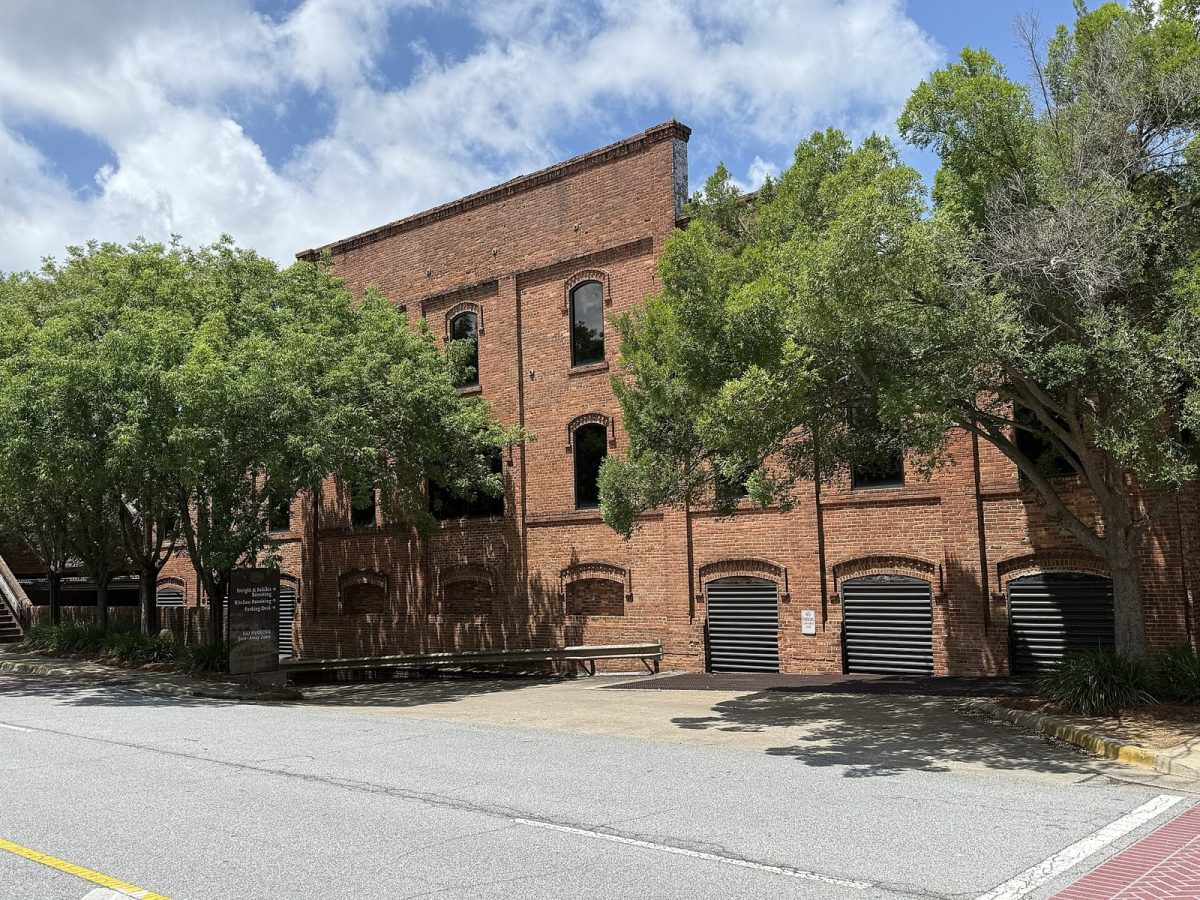
The restored Columbus Iron Works buildings, now the Columbus Iron Works Convention and Trade Center (file photo). Photo: Farragutful / Wikimedia Commons (CC BY-SA 4.0)
COLUMBUS, Ga. - The Columbus Iron Works began in 1853 as a foundry serving a growing industrial city, became a major Confederate military manufacturer during the Civil War and survived two devastating fires before its historic building became the Columbus GA Convention & Trade Center. Its history stretches from steamboat repairs and weapons production to commercial ice machinery, Char-Broil outdoor cookers and the meetings and events that now fill the former industrial site. Here is how the Iron Works changed over more than 170 years, chapter by chapter.
The brick building along the Chattahoochee River remains one of downtown Columbus' most recognizable historic structures. Its industrial history spans more than a century of manufacturing, rebuilding and adapting to changing markets. In 1969, the federal government recognized that legacy by adding the Columbus Iron Works to the National Register of Historic Places.
1828-1853: From Steamboats to a Growing Foundry
The story begins along the Chattahoochee River, where packet boats started docking at the old steamboat landing in 1828. That landing stood behind what became the Columbus Iron Works' main plant. River transportation helped define the industrial setting in which the foundry developed.
The Columbus Iron Foundry originally handled general repairs, water wheels, steamboat repairs and brass and iron castings. In 1853, the Columbus Iron Works Company emerged from that earlier business, and the building identified in the National Register nomination was constructed. The company formally incorporated in 1857.
The building's most distinctive architectural feature was its graduated red brick facade. Five rounded windows occupied its middle section, each topped with an unusual protruding brick design, while four brick half-columns divided the frontage into three sections. The 1969 National Register nomination described its appearance as typical of early 19th-century warehouses but emphasized that its historical importance outweighed its architectural distinction.
1861-1865: A Confederate Military Manufacturing Center
During the Civil War, Columbus became a major Confederate industrial center, and the Iron Works played a central role. The National Register nomination described the operation as having become the "arsenal of the Confederacy" under the name Confederate Naval Iron Works. Maj. James H. Warner oversaw an operation that manufactured guns, gunboats and other military equipment.
The New Georgia Encyclopedia identifies several Confederate government operations in Columbus, including the Columbus Arsenal, Confederate Naval Iron Works and Navy Yard. The Iron Works produced steam engines for ships, while the Navy Yard built the ironclad Muscogee. These operations formed part of a larger industrial system that supplied the Confederacy during the war.
Columbus already had a substantial manufacturing base before the fighting began. By the 1850s, five water-powered mills produced textiles, flour and lumber, and the city's factories tripled their output during the war. The National Register nomination states that Columbus produced more for the Confederacy than any other city except Richmond, Virginia.
1863: A Cannon Made From a Sunken Steamboat
In 1863, the Iron Works manufactured a breech-loading cannon that the National Register nomination described as possibly one of the first of its kind. Workers made the weapon from the wheel shaft of the sunken river steamer John C. Calhoun. The cannon demonstrated how the plant's earlier connection to river transportation continued into its wartime manufacturing.
When the nomination was prepared in 1969, the cannon remained mounted inside the Iron Works building. Its documented presence connected the structure to the military production that had taken place there more than a century earlier. The nomination treated the weapon as an important example of the company's Confederate-era manufacturing history.
1865: Destruction, Ruins and a Rapid Rebuilding
Union Gen. James H. Wilson's raiders reached Columbus on Easter Sunday, April 16, 1865, according to the New Georgia Encyclopedia. His force included 13,500 cavalrymen armed with repeating rifles, and Wilson's troops burned the city's industries. The remains of the ironclad Muscogee's hull eventually became the centerpiece of the museum now called the National Civil War Naval Museum.
The National Register nomination gives April 19, 1865, as the date fire destroyed the entire Columbus Iron Works plant. Two gunboats under construction were also destroyed. The nomination's date differs from the April 16 arrival of Wilson's forces described by the New Georgia Encyclopedia, so the two dates refer to the events as recorded in their respective sources.
The destruction did not end the company's operations. One month later, stockholders met, took possession of the ruins and started rebuilding the facilities. By September 1865, the Columbus Iron Works was operating again, only months after the destruction of its wartime plant.
1870-1872: A New Business in Commercial Ice
After the war, Columbus Iron Works expanded into machinery for industries beyond its earlier manufacturing work. In early 1870, the company began developing ice-making machinery. By June 1872, it had built and placed the Columbus Ice Manufacturing Company into operation.
The 1969 National Register nomination described that operation as "the first commercial ice plant in the country." That distinction is a claim made in the historic nomination rather than an independently established national first. The nomination also reported that many additional ice plants followed in later years, reflecting another direction for the company's manufacturing business.
1902-1903: A Second Fire and Another Recovery
On April 10, 1902, fire again destroyed the Columbus Iron Works plant. The company faced another major rebuilding effort after decades of postwar manufacturing. As it had done in 1865, the business resumed operations rather than ending its industrial work.
By 1903, the plant was operating again after being rebuilt and enlarged. The recovery marked the second time the company returned from a destructive fire. Its continued operation helped carry the original 19th-century enterprise into the next century.
1925-1948: New Ownership, Stoves and Char-Broil
A significant ownership change came in 1925, when W.C. Bradley and associates purchased control of the Columbus Iron Works Company. Two years later, the company began producing stoves and heaters to keep its foundry occupied. Those products reflected another shift in the types of goods manufactured by the long-running business.
Around 1948, Columbus Iron Works began making a small number of outdoor cookers. According to the National Register nomination, the cookers proved extremely successful, and the Char-Broil product line grew into one of the company's major businesses. The product connected a company established for industrial repairs and castings with a different market for manufactured goods.
1955-1965: Expansion and a Move to Modern Facilities
The company continued expanding its manufacturing operations during the 1950s. In 1955, it added a drop forging department, which the National Register nomination described as one of the few commercial sources of drop forgings in the Southeast. Columbus Iron Works also operated a supply division that distributed electrical, plumbing and mill supplies throughout Columbus and a broad surrounding area.
In 1964, construction began on a larger, modernized and mechanized foundry. Foundry operations started at the new Bradley Industrial Park location off Hamilton Road in April 1965. Three months later, in July 1965, Columbus Iron Works merged with the W.C. Bradley Co. and became one of its divisions.
1969: National Recognition for an Industrial Landmark
On July 29, 1969, the Columbus Iron Works was listed on the National Register of Historic Places under reference number 69000046. The nomination, prepared by Janice P. Biggers of the Historic Columbus Foundation, documented the company's industrial contributions and the building's architectural characteristics. At that time, the company employed approximately 650 people and had maintained operations since 1853.
The nomination identified the historic building at 901 Front Avenue. It emphasized the structure's place in the city's manufacturing and military history, including the original foundry, wartime operations and later industrial products. Federal recognition established the building's documented historical significance before its transition to a different use.
Today: From Iron Works to Convention & Trade Center
The former industrial property now serves as the Columbus GA Convention & Trade Center, which lists its current address as 801 Front Avenue. According to the center's website, the Iron Works operated at the site for more than a century before the company moved to new facilities outside town in the early 1970s. The building subsequently underwent a historic restoration that retained original features.
The center now offers more than 182,000 square feet of floor space, 17 meeting rooms and more than 20 individual event spaces. Its facilities include a kitchen capable of serving up to 4,000 meals at a time and a multilevel parking garage accommodating 426 vehicles. The center reports that it can host more than 600 events annually.
Original brick walls, huge timbers and exposed ceilings remain part of the building's appearance. Those features preserve visible connections to the manufacturing complex that occupied the riverfront for generations. The Columbus Iron Works' modern role as a convention and trade center represents another chapter in a building that once produced everything from steamboat components to military weapons and outdoor cookers.
How we did this
This history feature draws on the National Register of Historic Places nomination for the Columbus Iron Works, prepared by Janice P. Biggers of the Historic Columbus Foundation and listed July 29, 1969, under reference number 69000046. Additional historical information comes from the New Georgia Encyclopedia's "Columbus" article, while details about the restored building and current facilities come from the Columbus GA Convention & Trade Center website at columbustradecenter.com. All three sources were reviewed Oct. 27, 2026, and historical claims, including the commercial ice plant's reported national distinction, are attributed to their documented sources.
Source: National Register nomination (1969); New Georgia Encyclopedia; Columbus GA Convention & Trade Center
News organizations may republish this story with credit. See our guidelines.
Know someone who'd want to read this? Email it to a friend.
Own a Columbus business? 60,000+ page views a month. Ads from $125/month. See ad options Follow Columbus Times on FacebookLocal news, events and people, in your feed every day.Most read this week
- Georgia Spent $165.7 Million on Medicaid Work Requirement Program, but Only 18,527 Were Enrolled After 3 Years
- 8 Columbus Restaurants Got a C on Their Health Inspection in 2026, the Most of Any Year Since 2022. Here's Every One
- The Night Fight on the Chattahoochee: How Columbus Became the Site of What Many Call the Last Battle of the Civil War
- The 10 Best Mexican Restaurants in Columbus, Ga., Ranked by Diners
- Columbus' Top-Rated Barbecue: 12 BBQ Joints Ranked by Google Stars and Health Scores
More stories
 Local Fort Benning's 250-Foot Jump Towers: How World's Fair Parachute Towers Trained America's First Paratroopers
 Local Crime Dropped Nationwide in 2025: 8 Questions About What the New Numbers Mean for Columbus
 Local How to Report a Problem to the City of Columbus: 6 Steps to Using Columbus 311
 Local Georgia's Hands-Free Driving Law: 12 Questions About $50 to $150 Fines, Points and What You Can Still Do
Comments
Be respectful. No personal attacks, hate speech, spam or anyone's private information. Every comment is reviewed before it appears. Comment rules
No comments yet. Be the first to share your thoughts.