Phenix City Keeps Its 1 Opportunity Zone, Auburn Gets 4 and Muscogee County Falls From 16 to 5 Under a Federal Map That Starts Jan. 1, 2027
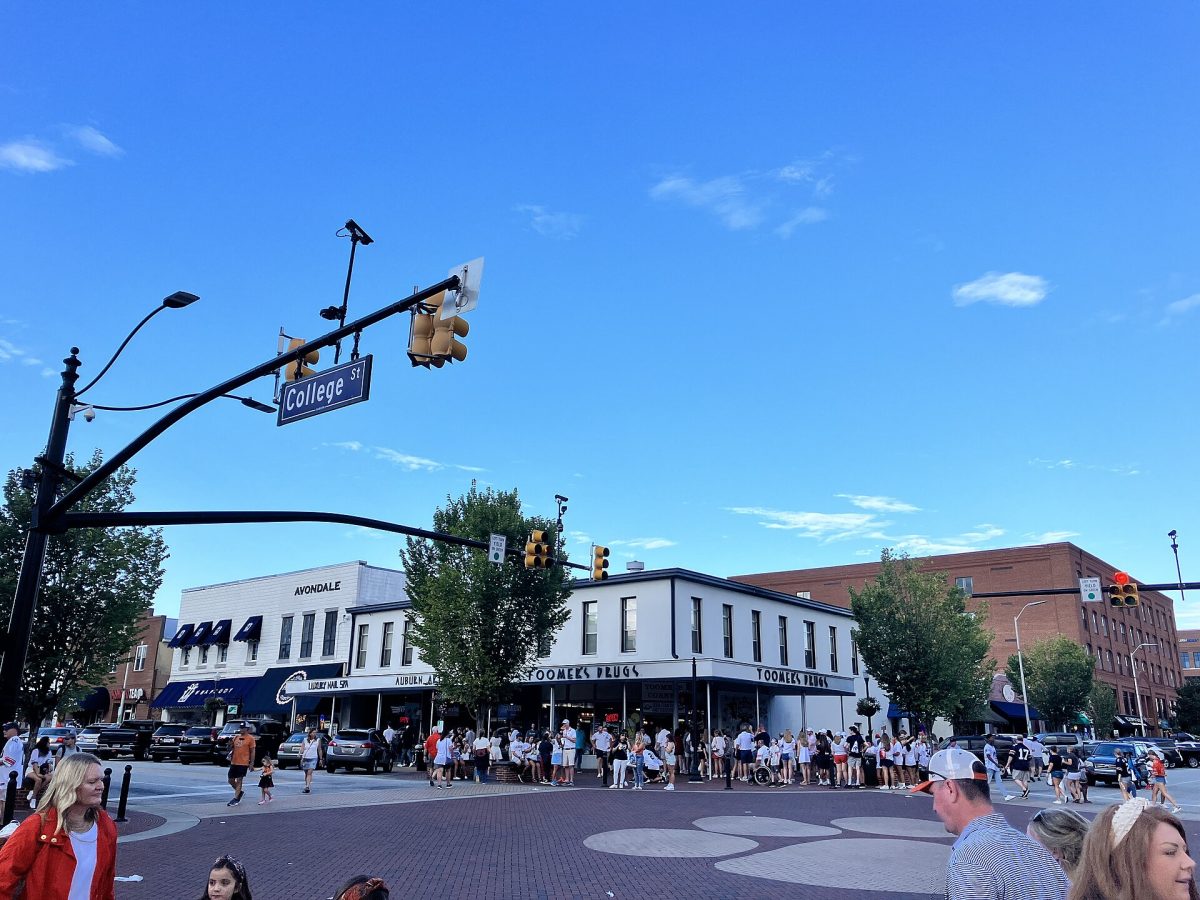
Toomer's Corner in Auburn, Ala., photographed in September 2023. Photo: Tyler Lahti / Wikimedia Commons (CC BY-SA 4.0)
PHENIX CITY, Ala. - Phenix City will keep its one federal Opportunity Zone for another decade, and Auburn will have four, under a new national map that takes effect Jan. 1, 2027. Gov. Kay Ivey announced Nov. 6 that the U.S. Treasury Department and the Internal Revenue Service approved all 141 census tracts Alabama nominated. Across the river, the same federal list cuts Muscogee County from 16 designated tracts to five.
The Treasury Department announced the designations for all 50 states, the territories and the District of Columbia on Nov. 5. In total, 6,576 census tracts were designated, 2,594 of them in rural areas, and each keeps the label for 10 years, the department said. Treasury said the program has drawn more than $110 billion in private investment since Congress created it in the Tax Cuts and Jobs Act of 2017.
What Alabama got
Ivey's office said the 141 Alabama zones include 65 rural and 76 non-rural census tracts spread across 66 counties. The Alabama Department of Economic and Community Affairs submitted the nominations in September after gathering local recommendations in the counties, according to the governor's news release. The release did not list the tracts by county, but it linked to the Treasury spreadsheet that does.
"This updated version of the Opportunity Zones Program will provide greater possibility for private investment within 141 census tracts in Alabama," Ivey said in the release. ADECA Director Kenneth Boswell said the agency would keep supporting the governor's effort to grow the economy in those areas. Neither statement named a specific project in east Alabama.
The local tracts
The Treasury spreadsheet lists one Russell County tract, Census Tract 302, as a non-rural zone. Census Bureau geographic files show the tract covers 0.59 square miles of land, with its center point inside the Phenix City limits. The same tract was Russell County's only Opportunity Zone on the list the federal Community Development Financial Institutions Fund published in December 2018, so the county's count does not change.
Lee County has four tracts on the new list, numbered 402.02, 404.01, 409.03 and 409.04, all classified as non-rural. The Census Bureau's geocoder places the center point of each one inside the Auburn city limits, and together they cover about 4.3 square miles of land. Lee County had seven tracts on the 2018 list, though tract boundaries were redrawn after the 2020 census, so the old and new numbers do not line up one for one.
The Georgia side of the Chattahoochee Valley shrinks more. Muscogee County had 16 tracts on the 2018 list and has five on the new one: tracts 3, 14, 16, 25 and 107.04. Troup County goes from four tracts to two, both classified as rural, and Harris County had none before and has none now.
| County | Zones on 2018 list | Zones starting Jan. 1, 2027 |
|---|---|---|
| Russell, Ala. | 1 | 1 |
| Lee, Ala. | 7 | 4 |
| Chambers, Ala. | 1 | 1 |
| Muscogee, Ga. | 16 | 5 |
| Troup, Ga. | 4 | 2 |
| Harris, Ga. | 0 | 0 |
| Alabama statewide | 158 | 141 |
| Georgia statewide | 260 | 238 |
The statewide totals come from counting rows in the two federal lists. Georgia's 238 new zones include 118 rural tracts, according to the Treasury spreadsheet. Chambers County, just north of Lee County, has one tract on each list, and the new one is classified as rural.
How the tax break works
An Opportunity Zone is not a grant, and the designation does not send public money to a neighborhood. The IRS describes it as an economic development tool that lets people invest in distressed areas and temporarily defer tax on eligible gains when they put the money into a Qualified Opportunity Fund. The goal, the agency says, is to spur growth and job creation in low-income communities while giving investors a tax benefit.
The rules for the new round are tighter than the first. A May 5 explainer from Fed Communities, a project of the 12 Federal Reserve Banks, said governors could nominate up to 25% of a state's low-income census tracts. A tract qualifies if its median family income is at or below 70% of the area median, down from 80% in the first round, or if its poverty rate is at least 20% and its median income is at or below 125% of the area median.
For investors, the Fed Communities explainer said, the new version offers a rolling five-year deferral that starts on the date of the investment, beginning Jan. 1, 2027. The standard reward after five years is a 10% step-up in basis, and rural investments get 30%. Because the Russell and Lee county tracts are classified as non-rural, the standard terms would apply there, while the rural terms would apply in the Troup and Chambers county tracts.
What happens next
Treasury said the new designations become effective Jan. 1, 2027, and last 10 years, with a process to redraw the map every decade. Fed Communities reported that tax benefits under the original program expire Dec. 31, 2026, and that the original tract designations expire Dec. 31, 2028. The IRS lists a notice titled Transitional Guidance on Qualified Opportunity Zones, Notice 2026-40, on its Opportunity Zones page.
Residents can look up any address on the interactive map on the CDFI Fund's Opportunity Zones page at cdfifund.gov, which also posts the full spreadsheet. Whether a zone produces a project depends on private investors, and neither Treasury nor the governor's office announced one for Phenix City or Auburn. The Fed Communities explainer said Treasury must now publish annual reports on where the money goes and what it does for the communities involved.
Source: Office of Gov. Kay Ivey news release (Nov. 6, 2026); U.S. Department of the Treasury news release (Nov. 5, 2026); Treasury and CDFI Fund list of Qualified Opportunity Zones effective Jan. 1, 2027; CDFI Fund list of designated Qualified Opportunity Zones (Dec. 14, 2018); Fed Communities, Federal Reserve System (May 5, 2026); IRS Opportunity Zones page (updated Oct. 20, 2026); U.S. Census Bureau TIGERweb and geocoder (accessed Nov. 9, 2026)

News organizations may republish this story with credit. See our guidelines.
Know someone who'd want to read this? Email it to a friend.
Plan your weekend with Columbus Times
Get This Weekend in Columbus every Thursday: the best local events, free things to do and family fun, plus each evening's local news. Free, and you can unsubscribe anytime.
By signing up you agree to get the Columbus Times email newsletter. Unsubscribe anytime with one click.

Comments
Be respectful. No personal attacks, hate speech, spam or anyone's private information. Every comment is reviewed before it appears. Comment rules
No comments yet. Be the first to share your thoughts.