10 Things Columbus, Georgia, Has That Many Cities Its Size Don’t
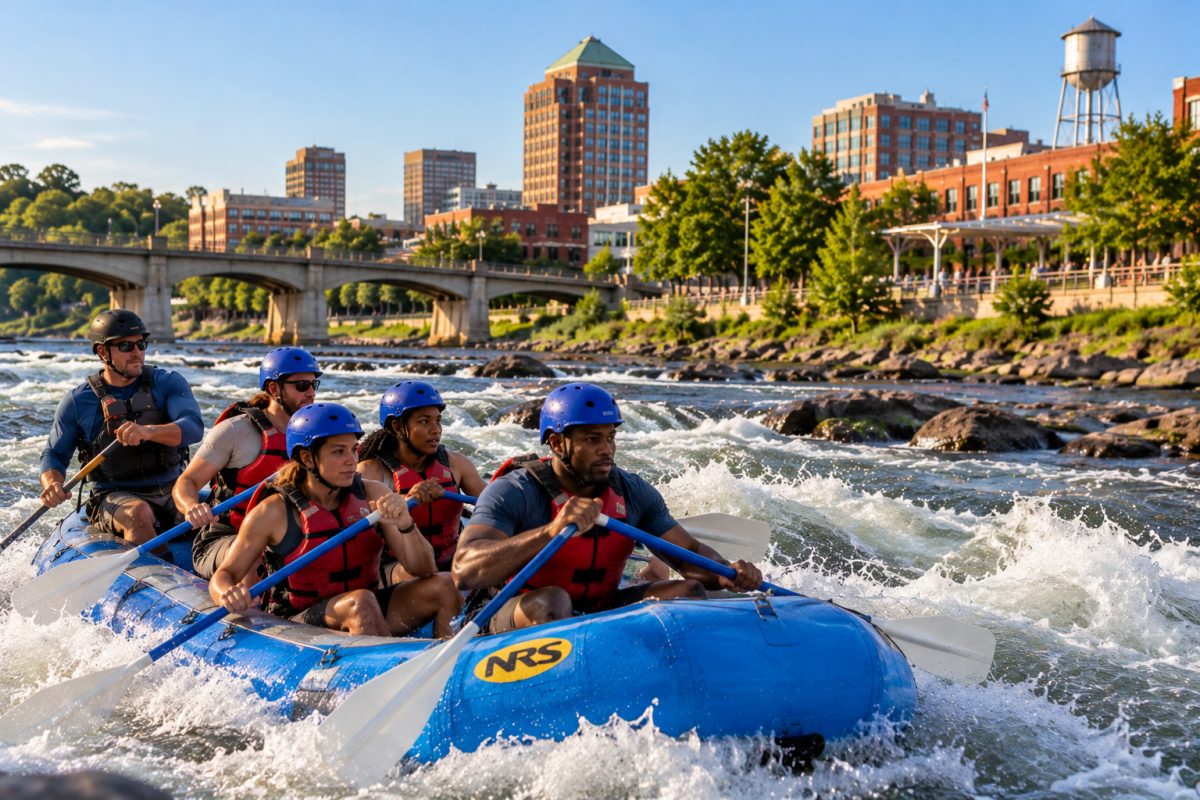
Columbus, Georgia, may not have the population of Atlanta, Charlotte or Nashville, but it offers several attractions, institutions and amenities that many considerably larger cities would be proud to call their own.
With approximately 200,000 residents, Columbus has developed an unusual combination of outdoor recreation, military history, performing arts, museums and corporate investment. Visitors can experience whitewater rafting in the middle of downtown, explore nationally significant military collections, attend performances at a historic opera house and walk along miles of scenic riverfront.
Some of these attractions have been part of the community for more than 150 years. Others are the result of major investments made within the past two decades.
Together, they demonstrate that a city’s attractions and cultural opportunities are not necessarily determined by its population. Here are 10 things Columbus has that many cities its size don’t.
1. The World’s Longest Urban Whitewater Rafting Course
One of Columbus’ most remarkable attractions runs directly through the center of the city. The Chattahoochee River is home to a 2.5-mile urban whitewater course, widely recognized as the longest of its kind in the world. The course stretches between Uptown Columbus and Phenix City, Alabama, offering rapids ranging from relatively gentle conditions to challenging Class IV and V whitewater during high-water releases.
The attraction opened in 2013 following a major river restoration project that included removing two historic dams. Today, visitors can experience guided rafting, kayaking and other water activities within walking distance of restaurants, hotels and entertainment venues.
The course has also hosted international paddling competitions, bringing athletes and visitors to the region. While other cities have rivers running through their downtowns, relatively few offer this level of whitewater recreation in an urban setting. (Visit Columbus, GA)
2. A 22-Mile RiverWalk Connecting Nature, History and Downtown
Columbus residents have access to approximately 22 miles of paved trails along the Chattahoochee River, creating one of the city’s most recognizable recreational amenities. The RiverWalk stretches from the northern portions of the city through Uptown and south toward Oxbow Meadows and the Victory Drive area.
Unlike a typical neighborhood walking trail, the RiverWalk connects multiple parts of Columbus while passing historic buildings, parks, public art, restaurants and scenic river overlooks. Residents use it for walking, running, bicycling, fishing and spending time outdoors without traveling far from home.
The RiverWalk also connects with the broader recreational trail network, including the approximately 12-mile Fall Line Trace. Together, these routes provide opportunities for outdoor exercise and transportation that are not always available in cities of comparable size. (Visit Columbus, GA)
3. One of America’s Premier Military Museums
The National Infantry Museum and Soldier Center is among Columbus’ most significant institutions. Located near Fort Benning, the museum occupies approximately 190,000 square feet on a 200-acre property and preserves the history of American infantry soldiers from the Revolutionary War through modern military operations.
The museum’s collection includes more than 70,000 artifacts, historical exhibits and immersive displays documenting the experiences of American soldiers. Since opening in June 2009, it has welcomed more than 3.8 million visitors, including military families, veterans, students and tourists from around the world.
The facility’s proximity to Fort Benning, home to major Army training institutions, gives Columbus a strong connection to military history. General admission is free, with a suggested donation, making a nationally recognized museum accessible to local families and visitors alike. (National Infantry Museum)
4. A National Museum Dedicated to Civil War Naval History
Columbus is hundreds of miles from the Atlantic Ocean, yet it is home to one of the nation’s most unusual maritime museums. The National Civil War Naval Museum at Port Columbus, located on Victory Drive, preserves the history of naval warfare during the American Civil War.
The museum’s most notable exhibit is the surviving remains of the CSS Jackson, a Confederate ironclad constructed in Columbus and destroyed near the end of the war. Visitors can also explore naval artifacts, reconstructed ship sections, historic flags and exhibits explaining the experiences of sailors who served on both sides of the conflict.
The museum occupies approximately 40,000 square feet and maintains an extensive collection of Civil War naval materials. Its presence reflects Columbus’ historical role as an industrial and manufacturing center during the nineteenth century, when the Chattahoochee River supported both commerce and military production. (NCWNM)
5. A Historic Opera House That Has Entertained Audiences Since 1871
The Springer Opera House is one of Columbus’ most recognizable historic buildings and a cultural institution with a history stretching back more than 150 years. Opened on February 21, 1871, the theater attracted prominent performers during an era when Columbus was developing into an important Southern commercial center.
Today, the Springer is officially recognized as the State Theatre of Georgia and continues presenting plays, musicals, educational programs and live entertainment. The building has undergone major renovations that preserved its architectural character while modernizing its performance facilities.
For Columbus residents, the Springer represents something increasingly difficult to find: a historic nineteenth-century theater that remains an active part of community life. Its continued operation connects generations of audiences while contributing to Uptown Columbus’ cultural identity. (Springer Theatre)
6. A Performing Arts Center and an Orchestra With Roots in 1855
Columbus has a performing arts infrastructure that extends beyond what many people might expect from a city its size. The RiverCenter for the Performing Arts includes the approximately 2,000-seat Bill Heard Theatre, the 430-seat Legacy Hall and additional spaces used for concerts, theater productions and educational performances.
The facility is also home to the Schwob School of Music at Columbus State University and serves as a performance venue for the Columbus Symphony Orchestra. Founded in 1855, the orchestra has a history dating back more than 170 years, making it one of the country’s oldest orchestral institutions.
The combination of a major performing arts center, a university music program and a long-established orchestra gives Columbus access to cultural programming that some larger communities lack. These institutions also create opportunities for students, professional musicians and local audiences to participate in the performing arts. (Columbus State University)
7. A Space Science Center With NASA Artifacts and a Planetarium
Columbus residents do not have to travel to Atlanta or Florida to explore exhibits about space exploration. The Coca-Cola Space Science Center, operated by Columbus State University, offers interactive exhibits, educational programs and opportunities to learn about astronomy and space technology.
The facility includes the Omnisphere Planetarium, flight simulators and a collection of NASA Space Shuttle artifacts described by the local tourism organization as the largest in Georgia. Visitors can participate in educational activities designed to demonstrate the science and technology involved in space missions.
For local families and schools, the center provides access to science education beyond the traditional classroom. Its location near the Chattahoochee River also places it within reach of other Uptown attractions, making it possible to combine a science museum visit with a broader day of recreation and sightseeing. (Visit Columbus, GA)
8. A Major Art and History Museum With Free Admission
The Columbus Museum, now branded as COMU, is another cultural institution that distinguishes the city from many similarly sized communities. Its collections focus on American art and regional history, with particular attention to the people, communities and cultural traditions of the Chattahoochee Valley.
In 2024, the museum completed a $30 million renovation that transformed exhibition galleries, visitor facilities and public spaces. The project modernized the institution while preserving its longstanding role as a center for arts education and historical preservation.
The museum also offers exhibitions, educational workshops and community programming, with free general admission helping make its collections accessible. For residents, it provides an opportunity to experience significant works of art and explore local history without the expense typically associated with major museum visits. (COMU • The Columbus Museum)
9. The World Headquarters of a Major Insurance Company
Columbus is not simply a military and tourism center. It is also home to major financial services operations, including the world headquarters of Aflac, one of the country’s most recognizable insurance companies.
Aflac maintains its corporate headquarters on Wynnton Road and operates additional facilities throughout Columbus. The city’s corporate history also includes Synovus and TSYS, the payment technology company that combined with Global Payments in 2019.
These businesses have helped establish Columbus as a center for insurance, banking and financial technology. They support professional employment opportunities in areas including technology, accounting, operations, customer service and corporate management.
Many communities of similar population size depend heavily on regional employers or businesses headquartered elsewhere. Columbus has developed companies with national and international reach, giving its economy a corporate presence that extends far beyond the Chattahoochee Valley. (Aflac Careers)
10. A Zipline That Lets Visitors Cross State Lines
Columbus offers another unusual outdoor attraction: the opportunity to travel from one state to another on a zipline. The Blue Heron Adventure zipline crosses the Chattahoochee River between Georgia and Alabama, allowing participants to experience the river and surrounding city from above.
The attraction features a dual zipline spanning approximately 1,200 feet, giving visitors an aerial view of the same river that supports Columbus’ whitewater rafting operations. Additional adventure activities provide opportunities for visitors to explore the area from different perspectives.
The experience is particularly unusual because the Chattahoochee River forms the state boundary. Participants can cross from Georgia into Alabama as part of a recreational activity, something not commonly available in American cities.
Combined with whitewater rafting and the RiverWalk, the zipline helps create a concentration of outdoor attractions close to Columbus’ downtown restaurants, hotels and entertainment venues. (Visit Columbus, GA)
Why These Attractions Matter to Columbus
The importance of these institutions extends beyond tourism. Museums, recreational trails, theaters and public attractions contribute to quality of life, while major employers create opportunities for residents to build careers without leaving the region.
The Chattahoochee River is a particularly strong example of how long-term investment can transform a community. Once primarily associated with industrial production and transportation, portions of the riverfront now support recreation, public gathering spaces and tourism-related businesses.
Columbus has also preserved institutions that might have disappeared in other communities. The Springer Opera House, Columbus Symphony Orchestra and historic museums demonstrate how cultural investment can extend across generations.
At the same time, these attractions require continued maintenance, financial support and public participation. Their long-term success depends on remaining accessible, attracting visitors and providing meaningful benefits to local residents.
A City With More to Offer Than Its Population Suggests
Columbus faces many of the same challenges as other midsized American cities, including infrastructure needs, housing affordability, public safety concerns and economic development. Those issues remain important, but they do not tell the entire story of the community.
Few places offer the same combination of a nationally recognized whitewater course, an extensive riverfront trail system, major military museums, a historic opera house, a professional orchestra and the headquarters of a nationally recognized insurance company.
For longtime residents, some of these attractions may be so familiar that their significance is easy to overlook. For people considering a visit or a move to the Chattahoochee Valley, they help demonstrate what makes Columbus distinctive.
Columbus may not be one of America’s largest cities, but it has institutions, attractions and recreational opportunities that give it an identity extending well beyond its population.
Source: Visit Columbus Georgia; Columbus Consolidated Government; National Infantry Museum and Soldier Center; National Civil War Naval Museum; Springer Opera
News organizations may republish this story with credit. See our guidelines.
Know someone who'd want to read this? Email it to a friend.
Own a Columbus business? 60,000+ page views a month. Ads from $125/month. See ad optionsPlan your weekend with Columbus Times
Get This Weekend in Columbus every Thursday: the best local events, free things to do and family fun, plus each evening's local news. Free, and you can unsubscribe anytime.
Most read this week
- Georgia's 3 Constitutional Amendments on the Nov. 3 Ballot, Explained in Plain English
- Georgia's 3 Amendments: Which Will Pass, Who's Against Them, and What Happens If They Fail
- Early Voting in Columbus Starts Oct. 13: Every Site, the Hours, and What's on Your Ballot
- USDA Awards $3.3 Billion Loan for Georgia Power Plant to Meet Rising Electricity Demand
- Which of Georgia's 3 Amendments Is Most Likely to Pass? What the Votes, Supporters and History Say
More stories
 Business The 7 Columbus-Area Industries That Could Create the Most Jobs by 2031
 Local Columbus Electric Bills Average $239 a Month. How Does That Compare With Other Georgia Cities?
 Local How Much Do Columbus Police Officers, Firefighters and Teachers Really Earn?
 Real Estate Columbus’ 10 Most Expensive Neighborhoods: Home Values Reach $600,000 and Beyond
Comments
Be respectful. No personal attacks, hate speech, spam or anyone's private information. Every comment is reviewed before it appears. Comment rules
No comments yet. Be the first to share your thoughts.