7 Georgia Benefits Many Eligible Residents May Be Missing
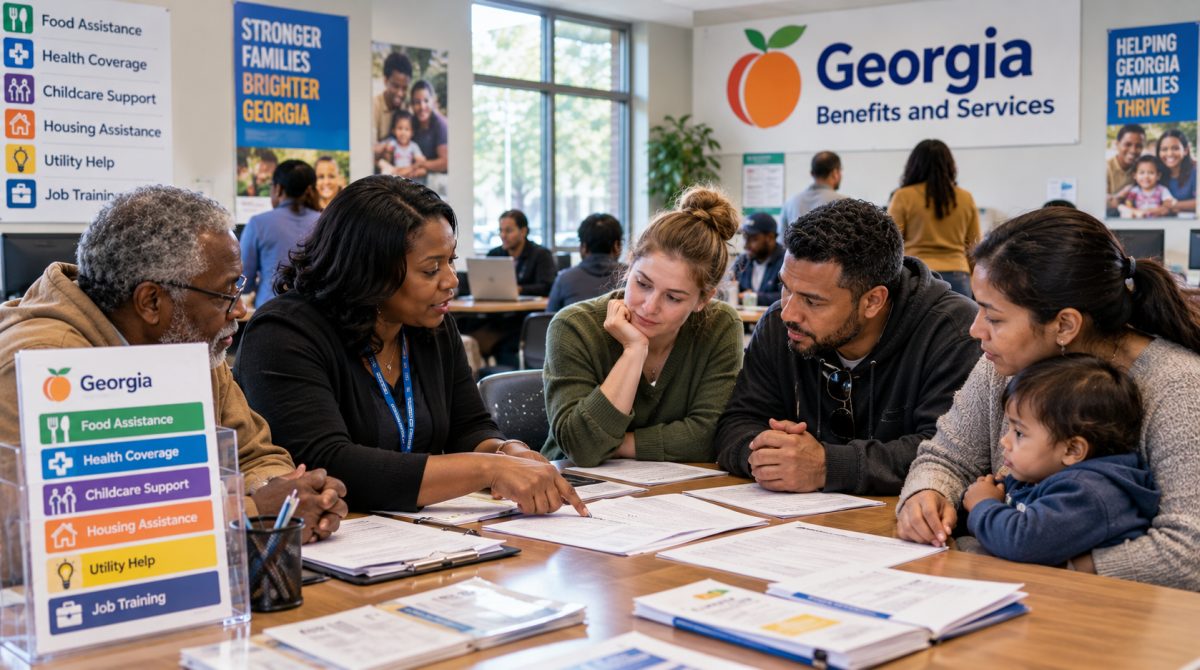
With grocery prices, housing expenses, utility bills and healthcare costs putting pressure on household budgets, Georgia residents may be overlooking programs that could help them save money.
From monthly grocery assistance to reduced property taxes, Georgia offers several benefit programs designed to help eligible residents manage essential expenses. Some provide direct financial assistance, while others reduce costs through health insurance, childcare subsidies or tax exemptions.
These programs are not limited to people who are unemployed. Depending on income, family size, age and other circumstances, working parents, senior citizens, homeowners and families with children may also qualify.
For residents of Columbus, Muscogee County and surrounding communities, knowing where to apply could make a meaningful difference in the household budget.
Here are seven Georgia benefit programs worth checking in 2026, including eligibility information and official application resources.
1. SNAP: Monthly Assistance to Help Pay for Groceries
The Supplemental Nutrition Assistance Program, commonly known as SNAP or food stamps, helps qualifying households purchase groceries.
Benefits are generally deposited monthly onto an Electronic Benefit Transfer (EBT) card that works similarly to a debit card at participating grocery stores and other authorized retailers.
Eligible households can use SNAP benefits to purchase many everyday food items, including meat, poultry, fish, dairy products, fruits, vegetables, bread and cereal.
One common misconception is that a person must be unemployed to receive SNAP. In reality, working households may qualify if they meet the program’s financial and other eligibility requirements.
Eligibility depends on factors such as household size, countable income, allowable deductions and resources where applicable. Some adults are also subject to work requirements.
For a Columbus household struggling with rising grocery bills, SNAP could help free up money for rent, transportation, utilities and other necessary expenses.
Who may qualify: Low-income individuals, working families, older adults and qualifying households with children.
How to apply: Visit Georgia Gateway or contact the Georgia Division of Family and Children Services at 877-423-4746.
2. LIHEAP: Assistance With Heating and Cooling Bills
Georgia’s Low-Income Home Energy Assistance Program, or LIHEAP, helps eligible households pay heating and cooling expenses.
Unlike some programs that provide ongoing monthly benefits, LIHEAP generally provides assistance directly to utility suppliers during designated application periods, subject to available funding.
The program is particularly important for households with older adults, people with disabilities and residents facing high utility expenses.
According to the Georgia Department of Human Services, the 2026 cooling assistance program used an income limit equal to 60% of Georgia’s state median income.
Under those published guidelines, a one-person household could qualify with annual income of up to $34,549, while the income limit for a five-person household was $77,071.
However, meeting the income requirement does not guarantee payment. Funding is limited, application periods vary, and assistance is distributed through local Community Action Agencies.
The 2026 cooling assistance application period opened in April, with older residents and medically homebound individuals receiving an earlier opportunity to apply. Heating assistance operates on a separate schedule.
As Georgia approaches the winter heating season, residents should contact their local agency to learn when the next application period will open and whether funding is available.
Who may qualify: Households meeting LIHEAP income guidelines, including eligible homeowners and renters.
How to apply: Find the appropriate Community Action Agency through Georgia Community Action Association.
3. PeachCare for Kids: Health Insurance for Children
Some Georgia parents may assume their children cannot qualify for publicly supported health insurance because the household earns too much for traditional Medicaid.
However, PeachCare for Kids provides health coverage to eligible uninsured children in families whose incomes may exceed Medicaid limits.
The program covers important medical services, including physician visits, preventive care, vaccinations, prescription medications, dental care, vision services, emergency treatment and hospitalization.
According to the Georgia Department of Community Health’s published eligibility guidelines, a family of four may qualify with annual income up to $77,064, subject to additional eligibility requirements.
That figure illustrates why families should not automatically assume they earn too much to receive assistance.
Children must generally be younger than 19, meet applicable citizenship or immigration requirements, and not already have health coverage or qualify for Medicaid.
Georgia’s PeachCare program currently does not charge monthly premiums, although some families may have copayments for certain services.
Parents do not need to submit separate Medicaid and PeachCare applications. The state’s medical assistance application evaluates children for the appropriate program.
Who may qualify: Uninsured children younger than 19 who meet income and other program requirements.
How to apply: Submit a Medical Assistance application through Georgia Gateway or call 877-427-3224.
4. CAPS: Financial Help Paying for Childcare
For working parents in Columbus, childcare can be one of the largest expenses outside of housing.
Georgia’s Childcare and Parent Services program, known as CAPS, helps eligible families pay for childcare so parents can work, attend school or participate in approved training activities.
The program provides childcare scholarships that help cover the cost of eligible childcare services.
For a parent who needs childcare to maintain employment, the assistance could significantly reduce an expense that might otherwise consume a substantial portion of their paycheck.
However, qualifying for CAPS involves more than meeting an income limit.
Applicants must satisfy requirements involving Georgia residency, the child’s age and eligibility status, approved parent activities and other program rules. Georgia also uses designated priority groups when determining initial scholarship eligibility.
Those priority groups may include qualifying very-low-income families, student parents, grandparents raising grandchildren and families involved with certain protective services programs.
Because funding is limited, some families who meet basic requirements may still be unable to obtain assistance.
Who may qualify: Eligible Georgia families with children who need childcare while parents participate in approved activities and meet the program’s financial and priority-group requirements.
How to apply: Visit Georgia Gateway or call the CAPS assistance line at 833-442-2277.
5. WIC: Grocery and Nutrition Assistance for Families With Young Children
Georgia’s Women, Infants and Children program, commonly known as WIC, provides nutritional assistance to pregnant women, new mothers, infants and children younger than five.
The program helps qualifying families purchase specific nutritious foods and provides nutrition education, breastfeeding support and referrals to healthcare services.
WIC food benefits can cover approved items such as milk, eggs, cereal, fruits, vegetables and other nutritious foods.
Unlike SNAP, which provides broader grocery-purchasing assistance, WIC focuses specifically on nutritional needs during pregnancy, infancy and early childhood.
Georgia generally uses an income eligibility standard of 185% of the federal poverty level, although other eligibility rules also apply.
Another detail some families may overlook is that fathers, grandparents and other eligible caregivers can apply for WIC benefits on behalf of qualifying children.
Families already receiving certain public assistance benefits may also meet WIC income eligibility requirements.
The Georgia Department of Public Health has published updated income guidelines covering July 1, 2026, through June 30, 2027.
Who may qualify: Eligible pregnant, postpartum and breastfeeding women, infants and children younger than five who meet program requirements.
How to apply: Visit Georgia WIC or call 800-228-9173.
6. Medicaid: Health Coverage for Eligible Adults and Families
Medicaid remains one of Georgia’s most important assistance programs, but some residents may be unfamiliar with the different ways to qualify.
Georgia Medicaid provides healthcare coverage to qualifying individuals and families based on income and other eligibility requirements.
Traditional Medicaid eligibility can include pregnant women, children, certain parents and caregivers, adults age 65 and older, people with qualifying disabilities and individuals requiring certain long-term care services.
Georgia also operates a separate program called Georgia Pathways to Coverage, which offers a potential coverage option for eligible adults ages 19 through 64 who do not qualify for traditional Medicaid.
Pathways has additional participation and eligibility requirements, so not every low-income adult qualifies automatically.
For residents who have delayed medical appointments or struggled to pay healthcare expenses, checking Medicaid eligibility could be worthwhile.
Some households may discover that their children qualify for coverage even when the adults do not.
The state also uses an Express Lane Eligibility process that can help identify children eligible for Medicaid or PeachCare using information from certain other public assistance programs.
Who may qualify: Eligible low-income individuals and families, pregnant women, older adults, people with qualifying disabilities and certain adults meeting Georgia Pathways requirements.
How to apply: Visit Georgia Medicaid or submit an application through Georgia Gateway.
7. Georgia Homestead Exemptions: Property Tax Savings for Homeowners
One benefit homeowners sometimes overlook has nothing to do with groceries, healthcare or monthly assistance payments.
Georgia provides homestead property tax exemptions that can reduce the taxable value of an eligible homeowner’s primary residence.
The state offers basic homestead exemptions, while counties and local governments may provide additional exemptions under applicable law.
Some exemptions offer additional relief based on age, disability, income or other circumstances.
For Columbus homeowners, this means it is worth checking which exemptions are available through Muscogee County and whether those exemptions are already reflected in the property’s tax records.
Generally, homeowners must own and occupy the property as their legal residence and meet applicable ownership and application requirements.
Georgia’s standard property tax filing deadline is April 1, although the Department of Revenue also describes circumstances in which homestead applications can be submitted during the 45-day assessment appeal window.
Because rules and local exemptions differ, homeowners should confirm the deadlines and eligibility requirements directly with their county tax officials.
Unlike direct assistance programs, a homestead exemption generally produces savings by reducing qualifying property taxes rather than sending the homeowner a monthly payment.
Who may qualify: Eligible Georgia homeowners who occupy their property as their legal residence and satisfy applicable exemption requirements.
How to apply: Contact your county tax commissioner or designated tax assessor’s office. Additional information is available through the Georgia Department of Revenue.
Why Some Georgia Residents May Overlook These Programs
The seven programs serve different purposes, but several factors can make them easy to miss.
Eligibility requirements differ considerably, and income limits may change based on household size or program rules. Some programs require annual renewal, while others operate during designated application periods or have limited funding.
A family may also incorrectly assume that qualifying for one form of assistance means it cannot qualify for another.
In reality, some households may be eligible for multiple programs at the same time.
For example, a qualifying Columbus family with young children might receive SNAP grocery assistance, WIC nutrition benefits and Medicaid or PeachCare coverage. Depending on the family’s circumstances, it might also qualify for childcare assistance.
Likewise, an eligible senior homeowner could potentially benefit from a homestead exemption and assistance with utility expenses.
Actual eligibility and benefit amounts depend on each program’s rules. Receiving one benefit does not guarantee eligibility for another.
Where Columbus Residents Can Start
For residents unsure whether they qualify, Georgia Gateway is one of the most useful starting points.
The state’s online benefits portal allows users to submit applications for multiple assistance programs, upload documents, check application status and manage existing benefits.
Georgia Gateway provides access to SNAP, Medicaid, PeachCare for Kids, WIC and CAPS, among other programs.
Energy assistance generally requires contacting a local Community Action Agency, while homestead exemption applications are handled by county tax officials.
Before applying, residents should gather relevant information, including identification, household income records, proof of residency, recent utility statements and other documents required by the specific program.
Georgia Gateway applications are free. Residents should be cautious of websites or individuals demanding payment simply to submit an application for public benefits.
The Bottom Line
Not every Georgia household will qualify for financial assistance, and eligibility varies significantly across programs.
However, some benefits extend beyond households with no employment income. Working families, parents with children, senior citizens and homeowners may qualify for assistance or tax savings depending on their circumstances.
For Columbus-area residents trying to stretch their budgets, checking eligibility could be a practical financial step.
With seven programs addressing expenses ranging from food and healthcare to childcare, utility bills and property taxes, the potential savings may be worth investigating.
The key is to check eligibility through official state agencies rather than assuming your income or employment status automatically disqualifies you.
Source: Georgia Department of Human Services; Georgia Division of Family and Children Services; Georgia Department of Public Health; Georgia Department of Com
News organizations may republish this story with credit. See our guidelines.
Know someone who'd want to read this? Email it to a friend.
Own a Columbus business? 60,000+ page views a month. Ads from $125/month. See ad optionsPlan your weekend with Columbus Times
Get This Weekend in Columbus every Thursday: the best local events, free things to do and family fun, plus each evening's local news. Free, and you can unsubscribe anytime.
Most read this week
- Georgia's 3 Constitutional Amendments on the Nov. 3 Ballot, Explained in Plain English
- Georgia's 3 Amendments: Which Will Pass, Who's Against Them, and What Happens If They Fail
- Early Voting in Columbus Starts Oct. 13: Every Site, the Hours, and What's on Your Ballot
- Which of Georgia's 3 Amendments Is Most Likely to Pass? What the Votes, Supporters and History Say
- What Rent Costs in Every Columbus ZIP Code
More stories
 Finance How Much Money Do You Need to Be Considered Rich in Columbus, Georgia?
 Finance $1 Million Net Worth on an $80,000 Salary: The Blueprint for Your 20s, 30s and 40s
 Finance Is Bitcoin a Smart Investment in 2026? What Investors Need to Know Before Buying
 Finance Is $60,000 a Year Enough to Live Comfortably in Columbus, Georgia? Here’s the Breakdown
Comments
Be respectful. No personal attacks, hate speech, spam or anyone's private information. Every comment is reviewed before it appears. Comment rules
No comments yet. Be the first to share your thoughts.