Georgia Reports 22 Measles Cases in 2026 After New Case in Macon County
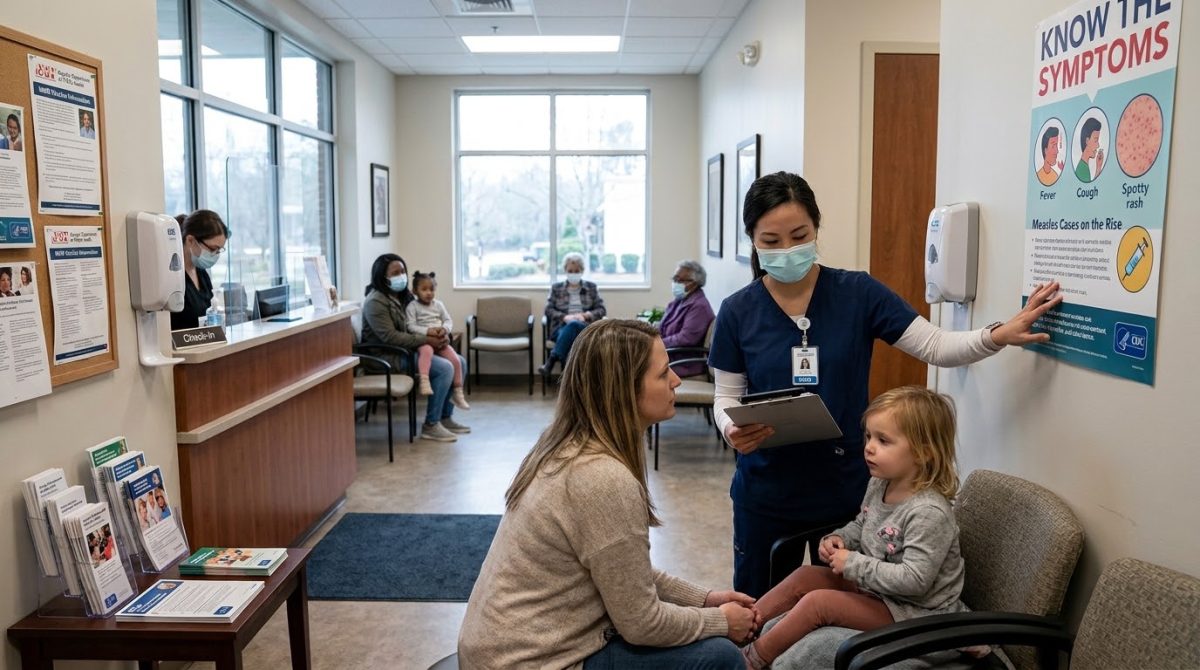
Georgia health officials have confirmed a new measles case in an unvaccinated resident of Macon County, bringing the state’s total to 22 cases this year, according to the Georgia Department of Public Health (DPH).
The latest case comes as measles outbreaks continue to affect communities across the country. Georgia reported 10 cases during all of 2025, meaning the state has already recorded more than twice that number in 2026.
The infected individual is isolating at home, while unvaccinated close contacts are quarantining. Although the person has no known travel history, health officials said they had contact with a confirmed measles case from Pennsylvania, where an ongoing outbreak has surpassed 1,100 cases.
The Georgia Department of Public Health is working to identify additional people who may have been exposed to the virus. Officials have not announced any specific public exposure locations connected to the latest case in the information released.
Why Health Officials Are Concerned About Measles
Measles is one of the most contagious infectious diseases. The virus spreads through the air when an infected person coughs or sneezes, and it can remain in the air for up to two hours after that person leaves an area.
That means people can potentially be exposed even without having direct contact with someone who is sick. Unvaccinated individuals are particularly vulnerable, and outbreaks can grow quickly when the virus reaches communities with low vaccination rates.
Cherie Drenzek, Georgia’s state epidemiologist, emphasized that vaccination remains the most effective way to prevent additional cases.
“The MMR vaccine is safe and effective. Measles spreads quickly, and vaccination now can help prevent further spread,” Drenzek said in the state’s announcement.
According to the DPH, one dose of the measles, mumps and rubella (MMR) vaccine provides approximately 93% protection against measles. Two doses increase protection to about 97%.
Who Should Get the MMR Vaccine?
The Centers for Disease Control and Prevention recommends two doses of the MMR vaccine for children. The first dose is typically given between 12 and 15 months of age, while the second is recommended between ages 4 and 6.
Infants between 6 and 11 months old who are traveling internationally should receive an early dose before departure. They must still receive two additional doses after their first birthday, following the recommended schedule.
Adults who are unsure whether they are fully vaccinated should speak with a healthcare provider about their vaccination history and whether another dose is appropriate.
Vaccination also plays an important role in protecting infants who are too young to receive the routine vaccine and people who cannot be vaccinated for medical reasons. When more people are protected, the virus has fewer opportunities to spread through a community.
Anyone with questions about their vaccination status should contact a healthcare provider rather than assume they are protected.
Measles Symptoms Can Take Up to 21 Days to Appear
People infected with measles typically develop symptoms 7 to 14 days after exposure, although symptoms can take as long as 21 days to appear.
Early symptoms include a high fever, cough, runny nose and watery eyes. A red rash usually develops afterward, beginning on the head and spreading to the rest of the body.
Because measles can initially resemble other respiratory illnesses, people should take potential exposure seriously, particularly if they are unvaccinated or do not know their vaccination status.
Anyone who develops symptoms consistent with measles should contact a healthcare provider immediately. The Georgia Department of Public Health specifically advises people not to walk into a doctor’s office, hospital or public health clinic without calling ahead to report their symptoms.
Calling first allows medical staff to take precautions that can reduce the risk of exposing other patients and healthcare workers. Healthcare providers who suspect measles are also instructed to notify public health officials immediately.
What Georgia Residents Should Know
The latest case is part of a broader measles concern involving multiple states. The connection to Pennsylvania’s outbreak illustrates how the virus can spread across state lines, including through contact with infected individuals who may not have traveled themselves.
For Columbus-area residents, the announcement is a reminder to review vaccination records and make sure children are up to date on recommended immunizations. The DPH announcement does not identify the new Macon County case as a confirmed exposure in Columbus or Muscogee County, and residents should not interpret the statewide case total as evidence of a local outbreak.
Health officials continue to emphasize vaccination, early recognition of symptoms and prompt communication with healthcare providers as key measures for limiting the spread of measles.
Residents can find additional information about Georgia’s measles response, vaccination recommendations and potential exposure guidance through the Georgia Department of Public Health at dph.georgia.gov/measles-georgia.
The CDC also provides information about symptoms, prevention and vaccination at cdc.gov/measles.
Source: Georgia Department of Public Health
News organizations may republish this story with credit. See our guidelines.
Know someone who'd want to read this? Email it to a friend.
Own a Columbus business? Reach 40,000+ monthly readers. Ads from $125/month. See ad optionsPlan your weekend with Columbus Times
Get This Weekend in Columbus every Thursday: the best local events, free things to do and family fun, plus each evening's local news. Free, and you can unsubscribe anytime.
More stories
 Health Medicare Open Enrollment Starts Oct. 15: What's Changing for 2027 and How to Avoid Costly Mistakes
 Health Know Your Numbers: The 4 Health Checks Columbus Adults Shouldn't Skip, and Where to Get Them Free or Low-Cost
 Health Where to Get a Flu Shot in Columbus This Fall
 Health Type 2 Diabetes Doesn't Have to Be Your Future: Medicare Has a Benefit That Can Help