Columbus Fire & EMS Sends a Paramedic Instead of an Ambulance: 1,103 Home Visits to 358 Addresses and a 64% Drop in Repeat 911 Calls
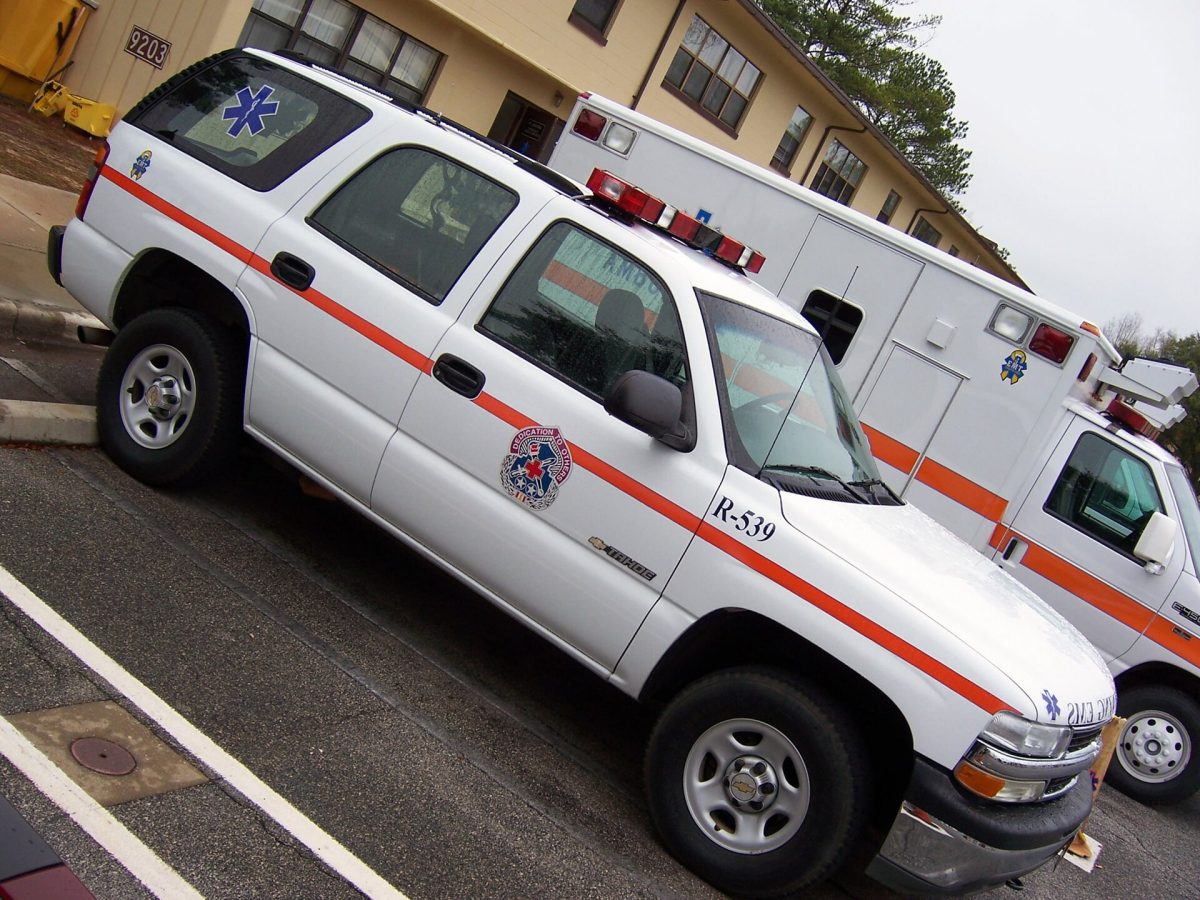
An SUV-based medic unit parked beside an ambulance. Columbus Correct Care's first unit was equipped with a Ford Explorer rather than an ambulance, according to the city's 2024 program overview. Photo: VigilancePrime / Wikimedia Commons (CC BY 3.0)
COLUMBUS, Ga. - When the same address calls 911 week after week, Columbus Fire & EMS now has an answer that is not an ambulance. Under a program called Columbus Correct Care, a community paramedic visits the home instead, checks on the patient and connects the household with a doctor, a pharmacy, food, housing help or a ride, according to a Nov. 11 report by Amaya Graham of WTVM that laid out the program's first numbers. The department's figures show 1,103 visits to 358 addresses since the program began in February 2025, and a 64% drop in 911 calls among the people who finished it.
The visits are voluntary, last eight to 16 weeks and are not billed to the patient, WTVM reported. Community paramedic Jonathan Laughlin oversees the effort, and the figures run through Oct. 31. The program grew out of a plan that Columbus Fire & EMS put in front of the Columbus Council in late 2024, and it has since added a second team for mental health calls, with a third planned for early 2027.
The numbers through Oct. 31
| Measure | 2025 | 2026 (through Oct. 31) | Total |
|---|---|---|---|
| Addresses visited | 186 | 172 | 358 |
| Visits made | 580 | 523 | 1,103 |
| Referrals for care and resources | 43 | 127 | 170 |
Columbus Fire & EMS reported a 64% decrease in 911 calls from patients who joined the eight- to 16-week program, according to WTVM. The department estimates operational savings of $894 for every 911 call avoided. Referrals nearly tripled from 2025 to 2026 as the team built a list of partners to send people to.
Those referrals cover primary care, medical appointments, prescriptions, home health care, medical equipment, emergency shelter, food, rent and utility help, medical insurance and transportation to medical visits, WTVM reported. One patient, Tim Lewis, told the station he had been calling 911 several times a week before paramedics began checking his vitals at home. Kathy McClendon, the 211 resource manager for United Way, described a woman whose house was being condemned and who was placed in a personal care home through the program.
How the program is built
City documents posted with Columbus Council agendas describe the plan behind the visits. A November 2024 program overview from Columbus Fire & EMS called for four mobile integrated health care units, each pairing a fire medic with an outside professional, and said the department would reassign its own operational staff to the first two units to start with minimal city investment. The overview put the cost of running all four units at $375,000 in vehicles and $318,000 in equipment up front, plus $817,000 a year in personnel on a single shift, rising to $2.13 million a year for round-the-clock service.
The first unit, now called Care 1, pairs a paramedic with a clinician from MercyMed, the nonprofit clinic, under an agreement that runs through Dec. 31, 2027, according to the agreement posted with a council agenda this year. The agreement calls for one Columbus Fire & EMS paramedic and one MercyMed clinical professional per unit, with the city providing the vehicle and medical direction and MercyMed providing the licensed clinician. A social worker or case manager is expected to join the team, WTVM reported.
Care 2 started in February 2026 and sends a paramedic, a Columbus police officer and a licensed professional counselor from Valley Healthcare to mental health calls, then follows up afterward, according to WTVM. As of Oct. 31, that team had answered 239 calls, and the department said none of them ended in jail time. Cost and call-reduction figures for Care 2 are not yet available, the station reported.
Care 3 is planned for January or February 2027 and will respond to low-acuity 911 calls, relying heavily on telemedicine, WTVM reported. The 2024 overview also described a fourth unit focused on veterans, with a projected start in 2026, and said full implementation could take four years if funding is provided. The overview was blunt that personnel is the largest cost and that a sustainable funding source still had to be identified.
Who pays for it
The program began with $139,000 in federal money that Sen. Jon Ossoff secured in the fiscal 2024 spending package to buy the vehicle and equipment for the first unit, according to an April 23, 2024, release from Ossoff's office. The release described a Ford Explorer-based unit pairing a paramedic with a nurse practitioner to reach frequent users of the EMS system. The 2024 overview also noted that the council had reallocated $193,232.99 in American Rescue Plan funds for the second unit's vehicle and equipment.
The city has agreed to keep the program going through its community care fund, WTVM reported. Mayor B.H. "Skip" Henderson said in the 2024 release that Columbus Fire & EMS would use the federal award as part of the Correct Care initiative, and Fire Chief Salvatore J. Scarpa described it as a pilot focused on high utilizers of the EMS system. Correct Care itself is an initiative of the Mayor's Commission on Health led by the fire department, according to the city's Correct Care web page.
WTVM reported that the program won a 2025 Achievement Award from the National Association of Counties and the 2026 Chattees Community Impact Award, shared by Correct Care, Columbus Fire & EMS and the Columbus Consolidated Government. The Columbus Times could not independently confirm the county association award in its online listings. The city's web page lists United Way of the Chattahoochee Valley, Valley Healthcare, MercyMed, New Horizons Behavioral Health, the Georgia Department of Public Health's West Central District and METRA among the partners.
How to get help
Residents who need help that is not an emergency can call United Way's 211 line, which WTVM reported is how community groups have been learning about Correct Care. The city's Correct Care page lists a direct number, (706) 225-4245, and an email address, [email protected], along with an online resource guide at columbusga.gov/correctcare. The page does not describe a formal intake form, so a call or email is the starting point.
For a medical emergency, 911 remains the number, and the program does not change how ambulances respond to urgent calls. Correct Care targets people whose repeated calls are driven by chronic illness, missing prescriptions, lack of transportation or housing problems rather than sudden emergencies. The department's own numbers suggest the approach is cutting repeat calls, and the next test will be whether the city funds the staffing to run all four units as the 2024 plan laid out.
Source: WTVM (Nov. 11, 2026); Columbus Consolidated Government, Columbus Correct Care page and Columbus Council agenda attachments (Correct Care Program Overview, November 2024; Mobile Integrated Healthcare agreement with MercyMed, 2026); Office of Sen. Jon Ossoff (April 23, 2024)

News organizations may republish this story with credit. See our guidelines.
Know someone who'd want to read this? Email it to a friend.
Plan your weekend with Columbus Times
Get This Weekend in Columbus every Thursday: the best local events, free things to do and family fun, plus each evening's local news. Free, and you can unsubscribe anytime.
By signing up you agree to get the Columbus Times email newsletter. Unsubscribe anytime with one click.

Comments
Be respectful. No personal attacks, hate speech, spam or anyone's private information. Every comment is reviewed before it appears. Comment rules
No comments yet. Be the first to share your thoughts.