Georgia's Free Yellow Dot Program: A Sticker and a Folder That Tell Paramedics Your Medications and Allergies, and 4 Steps to Set One Up
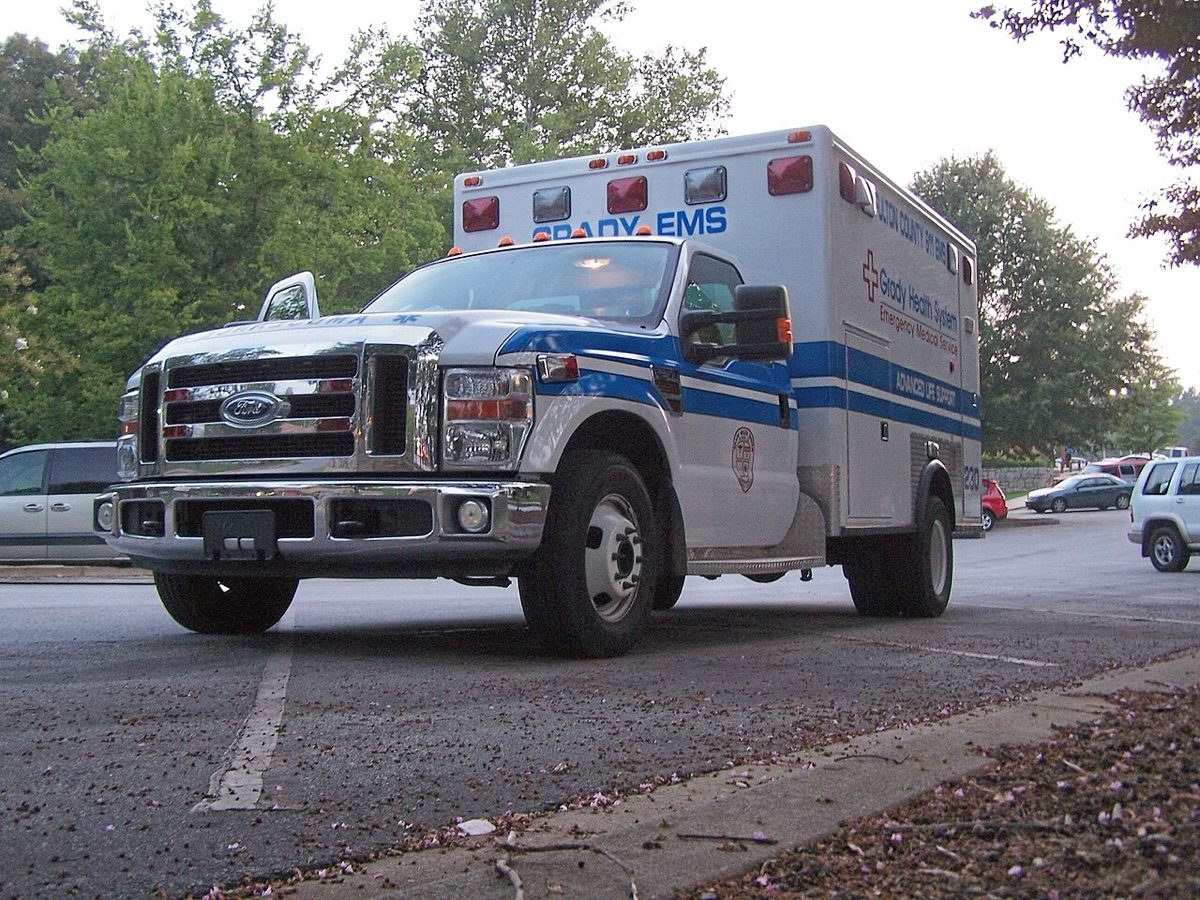
A Grady EMS ambulance in Georgia, photographed in 2007. Photo: Will.alexander at English Wikipedia / Wikimedia Commons (public domain)
COLUMBUS, Ga. - Georgia's Yellow Dot program is a free, voluntary system that gives first responders life-saving medical information when a crash or emergency leaves someone unable to speak for themselves. A bright yellow sticker goes on the car window, and a folder in the glove box lists medical history, prescriptions and allergies, according to the Georgia Department of Public Health. WTVM reported in June that the program is free for anyone in Georgia, not only older adults.
The catch is that the program works only where local responders and hospital staff have been trained to recognize the sticker and find the folder. The Department of Public Health warns that counties that have not adopted the program have not been trained. This guide explains how the kit works, what goes in it and how to check whether it is available near you.
How the kit works
The state describes the program as a way for first responders to learn at the scene that you have completed a personal information form and where to find it. Participants get a Yellow Dot sticker for the driver's side rear window and a folder for the glove compartment, according to the Department of Public Health. The folder holds the participant's vital information, such as medical history, prescriptions and allergies.
For home emergencies, the Department of Public Health says a similar folder can be held on the refrigerator by a magnetic clip, with the decal on or beside the main entry. WTVM described the same idea slightly differently, putting the sticker on the front door or window and the folder on top of the refrigerator. Either way, the sticker tells responders that a folder exists and the folder tells them what they need to know.
Who runs it
The Georgia Department of Public Health and the Georgia Department of Human Services Division of Aging Services are the partners named on the state's program pages. The program is aimed at helping responders assist older drivers and anyone having a medical emergency who cannot communicate, according to the Department of Public Health. WTVM quoted a first responder, Birdie Hicks, as saying, "Everyone should have one."
The station also spoke with Robbie Monfort, whose husband has Alzheimer's. After an accident, she said, she grabbed the folder in the emergency room and did not have to remember his medications or dosages. She called the program valuable for caregivers and patients.
Four steps to set one up
| Step | What to do |
|---|---|
| 1. Confirm it is available | Ask your local fire department, emergency management agency or county tag office, or check the Department of Public Health's list of current locations |
| 2. Get the kit | The kit is free; participants in communities that have adopted the program are given the sticker |
| 3. Fill out the form | List medications, conditions and allergies, then place the folder in the glove compartment |
| 4. Place the sticker | Put it on the rear window of the car; for home use, on the front door or window or beside the main entry |
WTVM's report suggested contacting your local Georgia county tag office or fire department or emergency management agency, and it pointed to the Governor's Office of Highway Safety (gohs.ga.gov) for more information. It did not list a Columbus address or phone number for kits. This guide could not confirm whether Muscogee County, which includes Columbus, is among the participating communities, so it is worth asking before assuming.
Keeping it current
WTVM's report advises crossing out outdated information and writing in new details whenever medications or dosages change. Reviewing the form after every doctor visit is a simple habit to build. The sources reviewed do not specify an update schedule, so the timing is up to each participant.
The state's pages note that the program is voluntary and free. They do not say how to request a kit in a particular county, so the first call is to local responders. The Department of Public Health's page also says the program only works if emergency responders and hospital medical staff are trained to recognize the sticker, locate the folder and use the information.
Who to contact
| Contact | Number or address |
|---|---|
| Georgia Department of Public Health main line | (404) 657-2700, Monday to Friday, 8 a.m. to 5 p.m. Eastern; 200 Piedmont Ave. SE, Atlanta, GA 30334 |
| Division of Aging Services, Yellow Dot | (866) 552-4464; 47 Trinity Ave. SW, Atlanta, GA 30334 |
| Governor's Office of Highway Safety | gohs.ga.gov |
The Department of Public Health's page also links to a guide for starting a Yellow Dot program in your own community, which may interest neighborhood groups, senior centers and local fire departments. The page was last updated in December 2022, so phone numbers and participating locations should be confirmed before relying on them. In an emergency, always call 911.
Source: Georgia Department of Public Health, Yellow Dot Program page; Georgia Department of Human Services Division of Aging Services, Yellow Dot Program page

News organizations may republish this story with credit. See our guidelines.
Know someone who'd want to read this? Email it to a friend.
Plan your weekend with Columbus Times
Get This Weekend in Columbus every Thursday: the best local events, free things to do and family fun, plus each evening's local news. Free, and you can unsubscribe anytime.
By signing up you agree to get the Columbus Times email newsletter. Unsubscribe anytime with one click.




Comments
Be respectful. No personal attacks, hate speech, spam or anyone's private information. Every comment is reviewed before it appears. Comment rules
No comments yet. Be the first to share your thoughts.