Army Corps Begins Drought Operations on the Chattahoochee: Lake Lanier Is 8 Feet Low, and the River That Feeds Columbus Is Managed to a 5,000 cfs Minimum
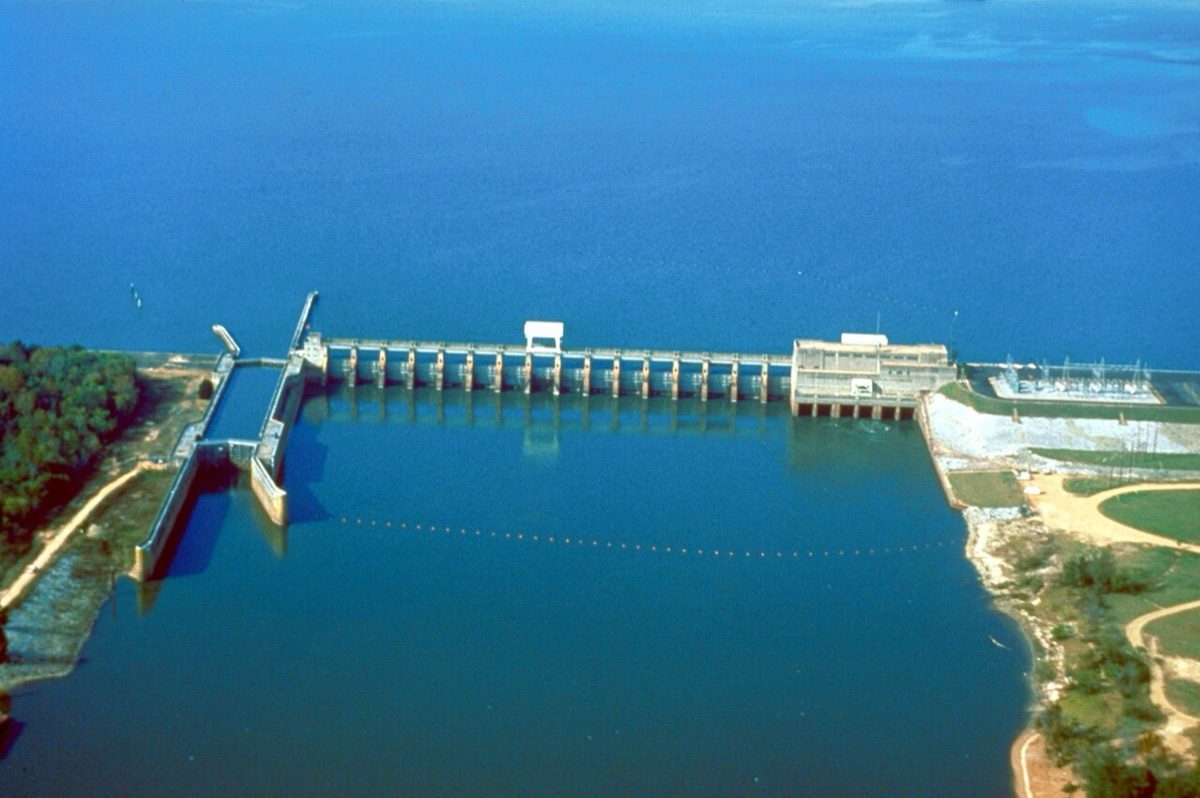
Jim Woodruff Lock and Dam on the Apalachicola River in Chattahoochee, Florida. Photo: U.S. Army Corps of Engineers, photographer not specified or unknown / Wikimedia Commons (public domain)
COLUMBUS, Ga. - The U.S. Army Corps of Engineers began federal drought operations on the Apalachicola-Chattahoochee-Flint (ACF) river system on Monday, Nov. 2, citing falling reservoir levels, according to reporting by Bruce Ritchie. The move affects the Chattahoochee River that runs along Columbus and Phenix City, because it lets the Corps hold back water in upstream lakes while cutting the amount sent downriver toward Florida. Lake Lanier, the system's largest reservoir, measured about 1,062.7 feet on Nov. 2, more than 8 feet below full, and the Forsyth County News reported it had fallen to its lowest level since January 2017.
The numbers behind the announcement
The Corps manages the ACF system as a chain of lakes and dams, and drought operations are a pre-set mode that kicks in when the system's stored water drops low enough. Under that mode, the Corps can reduce the flow released from Jim Woodruff Dam, near the Florida line, to a minimum of 5,000 cubic feet per second (cfs). The goal, Ritchie reported, is to let the upstream Chattahoochee reservoirs refill.
| Measure | Figure | Source |
|---|---|---|
| Drought operations began | Monday, Nov. 2, 2026 | Ritchie |
| Lake Lanier level | About 1,062.6 to 1,062.7 feet | Ritchie; Lake Lanier Association |
| Below full pool | More than 8 feet | Ritchie |
| October drop at Lanier | 1.25 feet | Ritchie |
| Minimum flow at Woodruff Dam | 5,000 cfs | Ritchie |
| Release for Peachtree Creek water quality | 750 cfs minimum | Lake Lanier Association |
| Lanier's 2007 record low | 1,050.79 feet | Lake Lanier Association |
The Lake Lanier Association's fall update described the imbalance that led to the trigger. In that update, inflows into the lake had averaged 338 cfs while the Corps was required to release an average of 1,230 cfs, a shortfall of 892 cfs a day. The Corps is releasing the minimum needed to support downstream water supply intakes, the association said.
Not as dry as last spring
This is not a repeat of the spring emergency. The Corps began federal ACF drought operations on May 1, according to a Mobile District announcement reported by WGTJ Radio on May 8, when moderate to extreme drought covered much of the district. Ritchie reported that 100% of the basin was in drought on May 19, while the most recent weekly figures showed under 10% of the region in drought and more than half "abnormally dry."
Early-October rains pushed flows on the Apalachicola River to nearly 30,000 cfs, Ritchie wrote, but they had dropped to 7,369 cfs by Saturday, Oct. 31. That quick fall helps explain why the Corps acted now rather than waiting for the late-fall rains that sometimes arrive. The flow figures come from Ritchie's newsletter, because the Corps' own release was not available when this story was written.
Not everyone agrees on the timing
Dan Tonsmeire, a former executive director of the Apalachicola Riverkeeper, called the declaration "unfortunate," according to Ritchie. He said waiting for late-fall rain would have shortened the period of reduced flows, which matters because the fall oyster spawn has begun. The fall oyster spawn is the period he pointed to as sensitive to reduced flows.
Danny Johnson of the Metropolitan North Georgia Water Planning District told Ritchie that the current El Nino could bring rain, but that the benefit depends on where it falls. He added, "Every effort to conserve helps protect the water supplies our communities depend on." Johnson's district covers metro Atlanta, which draws on Lake Lanier.
What it means for Columbus
Columbus sits between the two ends of this story. The city's drinking water comes from Lake Oliver, a reservoir on the Chattahoochee River in Muscogee County and Lee County, Alabama, that is entirely within Columbus city limits and was formed by the Oliver Dam, completed by Georgia Power in 1959. West Point Lake, the Corps reservoir upstream on the Georgia-Alabama line, has a full summer pool of 635 feet and a winter pool of 628 feet, according to its reference entry. That lake's current level was not available to The Columbus Times when this story was prepared.
The Corps announcement concerns the whole ACF system and does not say anything about Columbus water rates, restrictions or supply. A water-sharing agreement proposed in December 2023 by Georgia Gov. Brian Kemp, Alabama Gov. Kay Ivey and the Corps would set a minimum average flow of 1,350 cfs, measured as a rolling seven-day average at the 14th Street Bridge in Columbus, according to the Columbus Ledger-Enquirer. In designated drought zones, that minimum would need to be met only two days a week. The paper said Columbus Water Works draws its drinking water upstream of that measuring point.
What to watch
The Corps has not said how long drought operations will last, and the sources reviewed for this story give no end date. The Georgia Environmental Protection Division declared a statewide Drought Response Level 1 on April 27, 2026, according to local government notices, and residents should check the agency's drought page for the current status of any outdoor watering rules. Readers should not assume any restriction applies to Columbus unless a local utility announces one.
- Lake levels: The Corps and the Lake Lanier Association post daily lake readings online.
- Boaters: In May, Mobile District officials urged recreational users at federal reservoirs to wear life jackets and watch for obstructions that are not normally visible when levels are low.
The Columbus Times will update this story if the Corps issues new guidance for West Point Lake or the Chattahoochee below it. The Corps' own notice was not available when this story was written, so the figures here come from secondary reports. Readers can check the Corps' Mobile District website for the original announcement.
Source: Bruce Ritchie, "Corps of Engineers announces drought operations for ACF" (Nov. 2, 2026); Forsyth County News, Nov. 3, 2026
News organizations may republish this story with credit. See our guidelines.
Know someone who'd want to read this? Email it to a friend.
Own a Columbus business? 20,000+ page views in 30 days. Ads from $125/month. See ad options Follow Columbus Times on FacebookLocal news, events and people, in your feed every day.



Comments
Be respectful. No personal attacks, hate speech, spam or anyone's private information. Every comment is reviewed before it appears. Comment rules
No comments yet. Be the first to share your thoughts.