Renting Your Columbus Home on Airbnb? The City Requires a $40 Yearly Permit, $20 Background Checks and $500,000 in Coverage
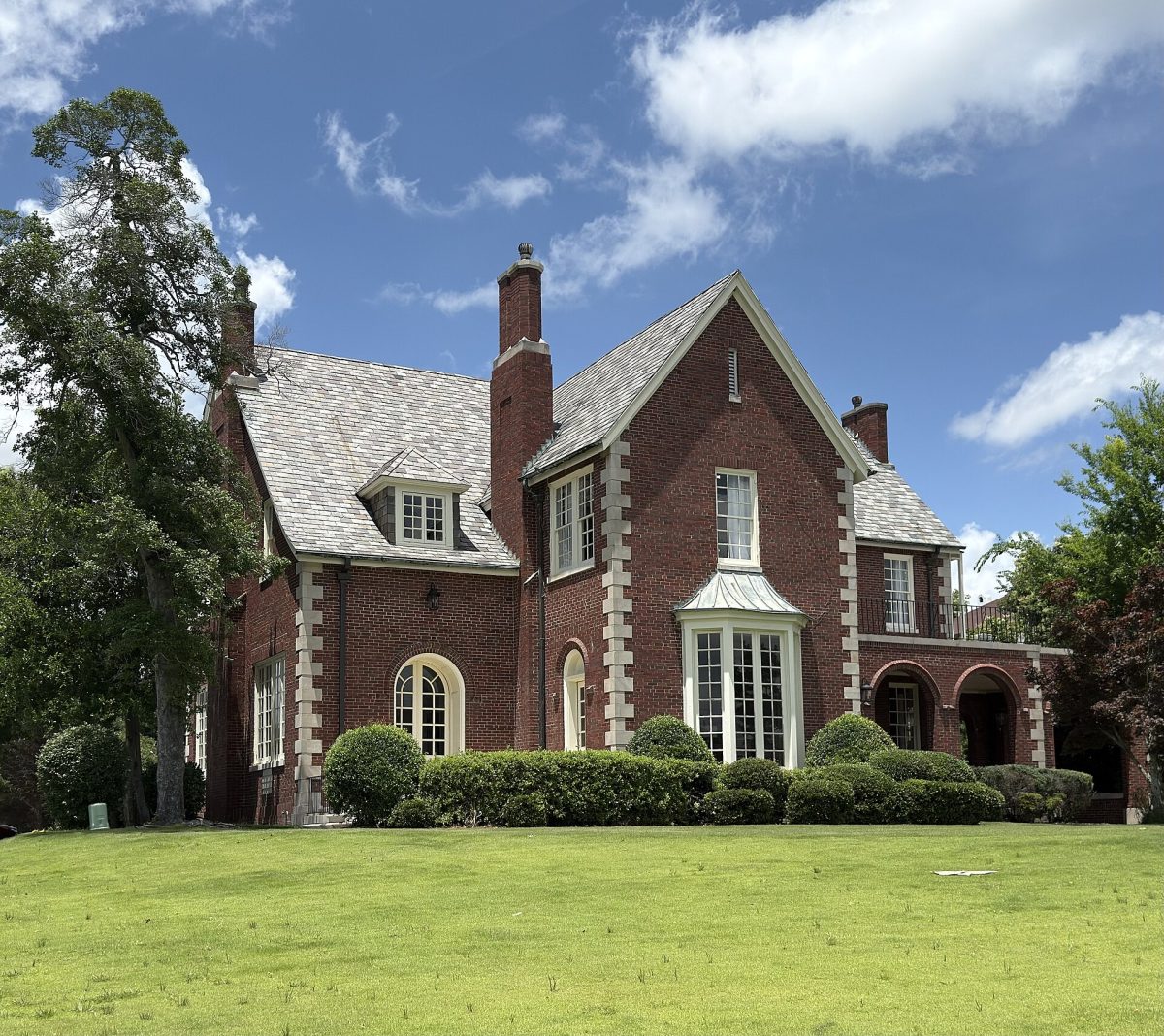
A home in the Wynn's Hill-Overlook-Oak Circle Historic District in Columbus. Photo: Farragutful / Wikimedia Commons (CC BY-SA 4.0)
COLUMBUS, Ga. - If you want to rent out your Columbus house, apartment or condo on Airbnb, Vrbo or another platform, you need a city short-term vacation rental permit before the first guest checks in. The permit costs $40 per unit, must be renewed every year and comes with $20 police background checks for each required person, according to the city's Inspections and Code fee schedule. You also need at least $500,000 in liability insurance, a 24/7 local contact and written notice to your next-door neighbors.
The rules come from Chapter 4, Article 9 of the city's Unified Development Ordinance, which Inspections and Code enforces. Since Jan. 1, 2026, the department has moved most plan and permit filings to its online portal. Short-term vacation rentals are one of the few submissions it still takes in person, according to a notice on the department's website.
Does your rental need a permit?
The city's application defines a short-term rental unit as a residential dwelling, or an approved accessory dwelling, rented to transient guests for no more than 30 consecutive days. The definition covers single-family and multifamily housing, including apartments and condominiums. It excludes group living, other lodging uses and motor vehicles.
Every house or unit you plan to rent needs its own permit, the department says. Each one is charged the $40 permit fee, and the fee is non-refundable. If you submit several houses at the same time, you only have to complete one set of background checks.
What the city charges
| Item | Fee |
|---|---|
| Short-term vacation rental permit | $40 per unit, renewed every year |
| Columbus Police background check | $20 per person |
| Certificate of occupancy issuance | $60 |
| Business license administrative fee | $75 |
| Occupation tax | $1 to $6 per $1,000 |
The amounts come from the city's Schedule of Permit Fees, effective July 1, 2024, and the Finance Department's license page. The schedule lists the $60 certificate of occupancy charge as a general fee, and the rental page does not say how it applies to rental permits. The Finance Department refers occupation tax questions to its Occupation Tax Section.
Step 1: Gather the paperwork
The department's submission checklist asks for a completed short-term vacation rental application and a copy of a homeowners insurance policy with at least $500,000 in liability coverage on the property. You also need a digital floor plan, and the city posts an example. A completed certificate of occupancy application and proof that your adjacent neighbors were notified round out the packet.
The application asks for the property address, building type, whether guests rent the full house or part of it, and every platform you will list on. It also asks for the owner, the applicant and the 24/7 contact person or rental agent. If you are leasing the property, you need a lease signed by both parties that says it can be used as a short-term vacation rental, and you must certify that you have the owner's consent.
Step 2: Get the background checks
Background checks are required for the homeowner, the applicant and the 24/7 contact person, and they must be done less than 30 days before you submit. Get them from the Columbus Police Department, which charges $20 each. If a check shows a felony within the last 10 years or a misdemeanor involving moral turpitude within the last five years, the city will not accept the application for processing.
The 24/7 contact must be customarily present in the city to transact business, which the department defines as living within 50 miles of the rental. The application lists that person's name, address, phone and email alongside the owner's. Pick someone who can respond at any hour.
Step 3: Notify your neighbors
You must notify, in writing, the owners of every property that shares a property line with your rental, under Section 4.9.6 of the UDO. You can hand-deliver the notice and have each owner sign an acknowledgment, or send it by certified mail with return receipt requested and keep copies of the receipts. Owner names and addresses are on the Tax Assessor's website, the instructions say.
The notice must include the rental's street address, the location of any on-site parking for guests and the maximum occupancy. The city calculates maximum occupancy as two people per bedroom plus one, so a three-bedroom home allows seven guests. You must also include a sample rental agreement, the owner's name and the rental agent's name and contact information.
Step 4: Pass the inspection and safety checks
Once all documents are in, Inspections and Code inspects the property before approving it. On the application, you attest that every rental unit has working smoke detectors in each bedroom, outside sleeping areas and on every habitable floor. You also attest to a maintained, charged fire extinguisher and a posted floor plan showing fire exits, escape routes and emergency contact information.
The application also asks you to confirm the property meets the city's property maintenance and building codes and owes no unpaid local taxes or liens. Failing to comply can be prosecuted as a criminal offense under Section 1-8 of the city code, with fines under Section 4.9.8 of the UDO, the application says. Read the attestations carefully before you initial them.
Step 5: Get your business license
After Inspections and Code approves your certificate of occupancy, you go to the Business License Office for a short-term vacation rental business license. The Occupation Tax Section is on the ground floor at 3111 Citizens Way. Applicants for a business license must also sign a SAVE affidavit verifying lawful presence and an E-Verify affidavit, according to the Finance Department.
Where to apply
Inspections and Code is at 1111 1st Ave., third floor, open 8 a.m. to 5 p.m. Monday through Friday, and can be reached at 706-225-4126 or [email protected]. The department's website posts the application, example floor plan, neighbor notice instructions and a map of short-term vacation rentals. The permit expires each year, so mark your renewal date.
Source: Columbus Inspections & Code STVR page and form (Nov. 2026); Schedule of Permit Fees (July 1, 2024); Columbus Finance (Nov. 2026)

News organizations may republish this story with credit. See our guidelines.
Know someone who'd want to read this? Email it to a friend.
Plan your weekend with Columbus Times
Get This Weekend in Columbus every Thursday: the best local events, free things to do and family fun, plus each evening's local news. Free, and you can unsubscribe anytime.
By signing up you agree to get the Columbus Times email newsletter. Unsubscribe anytime with one click.



Comments
Be respectful. No personal attacks, hate speech, spam or anyone's private information. Every comment is reviewed before it appears. Comment rules
No comments yet. Be the first to share your thoughts.