Columbus Bus Fares in 2026: 10 METRA Routes, $1.30 Rides and How to Save With a $53 Monthly Pass
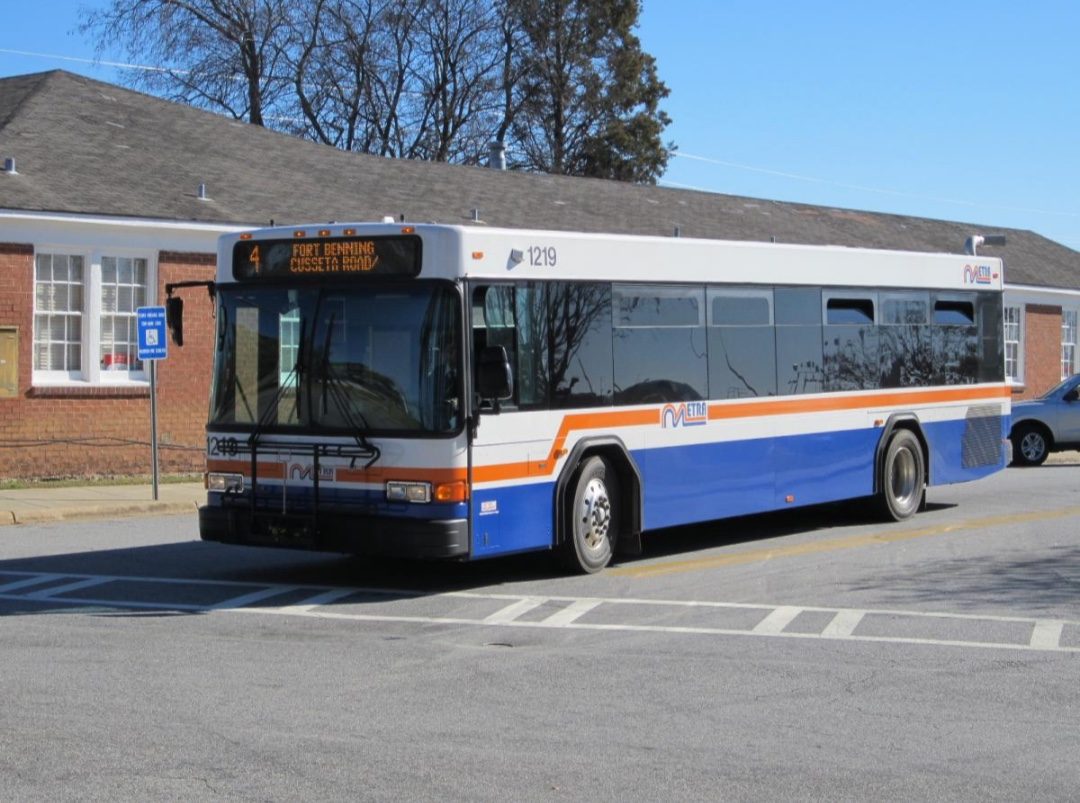
A METRA bus in Columbus. A regular one-way fare is $1.30. Photo: PRO MASTER MASTER PRO / Wikimedia Commons (CC BY-SA 4.0)
Columbus residents can ride a regular METRA bus for $1.30 one way, or purchase a 31-day unlimited-ride pass for $53, according to the city's published 2026 fare schedule. The transit system operates 10 regular bus routes, and frequent riders can save money by choosing a seven-, 14- or 31-day pass instead of paying separately for every trip.
For someone who depends on the bus to reach work, school, shopping or appointments, the difference can add up over a month. A rider making 44 regular one-way trips would spend $57.20 paying cash, compared with $53 using the 31-day pass. Someone who pays for two buses in each direction could save considerably more.
The best option depends on how often you ride, whether you qualify for reduced fares and how many buses you need to reach your destination. Here is a breakdown of what METRA charges, where its routes travel and how to get the most from the system.
How Much Does It Cost to Ride a METRA Bus in Columbus?
METRA uses different fares for regular adults, students, seniors, riders with disabilities and children. Most adult passengers pay $1.30 for a regular one-way trip, while qualifying students pay $1 and seniors 62 and older pay 65 cents with the required identification.
The system also publishes separate fares for Fort Moore trips and its Dial-A-Ride paratransit program. The following prices come directly from METRA's official fare schedule.
| Rider or service | One-way fare |
|---|---|
| Regular adult | $1.30 |
| Student with required ID | $1.00 |
| Senior age 62 or older with required ID | $0.65 |
| Qualified rider with a disability | $0.65 |
| Medicare recipient with required cards | $0.65 |
| Fort Moore adult fare | $1.90 |
| Fort Moore senior/disabled fare | $0.95 |
| Eligible Dial-A-Ride trip | $2.50 |
Children's fares depend on their height relative to the bus fare box. A child taller than the fare box pays $1.30, while a smaller child occupying a seat pays $1. An adult may hold one smaller child without paying an additional fare.
Passengers should have the correct fare available before boarding. METRA accepts cash, one-way tickets and swipe cards, but its fare boxes do not provide change.
How Much Can You Save With a METRA Bus Pass?
METRA sells unlimited-ride swipe cards for seven, 14 and 31 days. These are intended for people who use regular fixed-route buses frequently and want to avoid paying separately every time they board.
Pass prices vary according to the rider's eligibility. Students have a special 31-day rate, while seniors and qualified riders with disabilities pay half the regular adult pass prices.
| Pass duration | Adult | Senior/disabled | Student |
|---|---|---|---|
| 7 days | $15.50 | $7.75 | Not offered |
| 14 days | $28.00 | $14.00 | Not offered |
| 31 days | $53.00 | $26.50 | $23.00 |
The $53 adult pass provides unlimited rides during its 31-day period on the fixed-route system. METRA specifically excludes its separate paratransit service from the swipe-card program.
The seven-day pass may appeal to someone working several days in one week. A 14-day pass offers another option for riders with shorter schedules, while the 31-day pass generally becomes more attractive as the number of trips increases.
When Does a $53 Monthly Pass Actually Save Money?
For adults paying the standard $1.30 fare, the 31-day pass becomes cheaper after 40 one-way rides. Forty individual rides cost $52, while 41 rides cost $53.30, making the $53 pass the less expensive choice.
A passenger traveling to work and back on one bus each way would reach 40 rides after 20 commuting days. Someone traveling 22 days during the pass period would make 44 one-way rides, spending $57.20 in cash fares and saving $4.20 with the pass.
The savings become larger when a passenger needs multiple buses. A rider who pays for two boardings to reach work and two more to get home would pay four fares per commuting day, assuming no other rides.
| Travel pattern | Cash fares | 31-day adult pass | Savings with pass |
|---|---|---|---|
| 10 one-way rides | $13.00 | $53.00 | No savings |
| 20 one-way rides | $26.00 | $53.00 | No savings |
| 40 one-way rides | $52.00 | $53.00 | No savings |
| 44 one-way rides | $57.20 | $53.00 | $4.20 |
| 60 one-way rides | $78.00 | $53.00 | $25.00 |
| 88 one-way rides | $114.40 | $53.00 | $61.40 |
Calculations by Columbus Times using METRA's published adult fares. The comparison assumes all rides occur within one 31-day pass period and qualify for regular fixed-route fares.
For a rider who needs four bus boardings a day over 22 commuting days, the pass would reduce the calculated transit expense from $114.40 to $53.
That makes the number of boardings, rather than simply the number of days traveled, particularly important when deciding whether to buy a pass.
Which Pass Is Best for Occasional Riders?
Not everyone benefits from the longest pass. Someone who rides only a few times each week may spend less by paying individual fares.
The seven-day adult pass costs $15.50. At $1.30 per ride, it becomes cheaper than individual fares beginning with the 12th one-way boarding during those seven days. Twelve separate rides would cost $15.60.
The 14-day adult pass costs $28. At the regular fare, 21 rides would cost $27.30, while 22 rides would cost $28.60. That makes 22 rides the point at which the pass begins saving money.
| Adult pass | Price | First ride count where it saves |
|---|---|---|
| 7 days | $15.50 | 12 rides |
| 14 days | $28.00 | 22 rides |
| 31 days | $53.00 | 41 rides |
These calculations assume the passenger would otherwise pay $1.30 for every boarding. They also assume all trips fall inside the purchased pass period, which is important when planning irregular schedules.
For example, someone who rides twice daily on only three days each week may be better off paying cash. A rider who makes multiple transfers on those same days may reach the break-even point much sooner.
Where Do Columbus' 10 METRA Routes Go?
METRA operates 15 buses serving 10 regular routes across Columbus, according to its official route directory. The routes connect residential neighborhoods with commercial corridors, Columbus State University areas, shopping destinations, government facilities and other major locations.
Although METRA's numbering extends to Route 12, Routes 8 and 11 have been discontinued. The remaining 10 routes are listed below using their official published names.
| Route | Official route name |
|---|---|
| 1 | East Wynnton |
| 2 | Cusseta Road / Oakland Park |
| 3 | St. Mary's Road / Buena Vista Road / Schatulga Road |
| 4 | Fort Benning |
| 5 | North Highland / Columbus State / Peachtree Mall |
| 6 | Columbus State / Milgen Road |
| 7 | Columbus South |
| 9 | Bradley Park / Columbus Park Crossing |
| 10 | Airport Thruway / Veterans Parkway |
| 12 | Veterans Parkway / Civic Center / Victory Drive |
The route names give passengers a general idea of the areas served, but they do not replace checking the official schedule. Individual routes may operate on different timetables, and a destination along a named road is not necessarily within walking distance of every stop.
The Route Information page includes links to individual schedules, maps and bus stop lists. Those lists identify stops by name, sequence, identification number and geographic coordinates.
For someone traveling to an unfamiliar destination, checking the complete route before leaving can prevent an unnecessary additional ride.
What Hours Does METRA Operate?
METRA's published systemwide operating hours are 4:30 a.m. to 8:30 p.m., Monday through Saturday. The transit agency cautions that individual routes have different schedules, so those hours should not be interpreted as a guarantee that every route runs throughout the entire period.
Passengers should consult the timetable for their specific route before planning an early-morning or evening trip. This is particularly important for workers with shifts outside conventional daytime business hours.
METRA's published regular operating schedule does not include Sunday service. Holiday schedules may also differ from normal operations, so riders planning trips around a holiday should check official announcements.
For schedule questions, the METRA Transfer Center can be reached at 706-225-4673.
What If Your Trip Takes Two Buses?
METRA's fare page lists one-way fares and passes but does not list a transfer fare. If you pay a separate fare each time you board, a trip on two buses costs a regular adult $2.60 one way, or $5.20 round trip.
Before you ride, call the Transfer Center at 706-225-4673 and ask how your connection will be charged. An unlimited-ride pass covers every boarding on METRA's fixed-route buses, so riders who change buses often reach the break-even point sooner.
Who Qualifies for the 65-Cent Reduced Fare?
METRA offers half-price regular adult fares to eligible seniors and people with disabilities. The agency's senior eligibility age is 62, rather than 65, which may allow some passengers to qualify earlier than they expect.
Seniors and riders with disabilities must present the required identification. METRA also accepts Medicare cards for half-fare eligibility when accompanied by valid photo identification.
Qualifying passengers can buy a seven-day pass for $7.75, a 14-day pass for $14 or a 31-day pass for $26.50. Because the regular reduced fare is 65 cents, the break-even ride counts for these passes are the same as those for adult passes.
The discounts apply to qualifying fixed-route transportation. METRA's separate Dial-A-Ride service has its own fare and eligibility requirements, so riders should not assume that every reduced-fare option works across both services.
How Much Do Columbus Students Pay?
Students attending schools in Columbus may qualify for a $1 one-way fare and a discounted $23 31-day unlimited-ride card. METRA requires acceptable student identification, including an expiration date.
Students may use a current school ID that meets the requirements or apply for a METRA-issued identification card. METRA lists a $6 charge for its student ID card.
At $1 per ride, a student who makes 23 one-way trips would spend exactly $23 paying individually. The student pass starts providing a financial benefit with the 24th ride during its 31-day period.
For a student who regularly travels to school and back, that threshold could be reached well before the end of the pass period. Students and families should confirm eligibility and identification requirements before purchasing the discounted card.
Where Can You Buy a METRA Bus Pass?
METRA sells swipe cards at its Transfer Center, which the agency's rider guide places at Ninth Avenue and 15th Street. Passes are sold from 4 a.m. to 6:30 p.m., Monday through Saturday.
The Transfer Center also provides route information, schedules and assistance with trip planning. Its published telephone number is 706-225-4673.
Passengers purchasing a reduced-fare pass should bring the identification required for their fare category. Students seeking a METRA-issued ID should also review the student application instructions on the official fare page.
For ordinary cash fares, passengers board through the front door and pay the fare box. Exact change is required because operators do not carry change and fare boxes do not return change.
How Do You Plan a METRA Trip Online?
METRA provides a free online trip planner using Google Transit. Passengers can enter a starting address and destination to find available routes, nearby bus stops, walking directions and suggested connections.
The system is intended to make planning easier for people who do not already know the bus routes. It can also help experienced passengers identify alternatives when traveling somewhere outside their usual commute.
The official planner is at columbusga.gov/metra.
METRA recommends arriving at a designated bus stop roughly three to five minutes before the scheduled arrival time. Because several routes can serve the same stop, passengers should check the route number on the approaching bus.
After boarding, riders can signal their intended stop using the yellow tape or pull cord near the windows. METRA instructs passengers to wait until the bus stops completely and to use the rear exit when possible.
What About Riders Who Cannot Use Regular Buses?
METRA provides accessible buses on its regular routes, including wheelchair accommodations. The agency also offers a separate ADA complementary paratransit program called Dial-A-Ride for eligible people whose disabilities prevent them from using ordinary fixed-route buses.
Dial-A-Ride operates as a shared, curb-to-curb transportation service using specially equipped vehicles. Its published fare is $2.50 per trip, and the regular seven-, 14- and 31-day swipe cards are not valid for that service.
Passengers who need eligibility information can contact Dial-A-Ride at 706-225-4596. The program is not simply an alternative for anyone who prefers door-to-door transportation; eligibility is tied to the inability to use regular accessible buses because of a disability.
The Bottom Line for Columbus Riders
For someone making only a handful of trips, the $1.30 adult fare may be the least expensive way to use METRA. For someone riding almost every workday, especially when connections are required, the $53 unlimited 31-day pass can provide meaningful savings.
Seniors, eligible riders with disabilities and students have additional opportunities to reduce transportation costs. But the best decision still depends on the number of rides, the route schedule and whether a passenger can complete necessary trips within the pass period.
Before purchasing a pass, count the number of bus boardings expected over seven, 14 or 31 days, not just the number of destinations. Then compare the result with the official pass prices and check the route schedule to confirm that the service meets your transportation needs.
How We Did This
Columbus Times reviewed METRA's official 2026 fare and pass information, route directory, rider instructions, operating hours and online trip planner. The savings tables were calculated from the published one-way fares and pass prices, assuming all compared trips take place within the applicable pass period.
All fare comparisons use ordinary fixed-route prices unless otherwise identified. Actual savings depend on how many times a passenger boards, eligibility for discounted fares and whether the trips require transfers.
Source: Columbus Consolidated Government, METRA Transit System

News organizations may republish this story with credit. See our guidelines.
Know someone who'd want to read this? Email it to a friend.
Own a Columbus business? 60,000+ page views a month. Ads from $125/month. See ad optionsPlan your weekend with Columbus Times
Get This Weekend in Columbus every Thursday: the best local events, free things to do and family fun, plus each evening's local news. Free, and you can unsubscribe anytime.
Most read this week
- 8 Columbus Restaurants Got a C on Their Health Inspection in 2026, the Most of Any Year Since 2022. Here's Every One
- Georgia's 3 Amendments: Which Will Pass, Who's Against Them, and What Happens If They Fail
- Georgia's 3 Constitutional Amendments on the Nov. 3 Ballot, Explained in Plain English
- Early Voting in Columbus Starts Oct. 13: Every Site, the Hours, and What's on Your Ballot
- The Night Fight on the Chattahoochee: How Columbus Became the Site of What Many Call the Last Battle of the Civil War
More stories
 Finance 7 Georgia Benefits Many Eligible Residents May Be Missing
 Finance $1 Million Net Worth on an $80,000 Salary: The Blueprint for Your 20s, 30s and 40s
 Finance Is Bitcoin a Smart Investment in 2026? What Investors Need to Know Before Buying
 Finance Is $60,000 a Year Enough to Live Comfortably in Columbus, Georgia? Here’s the Breakdown
Comments
Be respectful. No personal attacks, hate speech, spam or anyone's private information. Every comment is reviewed before it appears. Comment rules
No comments yet. Be the first to share your thoughts.