10 of the Best Businesses to Start in Columbus, Georgia
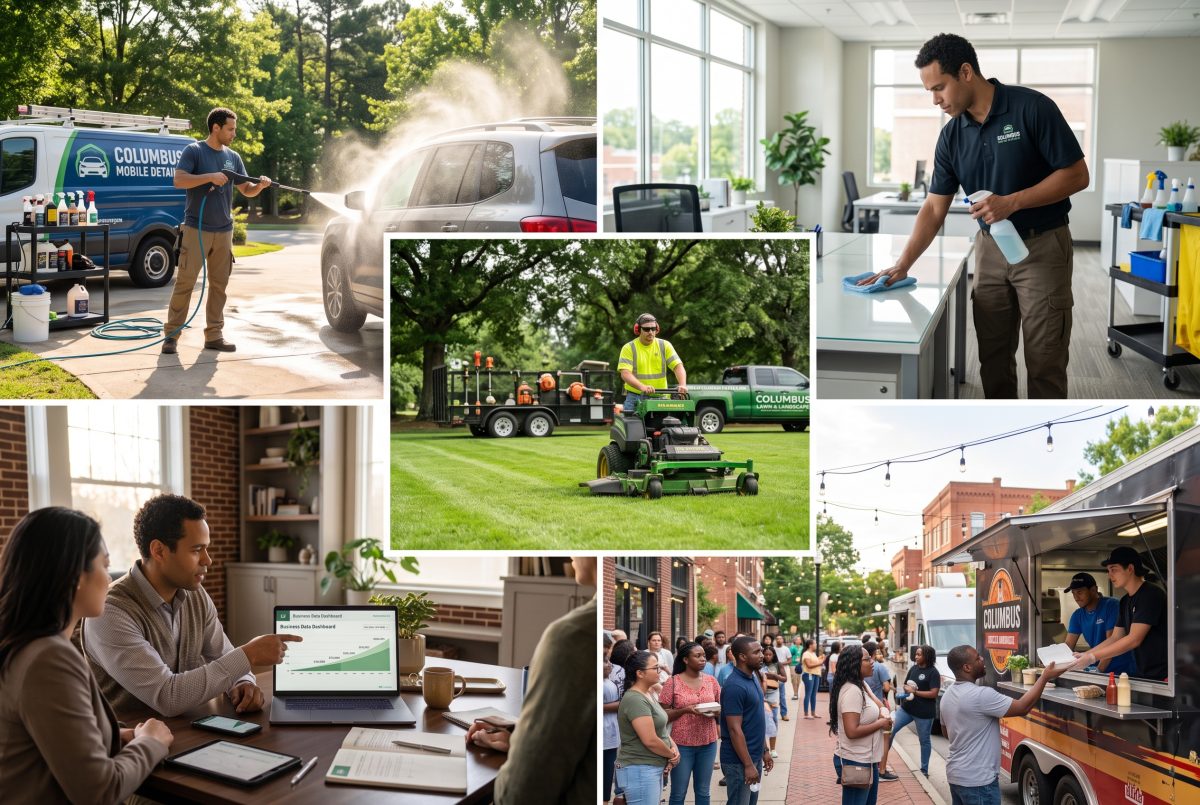
Starting a business in Columbus, Georgia, does not necessarily require a storefront, a large staff or a substantial bank loan. For aspiring entrepreneurs, some of the most promising opportunities involve providing services that homeowners, businesses, property managers and other organizations need regularly.
Columbus has several economic advantages for people considering entrepreneurship. The region has an established manufacturing sector, a major military installation, a substantial health care industry and a corporate presence that includes financial services and technology. Fort Moore, manufacturing facilities, hospitals and other large employers contribute to demand for services that smaller businesses can provide.
According to regional economic data published by Choose Columbus, the Columbus metropolitan statistical area had approximately 211,429 households and 14,269 businesses in 2026. Those figures illustrate the size of the potential customer base, although they do not guarantee that any particular business will succeed.
For prospective business owners, the challenge is finding a service people will pay for, identifying an underserved market and building a company that can generate repeat customers.
Here are 10 businesses worth considering in the Columbus area, including options for entrepreneurs with limited startup capital and those looking to build larger operations.
1. Commercial Cleaning Company
Estimated startup investment: $2,000 to $10,000 for a small owner-operated operation.
Commercial cleaning is one of the more accessible businesses for entrepreneurs who want to start small and expand gradually.
Offices, retail stores, professional buildings, churches and other facilities need regular cleaning. Rather than depending exclusively on individual residential customers, a commercial cleaning company can pursue recurring agreements with businesses that need service several times a week.
Entrepreneurs could begin by handling a few small offices themselves before hiring employees and pursuing larger contracts. Additional services, including carpet cleaning, floor maintenance and post-construction cleanup, could generate additional revenue.
The Columbus market already has established commercial cleaning providers, so new businesses would need to compete through dependable service, transparent pricing and attention to detail.
One potential strategy is to specialize in a particular customer group, such as small medical offices, professional firms, churches or property managers.
Why it could work: Recurring cleaning agreements can create more predictable revenue than relying exclusively on one-time jobs.
2. Lawn Care and Property Maintenance
Estimated startup investment: $3,000 to $15,000, depending on equipment and transportation needs.
Lawn care is another business that can be started with relatively modest equipment and expanded as the customer base grows.
Homeowners, landlords, homeowners associations and commercial property managers may need regular mowing, edging, shrub trimming, leaf removal and general property maintenance.
Entrepreneurs could begin with a limited service area to reduce driving time and fuel expenses. As the business grows, additional employees and equipment could make it possible to serve more properties each week.
There are also opportunities to offer complementary services, including mulch installation, seasonal cleanup, pressure washing and gutter cleaning. Tree removal, pesticide applications and certain specialized services may require additional training, insurance or licensing.
The key is to develop a reliable schedule and retain customers rather than constantly searching for new one-time jobs.
Why it could work: Recurring maintenance agreements can provide repeat business throughout the growing season, while specialized services may help generate additional income.
3. Information Technology and Cybersecurity Consulting
Estimated startup investment: $2,000 to $15,000 for a small consulting business, assuming the owner already has the necessary technical skills and equipment.
Entrepreneurs with technology experience may find opportunities helping small businesses manage their computer systems, protect customer information and maintain reliable operations.
Many smaller organizations cannot justify employing a full-time information technology department. An independent consultant can offer technical support, network troubleshooting, cloud migration, data backup management, cybersecurity assessments and employee security training.
Columbus has an established financial services and corporate technology presence, along with manufacturers, professional offices and health care organizations that depend on computer systems.
The most practical starting point may be small and midsize businesses that need ongoing support but do not have dedicated technical staff.
A consultant could charge for individual projects, offer monthly support agreements or specialize in a particular area, such as cybersecurity awareness or cloud administration.
However, entrepreneurs must understand the risks associated with handling sensitive information. Appropriate insurance, contracts, security practices and professional qualifications are especially important when working with regulated organizations.
Why it could work: Businesses increasingly depend on technology, creating opportunities for knowledgeable professionals who can solve problems and provide ongoing support.
4. Handyman and Home Repair Services
Estimated startup investment: $2,000 to $12,000, excluding the purchase of a work vehicle.
Homeowners frequently need help with smaller repairs and maintenance tasks that may not justify hiring a large contractor.
Depending on qualifications and applicable licensing requirements, a handyman business could offer furniture assembly, minor drywall repairs, door adjustments, shelving installation, caulking and other basic maintenance services.
Landlords and property managers may also need dependable contractors to prepare rental properties between tenants.
An entrepreneur could begin with a narrow list of services, develop relationships with property managers and gradually expand the business.
One way to stand out is to provide clear estimates, communicate arrival times and complete jobs when promised. Customers who have difficulty finding dependable service providers may be willing to recommend a business that consistently meets those expectations.
Georgia’s licensing rules must be considered carefully. Certain electrical, plumbing, HVAC and other construction activities require appropriately licensed professionals.
Why it could work: A steady stream of maintenance needs can create opportunities for small operators who establish a reputation for reliability.
5. Mobile Car Detailing
Estimated startup investment: $2,000 to $10,000 for a basic mobile setup.
A mobile detailing business brings vehicle cleaning services directly to customers at their homes or workplaces.
Services can include interior vacuuming, upholstery cleaning, exterior washing, waxing and other detailing packages. Entrepreneurs with additional training may eventually offer specialized services such as paint correction.
Rather than paying for a permanent commercial location immediately, a new business owner could operate with portable equipment and schedule appointments within a defined service area.
Potential customers include busy professionals, families with multiple vehicles, small business owners and organizations operating vehicle fleets.
Fleet agreements may be particularly valuable because they can produce repeat appointments. However, entrepreneurs should research local competition and ensure that their services are priced to cover travel, supplies, labor, insurance and equipment maintenance.
Water use, wastewater disposal and any applicable local requirements also need to be considered.
Why it could work: Mobile service offers convenience, while repeat customers and fleet agreements can help stabilize demand.
6. Property Management and Rental Turnover Services
Estimated startup investment: $3,000 to $15,000 for a service-focused operation that does not purchase real estate.
Columbus entrepreneurs can explore businesses that help landlords and property managers maintain rental properties.
Potential services include move-out cleaning, lawn maintenance, coordinating repairs, documenting property conditions and arranging routine upkeep.
A business could begin by specializing in one task, such as rental turnover cleaning, before expanding into a broader property maintenance operation.
Landlords often need several services completed within a short period when a tenant moves out. A company that can coordinate dependable cleaners, maintenance workers and other qualified service providers could offer convenience to property owners managing multiple units.
Entrepreneurs should distinguish between providing maintenance services and performing regulated property management activities. Georgia licensing requirements may apply to certain activities involving rental properties, leasing and managing property on behalf of others.
Why it could work: Repeat relationships with landlords and property managers can create opportunities for recurring work rather than relying entirely on individual homeowners.
7. Bookkeeping and Administrative Support
Estimated startup investment: $1,000 to $5,000 for a home-based business, assuming the owner already has a computer.
Many small businesses need help organizing financial records, preparing invoices, reconciling accounts and maintaining administrative systems.
An entrepreneur with bookkeeping or accounting experience could provide these services remotely or visit clients periodically.
Potential customers include contractors, independent professionals, small retailers, consultants and other businesses that are too small to employ dedicated administrative staff.
A bookkeeping business could charge by the hour, offer monthly packages or specialize in a particular industry.
For example, a contractor-focused service might help customers organize receipts, track expenses, prepare invoices and maintain records for their accountants.
Trust and accuracy are essential. Entrepreneurs must protect client information, understand the limits of their qualifications and avoid offering regulated tax, accounting or legal services without the necessary credentials.
Why it could work: Monthly service agreements can generate recurring revenue, and the business may be operated from home without the expense of renting office space.
8. Senior Assistance and Nonmedical Support Services
Estimated startup investment: $2,000 to $10,000 for a small, nonmedical service, depending on insurance, training and regulatory requirements.
Some older adults and their families need help with everyday activities that do not necessarily require medical care.
A nonmedical assistance business might offer companionship, errands, grocery shopping, appointment transportation or help with household organization.
Family members who live outside the area may also value dependable assistance for relatives who want to remain in their homes.
Entrepreneurs could begin with a clearly defined service, establish a screening process for workers and build relationships with families and appropriate community organizations.
This business requires careful planning. Georgia may impose licensing or other regulatory requirements on certain home care services, and transportation services may have additional insurance and legal considerations.
Business owners should clearly distinguish companionship and household assistance from medical care or other regulated services.
Why it could work: An aging population and families seeking dependable assistance create a potential market for trustworthy, well-organized service providers.
9. Food Truck or Specialized Catering Business
Estimated startup investment: $10,000 to $75,000 or more, depending on whether the entrepreneur rents kitchen space, purchases a used truck or invests in a fully equipped vehicle.
Food businesses can attract customers through local events, workplace catering, festivals and community gatherings.
Rather than immediately opening a traditional restaurant, an entrepreneur might test a focused menu through catering, a permitted shared kitchen or another legally approved operating model.
Potential concepts include breakfast catering, barbecue, specialty sandwiches, desserts, international cuisine and meals for workplace meetings.
Columbus also benefits from outdoor recreation and tourism associated with the Chattahoochee River, providing potential opportunities for appropriately located food businesses and event vendors.
However, food service can involve substantial expenses. Equipment, ingredients, labor, fuel, permits, insurance and food waste can quickly reduce profits.
Before purchasing a food truck or signing a lease, prospective owners should investigate health department requirements, approved operating locations and the economics of their proposed menu.
Why it could work: A focused menu and carefully chosen events can help entrepreneurs test demand before committing to the expenses of a full-service restaurant.
10. Government Contracting and Military Support Services
Estimated startup investment: $3,000 to $20,000 for a small service contractor, depending on the work, insurance and equipment required.
Fort Moore creates an important source of economic activity for the Columbus region. Its presence can also create opportunities for businesses that serve military personnel, civilian employees, contractors and organizations connected to the installation.
Entrepreneurs could investigate services such as commercial cleaning, landscaping, transportation, equipment maintenance, administrative support and certain technical services.
Some businesses may eventually pursue government contracts or subcontracting opportunities with larger companies.
However, government contracting is not a guaranteed path to easy money. Contracts can involve detailed requirements, competitive bidding, specific insurance limits, background checks, security requirements and strict performance standards.
Entrepreneurs should begin by identifying a service they can deliver reliably and then determine which agencies or established contractors purchase that service.
The federal government’s small-business assistance network offers guidance on preparing for government contracting, understanding eligibility and identifying potential opportunities.
Why it could work: A business that develops the right qualifications and relationships may be able to compete for larger contracts than it could obtain through individual customers alone.
Which Businesses Offer the Best Opportunities for Different Budgets?
The right business depends on an entrepreneur’s skills, available capital and willingness to manage employees.
The following estimates are planning ranges rather than verified local startup quotes. Actual costs will depend on equipment, insurance, licensing, marketing, transportation and other expenses.
Business Illustrative startup budget Potential business advantage Bookkeeping and administrative support $1,000–$5,000 Low overhead and recurring clients Commercial cleaning $2,000–$10,000 Potential for repeat contracts Lawn care and property maintenance $3,000–$15,000 Recurring residential and commercial customers Handyman services $2,000–$12,000 Demand for smaller repair jobs Mobile car detailing $2,000–$10,000 Mobile operation and repeat customers Property turnover services $3,000–$15,000 Relationships with landlords and property managers IT and cybersecurity consulting $2,000–$15,000 Specialized knowledge and business clients Nonmedical senior assistance $2,000–$10,000 Potential for repeat family customers Food truck or specialized catering $10,000–$75,000+ Event sales and catering opportunities Government contracting services $3,000–$20,000 Potential access to organizational contracts
These figures do not necessarily include several months of operating expenses or an owner’s personal living expenses. Entrepreneurs should develop a complete budget before committing their savings.
How to Choose the Right Business for Columbus
Choosing a business based on popularity alone can be a mistake. A service may sound attractive nationally but face intense competition or insufficient demand in a particular neighborhood.
Prospective entrepreneurs should begin by identifying the customers they want to serve and speaking with those customers before purchasing equipment or signing a lease.
For example, someone considering commercial cleaning could contact 20 local businesses or property managers to learn what services they currently use, what problems they experience and whether they would consider another provider.
A prospective IT consultant could interview small business owners about their technology challenges. Someone considering lawn care could compare existing providers, service prices and customer complaints in a defined area.
The goal is to establish whether potential customers have a problem they are willing to pay to solve.
Entrepreneurs should also calculate how many customers they need to cover expenses and generate a reasonable income.
Suppose a cleaning business charges a customer $600 per month. Ten such customers would produce $6,000 in monthly revenue. That is not $6,000 in profit: supplies, transportation, insurance, labor, taxes and other expenses must still be paid.
The same principle applies to every business on this list. Revenue projections are meaningful only when paired with realistic expenses and the time required to deliver the service.
Where Columbus Entrepreneurs Can Get Help
Aspiring business owners do not have to develop a business plan entirely on their own. Several organizations offer education, mentoring and assistance with startup planning.
University of Georgia Small Business Development Center: The Columbus office provides business consulting, training and assistance with business planning, financing and growth. Its office is located at 3100 Gentian Boulevard, Suite 119, on the Columbus State University campus. Entrepreneurs can find information through the UGA Small Business Development Center’s Columbus office.
SCORE Columbus: SCORE offers mentoring and educational resources for entrepreneurs and small business owners throughout the Columbus region. Visit SCORE Columbus to explore mentoring and workshops.
StartUP Columbus: Entrepreneurs interested in developing startup ideas and connecting with the regional business community can explore programs and resources through StartUP Columbus.
Choose Columbus: The regional economic development organization provides information about the local economy, business resources and industries operating in the area. Its small business resources page identifies organizations that can help entrepreneurs.
Before launching, business owners should also review Georgia’s business registration requirements, determine whether local licenses or permits apply and establish appropriate insurance and bookkeeping practices.
The Bottom Line
Some of the best businesses to start in Columbus may be the ones that solve ordinary problems consistently rather than chase the latest entrepreneurial trend.
Commercial cleaning, lawn care, bookkeeping, property maintenance and specialized technology services can offer practical starting points for people who want to begin with a manageable operation and expand over time.
Entrepreneurs with more capital or specialized experience may also explore catering, senior assistance or government contracting.
Ultimately, the strongest opportunity is not necessarily the business with the highest advertised revenue potential. It is the one with identifiable customers, manageable costs, a clear competitive advantage and a realistic path to profitability.
For Columbus residents considering entrepreneurship, the first step may be as simple as identifying a service people need, researching the competition and speaking with potential customers before investing significant money.
News organizations may republish this story with credit. See our guidelines.
Know someone who'd want to read this? Email it to a friend.
Own a Columbus business? Reach 40,000+ monthly readers. Ads from $125/month. See ad optionsPlan your weekend with Columbus Times
Get This Weekend in Columbus every Thursday: the best local events, free things to do and family fun, plus each evening's local news. Free, and you can unsubscribe anytime.
More stories
 Business 15 Columbus-Area Jobs That Pay $25 an Hour or More Without a Four-Year Degree
 Business Columbus-Area Job Openings: Who’s Hiring and What the Jobs Pay
 Business $249,000 Home in Columbus, Georgia: The $1,640 Monthly Cost Buyers Need to Know
 Business 1,200+ Jobs Announced: 6 Columbus-Area Businesses Expanding and Hiring