3 Columbus-Area Roads Seeing Traffic Concerns: 17,850 Vehicles a Day and Hundreds of Crashes
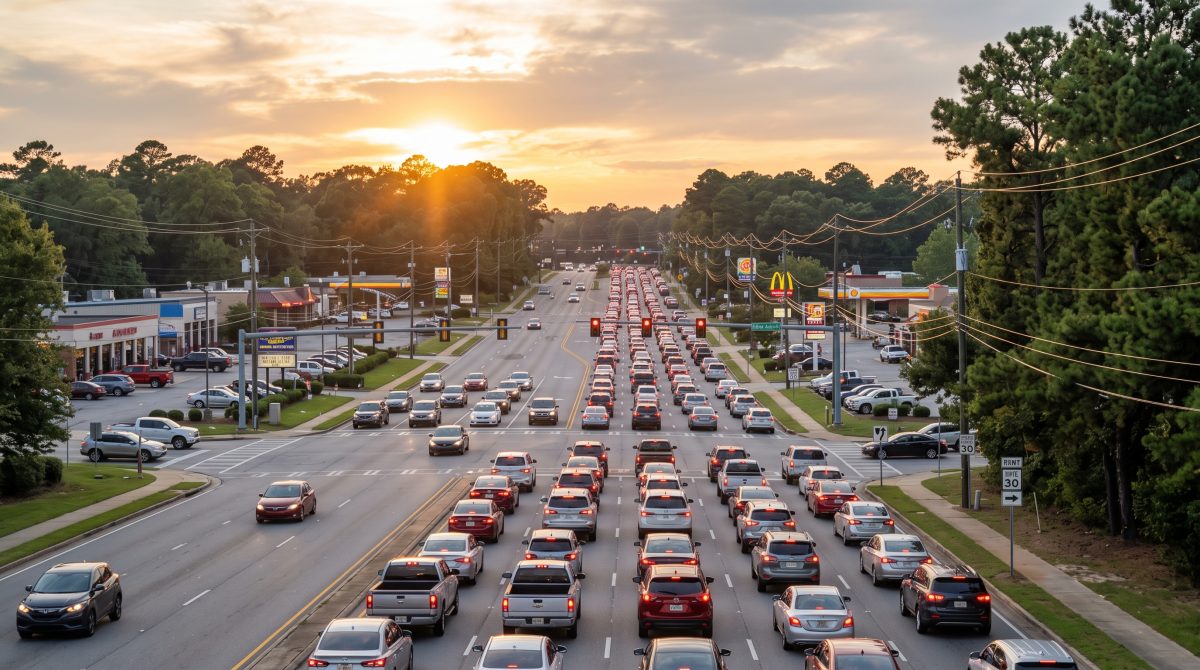
Getting across Columbus, Georgia, can be frustrating when traffic backs up at busy intersections, construction disrupts familiar routes, or drivers encounter long lines during the morning and evening commutes. As residential and commercial development continues to reshape parts of the region, transportation officials are examining roadways where traffic flow, safety and infrastructure need attention.
Several corridors stand out in local transportation studies, including Forrest Road, J.R. Allen Parkway and U.S. 27 north of Columbus. The concerns differ by location. Some involve high traffic volumes and speeding, while others center on intersection operations, highway improvements and the effects of continued development.
One important distinction is that a road experiencing congestion is not necessarily getting worse. Proving that traffic is deteriorating requires comparing traffic counts, travel times or congestion measurements across multiple years. Nevertheless, local transportation studies identify several places where drivers may encounter challenges and where improvements are being considered.
1. Forrest Road: Nearly 18,000 Vehicles a Day
Forrest Road is one of the clearest examples of a Columbus roadway where officials have documented traffic and safety concerns.
According to the city’s Forrest Road Improvement Project information, the stretch between Macon Road and Woodruff Farm Road carries approximately 17,850 vehicles per day. The corridor extends about 2.23 miles and includes 24 intersecting streets.
The city’s study also identified 730 reported crashes along the route during the five-year period from 2020 through 2024. A speed study found that motorists were traveling approximately 10 to 15 mph above the posted 30-mph speed limit.
Those findings raise concerns beyond rush-hour congestion. Higher speeds, frequent intersections and the volume of vehicles using the corridor can create challenges for motorists, pedestrians and people entering or leaving nearby properties.
The proposed improvements include reorganizing the roadway into three lanes, with one travel lane in each direction and a center two-way left-turn lane. Plans also call for a 5-foot sidewalk on the north side and a wider, 8- to 10-foot multi-use trail on the south side.
The project is intended to help reduce speeding, improve safety and make the corridor more predictable for drivers and other road users. The city’s project information describes the proposed improvements, but readers should check current project updates for construction schedules and implementation status. (Columbus GA)
For residents who regularly travel between Macon Road and Woodruff Farm Road, Forrest Road is worth watching as city officials work through the improvement process.
2. J.R. Allen Parkway: A Major Route Facing Continued Development Pressure
J.R. Allen Parkway, which carries U.S. 80 traffic through northern Columbus, is an important route for commuters, commercial vehicles and people traveling between Columbus and surrounding communities.
The corridor connects major roads and provides access to residential neighborhoods, shopping areas and employment destinations. Traffic conditions can vary considerably depending on the time of day, the interchange being used and the direction of travel.
A corridor study published by the Columbus Metropolitan Planning Organization examined traffic operations along J.R. Allen Parkway and nearby intersections, including the Veterans Parkway and Double Churches Road area.
The study includes traffic counts from 2020 and projected traffic conditions for 2025. At the Veterans Parkway intersection, the report recorded approximately 2,245 vehicles entering the intersection during the evening peak hour across the approaches it measured.
That figure illustrates the substantial amount of traffic handled by the intersection during a concentrated period. However, the 2025 figures in the study were projections, not necessarily observed counts. They should not be treated as proof that congestion has increased by a particular percentage. (Columbus GA Government)
For drivers, the practical challenge is that traffic on a major highway depends on more than the number of vehicles traveling along it. Interchange design, turning movements, signal timing and merging traffic can all affect how smoothly vehicles move through the corridor.
Residents who use J.R. Allen Parkway regularly should watch for transportation project announcements and changes to nearby intersections, especially where highway traffic meets busy commercial and residential roads.
3. U.S. 27 North of Columbus: Highway Construction and Growth
The U.S. 27/SR 1 corridor north of Columbus is another important area for drivers to monitor.
The highway widening project extending from Turnberry Lane in Muscogee County to State Route 315 in Harris County is designed to improve transportation efficiency and accommodate traffic needs along the route.
Construction has already affected nearby roads. In September 2026, the Georgia Department of Transportation announced a temporary closure of Pierce Chapel Road between U.S. 27/SR 1 and Blackmon Road. The closure was scheduled to begin September 21 and last approximately two weeks, weather permitting, while contractors adjusted the roadway to match the widening project.
The announced detour directed motorists to use DeKalb Drive, Hancock Road and Blackmon Road. At the time of the announcement, major construction activities on the broader highway project were expected to be completed in early summer 2027. Drivers should check current transportation updates before relying on the original schedule or detour information. (https://www.wtvm.com)
Construction can create temporary delays even when a project is intended to improve traffic flow over the longer term. Lane changes, temporary closures, construction equipment and detours may all affect travel times.
The highway project also reflects the transportation demands associated with growth north of Columbus. As homes and businesses are added in the surrounding area, the highway’s capacity and connections to local roads become increasingly important.
For commuters who travel between Columbus and Harris County, construction updates are particularly relevant because a closure on a connecting road can affect a route even when the main highway remains open.
4. Downtown Columbus: Roadwork Can Change the Daily Commute
Traffic concerns are not limited to the city’s major highways. Road construction and infrastructure improvements in downtown Columbus can also affect daily travel.
In January 2026, a months-long project involving Eighth Street was announced, with intermittent closures planned between Front Avenue and Veterans Parkway. The work was expected to proceed in phases over approximately 120 days, with officials warning motorists about delays, rough pavement and changing traffic patterns.
The project illustrates how construction can affect familiar routes even when the work is intended to improve the roadway. Downtown drivers may need to adjust their routes, allow extra travel time or pay attention to temporary traffic controls.
Because the original schedule was announced months ago, drivers should verify whether any remaining work or restrictions are still in effect before traveling through the area. (https://www.wtvm.com)
For businesses, construction can also affect deliveries, customer access and employees’ commutes. Keeping residents informed about the timing and location of roadwork is therefore an important part of local service journalism.
5. Veterans Parkway and Nearby Intersections: Heavy Traffic Meets Commercial Activity
Veterans Parkway is one of Columbus’s major commercial corridors, connecting shopping centers, restaurants, residential neighborhoods and other destinations.
Its numerous intersections require vehicles to turn across traffic, enter shopping-center driveways and merge into busy travel lanes. These movements can slow traffic, particularly during peak periods when commuters and shoppers are using the same roads.
The J.R. Allen Parkway corridor study examined traffic at the intersection of Veterans Parkway and Double Churches Road, among other locations. That intersection is one of the points where traffic on a major commercial road interacts with traffic entering and leaving the highway corridor. (Columbus GA Government)
However, identifying a busy intersection does not automatically establish that congestion has become worse over time. A reliable assessment would require current traffic counts and comparisons with earlier measurements.
For drivers, the most useful approach is to anticipate slower movement around busy commercial intersections, leave extra space when traffic is backing up and avoid sudden lane changes near turn lanes and interchange ramps.
Why Columbus Traffic Could Become a Bigger Issue
Traffic patterns change as communities grow, businesses open and residents adjust their commuting habits. A road that once handled mostly local traffic may eventually serve commuters traveling longer distances, customers visiting commercial developments and vehicles accessing new neighborhoods.
The challenge is not simply building more lanes. Transportation planners must also consider intersection safety, pedestrian access, traffic signals, road maintenance and the connections between highways and local streets.
Columbus’ Forrest Road improvement study, the J.R. Allen Parkway corridor analysis and the U.S. 27 widening project illustrate three different approaches to these challenges: redesigning a local arterial, studying traffic operations at major intersections and increasing highway capacity.
Whether these efforts significantly reduce delays will depend on their implementation and the traffic conditions that follow.
For residents, the most important questions are whether travel times improve, whether crashes decline and whether the road network can accommodate future demand without creating new bottlenecks elsewhere.
How Drivers Can Check Traffic and Construction Updates
Columbus-area motorists can use several official resources to prepare for roadwork and changing traffic conditions.
- Columbus Consolidated Government: Check city announcements and information about local transportation projects.
- Columbus Metropolitan Planning Organization: Review transportation planning documents, corridor studies and regional improvement projects.
- Georgia Department of Transportation: Find state highway project information, construction updates and transportation resources.
- Georgia 511: Check current traffic conditions, incidents, road closures and travel information before leaving.
Checking conditions before departure can help drivers avoid active work zones and allow more time for trips during periods of construction or heavy traffic.
The Bottom Line
Forrest Road, J.R. Allen Parkway and U.S. 27 north of Columbus are three corridors worth watching as local officials address transportation needs and construction continues in the region.
Forrest Road stands out for its documented traffic volume and crash history. J.R. Allen Parkway has been the subject of a corridor study examining major intersections and peak-hour traffic. U.S. 27 is undergoing a widening project that has affected connecting roads and is intended to improve transportation efficiency.
These developments show where transportation challenges are receiving attention, but they do not establish that congestion is worsening across all of Columbus. That conclusion would require current traffic counts and comparable historical measurements.
For local drivers, the immediate takeaway is to watch for construction updates, plan around known work zones and stay alert near busy intersections. For the city, the longer-term test will be whether infrastructure improvements make travel safer and more reliable as Columbus and its surrounding communities continue to develop.
News organizations may republish this story with credit. See our guidelines.
Know someone who'd want to read this? Email it to a friend.
Own a Columbus business? Reach 40,000+ monthly readers. Ads from $125/month. See ad optionsPlan your weekend with Columbus Times
Get This Weekend in Columbus every Thursday: the best local events, free things to do and family fun, plus each evening's local news. Free, and you can unsubscribe anytime.
More stories
 Local Why Are So Many New Homes Being Built Around Columbus? Follow the Development
 Local Which Columbus-Area Communities Are Getting New Investment? Here’s Where Millions Are Headed
 Local Columbus Road Closures Residents Should Know About: Cherokee Avenue Lane Closing for a Month
 Local Columbus, Georgia, History Facts That May Surprise Even Lifelong Residents