Why Are So Many New Homes Being Built Around Columbus? Follow the Development
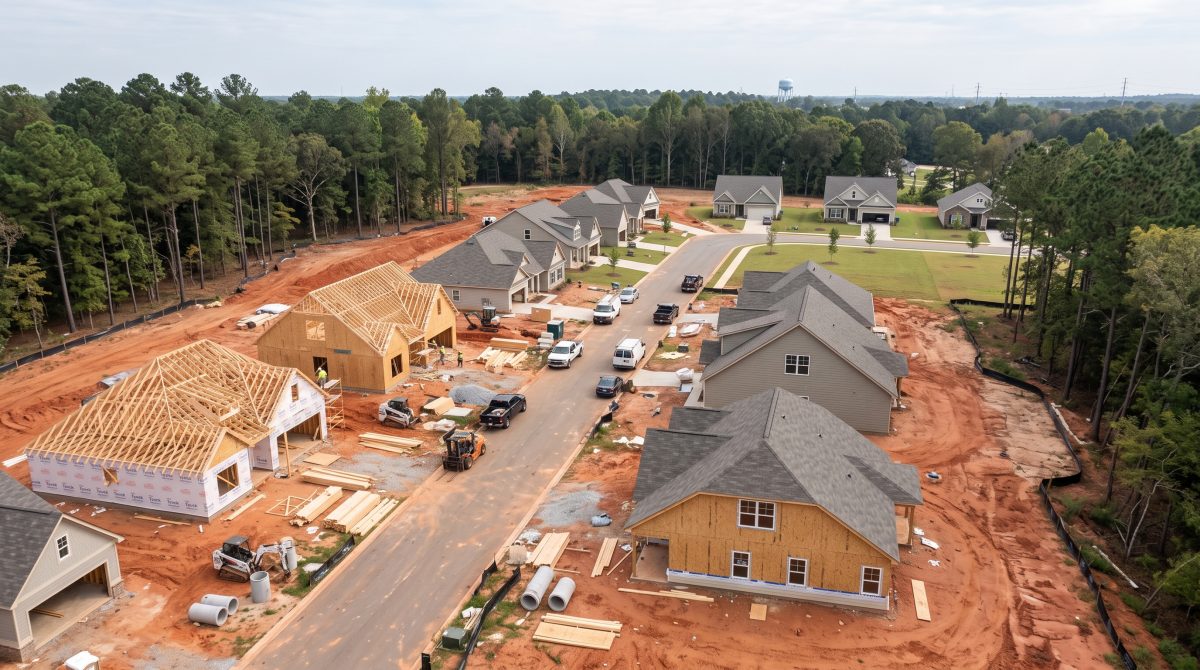
Drive through parts of Columbus and the surrounding Chattahoochee Valley, and the signs of development are hard to miss. Cleared land, new subdivisions, construction equipment and freshly paved neighborhood streets are changing the landscape in communities throughout the region.
The construction raises an important question: Why are so many new homes being built around Columbus, and what does that development say about the area’s housing market?
The answer involves several factors, including the need for different types of housing, the area’s established employment base, demand from military-connected households, and the availability of land for residential development outside established neighborhoods.
However, new construction does not automatically mean Columbus is experiencing a population boom. The latest population estimates show a more complicated picture, making it important to look beyond construction activity to understand what is happening in the local housing market.
Columbus Still Has a Substantial Housing Market
Columbus remains one of Georgia’s largest cities and an important economic center for the western part of the state.
According to the U.S. Census Bureau, Columbus had an estimated population of 202,171 in July 2025. That was slightly higher than the 2024 estimate of 201,830, although the city’s population remained below its 2020 census count of 206,922. The figures suggest modest recent growth following a longer period of population decline rather than an explosive increase in residents.
The distinction matters because housing construction is influenced by more than population growth. New homes may be built to replace older properties, accommodate households moving within the region, serve buyers seeking different amenities, or provide housing in locations where builders believe demand will support additional development.
Columbus also has a substantial existing housing market. The Census Bureau’s 2020–2024 estimates put the city’s median value of owner-occupied homes at $193,900, while the median gross rent was $1,106 per month.
Those figures provide a useful baseline for understanding the local market, although they do not represent the current asking price of newly constructed homes. New homes may carry higher prices because of construction costs, lot sizes, modern layouts and neighborhood amenities.
For buyers, the challenge is determining whether the additional cost of a new home is justified by its condition, location and expected maintenance expenses.
Source: U.S. Census Bureau — Columbus, Georgia QuickFacts
Fort Benning Remains an Important Part of the Housing Picture
One factor that distinguishes Columbus from many communities of similar size is its relationship with Fort Benning, the major Army installation located south of the city.
The military installation and its surrounding support economy contribute to the region’s housing needs. Service members, civilian employees, military families and contractors all require places to live, creating demand across different price ranges and housing types.
Military-related moves can also produce a recurring pattern of housing turnover. Some households rent, others purchase homes, and some sell their properties when reassigned. That activity can support demand for both existing houses and new construction.
Location is an important consideration for these households. Depending on their budgets and commuting preferences, buyers may consider neighborhoods in Columbus or communities outside the city.
New construction can appeal to military families who want modern floor plans, updated systems and fewer immediate repair projects. However, the financial decision depends on how long a household expects to remain in the area, mortgage costs and the potential resale value of the property.
Fort Benning is not the sole explanation for residential development, but its presence is an important part of the region’s economic and housing context.
Why Builders Look Beyond Established Neighborhoods
Building a new home requires more than finding a buyer. Developers must secure land, obtain the necessary approvals, arrange financing, install infrastructure and determine whether a project can generate an acceptable return.
In established parts of Columbus, available land may be limited or more expensive to develop. Existing buildings, utility infrastructure, zoning restrictions and the cost of preparing a property can complicate construction.
Land on the outskirts of the city and in surrounding communities may offer builders different opportunities.
Larger parcels can accommodate multiple homes, internal streets, stormwater systems and neighborhood amenities. Developers may also be able to construct houses in phases, adding lots as earlier sections are completed and sold.
That approach can make suburban development attractive when builders expect sufficient demand from households seeking more space, newer homes or access to particular schools and commuting routes.
But development outside established neighborhoods also creates challenges. Roads, water and sewer systems, drainage infrastructure and emergency services must keep pace with new housing. When those investments lag behind construction, residents may experience traffic congestion, drainage problems or pressure on public facilities.
The location of new subdivisions therefore matters as much as the number of homes being built.
What About Phenix City, Harris County and Other Nearby Communities?
The Columbus housing market does not stop at the city limits.
Phenix City, Alabama, sits across the Chattahoochee River and forms part of the broader regional housing market. Harris County, north of Columbus, also attracts attention from people considering homes outside the city’s established neighborhoods.
For some buyers, the choice between Columbus and a nearby community comes down to the total cost of ownership, commute time, property taxes, school preferences and the type of home available.
A household comparing properties should look beyond the advertised purchase price. Homeowners association fees, insurance, utility costs, property taxes and transportation expenses can significantly affect the overall cost of living.
New construction can also vary considerably from one community to another. One subdivision may emphasize smaller starter homes, while another may offer larger houses on more spacious lots.
These differences make it difficult to describe the entire region’s development with a single trend. A complete picture requires examining individual projects, their proposed number of homes, price ranges, construction timelines and infrastructure requirements.
For residents, the practical question is not simply whether a neighboring community is growing. It is whether the homes being built match the needs and budgets of the people who want to live there.
New Construction Does Not Always Mean Affordable Housing
One of the biggest questions surrounding residential development is whether the additional supply will make housing more affordable.
In theory, adding homes can help ease competition for available properties, particularly when construction keeps pace with demand. A larger selection of houses may also give buyers more choices in terms of size, location and features.
However, the impact depends on what developers build and how much those homes cost.
New houses generally include the cost of land, materials, labor, infrastructure and financing. Those expenses can put newly constructed homes beyond the reach of some first-time buyers, even when the surrounding area has relatively affordable existing properties.
The result can be a market in which new subdivisions continue to expand while households with lower incomes struggle to purchase a home.
Columbus already faces the challenge of meeting housing needs across different income levels. The city’s Community Reinvestment Department has identified affordable housing, homeownership opportunities and neighborhood reinvestment as priorities in its planning process.
The city’s fiscal year 2025 housing report also documented efforts to expand housing options for lower-income residents.
Among the projects highlighted were seven single-family homes under construction through the Nueva Valley project in partnership with Habitat for Humanity, additional homes at Elliot’s Walk, and Providence Pointe, a rental development intended for older residents.
The report also described the Miles Crossing development, which is intended to expand rental opportunities for low-income households.
These projects illustrate an important distinction: Housing development includes more than market-rate subdivisions. Affordable homeownership programs, income-restricted apartments and senior housing also play a role in meeting the region’s needs.
Sources: City of Columbus Community Reinvestment Department and the city’s 2024–2025 Consolidated Annual Performance and Evaluation Report.
Roads, Schools and Utilities Will Help Determine the Impact
Residential development can bring new customers to local businesses, expand the property-tax base and support additional investment. It can also create costs that extend beyond the boundaries of a subdivision.
As neighborhoods grow, local officials must consider whether existing roads can handle additional traffic and whether water, sewer and stormwater systems have sufficient capacity.
School enrollment and the availability of public services may also become important in areas experiencing concentrated residential construction.
These issues can be especially significant when several developments are proposed near one another. Each project might appear manageable on its own, but the combined impact can be more substantial.
Residents evaluating a proposed subdivision should pay attention to public planning documents, rezoning requests, development approvals and infrastructure plans. Those records can reveal whether a project is still being considered, has received approval or has advanced to construction.
They can also help distinguish between a development that has been announced and one that is actually moving forward.
That distinction matters because proposed projects can change in size, face delays or fail to proceed as originally planned.
How to Follow New Housing Developments Around Columbus
For residents who want to understand where the next wave of construction may occur, several public records offer a useful starting point.
Columbus Consolidated Government: The city’s planning, zoning and community development information can help residents track proposed projects, land-use decisions and housing initiatives. Public meeting agendas and planning documents are particularly useful for identifying projects before construction begins.
Muscogee County property records: Property information can help residents identify land ownership and research parcels associated with proposed development. Ownership changes alone, however, do not confirm that a subdivision will be built.
Harris County government: Residents interested in development north of Columbus can review county planning information and public records for relevant land-use and infrastructure decisions.
Phenix City and Russell County: Because the Alabama side of the region is part of the broader housing market, local planning and development records can provide additional context about residential growth across the river.
U.S. Census Bureau: Population estimates, housing statistics and household data can help determine whether construction activity is occurring alongside population growth or other changes in the housing market.
The most informative approach is to compare several types of information rather than relying on construction activity alone. A cleared parcel may eventually become a subdivision, but approved plans, building permits and completed homes provide stronger evidence of actual development.
The Bigger Question: Who Will Be Able to Afford the New Homes?
Columbus and its surrounding communities have reasons to expect continued interest in residential development. The region has an established employment base, a major military installation and a housing market that serves households with different budgets and preferences.
Yet the number of new homes being built is only one measure of progress.
The more important question is whether development produces housing that local workers, young families, military households, retirees and first-time buyers can realistically afford.
If construction expands the supply of homes across a range of prices, it can give residents more options and help accommodate changing housing needs. If most new construction targets a narrow segment of the market, some households may continue to face limited choices despite the visible growth.
Infrastructure will also help determine whether new neighborhoods improve the region’s long-term prospects. Roads, utilities and public services must support the people who move into newly developed areas.
For now, the signs of construction around Columbus tell only part of the story. Understanding the full picture requires following individual projects, examining the number and type of homes planned, and comparing those developments with population trends and local housing costs.
The real measure of success will not simply be how many new homes appear on the landscape. It will be whether those homes help build a region where more residents can find a suitable place to live.
News organizations may republish this story with credit. See our guidelines.
Know someone who'd want to read this? Email it to a friend.
Own a Columbus business? Reach 40,000+ monthly readers. Ads from $125/month. See ad optionsPlan your weekend with Columbus Times
Get This Weekend in Columbus every Thursday: the best local events, free things to do and family fun, plus each evening's local news. Free, and you can unsubscribe anytime.
More stories
 Local Which Columbus-Area Communities Are Getting New Investment? Here’s Where Millions Are Headed
 Local Columbus Road Closures Residents Should Know About: Cherokee Avenue Lane Closing for a Month
 Local Columbus, Georgia, History Facts That May Surprise Even Lifelong Residents
 Local The Columbus Neighborhoods People Should Know About