Columbus Homestead Exemption: How to File by April 1 for $13,500 Off Your Assessed Value
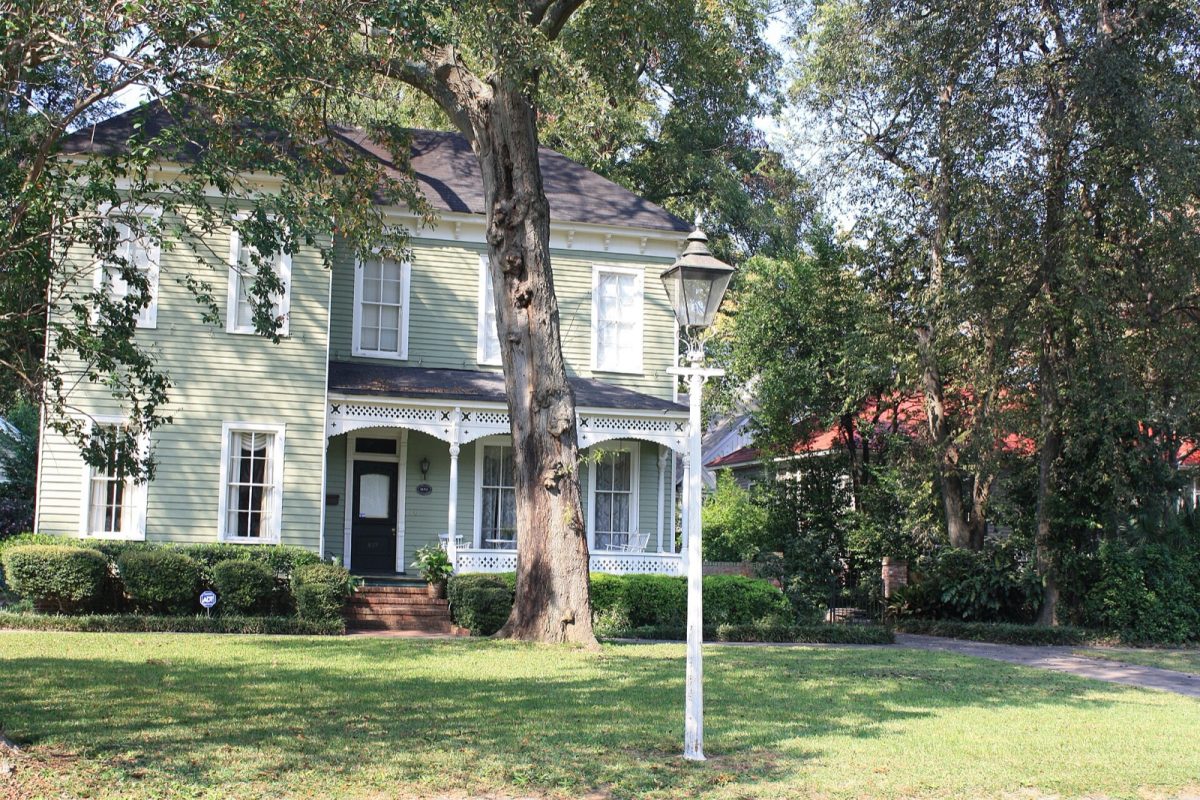
A two-story house with a front porch in the Columbus Historic District (file photo). Photo: Deutschlandreform / Wikimedia Commons (CC BY-SA 3.0)
COLUMBUS, Ga. - Columbus homeowners who qualify for the standard homestead exemption can reduce their property's assessed value by $13,500 for covered property taxes. To claim the exemption, owners must file with the Muscogee County Tax Commissioner's Office by April 1, with an additional filing opportunity during the property assessment appeal period. The exemption also freezes the assessment on the property, according to the Tax Commissioner's Office.
The next regular filing deadline is April 1, 2027, which is 154 days after Thursday, Oct. 29, 2026. Applications are accepted year-round, but the deadline determines when an exemption generally takes effect. Homeowners who qualify can keep the exemption from year to year without filing another application unless their circumstances change.
Step 1: Check That You Qualify
Georgia's homestead exemption rules generally require homeowners to own and occupy their homes as their legal residences on Jan. 1 of the tax year. For a 2027 exemption, the applicant must own the property as of Jan. 1, 2027, and use it as a legal residence. The homeowner must actually occupy the property rather than merely own it.
Georgia allows an exception when homeowners are away from their residences for health reasons. Those circumstances do not automatically disqualify an otherwise eligible homeowner from receiving the exemption. A family member or friend can notify the tax commissioner about the homeowner's situation.
Columbus offers the H1 Standard Homestead Exemption, which reduces the property's assessed value by $13,500. The exemption applies to maintenance and operation millage levied by the county and school board, but it does not apply to bond debt millage. The city's exemption information also states that the homestead exemption "freezes the assessment on the property."
Step 2: Gather Your Deed, License and Registration Information
The Muscogee County Tax Commissioner's Office requires applicants to provide a copy of the recorded deed and a Georgia driver's license showing their current address. Voter registration and vehicle registration must both be in Muscogee County. The Board of Tax Assessors also identifies a recorded warranty deed, proof of occupancy and proof of Georgia residency among the application requirements.
Homeowners should gather these documents before visiting the office to file. Owners can look up their property record, including how it is listed, through the city's property records search at publicaccess.columbusga.gov. Applicants who are unsure which records apply to them can call the Tax Commissioner's Office at (706) 653-4211 before making the trip.
Step 3: File at the Tax Commissioner's Office at 3111 Citizens Way
| Detail | Information |
|---|---|
| Address | 3111 Citizens Way, Columbus, GA 31906 |
| Division | Property Tax Division |
| Office hours | Monday-Friday, 8:30 a.m. to 4:30 p.m. |
| Telephone | (706) 653-4211 |
| [email protected] | |
| Regular deadline | April 1, 2027 |
Homeowners file their homestead exemption applications through the Property Tax Division of the Tax Commissioner's Office. The office accepts applications throughout the year, although applications received after the regular April 1 deadline generally apply to the following year. Plan to file in person at 3111 Citizens Way, and call (706) 653-4211 with questions about the filing procedure.
Georgia's Department of Revenue also allows taxpayers to apply beyond April 1, through the end of the 45-day period for appealing their assessment notices. The Tax Commissioner's Office says a homestead exemption application can be submitted with an appeal, separately from an appeal or in place of an appeal during that period. Because the regular deadline and assessment appeal period operate differently, homeowners filing after April 1 should contact the Tax Commissioner's Office to confirm the applicable timing.
The Board of Tax Assessors reviews exemption applications and approves or denies them under Section 48-5-41 of the Georgia Code. The board meets each Wednesday at 9 a.m. in the City Services Building at 3111 Citizens Way. Its office hours are Monday through Friday, 8 a.m. to 5 p.m., and its telephone number is (706) 225-4398.
Step 4: Check Senior, Veteran and Other Special Exemptions
Columbus offers additional property tax exemptions for qualifying older homeowners, disabled veterans and certain surviving spouses. These exemptions have different eligibility requirements, documentation rules and effects on particular tax levies. Applicants should compare the available options before choosing an exemption because some benefits replace other exemptions rather than adding to them.
| Exemption or program | Qualifications and benefits |
|---|---|
| H2 Standard Elderly General | Age 65 or older by Jan. 1; prior-year household net income no more than $10,000; up to $21,500 off assessed value and $4,000 off the state portion; covers county, school and state taxes, including bond debt |
| Elderly school tax exemption | Age 62 or older; prior-year net income no more than $10,000; applies to school taxes, including school bonds |
| Floating exemption | Age 62 or older; gross household income $30,000 or less; applies to state and county taxes, not school taxes |
| Disabled veteran | 100% disabled; up to $121,812 off assessed value for all levies, using the 2025 amount |
| Surviving spouse of service member | Unremarried spouse of a service member killed in war or armed conflict; up to $121,812 using the 2025 amount |
| Surviving spouse of firefighter or peace officer | Unremarried spouse of someone killed in the line of duty; 100% exemption |
| Property tax deferral | Age 62 or older; gross household income $15,000 or less; defers taxes until ownership changes or deferred taxes plus interest reach 85% of fair market value |
For the H2 elderly exemption, the $10,000 income limit excludes Social Security income up to $96,432 under the published 2025 figure. Applicants must provide copies of federal and state tax returns, Social Security statements and other income statements for the previous year. Applications are traditionally accepted from Jan. 2 through April 1 and during the assessment appeal period.
The floating exemption deserves particular attention because it replaces other state and county exemptions. The Board of Tax Assessors warns that "in many instances the granting of this exemption will initially increase the amount of taxes." Homeowners considering that option should ask the assessors' office, at (706) 225-4398, how it would affect their existing benefits.
Disabled veterans seeking the applicable exemption must provide a VA benefits letter. Qualifying surviving spouses of service members must provide documentation from the Secretary of Defense, while surviving spouses of firefighters or peace officers must provide agency documentation. The published $121,812 exemption amount applies to 2025 and should not be assumed to be the 2027 amount.
Step 5: Know What Happens After You File
The Board of Tax Assessors determines whether an application qualifies for an exemption. Once approved, the exemption renews automatically each year unless the owner moves, ownership changes or the owner applies for a different exemption. Homeowners therefore generally do not need to submit the same application annually while their eligibility remains unchanged.
The property tax calendar also includes assessment notices in May, followed by a 45-day appeal period. Tax bills are mailed in August, with a 40% installment or full payment due in October and the remaining 60% due in December. These dates help homeowners distinguish the homestead filing deadline from the later assessment and payment process.
Applicants whose homestead exemption requests are denied can appeal to the Muscogee County Board of Equalization. The grand jury appoints members of that board, which handles appeals involving exemption denials. Homeowners can contact the Board of Tax Assessors for information about an application decision and the relevant appeal process.
Worked Example: How the $13,500 Exemption Changes Taxable Value
Georgia generally assesses residential property at 40% of its fair market value for property tax purposes. For illustration, a Columbus home with a fair market value of $200,000 would have an assessed value of $80,000 before exemptions. Applying the $13,500 H1 exemption would reduce the taxable assessed value to $66,500 for the levies covered by the exemption.
| Calculation | Amount |
|---|---|
| Illustrative fair market value | $200,000 |
| Assessed value at 40% | $80,000 |
| H1 standard exemption | -$13,500 |
| Taxable assessed value for covered levies | $66,500 |
| Savings per covered mill | $13.50 |
One mill equals $1 in tax for every $1,000 of taxable assessed value. Dividing the $13,500 exemption by $1,000 produces $13.50 in savings for each mill of the applicable non-bond tax rate. Actual savings depend on the verified millage rates, so this example does not establish a specific annual tax reduction.
Muscogee County also appears on the Georgia Department of Revenue's list of jurisdictions offering a valuation-freeze exemption. The Columbus Tax Commissioner's Office describes its standard homestead exemption as freezing the assessment on the property. Homeowners should distinguish that feature from the $13,500 reduction when reviewing the benefits of their exemption.
## How we did this Columbus Times reviewed homestead exemption instructions, application requirements, office information and property tax calendar details published by the Columbus Consolidated Government's Tax Commissioner's Office and Board of Tax Assessors. We also used Georgia Department of Revenue guidance and information available through the city's public property access and resources websites, including columbusga.gov, dor.georgia.gov, publicaccess.columbusga.gov and resources.columbusga.gov, with facts verified Oct. 28, 2026. The $200,000 home calculation is an illustration based on Georgia's 40% assessment rule and Columbus's $13,500 standard exemption, not an estimate of an individual homeowner's property tax bill.
Source: Muscogee County Tax Commissioner and Board of Tax Assessors (columbusga.gov); Georgia Department of Revenue

News organizations may republish this story with credit. See our guidelines.
Know someone who'd want to read this? Email it to a friend.
Own a Columbus business? 60,000+ page views a month. Ads from $125/month. See ad options Follow Columbus Times on FacebookLocal news, events and people, in your feed every day.Most read this week
- Georgia Spent $165.7 Million on Medicaid Work Requirement Program, but Only 18,527 Were Enrolled After 3 Years
- 8 Columbus Restaurants Got a C on Their Health Inspection in 2026, the Most of Any Year Since 2022. Here's Every One
- Columbus' Top-Rated Barbecue: 12 BBQ Joints Ranked by Google Stars and Health Scores
- 12 Famous People From Columbus, Ga.: A Hall of Fame Slugger, a Grammy-Winning Bluesman and America's First Black Military Pilot
- 12 Columbus Seafood and Fish Restaurants Ranked by Google Stars, With Latest Health Scores
More stories
 Real Estate Homebuilder Confidence Falls to 14-Year Low as Mortgage Rates Hit 7.4% and 43% of Builders Cut Prices
 Real Estate Up to $49,999 for a Down Payment: 4 Programs Helping Columbus Families Buy Their First Home
 Real Estate Who Owns the Most Land in Columbus, Georgia? Records Reveal Major Landholders
 Real Estate Renting vs. Buying in 2026: What a Home Really Costs in Columbus, Phenix City and Smiths Station

Comments
Be respectful. No personal attacks, hate speech, spam or anyone's private information. Every comment is reviewed before it appears. Comment rules
No comments yet. Be the first to share your thoughts.