Which Columbus-Area Communities Are Getting New Investment? Here’s Where Millions Are Headed
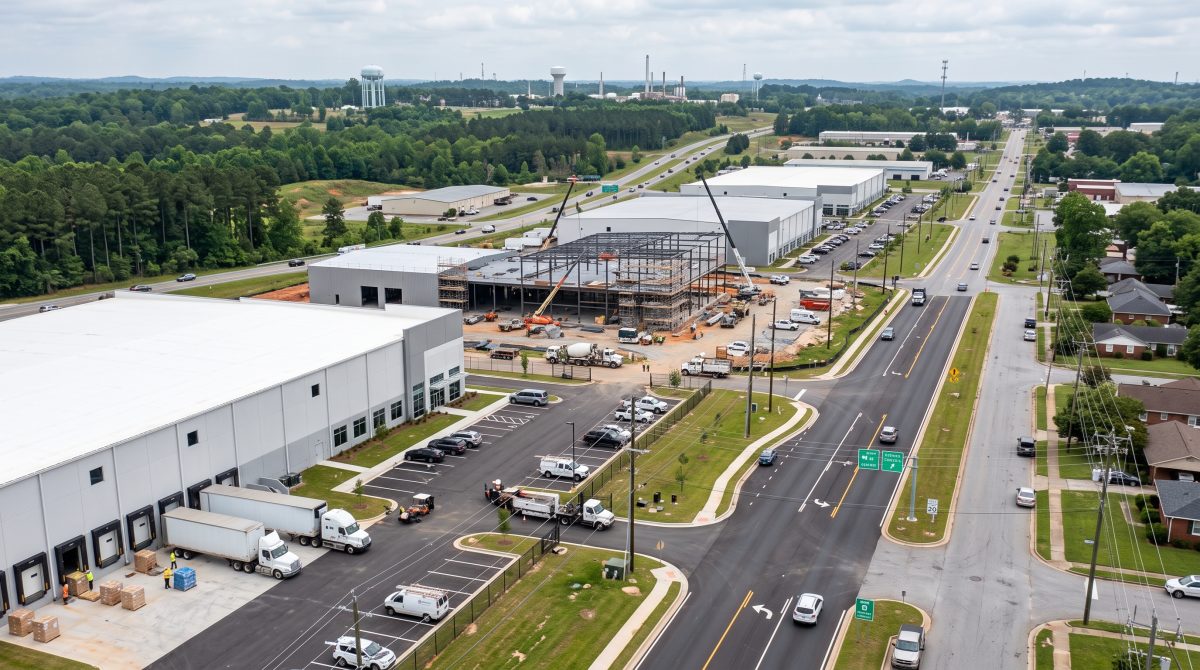
Columbus, Georgia, is attracting hundreds of millions of dollars in announced business investments, but the money is not being distributed evenly across the city. Major manufacturing expansions, new industrial facilities and a proposed technology campus are creating new opportunities in some parts of Muscogee County, while city officials are also working to direct resources toward neighborhoods that need infrastructure improvements, housing investment and economic revitalization.
The developments range from established industrial corridors along Macon Road to business parks in eastern Columbus and a proposed data center project in northeast Muscogee County. Other efforts focus on improving South Columbus and encouraging businesses to invest in areas that have historically received less private development. Together, these projects offer a picture of where economic activity is concentrating and where additional investment could reshape the community in the years ahead.
However, there is an important distinction between a project that has been announced, one that is under construction and one that has completed its expansion. The locations attracting the largest corporate commitments will not necessarily experience the greatest immediate improvements in housing, retail options or neighborhood services.
1. East Columbus and Corporate Ridge: New Jobs in Healthcare Logistics
East Columbus is among the areas benefiting from an announced expansion in healthcare logistics.
In December 2025, BioTouch announced plans to invest $12.5 million to expand two existing Columbus facilities, with the company expecting to create 480 jobs over four years. The facilities are located at Corporate Ridge Business Park and Columbus East Industrial Park.
BioTouch specializes in healthcare logistics and the production of kits used for medical testing and sample collection. The expansion is expected to support additional manufacturing and logistics activity, providing employment opportunities for workers interested in production, warehouse operations and related positions.
The company reported that its Columbus operations employed approximately 390 people before the expansion announcement. Construction and hiring were underway when the project was announced, with full operations expected by 2028.
For the surrounding area, the significance extends beyond the company’s investment. Expanding industrial operations can increase demand for transportation services, equipment suppliers, maintenance contractors and other businesses that support manufacturing and distribution.
The ultimate benefit to nearby residents will depend on the positions available, the wages offered and how many jobs go to people who already live in Columbus.
Source: Georgia Governor’s Office, December 4, 2025.
2. Macon Road: Pratt & Whitney Commits Another $200 Million
The Macon Road industrial corridor is receiving another major investment from Pratt & Whitney, the aerospace manufacturer that has maintained a significant presence in Columbus for decades.
In February 2026, the company announced a new $200 million expansion of its Columbus operations. The project is expected to create 15 new jobs initially, with additional employment opportunities anticipated as the expansion progresses.
The work involves Pratt & Whitney’s Columbus Engine Center and Columbus Forge, located at 8987 Macon Road and 8801 Macon Road, respectively. The company expects the latest expansion to be completed by 2028.
The announcement followed the completion of a separate expansion originally announced in 2023. That earlier project added approximately 81,000 square feet to the Columbus Engine Center and nearly 400 jobs.
The new investment is intended to increase production capacity for components used in military and commercial aircraft engine programs.
Unlike projects that establish an entirely new business in an unfamiliar location, Pratt & Whitney’s expansion builds on an existing industrial operation and workforce. That can help sustain Columbus’ role in aerospace manufacturing while creating opportunities for suppliers and skilled workers.
For residents, the most direct benefits are likely to involve specialized manufacturing, engineering, equipment maintenance and other technical occupations. The initial commitment of 15 jobs is relatively modest compared with the $200 million investment, although the company has indicated that more positions will follow.
Source: Georgia Governor’s Office, February 24, 2026.
3. Muscogee Technology Park: A Major Manufacturing Project on the Horizon
Muscogee Technology Park is positioned to play an important role in Columbus’ efforts to attract advanced manufacturing businesses.
One of the region’s largest recent announcements came in September 2025, when JS Link America announced plans to invest approximately $223 million in a new rare-earth permanent magnet manufacturing facility in Columbus.
The project is expected to create more than 520 jobs in Muscogee County. The facility is intended to produce permanent magnets used in industries that include automobiles, energy, electronics, robotics and aerospace.
These components are important to various modern technologies, including electric motors and certain renewable energy systems. Establishing a manufacturing operation in this sector could help Columbus diversify its industrial base and attract other businesses that depend on specialized components.
The project also reflects a broader effort to strengthen domestic manufacturing supply chains.
For local workers, the potential opportunities could extend across production, quality control, maintenance, logistics and technical operations. The number of jobs ultimately available to residents will depend on the company’s hiring needs, training requirements and production schedule.
The announcement is significant, but residents should distinguish the planned investment and projected job creation from employment already in place. The final economic impact will become clearer as the facility advances toward operation.
Source: Georgia Governor’s Office, September 3, 2025.
4. Columbus’ Existing Manufacturing Base: Smucker and Sigma Stretch Film
New investment is not limited to companies building entirely new facilities. Some of the region’s largest commitments involve expanding existing operations or putting previously used industrial properties back into productive use.
J.M. Smucker Co. announced a $120 million investment in its Columbus bakery in 2025. The project is expected to add 48 jobs while retaining more than 360 existing positions. The bakery produces Hostess snack cakes, including Twinkies, and the expansion is intended to increase production capacity.
The investment is important because it combines new job creation with the retention of an established workforce. Retaining existing manufacturing positions can help preserve household income and support businesses that depend on employees spending money in the local economy.
Sigma Stretch Film of Georgia also announced a $39 million investment in a new Columbus manufacturing operation, with plans to create 100 jobs. The project involves reusing an existing manufacturing facility rather than relying entirely on new construction.
Reusing industrial property can provide an alternative to leaving buildings vacant or developing previously undeveloped land. It can also allow businesses to bring facilities into operation without starting every stage of construction from scratch.
These projects illustrate two different ways Columbus is attracting investment: encouraging established employers to expand and finding new industrial uses for existing properties.
Sources: Choose Columbus; Georgia Department of Community Affairs.
5. Northeast Muscogee County: A Proposed $5.18 Billion Data Center Campus
One of the most consequential development proposals in the region involves a potential corporate data center campus in northeast Muscogee County.
Announced in February 2026, the proposal involves the Development Authority of Columbus working with Habitat Partners to develop a site intended to attract a major data center operation. The projected investment could exceed $5.18 billion between 2027 and 2030, covering land acquisition, construction and equipment installation.
The scale of the proposed investment would place the project among the region’s largest development proposals. However, the figure represents a potential multiyear investment rather than money already spent.
The proposal also differs from a traditional manufacturing facility in an important way: a data center can require enormous capital investment without employing as many permanent workers as a similarly valued industrial project might suggest.
The Development Authority has described its approach as one that seeks to attract a private and secure development while protecting public safety, the school system and natural resources.
The proposal has also generated questions about infrastructure, land use and the potential local effects of large-scale technology development. A project of this size can require substantial electrical capacity, water planning, transportation coordination and regulatory review.
For northeast Muscogee County, the central questions are whether the proposal will advance through the necessary approvals, what infrastructure it will require and how much lasting economic benefit it will provide to the wider community.
Residents should also distinguish projected tax revenue from guaranteed revenue. The actual fiscal impact will depend on the final development, its assessed value, applicable tax arrangements and the timing of construction and equipment installation.
Sources: Choose Columbus, February 2026; Columbus Ledger-Enquirer, June 19, 2026.
6. South Columbus: A Different Kind of Investment
While large industrial projects attract attention because of their dollar amounts, neighborhood investment can have a more direct effect on the daily lives of residents.
South Columbus is an area where the city has been working to establish a framework for targeted community revitalization.
The city’s recent community development planning identifies the South Columbus Neighborhood Revitalization Strategy Area as a priority for additional work involving housing, infrastructure and economic development. City documents indicate that the area contains a substantial population of residents with low or moderate incomes.
The city’s planning efforts include expanding the strategy area’s boundaries to provide greater flexibility for eligible projects and identifying a qualified community-based development organization to help support future work.
Potential activities could include housing development, infrastructure improvements and economic revitalization. These efforts are intended to help direct resources toward communities where investment could address longstanding needs.
Unlike a corporate announcement with a single investment figure, neighborhood revitalization generally involves several funding sources, planning decisions and individual projects. Progress may therefore be measured through improvements to housing, streets, public facilities and commercial activity rather than one large headline number.
For residents, the important question is whether those efforts eventually produce visible improvements in neighborhood conditions and access to services.
The city’s planning documents describe work underway to prepare for future projects. They should not be interpreted as evidence that every proposed improvement has already been funded or completed.
Source: City of Columbus, Georgia, 2024–2025 Consolidated Annual Performance and Evaluation Report.
7. The Wider Columbus Area: Investment Is Not Limited to One Neighborhood
The pattern of investment across Columbus shows that different parts of the local economy are benefiting in different ways.
Industrial corridors and established business parks are attracting manufacturing and logistics expansions. Muscogee Technology Park is associated with plans for advanced manufacturing. Northeast Muscogee County is being considered for a major technology development, while South Columbus is the focus of planning intended to support neighborhood revitalization.
These projects do not all offer the same benefits.
A manufacturing expansion may create jobs that require technical training and specialized skills. A logistics operation may provide opportunities in production, distribution and transportation. A data center may generate substantial construction activity and property investment but have a different long-term employment profile. Neighborhood redevelopment may take longer to produce measurable results but can directly affect housing conditions and the quality of local infrastructure.
The differences matter because the size of an investment alone does not establish how much a community will benefit.
The location of the jobs, the wages offered, the qualifications required and the availability of transportation can all influence whether residents gain access to the opportunities being created.
What Residents Should Watch Next
Several developments will help determine how much of the announced investment translates into lasting economic growth.
First, watch actual hiring. Announced job totals are useful indicators, but the number of positions filled and the types of jobs available provide a clearer picture of the opportunities reaching local residents.
Second, watch construction and completion dates. Projects that remain in the planning or approval stages may take years to generate their expected economic effects. Residents should look for evidence of construction progress, completed facilities and operating businesses.
Third, pay attention to neighborhood infrastructure. New industrial and technology developments can increase demands on roads, utilities and other public services. Infrastructure planning will help determine how communities accommodate growth.
Finally, look at investment beyond industrial sites. Housing availability, commercial redevelopment and improvements to established neighborhoods are also important measures of local economic development.
The Bottom Line
Columbus is attracting substantial business investment, with major commitments involving aerospace, advanced manufacturing, food production and healthcare logistics. South Columbus is also part of the city’s longer-term neighborhood revitalization planning, while a proposed data center campus could bring a different kind of development to northeast Muscogee County.
The projects show that investment is occurring across several parts of the community, but they remain at different stages of development and carry different expectations for job creation, tax revenue and neighborhood benefits.
For Columbus residents, the most important measure of success will not simply be how many millions of dollars companies announce. It will be whether those investments translate into accessible jobs, stronger local businesses, improved infrastructure and tangible benefits for the people who live in the communities experiencing the change.
News organizations may republish this story with credit. See our guidelines.
Know someone who'd want to read this? Email it to a friend.
Own a Columbus business? Reach 40,000+ monthly readers. Ads from $125/month. See ad optionsPlan your weekend with Columbus Times
Get This Weekend in Columbus every Thursday: the best local events, free things to do and family fun, plus each evening's local news. Free, and you can unsubscribe anytime.
More stories
 Local Columbus Road Closures Residents Should Know About: Cherokee Avenue Lane Closing for a Month
 Local Columbus, Georgia, History Facts That May Surprise Even Lifelong Residents
 Local The Columbus Neighborhoods People Should Know About