Columbus, Georgia, History Facts That May Surprise Even Lifelong Residents
Columbus, Georgia, is known for its military connections, riverfront attractions, historic neighborhoods and growing business community. But some of the most fascinating stories about the city are less familiar, even to people who have lived here for decades.
The city was once one of the South’s most important manufacturing centers. Its African American residents helped change voting rights in Georgia. A Columbus-born musician became one of the most influential figures in the history of the blues, while local entrepreneurs helped transform the regional economy.
Columbus also has historic buildings that survived because residents fought to save them, neighborhoods that grew around textile mills, and a military connection that continues to shape the area more than a century after it began.
Here are 12 facts that reveal the people, events and institutions behind the city’s development.
1. Columbus Was Founded in 1828 as a Planned City
Columbus did not develop solely as a settlement that gradually expanded around an existing town. The Georgia legislature established the city in 1828, positioning it near the navigable headwaters of the Chattahoochee River.
That location was important.
The river provided a transportation route for agricultural products and offered waterpower that entrepreneurs could eventually use to operate industrial machinery.
Columbus quickly became a center for cotton trading. As manufacturing expanded, the city developed into one of the South’s important industrial communities.
Its location near the Alabama border also helped connect it to commercial activity throughout the surrounding region.
The river was more than a scenic backdrop. It was one of the principal reasons Columbus developed where it did and became economically significant.
Why it matters today: The same river that helped establish Columbus’s commercial importance remains central to its identity, recreation, tourism and redevelopment efforts.
2. Columbus Was Once One of the South’s Leading Manufacturing Cities
Many people associate the industrial history of the American South with cities elsewhere in Georgia or with textile centers in the Carolinas.
Columbus deserves a prominent place in that story.
During the 19th century, local entrepreneurs used the Chattahoochee River’s waterpower to develop textile mills and other manufacturing operations.
By the late 19th century, Columbus had become a major textile-producing center. Historian John S. Lupold, writing for the New Georgia Encyclopedia, documents how local manufacturers expanded rapidly after the Civil War.
The Eagle and Phenix Company, in particular, became a major force in the city’s industrial economy.
Its mills expanded repeatedly during the late 1800s, contributing to Columbus’s reputation as an important manufacturing center in the South.
The industry helped create jobs, attract workers and stimulate the development of residential communities around factories.
But that prosperity also came with difficult realities, including demanding industrial labor and the close relationship between workers’ lives and factory operations.
Columbus’s industrial history was therefore both a story of economic growth and a story of the people whose labor made that growth possible.
Why it matters today: Historic industrial buildings and districts preserve evidence of an era when Columbus helped drive the South’s transition from an overwhelmingly agricultural economy toward manufacturing.
3. Bibb City Was a Company Town Built Around a Textile Mill
Bibb City has a distinctive place in Columbus history because its development was closely tied to the Bibb Manufacturing Company.
Established in 1909, Bibb City developed as a company town associated with the textile mill on the Chattahoochee River.
The factory influenced the surrounding community’s economic and residential life. Employment, housing and the daily routines of residents were closely connected to the industrial operation.
For much of its history, Bibb City maintained its own municipal identity rather than simply functioning as another Columbus neighborhood.
That changed in 2000, when the former municipality became part of the Columbus Consolidated Government.
The mill later closed in 1998, marking a significant turning point for the community.
The original mill building burned in 2008, but the area has continued to evolve through redevelopment, housing rehabilitation and renewed interest in its historic character.
Bibb City’s story reflects a broader pattern across the industrial South: communities built around factories had to redefine themselves when manufacturing declined or disappeared.
Why it matters today: Bibb City illustrates how a single industrial employer once shaped an entire community—and how neighborhoods can adapt after the economic foundation on which they were built changes.
4. A Columbus Barber Helped Challenge Georgia’s All-White Democratic Primary
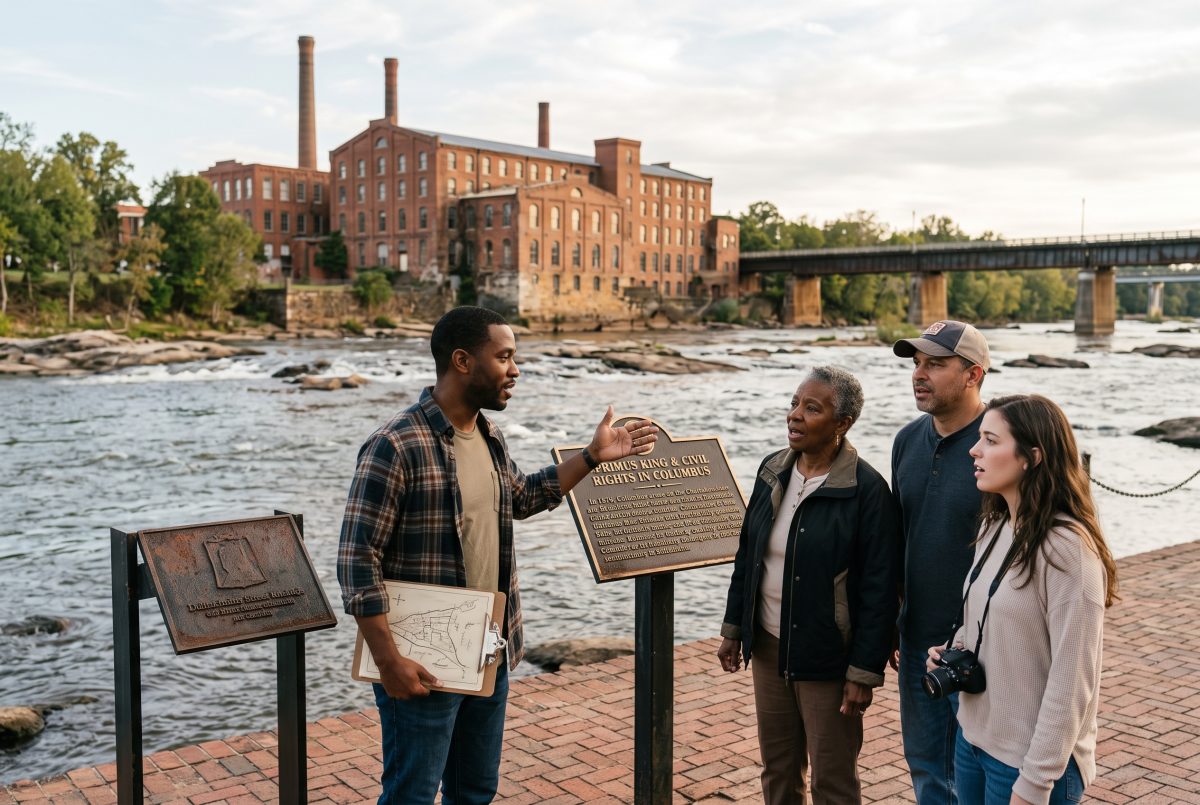
One of the most consequential events in Columbus history involved a local African American man named Primus King.
On July 4, 1944, King, a barber and minister, attempted to vote in Georgia’s Democratic primary at the Muscogee County courthouse.
At the time, the Democratic primary was a critical part of the state’s political process, and Black voters were excluded from participating in it.
King’s challenge became the basis of a major legal fight against the all-white primary system.
Local civil rights leader Thomas Brewer helped organize the effort and supported the legal challenge. Federal court decisions in 1945 and 1946 ruled against the exclusionary system.
The case became an important victory for voting rights in Georgia.
It also demonstrated how local activism could challenge entrenched political restrictions and contribute to broader civil rights progress.
The story is especially significant because it began with an ordinary act that should have been fundamental to democratic participation: a citizen attempting to cast a ballot.
King’s action and the organizing behind it helped expose the injustice of a system that denied Black citizens meaningful access to the political process.
Why it matters today: The Primus King case connects Columbus directly to the larger history of voting rights and shows how local people helped change the state’s political landscape.
5. Columbus Was Home to the Woman Known as the Mother of the Blues
Columbus occupies an important place in American music history as the birthplace of Gertrude “Ma” Rainey.
Born in Columbus in 1886, Rainey became one of the pioneering performers of the blues and helped popularize the genre during the early 20th century.
Known for her powerful voice and commanding stage presence, Rainey performed at a time when Black musicians were helping shape the foundations of modern American popular music.
She became widely known as the “Mother of the Blues,” a title reflecting her influence and importance in the development of the genre.
Rainey’s career took her across the country, but her connection to Columbus remained part of her story.
She eventually returned to her hometown and lived there during the later years of her life.
Her legacy also connects Columbus to a much larger musical tradition rooted in African American experiences, creativity and cultural expression.
Blues music influenced numerous later styles, including rhythm and blues, rock and roll, and other forms of popular music.
Why it matters today: Rainey’s life is a reminder that Columbus contributed to American cultural history in ways that extend far beyond Georgia.
6. A Formerly Enslaved Man Became a Master Bridge Builder
Horace King is another remarkable figure whose life connects Columbus to a broader chapter of Southern history.
King was born enslaved in South Carolina and became a highly skilled builder and engineer. He worked on bridges and other structures throughout the Southeast and became known for his expertise in bridge construction.
His abilities brought him into contact with influential builders and entrepreneurs, including John Godwin, with whom he worked on major construction projects.
King eventually became a free man and continued building bridges and other structures.
His career is particularly notable because he developed an influential professional reputation in a society shaped by slavery and racial discrimination.
His story also demonstrates the importance of skilled Black craftsmen and builders whose contributions were often overlooked in conventional accounts of Southern economic development.
King’s work extended across state lines, connecting his legacy to the wider infrastructure history of the region.
Why it matters today: King’s life challenges narrow accounts of Southern history by highlighting the technical skill, entrepreneurship and achievements of a formerly enslaved man who became a respected builder.
7. Fort Moore Began as a World War I Military Training Camp
Columbus’s modern identity is inseparable from its military connection.
That relationship expanded dramatically during World War I, when the U.S. Army established Camp Benning near Columbus in 1918.
The installation was later known as Fort Benning and was renamed Fort Moore in 2023.
Its establishment brought a significant military presence to the region and helped shape the area’s economic and demographic development.
Military installations generate demand for housing, transportation, retail, medical services and other businesses. They also bring service members and families from different parts of the country into the surrounding community.
Over time, the installation became associated with infantry training and other major Army training functions.
The military connection also helped distinguish Columbus from other Georgia cities with similar industrial histories.
Today, the installation remains a major regional institution, although its official name and organizational structure have changed over the decades.
Why it matters today: Understanding Columbus’s development requires recognizing how the military presence helped transform the city and its surrounding economy during the 20th century.
8. The National Infantry Museum Tells a Story Much Bigger Than Columbus
Columbus is home to the National Infantry Museum and Soldier Center, located near Fort Moore.
The museum opened in its current location in June 2009 and preserves artifacts and exhibits documenting the history of the American infantry.
Its galleries cover military history across multiple periods, while dedicated exhibits highlight infantry training, military service and the experiences of soldiers.
One of the museum’s best-known features is The Last 100 Yards, an immersive exhibit illustrating the infantry’s role across different eras.
The institution also includes memorials and outdoor exhibits, providing visitors with opportunities to explore military history beyond the galleries.
Its location near Fort Moore reflects the longstanding relationship between Columbus and the Army.
But the museum’s significance extends beyond the local military community. Its exhibits connect visitors to national military history and the experiences of generations of service members.
For residents, the museum offers an opportunity to understand one of the most important institutions shaping the modern Columbus region.
Why it matters today: The museum helps preserve military history while reinforcing Columbus’s role as a destination for military heritage and education.
9. The Springer Opera House Survived Because People Fought to Save It
The Springer Opera House opened in downtown Columbus in 1871 and became an important part of the city’s cultural history.
During its early years, the theater hosted performances that connected Columbus audiences to the entertainment world of the 19th century.
Like many historic theaters, however, the Springer eventually faced challenges as entertainment preferences and economic conditions changed.
By the mid-20th century, the building was threatened with demolition.
Its preservation became an important local cause, helping inspire a broader movement to protect historic buildings in Columbus.
The campaign to save the Springer contributed to the development of the Historic Columbus Foundation and efforts to preserve other significant structures and districts.
The Springer subsequently developed into a major performing arts institution and is recognized as the State Theatre of Georgia.
Its survival illustrates how local preservation efforts can help protect buildings that might otherwise disappear through neglect or redevelopment.
Why it matters today: The Springer is more than an old theater. Its survival reflects the role residents can play in deciding which parts of a city’s history remain visible to future generations.
10. Columbus’s Historic Districts Preserve More Than Beautiful Old Buildings
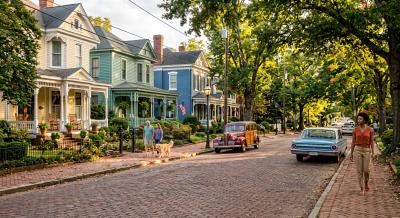
Columbus has multiple designated historic districts that preserve examples of its architectural and neighborhood history.
These areas include residential streets, commercial buildings and industrial properties associated with different periods of the city’s development.
The Columbus Historic District, for example, was listed in the National Register of Historic Places in 1969.
Other districts reflect the city’s growth beyond its original urban center, including established residential areas such as Dinglewood and Weracoba-St. Elmo.
The Columbus Historic Riverfront Industrial District preserves part of the industrial landscape associated with the city’s manufacturing era.
Historic preservation does more than maintain attractive buildings.
It can protect architectural features, preserve neighborhood character, support heritage tourism and help residents understand how earlier generations lived and worked.
At the same time, maintaining historic properties can involve substantial expenses and restrictions, making preservation a practical challenge for property owners and communities.
Columbus’s preservation efforts reflect decades of work to balance the city’s development needs with the value of its historic resources.
Why it matters today: Historic districts help connect modern Columbus to the physical evidence of its past, giving residents a more tangible understanding of the city’s development.
11. Columbus Helped Produce Business Leaders Who Changed the Regional Economy
Columbus’s economic history is not limited to textile mills.
The city also became home to entrepreneurs whose businesses expanded into major regional and national enterprises.
One important figure was W. C. Bradley, a businessman and financier who arrived in Columbus in the late 19th century.
Bradley became involved in cotton trading, manufacturing, banking and other ventures. His business activities and philanthropic legacy had a lasting impact on the Columbus region.
The city’s later economic development also included businesses in insurance, financial services and payment processing.
Companies associated with Columbus helped demonstrate that the city could build an economy beyond its traditional industrial foundations.
The transition was important as textile manufacturing declined and local leaders sought new sources of employment and investment.
Businesses such as Aflac and TSYS became part of that changing economic landscape, contributing to Columbus’s reputation as a regional center for corporate activity.
The story of Columbus business is therefore one of adaptation: entrepreneurs repeatedly sought opportunities in changing industries and markets.
Why it matters today: Columbus’s business history helps explain how the city evolved from a major textile center into a more diversified regional economy.
12. Columbus’s Government Consolidation Changed the City’s Geography
Columbus underwent a major governmental transformation when the city and Muscogee County consolidated their governments.
The consolidated government began operating in 1971, making Columbus an early example of city-county consolidation in Georgia.
The change affected how local government was organized and how public services could be administered across the community.
Consolidation also reshaped the city’s geographic identity. Columbus expanded to encompass a much larger area than the original historic urban center, bringing a wider range of residential and commercial communities within the same local government.
That helps explain why modern Columbus includes such varied environments, from downtown historic districts and former mill communities to suburban residential developments and commercial corridors.
The consolidated government oversees responsibilities that might otherwise be divided between separate city and county administrations.
Although the arrangement has its own political and administrative complexities, it remains a defining feature of local government in Columbus.
Why it matters today: Government consolidation helps explain why Columbus’s boundaries, services and civic identity differ from those of many other Georgia cities.
What These Facts Reveal About Columbus
These 12 stories show that Columbus is much more than a city defined by its military installation or its location along the Chattahoochee River.
Its history includes industrial innovation, difficult labor conditions, African American leadership, cultural achievements, entrepreneurship and civic reform.
The city helped shape the Southern textile industry. Its residents contributed to important voting-rights victories. Its musicians influenced American culture, while its builders and business leaders helped transform the region’s infrastructure and economy.
Its historic theaters, industrial buildings and residential districts also preserve physical reminders of those developments.
Understanding this history offers a fuller picture of the community and the people who helped create it.
For longtime residents, these stories may provide new reasons to appreciate familiar places. For newcomers, they offer an introduction to a city whose past is more complicated and consequential than its most recognizable landmarks suggest.
And for anyone interested in Columbus’s future, they demonstrate that the city has repeatedly adapted to economic, cultural and political change.
Its next chapter will be shaped by many of the same forces that influenced its past: entrepreneurship, community investment, public leadership and the willingness of residents to preserve what matters.
How many of these Columbus history facts did you already know?
Share this story with someone who loves local history, and tell Columbus Times which overlooked people, places or events deserve a closer look in a future feature.
News organizations may republish this story with credit. See our guidelines.
Know someone who'd want to read this? Email it to a friend.
Own a Columbus business? Reach 40,000+ monthly readers. Ads from $125/month. See ad optionsPlan your weekend with Columbus Times
Get This Weekend in Columbus every Thursday: the best local events, free things to do and family fun, plus each evening's local news. Free, and you can unsubscribe anytime.