Before Scott Colom, There Was Hiram Revels: Mississippi Sent the First Black U.S. Senator to Washington in 1870
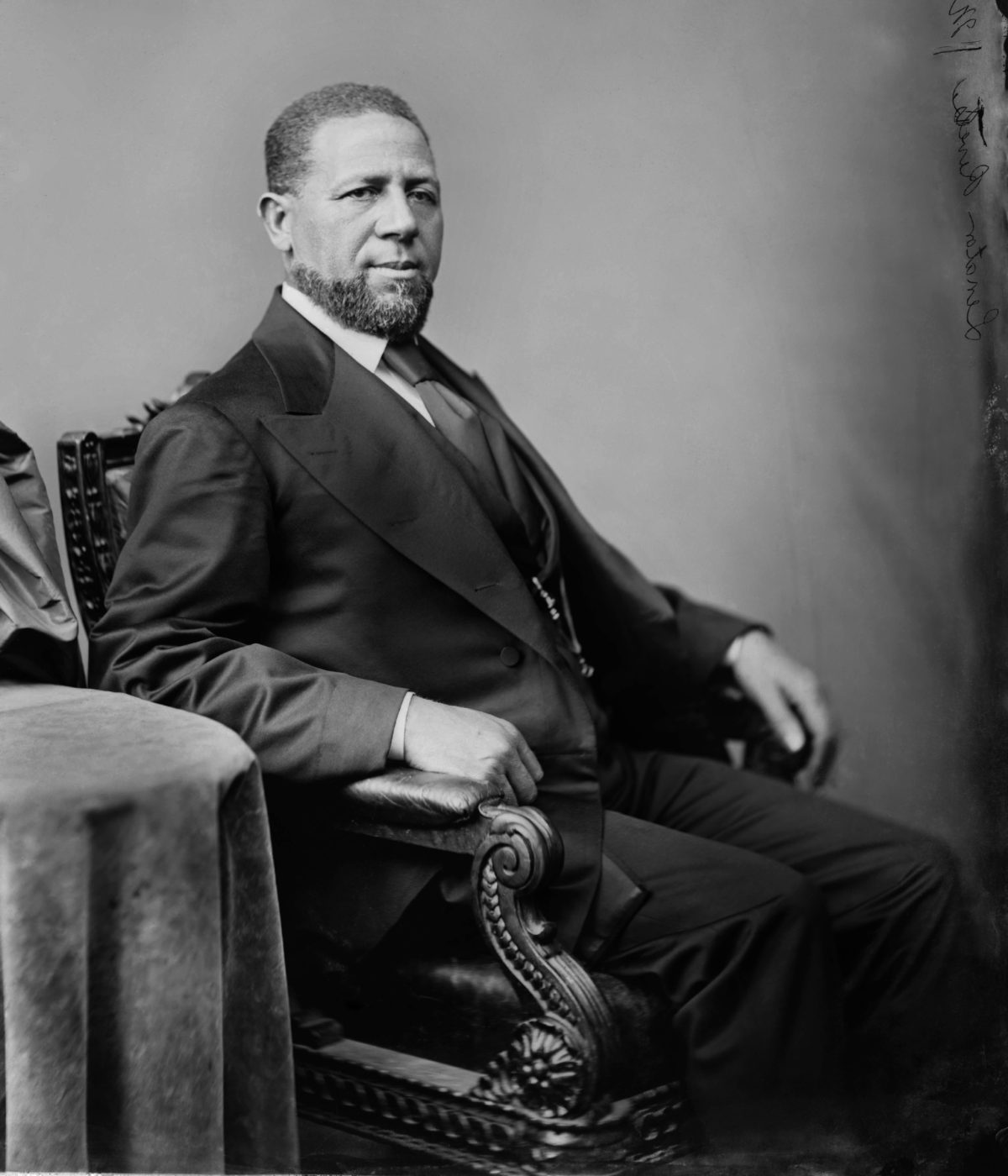
Hiram Rhodes Revels of Mississippi, the first African American to serve in the U.S. Senate, photographed between 1860 and 1875. Photo: Brady-Handy Collection, Library of Congress
When Scott Colom takes his seat in the U.S. Senate in January, he will be the first Black senator to represent Mississippi in 146 years. The last was Blanche K. Bruce, whose term ended March 3, 1881. The first was Hiram Rhodes Revels, who walked into the Senate chamber on Feb. 25, 1870, and became the first African American to serve in either house of Congress.
Colom, a Democrat and the district attorney for Clay, Lowndes, Noxubee and Oktibbeha counties, defeated Republican Sen. Cindy Hyde-Smith in the Nov. 3 election. The Associated Press called the race on Nov. 11, eight days after the polls closed, with Colom ahead 480,153 votes to 472,122, or 49.36% to 48.54%. An independent, Ty Pinkins, also ran. Hyde-Smith conceded that evening in a video, saying, "I want to congratulate Scott Colom and wish him well as he takes on the tremendous responsibility of representing our great state." The results become final when the state certifies them.
Colom, 43, is a seventh-generation Mississippian from Columbus, Mississippi. He graduated from Millsaps College in 2005 and earned his law degree from the University of Wisconsin in 2009. He has been district attorney since January 2016. In 2022, he was nominated to a federal judgeship, but Hyde-Smith blocked the nomination.
There is one more first in his win. Revels and Bruce were both chosen by the Mississippi Legislature, which picked U.S. senators until the 17th Amendment gave that choice to voters in 1913. Colom is the first Black senator from Mississippi elected by the people.
From Fayetteville to Washington
Revels was born free in Fayetteville, North Carolina, in 1827. Some sources give 1822. He studied at Quaker seminaries in the Midwest and at Knox College in Galesburg, Illinois. During the Civil War, he served as a Union Army chaplain and helped recruit and organize two regiments of the United States Colored Troops, in Maryland and Missouri.
After the war, he moved to Mississippi, where he was elected an alderman in 1868 and a state senator in 1869. In January 1870, the Mississippi Legislature voted 81 to 15 to send him to Washington. He would fill the rest of a term in the seat Albert G. Brown had walked away from in 1861, when Mississippi left the Union.
Two days of debate
Revels could not simply be sworn in. Southern Democrats argued that under the 1857 Dred Scott decision, no Black man had been a citizen before the 14th Amendment was ratified in 1868. A senator must be a citizen for nine years, so, they said, Revels did not qualify.
The debate lasted two days, and the Senate galleries were packed. Supporters answered that the Civil War and the new amendments had overturned Dred Scott, and that Revels had long been a citizen who voted in Ohio. Massachusetts Sen. Charles Sumner put it plainly: "The time has passed for argument. Nothing more need be said."
On Feb. 25, 1870, the Senate voted 48 to 8 to seat him. The galleries stood as he took the oath.
A short, busy term
Revels served a little over a year, until March 3, 1871. In his first speech on the floor, on March 16, 1870, he argued that Black lawmakers who had been forced out of the Georgia General Assembly should get their seats back. He spoke against a plan to keep the schools of Washington, D.C., segregated. He nominated a young Black man to the U.S. Military Academy at West Point, though the young man was not admitted. He also won his fight for Black workers who had been barred by their color from jobs at the Washington Navy Yard.
When his term ended, Revels became the first president of Alcorn Agricultural and Mechanical College, now Alcorn State University. He later taught at Shaw College, now Rust College, in Holly Springs. He died on Jan. 16, 1901, in Aberdeen, Mississippi.
Bruce and the long wait
In 1874, the Legislature chose Bruce, who was born in Farmville, Virginia, in 1841. Bruce served from March 4, 1875, to March 3, 1881, and became the first Black senator to serve a full term. On Feb. 14, 1879, he became the first African American to preside over the Senate.
As Reconstruction ended, so did Black representation for Mississippi in the Senate. Colom's swearing-in will close a gap of more than a century and a quarter.
Source: Mississippi Free Press (Nov. 11, 2026); Associated Press; U.S. Senate Historical Office; Library of Congress
News organizations may republish this story with credit. See our guidelines.
Know someone who'd want to read this? Email it to a friend.
Plan your weekend with Columbus Times
Get This Weekend in Columbus every Thursday: the best local events, free things to do and family fun, plus each evening's local news. Free, and you can unsubscribe anytime.
By signing up you agree to get the Columbus Times email newsletter. Unsubscribe anytime with one click.



Comments
Be respectful. No personal attacks, hate speech, spam or anyone's private information. Every comment is reviewed before it appears. Comment rules
No comments yet. Be the first to share your thoughts.