How Columbus Was Founded in 1828: 9 Questions About the Planned Town, the 13-by-9 Block Grid and South Commons
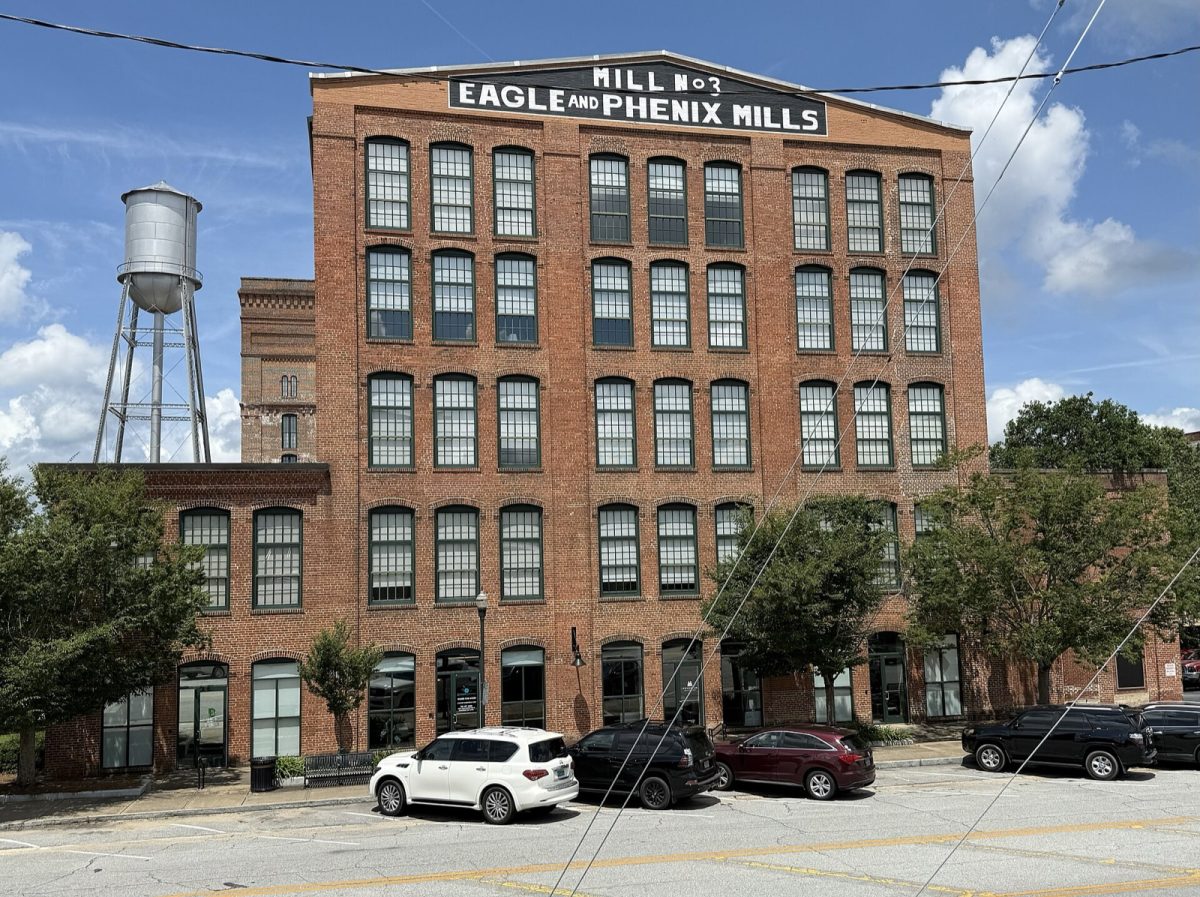
Columbus was a planned town created by the Georgia legislature in 1828. Shown: the historic Eagle and Phenix Mills. Photo: Farragutful / Wikimedia Commons (CC BY-SA 4.0)
COLUMBUS, Ga. - Columbus was established by the Georgia legislature in 1828 as a planned town along the Chattahoochee River, with an original layout measuring 13 blocks north to south and nine blocks east to west. The state planned the community and auctioned its lots that year at the river's fall line, according to the Georgia Encyclopedia. Nearly 200 years later, the original South Commons remains public recreation space, and Columbus State University is preparing historical collections connected to the city's 2028 bicentennial.
The city's beginnings involved state planning, river transportation, cotton commerce and early industrial development, according to the Georgia Encyclopedia. Its original design also included public commons on three sides of the town. The following 10 questions explain how Columbus began, how its original layout was organized and which parts of that history remain connected to the city today.
1. When was Columbus founded, and who created it?
Columbus was created in 1828 by the Georgia legislature, according to the Georgia Encyclopedia. The state established the town through a planned development rather than leaving its initial layout to develop without an organized design. The founding took place at the fall line of the Chattahoochee River.
The Georgia Encyclopedia identifies 1828 as the year the state planned Columbus and auctioned its original lots. The town's early development was therefore tied to decisions made by the Georgia legislature and the sale of land within the planned settlement. That process established the original layout from which Columbus developed.
The founding year also provides the basis for the city's upcoming bicentennial. Columbus State University identifies Columbus 2028 as a celebration of the city's founding in 1828. The anniversary will mark 200 years since the establishment of the original planned town.
2. How did Georgia plan Columbus and sell its first lots?
According to the Georgia Encyclopedia, the state planned Columbus before auctioning its lots in 1828. The town was laid out at the fall line of the Chattahoochee River, with a defined street grid and surrounding commons. The original design established the geographic boundaries of the planned community.
The use of a planned layout meant that the original town was organized into a specific arrangement of blocks. The Georgia Encyclopedia describes a rectangular grid extending north to south and east to west. Public commons were incorporated into the design along three sides.
The state also conducted the sale of the town's lots during the founding year. According to the Georgia Encyclopedia, those auctions took place in 1828 as part of the city's establishment. The combination of land sales and advance planning shaped the beginning of Columbus.
3. What did the original 13-by-9 block grid look like?
The original Columbus town plan was a rectangle measuring 13 blocks north to south and nine blocks east to west, according to the Georgia Encyclopedia. The north-to-south extent reached from the river to Seventeenth Street. The east-to-west extent reached from the river to Sixth Avenue.
Those dimensions describe the original planned town rather than the full extent of Columbus today. The Georgia Encyclopedia identifies the rectangular arrangement as a defining feature of the city's initial design. The grid organized the settlement around the Chattahoochee River and the designated streets.
| Original feature | Description |
|---|---|
| Founding year | 1828 |
| Town shape | Rectangle |
| North-to-south grid | 13 blocks |
| East-to-west grid | 9 blocks |
| North-to-south extent | River to Seventeenth Street |
| East-to-west extent | River to Sixth Avenue |
| Surrounding commons | Four-block commons on north, east and south |
The grid and its boundaries illustrate how deliberately the town was organized at its founding. The Georgia Encyclopedia also describes public commons beyond the original blocks. Together, the rectangular street plan and surrounding open space formed the layout established in 1828.
4. What were the commons, and what remains today?
The original town plan included a four-block commons surrounding Columbus on its north, east and south sides, according to the Georgia Encyclopedia. These areas were part of the planned community from its beginning. They were included alongside the rectangular street grid established in 1828.
The South Commons remains one of the most direct connections to that original design. According to the Georgia Encyclopedia, the area dates to the city's founding and continues to serve as public recreation space. Its continued use connects present-day Columbus with the planned town established nearly two centuries ago.
The South Commons also demonstrates that the original city plan included more than streets and lots. The Georgia Encyclopedia identifies the surrounding commons as part of the town's initial arrangement. The remaining South Commons provides a physical example of that planning decision from 1828.
5. Why was Columbus established at the Chattahoochee River?
The Georgia Encyclopedia places Columbus' founding at the fall line of the Chattahoochee River. The river was closely connected to the town's commercial development during its early years. Cotton and other goods moved through a trading network that extended beyond the immediate Columbus area.
According to the Georgia Encyclopedia, warehouses in early Columbus served planters within approximately 50 miles. Cotton moved through Apalachicola, Florida, and onward to Liverpool. That commercial route connected the new settlement with destinations far beyond Georgia.
The river location also appears directly in the original street plan described by the Georgia Encyclopedia. Both the north-to-south and east-to-west dimensions of the grid were defined partly by the river. Columbus' location therefore influenced both the town's geographic arrangement and its early commercial activity.
6. How did Columbus get its name?
The Georgia Encyclopedia says the writings of Washington Irving about Christopher Columbus probably influenced the city's name. That explanation is presented as a probable influence rather than a documented certainty. The reference connects the name of the Georgia community with writings about the historical figure Christopher Columbus.
The city's establishment by the Georgia legislature occurred in 1828, according to the same source. The original town was planned and its lots auctioned during that year. The name Columbus became associated with the settlement established along the Chattahoochee River.
The Georgia Encyclopedia's wording is important because it does not describe the influence of Irving's writings as certain. Instead, it identifies those writings as the probable inspiration for the name. That distinction preserves the historical explanation as presented by the source.
7. What was life like in Columbus during its first decade?
Columbus retained a frontier atmosphere for more than a decade after its founding, according to the Georgia Encyclopedia. The community developed along the Chattahoochee River while Muscogee, also known as Creek, people held land west of the river. Those circumstances formed part of the setting in which the new Georgia town emerged.
The area's history during this period also included the Creek War of 1836. According to the Georgia Encyclopedia, the conflict led to the removal of approximately 16,000 people. The removal was connected to the Trail of Tears in 1838 and 1839.
These events occurred during the same early period in which Columbus was developing as a commercial settlement. The Georgia Encyclopedia describes the frontier setting, Creek land west of the river and subsequent removal as parts of the city's early history. They provide historical context for the town's establishment and development during the 1830s.
8. What businesses and industries developed first?
Gristmills and sawmills were operating in Columbus by 1828, according to the Georgia Encyclopedia. Warehouses also served agricultural producers from surrounding areas, including planters within approximately 50 miles. Cotton commerce became part of the town's early economic activity.
The Georgia Encyclopedia reports that cotton traveled through Apalachicola, Florida, before reaching Liverpool. That movement connected Columbus' warehouse trade with a larger commercial network. The town's position along the Chattahoochee River was an important element of its early development.
Industrial activity also expanded during the following decade. According to the Georgia Encyclopedia, a textile mill operated north of town by 1838. The city sold dam rights that limited waterpower development to two blocks between Twelfth and Fourteenth streets.
Those details show the early combination of agricultural trade and manufacturing described by the Georgia Encyclopedia. Mills were present during the founding year, while textile production appeared within the town's first decade. Waterpower rights and the river's location formed part of that industrial history.
9. Where can residents learn more ahead of the 2028 bicentennial?
Columbus State University maintains historical materials through its Archives & Special Collections, which the university has renamed the Kenneth H. Thomas, Jr. Archives & Special Collections. According to an Oct. 19, 2026, university announcement, a philanthropic gift and supporting endowment will help preserve materials and expand the archives' collections. The gift is connected to the Columbus 2028 celebration of the city's founding.
The archives maintain rare manuscripts, historic photographs, maps and specialized collections, according to Columbus State. The university says those resources are available to students, faculty, scholars and independent researchers. The collection is part of CSU Libraries at 4225 University Avenue in Columbus.
Columbus State also announced plans to acquire additional historical documents and artifacts as the bicentennial approaches. The endowment will support digitization, conservation, community workshops, lectures and student learning opportunities. Those activities will expand the university's work preserving and providing access to regional history.
The 2028 celebration will mark two centuries since Georgia established Columbus at the Chattahoochee River's fall line. The Georgia Encyclopedia documents the original 13-by-9 block grid, surrounding commons, early commerce and industrial development. Columbus State's archival work adds another source of historical materials connected to the city's founding and subsequent history.
Source: Georgia Encyclopedia (New Georgia Encyclopedia), Columbus State University News - https://www.georgiaencyclopedia.org/articles/counties-cities-neighborhoods/columbus/ and https://news.columbusstate.edu/posts/columbus-state-names-archives-in-honor-of-georgia-historian-kenneth-thomas-jr/
News organizations may republish this story with credit. See our guidelines.
Know someone who'd want to read this? Email it to a friend.
Plan your weekend with Columbus Times
Get This Weekend in Columbus every Thursday: the best local events, free things to do and family fun, plus each evening's local news. Free, and you can unsubscribe anytime.
By signing up you agree to get the Columbus Times email newsletter. Unsubscribe anytime with one click.


Comments
Be respectful. No personal attacks, hate speech, spam or anyone's private information. Every comment is reviewed before it appears. Comment rules
No comments yet. Be the first to share your thoughts.