Fort Mitchell, Alabama, by the Numbers: An 1813 Stockade, 15 Years of Federal Troops, a 1990 Landmark Designation and a 280-Acre Veterans Cemetery
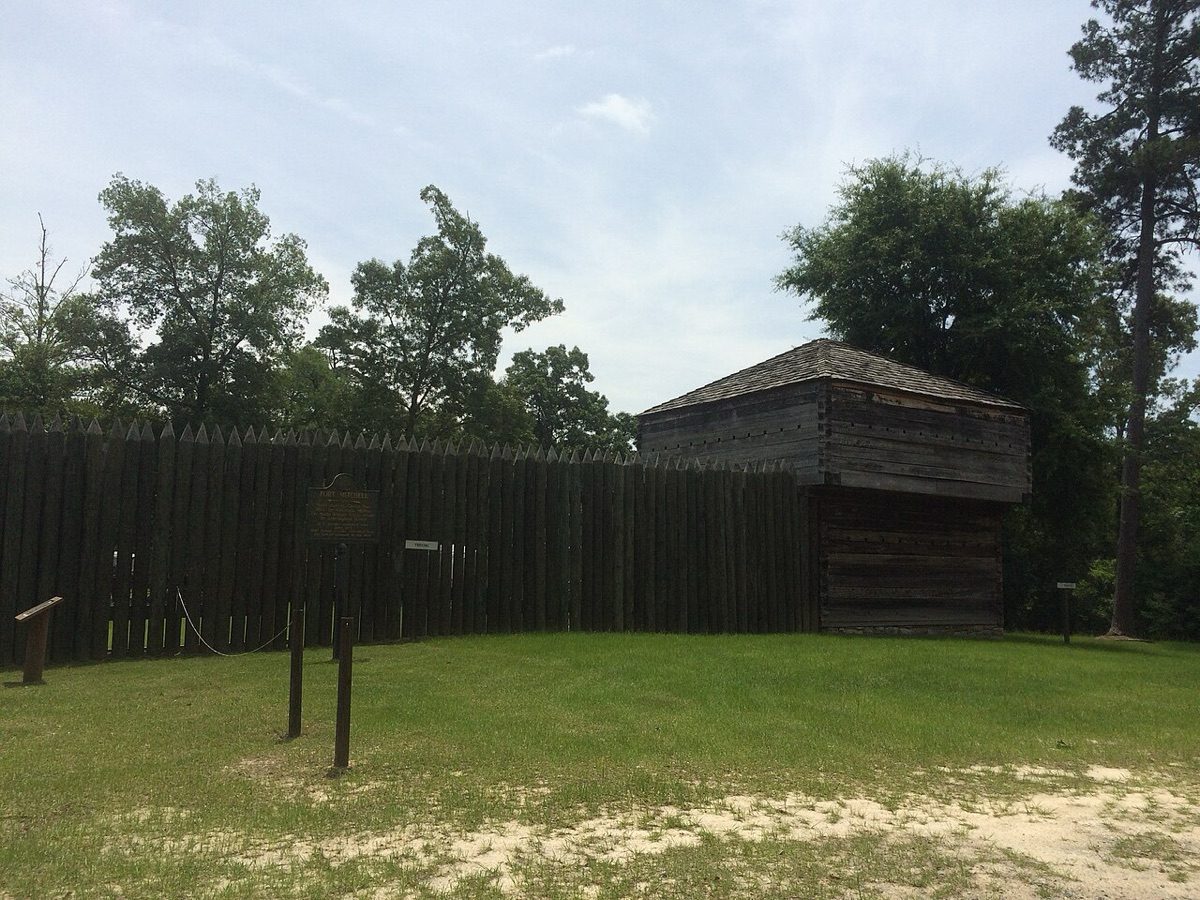
The exterior of the reconstructed Fort Mitchell stockade in Russell County, Alabama. Photo: dofftoubab / Wikimedia Commons (CC BY-SA 3.0)
PHENIX CITY, Ala. - Just west of the Chattahoochee River in Russell County, Alabama, sits one of the area's earliest military sites: Fort Mitchell. Georgia militiamen built a stockade there in 1813 to guard a trail that would become the Federal Road, and federal troops used a later fort on the site until 1840. The place is now a state-owned park with a reconstructed fort, a National Historic Landmark designation and, next door, a national veterans cemetery that covers 280 acres.
The story of the fort touches the Creek War, the early mail and trade routes of the Deep South and the forced removal of the Creek people, so its numbers track a larger history. Here are the dates and figures that define it, according to the Encyclopedia of Alabama and the federal and reference listings noted above. The sections below take them in turn.
Fort Mitchell by the numbers
| Figure | What it marks |
|---|---|
| 1813 | Year the original stockade fort was built, according to the park's listing; the Encyclopedia of Alabama dates the establishment to late 1813 in its introduction and to autumn 1812 through winter 1813 in its text |
| 1817 | Year the government trading factory moved to Fort Mitchell from Fort Hawkins |
| Nov. 1818 | Month a post office began operating there |
| 1821 | Year Col. John Crowell arrived to set up an Indian agency |
| 1825 to 1840 | Years the Fourth Infantry occupied the fort |
| 12 feet | Height of the pickets on the 1825 fort, which also had a blockhouse |
| 1836 | Year Gens. Thomas Jesup and Winfield Scott stayed at the fort during the Second Creek War |
| 1971 | Year the Alabama Archaeological Society began excavating |
| June 13, 1972 | Date the site was added to the National Register of Historic Places |
| May 1987 | Opening of Fort Mitchell National Cemetery |
| June 21, 1990 | Date the site was designated a National Historic Landmark |
A fort on the Federal Road
The fort was named for David Brydie Mitchell, a former governor of Georgia, according to the Encyclopedia of Alabama. Gen. John Floyd, a Georgia militia commander, established the settlement in Creek territory and used it as a base against the Creek towns of Atasi and Talasi. He stayed about a year and left in 1814.
The trail the fort guarded became the Federal Road, a horse path that allowed settlers to cross Creek land on the way from Georgia to the Mississippi Territory. The encyclopedia describes the road as the route that let settlers travel from Georgia toward the Mississippi Territory. That role made the Fort Mitchell crossing a gathering point for travelers, traders and soldiers throughout the early 1800s.
From trading post to Indian agency
In 1817 the government trading factory moved to Fort Mitchell from Fort Hawkins, and a post office opened in November 1818. The factory was abandoned in 1820, and Col. John Crowell arrived in 1821 to establish an Indian agency there. These steps made the site a center of federal dealings with the Creek Nation, years before the removal that followed.
The Fourth Infantry arrived in July 1825 and built a new fort that autumn, with 12-foot pickets, diagonal corners and a blockhouse. The regiment occupied the post until 1840. The encyclopedia reports that soldiers suffered outbreaks of malaria, typhus, smallpox and influenza, a reminder that disease was a daily threat on the frontier.
The Creek removal and the end of the post
In 1836 Gens. Thomas Jesup and Winfield Scott stayed at the fort during the Second Creek War, and the site served as an assembly point for the Creek removal that became part of the Trail of Tears. The last federal troops left in the spring of 1840. About 20 years later, the encyclopedia notes, the Fifteenth Alabama Regiment drilled in nearby fields as the Civil War began.
The post was also known for duels in its early days. The first notable one, in 1828, was between George E. Crawford and Thomas Burnside. Gen. Sowell Woolfolk later died in a duel with Maj. Joseph Camp, according to the encyclopedia.
The park and the cemetery today
Archaeologists from the Alabama Archaeological Society began digging at the site in 1971, and a report followed in 1974. The site was listed on the National Register of Historic Places on June 13, 1972, and became a National Historic Landmark on June 21, 1990. Today the park includes a reconstruction of the 1813 stockade fort, a museum, a collection of historic carriages, a restored 19th-century log home and a visitor center.
Blacksmith shop demonstrations are periodically presented inside the stockade, according to the site listing. Hours and admission were not available in the sources reviewed, so visitors should check with the park before driving over. The Fort Mitchell National Cemetery opened in May 1987 on 280 acres adjacent to Fort Mitchell Park, and it serves veterans in the Veterans Affairs region that includes Georgia and Alabama. Reference listings put the number of interments at roughly 5,000.
Why it matters to the Columbus area
For readers on the Georgia side of the river, Fort Mitchell is a trip across the Chattahoochee that adds a frontier chapter to the history of Columbus and Fort Benning. The fort predates the founding of Columbus in 1828, and its story helps explain why the river crossing mattered. Anyone planning a visit should confirm hours, tour options and any event schedule with the park directly.
Source: Encyclopedia of Alabama, "Fort Mitchell" (Rebecca Dobrinski, updated June 17, 2024)

News organizations may republish this story with credit. See our guidelines.
Know someone who'd want to read this? Email it to a friend.
Plan your weekend with Columbus Times
Get This Weekend in Columbus every Thursday: the best local events, free things to do and family fun, plus each evening's local news. Free, and you can unsubscribe anytime.
By signing up you agree to get the Columbus Times email newsletter. Unsubscribe anytime with one click.




Comments
Be respectful. No personal attacks, hate speech, spam or anyone's private information. Every comment is reviewed before it appears. Comment rules
No comments yet. Be the first to share your thoughts.