Meteor Showers Over Columbus This Month: Northern Taurid Fireballs Peak Nov. 11-12 and the Leonids Nov. 16-18, and How to Watch With No Telescope
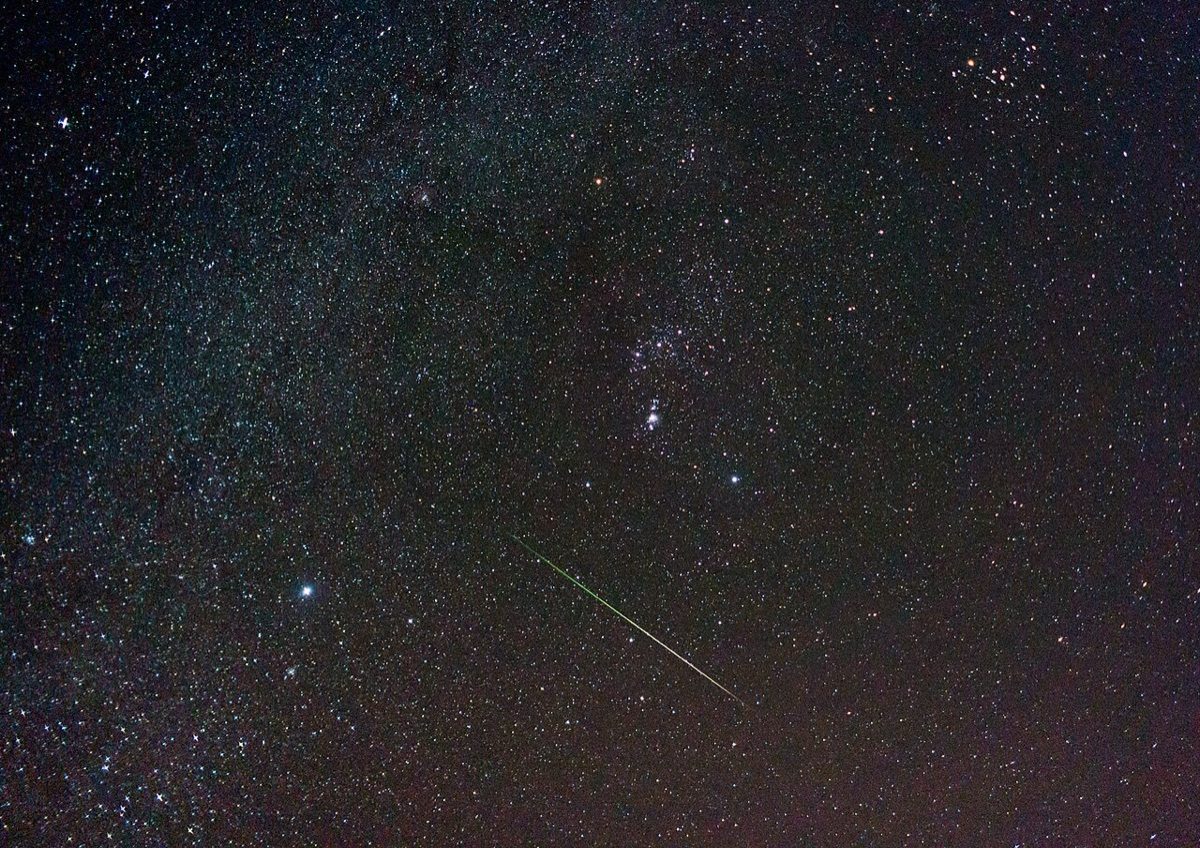
A Leonid meteor streaks across a night sky in a long-exposure photograph. Photo: David Wipf / Wikimedia Commons (CC BY 2.0)
COLUMBUS, Ga. - November has three meteor showers on the calendar, and none of them needs a telescope, a ticket or a drive to a faraway dark-sky park. The Southern Taurids peaked around Nov. 4-5, the Northern Taurids peak around Nov. 11-12, and the better-known Leonids around Nov. 16-18, according to the American Meteor Society. Daylight saving time ended Nov. 1, so all times in this guide are Eastern Standard Time, which is five hours behind UTC.
None of these showers is expected to be a spectacle. The Leonids once produced meteor storms, but the American Meteor Society says no dense debris cloud is expected until 2099. What November does offer is a chance at a few bright fireballs and a modest number of fast meteors for anyone willing to spend an hour outside on a clear night.
The dates at a glance
| Shower | Peak, according to the American Meteor Society | Notes |
|---|---|---|
| Southern Taurids | Peaked Nov. 4-5 (fireball component) | Known for fireballs; the society lists the moon as a waning crescent, a favorable condition |
| Northern Taurids | Nov. 11-12 | The society lists a thin waxing crescent moon, very favorable for viewing |
| Leonids | Nov. 16-17 (EarthSky predicts a peak at 0 UTC on Nov. 18) | The first-quarter moon can wash out fainter meteors |
| Geminids | Dec. 13-14 | Usually the strongest shower of the year, outside November |
Taurids: fewer meteors, bigger fireballs
The Taurids are not a high-count shower, but the American Meteor Society says they are rich in fireballs, the term for very bright meteors. The society notes that fireball reports can rise from September through November, and that the Southern Taurid fireball component peaked around Nov. 5. The Northern Taurids, a similar shower active slightly later, peak around Nov. 11-12.
For Columbus-area viewers, that means the next few evenings and the night of Nov. 11 are worth a look if skies are clear. The society says the moon is a thin crescent during the Northern Taurid peak, so faint meteors should be easier to see than during the Leonids. Anyone who sees a very bright fireball can report it to the American Meteor Society, a step EarthSky also recommends.
Leonids: the headline shower
The Leonids are active from about Nov. 3 through Dec. 2, according to EarthSky, with the American Meteor Society listing the peak window as Nov. 16-17. EarthSky says the predicted maximum is at 0 UTC on Nov. 18, which is 7 p.m. Eastern on Nov. 17. Its advice is to watch late on Nov. 17 until dawn on Nov. 18, and it says the morning of Nov. 17 may also be worth a look.
Under a dark, moonless sky, about 10 to 15 Leonids per hour is typical, EarthSky reports, and fewer are expected this year because of the moon. The first-quarter moon arrives at 11:48 UTC on Nov. 17, which is 6:48 a.m. Eastern. EarthSky says the moon sets around the time the Leonid radiant rises, so it should not interfere much after midnight, although sources vary on how much moonlight will matter.
The radiant, the point the meteors appear to fly away from, is in the constellation Leo, near the top of the backward-question-mark pattern called the Sickle. It rises around midnight and is highest at dawn, EarthSky says. Jupiter and Mars are near the radiant, and the two planets are closest to each other around Nov. 16, which gives watchers an easy landmark.
Where the Leonids come from
The Leonids are bits of dust and ice shed by comet 55P/Tempel-Tuttle, which orbits the sun roughly every 33 years. William Tempel discovered it in 1865 and Horace Tuttle independently found it in 1866, according to EarthSky. The comet's next return is due in early 2031.
That 33-year rhythm is why some past years produced storms of more than 1,000 meteors an hour, a threshold EarthSky uses to define a storm. This year is not one of them. Expect the shower to be a steady trickle rather than a storm.
How to watch from the Columbus area
- Skip the telescope. Meteors cross wide swaths of sky, so the naked eye works best. You do not need to find the radiant, EarthSky says; look in whichever direction is most comfortable.
- Get away from city lights. Any open spot with a wide view of the sky and few streetlights will beat a lit parking lot. Check the weather first, because clouds, not the moon, are the biggest obstacle on many November nights.
- Give your eyes time. EarthSky advises letting your eyes adjust to the dark, and phone screens undo that quickly.
- Dress warmer than you think. November nights in west Georgia can be chilly. A reclining chair or a blanket makes an hour of looking up much easier on the neck.
- Plan for after midnight. The Leonid radiant does not rise until about midnight, and the best views come in the hours before dawn.
The moon calendar
Most calendars list the new moon around Nov. 9 and the full moon around Nov. 24, though sources differ by a day depending on time zone. The week around the new moon, roughly Nov. 7 to 11, is the darkest stretch of the month and lines up with the Northern Taurid peak. The moon grows brighter after that, reaching first quarter on Nov. 17 and full around Nov. 24.
If clouds block the Leonids, the next major shower is the Geminids on Dec. 13-14, which the American Meteor Society describes as usually the strongest of the year. The society lists the moon as a waxing crescent that night, which it calls generally favorable. Forecasts change, so check the National Weather Service's Columbus-area outlook before heading out.
Source: American Meteor Society, Meteor Shower Calendar 2026-2027 (amsmeteors.org); EarthSky, "Everything you need to know: Leonid meteor shower"

News organizations may republish this story with credit. See our guidelines.
Know someone who'd want to read this? Email it to a friend.
Own a Columbus business? 20,000+ page views in 30 days. Ads from $125/month. See ad options Follow Columbus Times on FacebookLocal news, events and people, in your feed every day.



Comments
Be respectful. No personal attacks, hate speech, spam or anyone's private information. Every comment is reviewed before it appears. Comment rules
No comments yet. Be the first to share your thoughts.