Voyager 1 Reaches the One Light-Day Mark on Nov. 18: 16.1 Billion Miles and What That Number Means
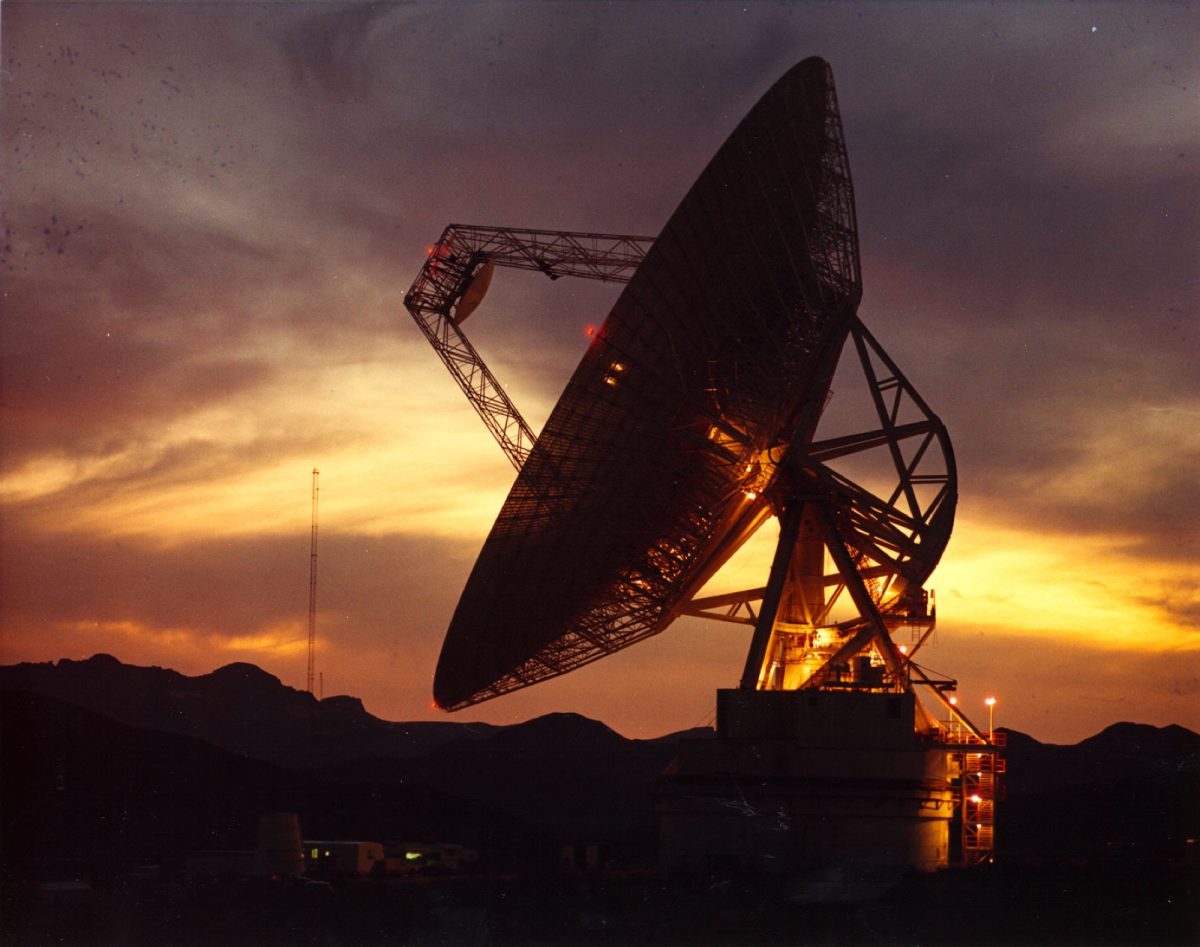
NASA says Voyager 1 reaches the one-light-day milestone Nov. 18, 2026, about 49 years after launch. Here is what 16.1 billion miles means. Shown: a large Deep Space Network dish antenna silhouetted against a sunset sky at Goldstone, California (file photo). Photo: NASA (photographer not listed) / Wikimedia Commons (Public domain)
COLUMBUS, Ga. - NASA's Voyager 1 spacecraft is expected to reach a distance equivalent to the one light-day mark on Nov. 18, 2026, marking a milestone approximately 49 years after its launch. The spacecraft will be about 16.1 billion miles from the Sun when it crosses the milestone, according to NASA Science. A light-day is the distance light travels in a full day. The spacecraft launched in 1977 as part of a twin-spacecraft mission, and the milestone gives a way to picture how far it now is from the Sun.
NASA identified the upcoming milestone in an Oct. 30 article titled "November's Night Sky Notes: Light-Day Away," written by Kat Troche. The agency reported that its Deep Space Network was tracking Voyager 1 at a distance of 25.80 billion kilometers, or just over 16 billion miles, at the time of the article. NASA also said both Voyager spacecraft continue returning scientific information from the distant reaches of the solar system.
The Nov. 18 milestone comes more than a decade after Voyager 1 crossed the heliopause in August 2012, according to NASA. That boundary is where the solar wind meets the interstellar medium. The spacecraft's continued operation and the approaching distance milestone are among the developments described in NASA's November skywatching report.
November 18 Marks the One-Light-Day Milestone
NASA identifies Nov. 18, 2026, as the date Voyager 1 will cross the one-light-day mark. The milestone arrives 49 years after the spacecraft's launch in 1977. NASA describes the distance as approximately 16.1 billion miles from the Sun.
The term "light-day" provides a way of expressing an extremely large distance using the distance light travels in a specified period. In this case, the period is one full day, or 86,400 seconds. The resulting distance is approximately 16.1 billion miles.
NASA's Oct. 30 article connects the approaching milestone with Voyager 1's continued journey. The spacecraft is one of two Voyagers launched in 1977, according to the agency. Both spacecraft continue returning valuable scientific information.
The date gives NASA a specific point for describing Voyager 1's distance using a light-travel measurement. Rather than reporting the journey only in miles or kilometers, the one-light-day figure expresses the scale using the distance light travels in a day. NASA's published account identifies Nov. 18 as the date that milestone will be reached.
What Does One Light-Day Mean in Miles?
One light-day is the distance light travels in 24 hours. Using a speed of approximately 186,282 miles per second, the distance can be calculated by multiplying that speed by the number of seconds in a day. The result is 16,094,764,800 miles, which rounds to approximately 16.1 billion miles.
The calculation can be shown directly:
| Measurement | Value |
|---|---|
| Speed of light | 186,282 miles per second |
| Seconds in one day | 86,400 |
| Distance traveled in one light-day | 16,094,764,800 miles |
| Rounded distance | 16.1 billion miles |
The arithmetic is 186,282 multiplied by 86,400, equaling 16,094,764,800 miles. This calculation explains the distance represented by the term "light-day" and is separate from NASA's reported spacecraft measurements. The rounded value matches the approximately 16.1 billion miles identified in NASA's milestone announcement.
The light-day measurement does not describe a calendar date or the length of the spacecraft's mission. It expresses distance using the amount of space light travels during a specific period. NASA uses that measurement to explain the scale of Voyager 1's journey.
The agency's announcement also uses a distance of approximately 16.1 billion miles from the Sun when describing the milestone. That distance and the one-light-day description appear together in NASA's Oct. 30 article. Both figures provide a way to understand the spacecraft's position at this stage of its mission.
NASA Reports Voyager 1 at More Than 16 Billion Miles
At the time of NASA's October article, Voyager 1 was being tracked at a distance of 25.80 billion kilometers. The measurement came from the Canberra antenna of NASA's Deep Space Network. NASA described that distance as just over 16 billion miles.
The kilometer figure can be converted into miles using approximately 1.609344 kilometers per mile. Dividing 25.80 billion kilometers by 1.609344 produces approximately 16.03 billion miles. That calculation is consistent with NASA's description of the spacecraft being slightly more than 16 billion miles away.
The reported tracking distance and the one-light-day milestone are two different figures in NASA's account. The tracking measurement describes the spacecraft's distance at the time of the article, while the milestone refers to Nov. 18. NASA identifies the latter date as the point when Voyager 1 reaches the one-light-day mark.
NASA's reference to the Canberra antenna also identifies the tracking facility associated with the reported measurement. The antenna is part of the agency's Deep Space Network, according to the article. The reported 25.80 billion kilometers provides a numerical reference for the spacecraft's distance ahead of the November milestone.
Voyager 1 Began Its Mission in 1977
Voyager 1 launched in 1977 as part of a mission involving two spacecraft, according to NASA Science. The mission was timed to take advantage of a planetary alignment that occurs once every 175 years. That alignment involved the four largest planets.
NASA's account identifies the alignment as an important part of the mission's original timing. The spacecraft were launched during the period associated with that unusual planetary arrangement. Nearly five decades later, Voyager 1 is approaching the one-light-day distance milestone.
The mission's 1977 beginning provides the basis for NASA's description of the Nov. 18 milestone occurring 49 years after launch. The spacecraft's journey has continued beyond the period associated with the original planetary alignment. NASA reports that both Voyager spacecraft continue returning scientific information.
Voyager 1's upcoming milestone is therefore described through two different measurements in NASA's account. One is the time since launch, expressed as 49 years. The other is the distance associated with one light-day, approximately 16.1 billion miles.
Voyager 1 Crossed the Heliopause in August 2012
Voyager 1 crossed the heliopause in August 2012, according to NASA. The heliopause is the boundary where the solar wind meets the interstellar medium. NASA identifies that crossing as an earlier milestone in the spacecraft's journey.
The 2012 crossing occurred years before the approaching November 2026 distance milestone. Both events appear in NASA's account of Voyager 1's travels. One describes the spacecraft passing a boundary, while the other describes its distance in terms of a light-day.
NASA's report also addresses the continuing scientific role of the Voyager mission. The agency states that both spacecraft continue returning valuable science from the distant reaches of the solar system. That description includes Voyager 1 as it approaches the Nov. 18 milestone.
The heliopause crossing and continued scientific reporting provide context for the spacecraft's long-running mission. NASA identifies August 2012 as the boundary-crossing date and November 2026 as the upcoming distance milestone. The agency's Oct. 30 publication connects those developments within its account of Voyager 1.
The Voyager Golden Record Includes a Greeting From Earth
NASA's article also references the Golden Record carried by Voyager. The record includes an opening greeting that identifies its origin as Earth. According to NASA Science, that greeting reads, "Hello from the children of planet Earth."
The reference to the Golden Record appears in NASA's account of the Voyager mission. It is one of the details connecting the spacecraft's original mission with its continuing journey. The agency includes the greeting while describing the mission and the approaching one-light-day milestone.
The Golden Record is distinct from the distance calculations used to describe Voyager 1's position. NASA's report includes both the greeting and the spacecraft's reported distance. Together, those details appear in the agency's November skywatching article about the approaching milestone.
Where NASA Is Tracking the Voyager Milestone
NASA published its account of the upcoming event Oct. 30, 2026, under the title "November's Night Sky Notes: Light-Day Away." The article is part of NASA Science's Night Sky Network information and identifies Nov. 18 as the milestone date. It also reports the tracking measurement from the Canberra antenna and provides historical information about the Voyager mission.
The article includes links to distance-tracking information for each Voyager spacecraft. Those resources accompany NASA's discussion of the spacecraft's continued journeys. The Nov. 18 milestone specifically concerns Voyager 1.
NASA's report identifies three principal measurements associated with the upcoming event. Voyager 1 launched 49 years earlier in 1977, was tracked at 25.80 billion kilometers at the time of the article and is expected to reach the one-light-day milestone Nov. 18. The agency also describes the milestone distance as approximately 16.1 billion miles from the Sun.
The official NASA article is available at https://science.nasa.gov/solar-system/skywatching/night-sky-network/novembers-night-sky-notes-light-day-away/. It contains the agency's explanation of the distance milestone, the Voyager mission history and links to spacecraft distance-tracking resources. NASA identifies Nov. 18, 2026, as the date of Voyager 1's one-light-day milestone.
Source: NASA Science, "November's Night Sky Notes: Light-Day Away," by Kat Troche, published Oct. 30, 2026

News organizations may republish this story with credit. See our guidelines.
Know someone who'd want to read this? Email it to a friend.
Own a Columbus business? 20,000+ page views in 30 days. Ads from $125/month. See ad options Follow Columbus Times on FacebookLocal news, events and people, in your feed every day.Most read this week
- Georgia's 3 Amendments: Which Will Pass, Who's Against Them, and What Happens If They Fail
- Georgia's 3 Constitutional Amendments on the Nov. 3 Ballot, Explained in Plain English
- Georgia Election Forecast 2026: Who Is Projected to Win Every Major Race?
- Columbus Early Voting Ends Friday: 32,307 Muscogee Ballots Cast, 6% Ahead of 2022 Pace
- Early Voting in Columbus Starts Oct. 13: Every Site, the Hours, and What's on Your Ballot
More stories
 Consumer / Safety 338,800 DREO Space Heaters Recalled for Fire Risk: Check the Bottom Label and What to Do If You Bought One at Costco
 Weather NOAA Expects Very Strong El Nino This Winter: What the Outlook Says for the Southeast and Two November Update Dates
 Military / Education Leaving the Army Near Fort Benning? 15 SkillBridge Programs at Columbus Tech, From CDL to Paralegal: 10 Questions Answered
 Education Muscogee County Schools Calendar: Progress Reports Nov. 10, No School Nov. 11, a 5-Day Thanksgiving Break and a 12-Day Winter Break
Comments
Be respectful. No personal attacks, hate speech, spam or anyone's private information. Every comment is reviewed before it appears. Comment rules
No comments yet. Be the first to share your thoughts.