The City Inside Columbus That Disappeared: Bibb City's 91-Year History and the Mills That Built It
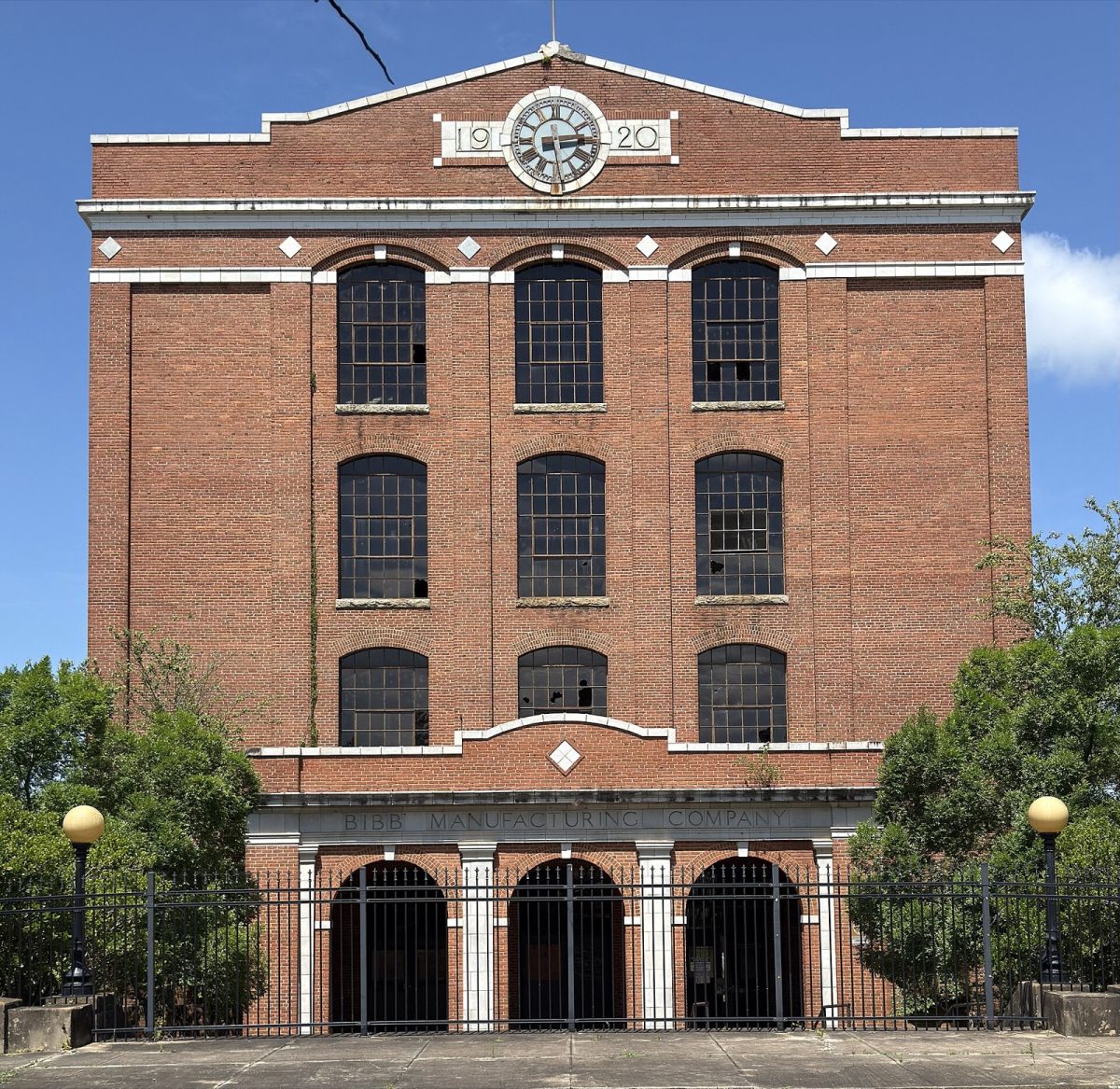
Bibb City was its own city from 1909 to 2000. Its historic district was listed on the National Register in 2010. Photo: Farragutful / Wikimedia Commons (CC BY-SA 4.0)
Columbus, Ga. — For 91 years, Columbus had a small neighboring city built around a textile mill. Bibb City was incorporated in 1909, operated as a company town and disappeared as an independent municipality on Dec. 7, 2000, when it surrendered its charter and became part of Columbus.
At its industrial peak in the 1940s, the Columbus Mill employed 2,500 workers and was the largest cotton mill in the United States. The enormous factory closed in 1998, ending the industrial operation around which the community had developed.
Bibb City's history is part of a larger story about Columbus, where the Chattahoochee River powered factories that helped make the area a major Southern manufacturing center.
How a company town became its own city
Bibb City's origins trace to the Bibb Manufacturing Company, founded in Macon, Georgia, in 1876.
Three men, Maj. John F. Hanson, Isaac N. Hanson and Hugh M. Comer, requested the company's original charter. Georgia Gov. James Smith approved its incorporation Feb. 25, 1876.
The company expanded through the acquisition of mills and manufacturing properties. By 1878, Bibb operated 16,500 spindles and 140 looms.
In 1900, Bibb Manufacturing purchased the Columbus Power Company, which owned a spindle mill and a dam generating power for industrial operations.
The company sold the power business in 1906 but retained the mill and 51 surrounding acres. A new Columbus Mill was built, and the surrounding community was incorporated as Bibb City in 1909.
Unlike an ordinary neighborhood, Bibb City had its own municipal identity, even though the textile company dominated the community.
A city built around a 750,000-square-foot mill
The Columbus Mill was the centerpiece of Bibb City.
Its massive industrial complex covered approximately 750,000 square feet. During the 1940s, it employed about 2,500 workers, making it the largest cotton mill in the country.
The mill and surrounding residential village formed the independent municipality. In the segregated industrial environment of that era, most textile workers were white.
Bibb Manufacturing produced a range of cotton products, including sheets, comforters, towels, curtains and bedspreads. Its broader operations also manufactured carpet yarn and industrial textiles used in automobile hoses and conveyor belts.
The company's influence extended well beyond its production facilities, shaping daily life in the communities surrounding its mills.
What life was like in Bibb's mill communities
Bibb Manufacturing provided more than employment. Its company communities included worker housing, stores, educational opportunities, medical care and organized social activities.
The company's benefits were extensive across its operations.
By 1950, Bibb Manufacturing operated five schools at mill locations outside Macon and maintained 19 vocational schools for employees.
It also operated six free medical clinics staffed by nine doctors and eight nurses. That year, approximately 15,000 employees used the free medical services, and nurses visited sick workers in their homes.
Social activities included organized clubs, camping trips, fishing excursions and athletic competitions. The company's Columbus and Porterdale operations maintained gymnasiums.
Bibb also supported religious facilities. In 1950, six churches in its mill communities had a combined membership of 2,400.
These figures describe the company's broader network of communities, not exclusively Bibb City. Still, they illustrate how closely employment and everyday life could be connected in company-owned mill villages.
How Bibb City disappeared in 2000
Bibb Manufacturing underwent major financial and ownership changes toward the end of the 20th century.
In 1985, Thomas Foley's NTC Group acquired the company through a leveraged buyout financed with junk bonds.
By 1995, Bibb's $160 million in junk bonds had been downgraded to the lowest possible rating. The company faced $26 million in interest payments against expected earnings of $15 million.
In 1998, Dan River agreed to purchase Bibb Manufacturing for approximately $250 million.
That same year, the Columbus Mill closed.
Without its central industrial operation, Bibb City faced a difficult future. The municipality lacked sufficient funding to continue city operations and surrendered its charter Dec. 7, 2000.
Columbus formally annexed the former company town.
Its final census recorded 510 residents living in just 0.2 square miles.
What the last census revealed
The 2000 U.S. census documented Bibb City's final years as an independent municipality.
| Measure | Bibb City in 2000 |
|---|---|
| Population | 510 |
| Households | 220 |
| Families | 117 |
| Housing units | 242 |
| Median household income | $24,107 |
| Residents below poverty line | 32.6% |
| Median age | 36 |
| Area | 0.2 square miles |
The census also found that 24.1% of residents were younger than 18, while 16.7% were at least 65.
Nearly 40% of households consisted of individuals living alone. More than half of children younger than 18 lived below the poverty line.
These numbers provide a picture of the small community shortly before its municipal identity ended.
The Columbus Mill fire of 2008
Although the mill closed in 1998, its enormous structure remained standing for another decade.
Shortly after midnight Oct. 30, 2008, a massive fire destroyed the 750,000-square-foot Columbus Mill.
The Bureau of Alcohol, Tobacco, Firearms and Explosives and Columbus Department of Fire and Emergency Medical Services conducted a four-day joint investigation.
The cause remained undetermined.
The destruction removed the industrial centerpiece of the former city, leaving the surrounding community as an important connection to its past.
Columbus had a much larger mill economy
Bibb City was only one piece of Columbus' industrial history.
The Columbus Historic Riverfront Industrial District includes five major historic industrial complexes along the eastern bank of the Chattahoochee River.
The district was designated a National Historic Landmark in 1978.
Columbus' location at the river's fall line provided a natural advantage. The river drops approximately 125 feet over 2.5 miles, offering substantial waterpower for factories.
Industrial development began early, with the river first dammed in 1828.
The five historic complexes illustrate different parts of that manufacturing history.
| Historic complex | Notable history |
|---|---|
| Bibb Mill | Industrial complex associated with the company town |
| City Mills | Grist mill complex with an 1869 building constructed by Horace King |
| Muscogee Mills | Industrial architecture and traces of an 1844 millrace |
| Eagle and Phenix Mills | Once the South's largest textile operation |
| Columbus Ironworks | Industrial complex containing historic electrical equipment |
City Mills later housed electrical generators installed in 1919, some operating into the 1960s.
The Eagle and Phenix complex retains elements of its original raceway and dam. Columbus Ironworks includes buildings dating to the early 20th century and a portion converted into a convention and event center.
The community that remains
Bibb City's municipal government disappeared, but its history received formal recognition afterward.
In September 2006, Georgia's state historic preservation officer nominated Bibb City for listing on the National Register of Historic Places.
The Bibb City Historic District received national designation Feb. 14, 2010.
Today, the former municipality is part of consolidated Columbus, preserving the identity of a place that once operated as its own city.
How we did this
This article uses historical information from the Wikipedia entries for "Bibb City, Georgia," "Bibb Manufacturing Company" and "Columbus Historic Riverfront Industrial District," reviewed Oct. 23, 2026. Population figures come from Bibb City's final 2000 census data, while manufacturing history reflects the dates, facilities and company records described in those sources.
Source: Wikipedia: "Bibb City, Georgia", "Bibb Manufacturing Company", "City Mills", "Columbus Historic Riverfront Industrial District"
News organizations may republish this story with credit. See our guidelines.
Know someone who'd want to read this? Email it to a friend.
Own a Columbus business? 60,000+ page views a month. Ads from $125/month. See ad optionsPlan your weekend with Columbus Times
Get This Weekend in Columbus every Thursday: the best local events, free things to do and family fun, plus each evening's local news. Free, and you can unsubscribe anytime.
Most read this week
- 8 Columbus Restaurants Got a C on Their Health Inspection in 2026, the Most of Any Year Since 2022. Here's Every One
- Georgia Spent $165.7 Million on Medicaid Work Requirement Program, but Only 18,527 Were Enrolled After 3 Years
- The Night Fight on the Chattahoochee: How Columbus Became the Site of What Many Call the Last Battle of the Civil War
- Georgia's 3 Amendments: Which Will Pass, Who's Against Them, and What Happens If They Fail
- The 10 Best Mexican Restaurants in Columbus, Ga., Ranked by Diners
More stories
 Local 6 Hiking Loops Near Columbus Ranked by Distance: From 3.2 to 7.8 Miles at F.D. Roosevelt State Park
 Local Columbus Hazardous Waste Day Is Saturday, Oct. 24: 10 Things You Can Drop Off and the 1 Item to Leave Home
 Local Coca-Cola's Inventor Is Buried in Columbus, and RC Cola and Nehi Were Born Here
 Local Columbus Airport's 6 Biggest Milestones: From Early Airmail Service to a $24 Million Runway Rebuild
Comments
Be respectful. No personal attacks, hate speech, spam or anyone's private information. Every comment is reviewed before it appears. Comment rules
No comments yet. Be the first to share your thoughts.