Columbus Sunsets Jump to 5:49 p.m. Nov. 1: 10 Things to Know When Clocks Fall Back
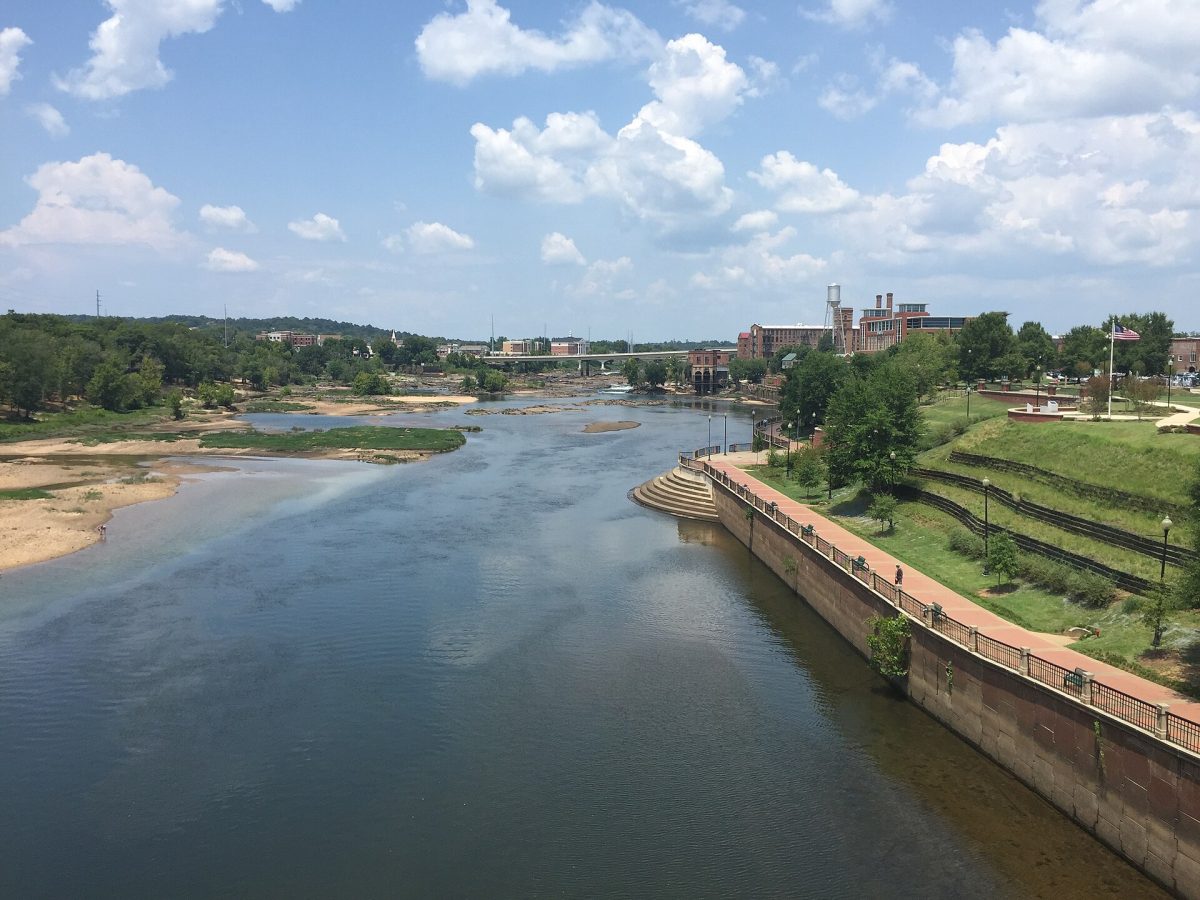
The Chattahoochee from the Dillingham Street Bridge. Sunset in Columbus moves to 5:49 p.m. on Nov. 1. Photo: Mccunicano / Wikimedia Commons (CC BY-SA 4.0)
Columbus, Ga., will see sunset move from 6:50 p.m. Saturday, Oct. 31, to 5:49 p.m. Sunday, Nov. 1, when daylight saving time ends and clocks move back one hour. The change means earlier sunsets on the clock, brighter mornings immediately after the time change and a stretch of winter days when Columbus residents will see the sun disappear before 6 p.m.
The clocks officially fall back at 2 a.m. Sunday, Nov. 1, returning to 1 a.m. Daylight saving time will not return until Sunday, March 14, 2027.
But the clock change is only part of the story. Columbus will reach its earliest sunset around Nov. 29 through Dec. 8, when the sun goes down at 5:34 p.m. The shortest days arrive later, around the winter solstice on Dec. 21, and the latest sunrises will not occur until January.
The U.S. Naval Observatory's sun and twilight calculations show exactly how the coming months will affect morning daylight, evening schedules and the timing of sunrise and sunset.
Here are 10 things Columbus residents should know, including a complete winter sun-times calendar and a practical checklist for the time change.
1. Exactly when do the clocks change in Columbus?
Clocks fall back one hour at 2 a.m. Sunday, Nov. 1, 2026, when the local time returns to 1 a.m.
That marks the end of daylight saving time for 2026. The change happens overnight between Saturday, Oct. 31, and Sunday, Nov. 1.
For residents who prefer not to think about the change in the middle of the night, the simplest approach is to adjust clocks before going to bed Saturday.
Phones generally update automatically. However, residents should still check clocks in their cars, ovens and other devices that may require manual adjustment.
The most noticeable difference Sunday will be the timing of daylight. Sunrise and sunset will appear approximately one hour earlier on the clock, even though the actual amount of daylight changes by only a couple of minutes.
That means Sunday morning will begin with an earlier sunrise, while Sunday evening will have an earlier sunset.
The change does not add or remove an hour of actual sunlight. It changes how the hours of daylight line up with the time displayed on the clock.
2. What changes between Saturday and Sunday?
Columbus will move from a 7:56 a.m. sunrise Saturday to a 6:57 a.m. sunrise Sunday, while sunset moves from 6:50 p.m. to 5:49 p.m.
The U.S. Naval Observatory provides the following comparison:
| Sun and twilight event | Saturday, Oct. 31 | Sunday, Nov. 1 |
|---|---|---|
| Dawn, civil twilight begins | 7:31 a.m. | 6:32 a.m. |
| Sunrise | 7:56 a.m. | 6:57 a.m. |
| Sunset | 6:50 p.m. | 5:49 p.m. |
| Dusk, civil twilight ends | 7:16 p.m. | 6:15 p.m. |
| Total daylight | 10 hr., 54 min. | 10 hr., 52 min. |
Every listed event moves nearly one hour earlier on the clock. However, Columbus loses only two minutes of daylight between Saturday and Sunday.
There is also an important distinction between sunset and dusk. Sunset is the time the sun goes below the horizon, while civil twilight continues afterward.
On Sunday, Nov. 1, sunset will occur at 5:49 p.m., but civil twilight will not end until 6:15 p.m. Similarly, morning civil twilight begins at 6:32 a.m., before the 6:57 a.m. sunrise.
Those distinctions help explain why the official sunset time and the point when evening twilight ends are not the same.
3. What time will the sun rise and set through winter?
Columbus sunsets will move into the 5 p.m. hour beginning Nov. 1, with the earliest sunsets occurring around late November and early December.
The following calendar shows selected sunrise and sunset times from October through the return of daylight saving time in March.
All times are local Columbus clock times. November through March 13 use standard time, while Oct. 21 and March 14 use daylight saving time.
| Date | Sunrise | Sunset |
|---|---|---|
| Oct. 21, 2026 | 7:48 a.m. | 7:00 p.m. |
| Nov. 1, 2026 | 6:57 a.m. | 5:49 p.m. |
| Nov. 15, 2026 | 7:10 a.m. | 5:39 p.m. |
| Dec. 1, 2026 | 7:24 a.m. | 5:34 p.m. |
| Dec. 21, 2026 | 7:38 a.m. | 5:39 p.m. |
| Jan. 1, 2027 | 7:42 a.m. | 5:46 p.m. |
| Jan. 15, 2027 | 7:42 a.m. | 5:57 p.m. |
| Feb. 1, 2027 | 7:34 a.m. | 6:13 p.m. |
| March 1, 2027 | 7:08 a.m. | 6:37 p.m. |
| March 13, 2027 | 6:53 a.m. | 6:46 p.m. |
| March 14, 2027 | 7:52 a.m. | 7:47 p.m. |
Source: U.S. Naval Observatory.
The table shows several different phases of the winter daylight calendar. During November, sunsets become earlier while sunrises gradually become later after the initial clock change.
By Dec. 1, the sun will set at 5:34 p.m. By Dec. 21, sunset will already be slightly later, at 5:39 p.m., even though the shortest days of the year occur around that time.
January brings the latest morning sunrises. After that, the sunrise and sunset calendar gradually shifts toward earlier mornings and later evenings.
By March 1, sunset will reach 6:37 p.m., before the next clock change moves it into the 7 p.m. hour.
4. When is the earliest sunset in Columbus?
The earliest sunset in Columbus is 5:34 p.m., occurring from approximately Nov. 29 through Dec. 8.
That means the city's earliest sunsets arrive before the official start of astronomical winter.
On Dec. 1, Columbus will see sunrise at 7:24 a.m. and sunset at 5:34 p.m., providing about 10 hours and 10 minutes of daylight.
By the winter solstice on Dec. 21, sunset will have moved later to 5:39 p.m., even though the overall day will be shorter.
This distinction is one of the most important parts of the winter calendar. The earliest sunset and shortest day are separate events because sunrise and sunset times do not shift by identical amounts throughout the season.
Between Dec. 1 and Dec. 21, the sunrise moves from 7:24 a.m. to 7:38 a.m., a 14-minute change. Meanwhile, sunset moves five minutes later.
As a result, Columbus loses daylight during that period even as evening sunset begins to occur later.
There is another geographic detail worth knowing: Columbus does not have a sunset before 5:30 p.m. at any point during the year.
The earliest scheduled sunset remains 5:34 p.m., and the city begins gaining later evening sunsets before the shortest days have passed.
5. When will Columbus have its latest sunrise?
The latest sunrise in Columbus is approximately 7:42 a.m., occurring from about Jan. 1 through Jan. 16, 2027.
That period arrives after the winter solstice, showing that the shortest day and latest sunrise do not occur together.
The U.S. Naval Observatory calculations identify a particularly long stretch of late sunrises: 61 days when sunrise is 7:30 a.m. or later, from Dec. 9 through Feb. 7.
For Columbus residents with early morning schedules, that is a meaningful calendar milestone. The sun will not rise before 7:30 a.m. during that entire period.
On Jan. 15, sunrise is scheduled for 7:42 a.m., with sunset at 5:57 p.m. By Feb. 1, sunrise moves earlier to 7:34 a.m., while sunset moves later to 6:13 p.m.
Those changes are gradual rather than sudden. Unlike the one-hour adjustment on Nov. 1, the seasonal movement of sunrise happens over many weeks.
The timing also explains why mornings may continue to seem late even after evening sunsets have started moving later.
Columbus residents will see the improvement in evening daylight first, while the latest morning sunrises continue into January.
6. When is the shortest day of the year?
The winter solstice occurs Monday, Dec. 21, 2026, at 3:50 p.m. Eastern, with Columbus receiving approximately 10 hours and one minute of daylight.
Sunrise that day will be at 7:38 a.m., followed by sunset at 5:39 p.m.
The shortest days of the year occur around Dec. 18-24, with approximately 10 hours and one minute of daylight.
By comparison, Columbus has about 11 hours and 12 minutes of daylight on Oct. 21, when sunrise is at 7:48 a.m. and sunset is at 7 p.m.
That represents a loss of approximately 71 minutes of daylight between Oct. 21 and the winter solstice.
The difference is not caused by the November clock change. Moving the clocks affects the displayed time of sunrise and sunset, but the reduction in daylight is a seasonal change.
After the solstice, the total amount of daylight begins increasing again. By March 20, 2027, Columbus will have approximately 12 hours and seven minutes of daylight.
That is more than two hours of additional daylight compared with the shortest days in December.
For residents tracking daylight rather than the clock, Dec. 21 is the key turning point. For those primarily concerned about late mornings, the important dates extend into January.
7. Why does the sun set later in Columbus than in Atlanta or Savannah?
Columbus generally has later sunsets than Atlanta and Savannah because of its position farther west within the Eastern time zone.
The difference is visible immediately after daylight saving time ends.
On Sunday, Nov. 1, Columbus and Atlanta will both see sunrise at 6:57 a.m., but Columbus will have sunset four minutes later.
Savannah's sunrise and sunset will occur considerably earlier on the clock.
| City | Nov. 1 sunrise | Nov. 1 sunset | Dec. 21 sunrise | Dec. 21 sunset |
|---|---|---|---|---|
| Columbus | 6:57 a.m. | 5:49 p.m. | 7:38 a.m. | 5:39 p.m. |
| Atlanta | 6:57 a.m. | 5:45 p.m. | 7:38 a.m. | 5:33 p.m. |
| Savannah | 6:41 a.m. | 5:34 p.m. | 7:21 a.m. | 5:24 p.m. |
On Nov. 1, Columbus sunset will occur 15 minutes later than Savannah's and four minutes later than Atlanta's.
At the winter solstice, Columbus will again see sunset 15 minutes later than Savannah, while Atlanta will see sunset six minutes earlier than Columbus.
The difference also appears during the earliest-sunset period. On Dec. 5, the calculated sunset times are:
| City | Dec. 5 sunset |
|---|---|
| Columbus | 5:34 p.m. |
| Atlanta | 5:29 p.m. |
| Savannah | 5:19 p.m. |
Columbus has the latest sunset of the three cities on that date.
The trade-off is that Savannah also sees sunrise earlier. On Dec. 21, Savannah's sunrise is 7:21 a.m., compared with 7:38 a.m. in Columbus.
Therefore, a later sunset does not necessarily mean a longer day. The timing of both sunrise and sunset matters when making comparisons between cities.
8. Why is solar noon in Columbus after 12 p.m.?
Solar noon in Columbus comes well after 12 p.m., from about 12:24 p.m. in early November to about 12:54 p.m. in late February, because the city sits near the western edge of the Eastern time zone.
Solar noon is the time when the sun reaches its highest position in the sky during the day.
Although ordinary clock time marks noon at 12 p.m., the sun reaches that high point 24 to 54 minutes later in Columbus this winter. The exact gap shifts a little through the season because Earth's orbit isn't a perfect circle.
That difference helps explain the city's relatively late sunrise and sunset times compared with places farther east in the same time zone.
It also provides useful context when comparing Columbus with Savannah. Both cities use Eastern time, but their position within that time zone affects when daylight appears on the clock.
For example, on Dec. 21, Columbus' sunrise is 17 minutes later than Savannah's, and its sunset is 15 minutes later.
The important point is that a shared time zone does not mean identical sunrise and sunset times.
Columbus' position within the Eastern time zone shifts the daylight schedule later relative to the clock, which is why its winter sunsets occur later than those in Atlanta and Savannah.
9. When do clocks spring forward again?
Daylight saving time returns Sunday, March 14, 2027, moving sunrise and sunset approximately one hour later on the clock.
The difference between the Saturday and Sunday sun schedules illustrates what will happen.
| Sun event | Saturday, March 13 | Sunday, March 14 |
|---|---|---|
| Sunrise | 6:53 a.m. | 7:52 a.m. |
| Sunset | 6:46 p.m. | 7:47 p.m. |
On Saturday, March 13, the sun will rise before 7 a.m. and set at 6:46 p.m.
The following day, after the return of daylight saving time, sunrise will be 7:52 a.m. and sunset will be 7:47 p.m.
That change will bring sunsets back into the 7 p.m. hour. However, morning sunrise will also move later on the clock.
The March change is the reverse of what happens in November. Instead of earlier clock-time sunrises and sunsets, both events move later.
By March 20, Columbus will have approximately 12 hours and seven minutes of daylight, compared with about 10 hours and one minute during the shortest days in December.
The growing amount of daylight and the clock change are separate developments, but both will affect how the daylight schedule looks by mid-March.
10. What should Columbus residents do before Nov. 1?
The simplest preparation is to update clocks before bed Saturday, Oct. 31, and prepare for sunsets before 6 p.m. beginning Sunday.
A few steps can help residents handle the change without confusion.
- Change manual clocks Saturday night. Move clocks back one hour before going to bed, so they show the correct standard time Sunday morning.
- Check phones and other automatic devices. Phones generally adjust automatically, but it is worth verifying that the correct time appears Sunday.
- Remember car and oven clocks. These may require a manual adjustment even when other devices have already updated.
- Test smoke and carbon monoxide alarms. The clock change is a useful reminder to check both kinds of safety alarms.
- Plan for earlier evening sunsets. Residents traveling during the evening commute should account for sunset occurring before 6 p.m. after the change.
The evening commute is one of the everyday schedules most visibly affected. Columbus sunset moves to 5:49 p.m. on Nov. 1 and to 5:39 p.m. by Nov. 15.
By Dec. 1, sunset reaches 5:34 p.m. That means someone using the 6 p.m. hour as a reference for daylight will encounter an earlier sunset throughout much of the winter.
Morning schedules change as well. Although sunrise initially becomes earlier after the clocks fall back, the seasonal progression will push sunrise to 7:30 a.m. or later from Dec. 9 through Feb. 7.
Knowing those dates can help households plan routines around the available daylight rather than relying on the same sunrise or sunset time throughout winter.
The key dates to remember
Columbus residents do not need to memorize every sunrise and sunset time to understand the winter daylight calendar. A few dates capture the biggest changes.
Nov. 1 is when clocks move back and sunset shifts to 5:49 p.m. About Nov. 29 through Dec. 8 is the earliest-sunset period, with the sun going down at 5:34 p.m.
Dec. 21 is the winter solstice, when Columbus experiences approximately 10 hours and one minute of daylight. About Jan. 1-16 brings the latest sunrises, at 7:42 a.m.
March 14, 2027, marks the return of daylight saving time, when sunset moves to 7:47 p.m.
The dates also show why the winter daylight calendar has more than one turning point. The earliest sunset comes before the solstice, the latest sunrise follows it, and the clocks do not change again until March.
For Columbus, the immediate adjustment is straightforward: Set clocks back one hour before bed Saturday, Oct. 31, and expect sunset at 5:49 p.m. Sunday, Nov. 1.
How we did this
Columbus Times used U.S. Naval Observatory sun and civil twilight calculations for Columbus, Georgia, at approximately 32.461 degrees north latitude and 84.988 degrees west longitude.
The comparisons with Atlanta and Savannah also use U.S. Naval Observatory sunrise and sunset calculations. Winter solstice timing comes from the observatory's 2026 astronomical data.
All sunrise, sunset, dawn and dusk times are presented in local clock time, accounting for the Nov. 1, 2026, return to standard time and the March 14, 2027, return to daylight saving time.
Source: U.S. Naval Observatory

News organizations may republish this story with credit. See our guidelines.
Know someone who'd want to read this? Email it to a friend.
Own a Columbus business? 60,000+ page views a month. Ads from $125/month. See ad optionsPlan your weekend with Columbus Times
Get This Weekend in Columbus every Thursday: the best local events, free things to do and family fun, plus each evening's local news. Free, and you can unsubscribe anytime.
Most read this week
- Georgia's 3 Amendments: Which Will Pass, Who's Against Them, and What Happens If They Fail
- Georgia's 3 Constitutional Amendments on the Nov. 3 Ballot, Explained in Plain English
- Early Voting in Columbus Starts Oct. 13: Every Site, the Hours, and What's on Your Ballot
- USDA Awards $3.3 Billion Loan for Georgia Power Plant to Meet Rising Electricity Demand
- Georgia Election Forecast 2026: Who Is Projected to Win Every Major Race?
More stories
 Community Emergency Responders Train in Columbus to Make Crash Scenes Safer and Reopen Roads Faster
 Community Columbus's Whitewater by the Numbers: 2.5 Miles, 45,000 Rafters a Year and 2 Dams That Came Down
 Community What's Open and Closed in Columbus on Columbus Day, Monday, Oct. 12
 Community Fort Benning Graduation in Columbus: Your Family's Guide to the Ceremony, the Gate, Hotels and Food
Comments
Be respectful. No personal attacks, hate speech, spam or anyone's private information. Every comment is reviewed before it appears. Comment rules
No comments yet. Be the first to share your thoughts.