The Night Fight on the Chattahoochee: How Columbus Became the Site of What Many Call the Last Battle of the Civil War
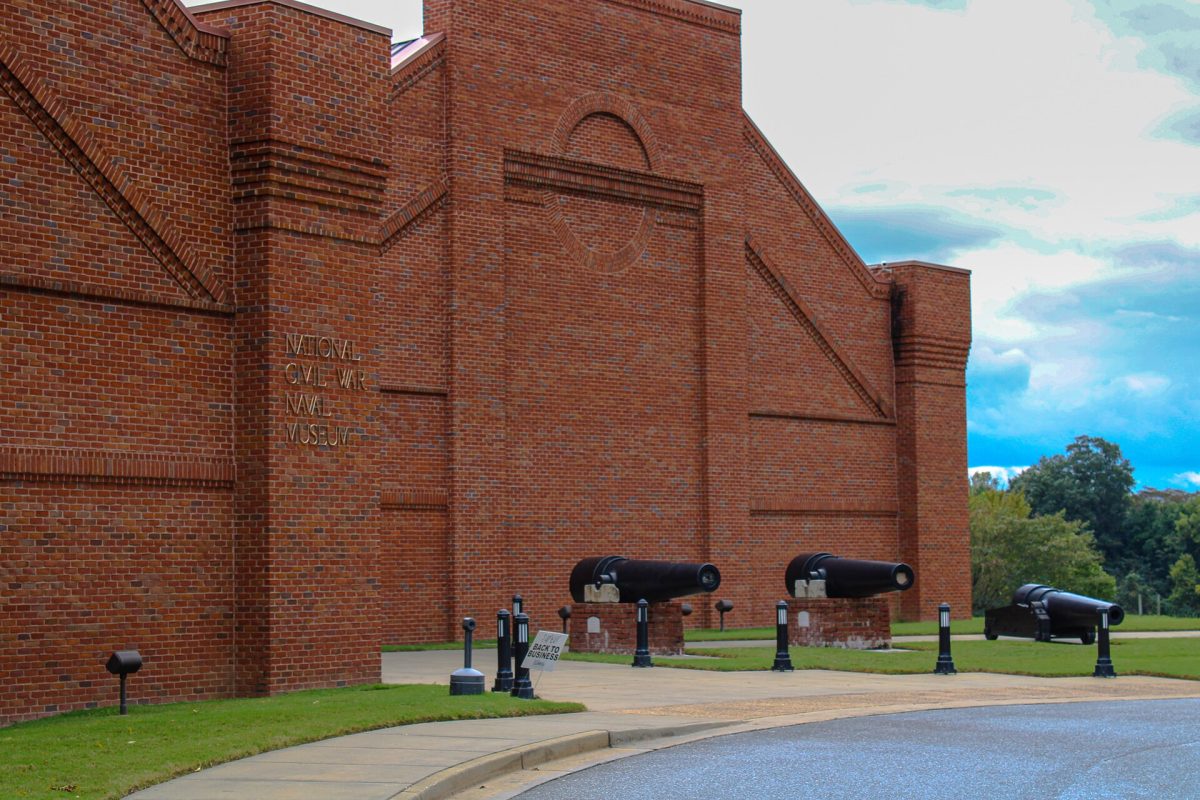
The National Civil War Naval Museum in Columbus displays the remains of the ironclad CSS Jackson. Photo: Gabby Brito / Wikimedia Commons (CC BY-SA 4.0)
A week after Robert E. Lee surrendered at Appomattox, the Civil War came to Columbus, Ga. On Easter Sunday, April 16, 1865, thousands of Union cavalrymen fought their way across a covered bridge over the Chattahoochee River in the dark, captured the city and, over the next two days, burned the factories, arsenal and navy yard that had made Columbus one of the Confederacy's most important industrial centers.
Generals on both sides later called it the last battle of the war. Historians still argue about that. But there's no argument about what it meant for Columbus: by the time the smoke cleared, the city that had built ironclads and gunboats for the South had been stripped of nearly everything that made it a war town.
Here's the story of the Battle of Columbus, based on the historical record, and what you can still see of it today.
A war town on the river
By 1865, Columbus was a target. The Chattahoochee River powered textile mills and factories, and the city had grown into one of the South's main suppliers for the Confederate war effort. Its navy yard built warships, including the ironclad CSS Jackson, a 223-foot armored ram designed to carry six heavy Brooke rifles. It was still being finished in the spring of 1865.
Columbus had largely escaped the fighting for four years. That changed with a Union cavalry campaign known as Wilson's Raid.
Wilson's Raid: 13,500 riders across Alabama
On March 22, 1865, Union Brevet Maj. Gen. James H. Wilson led about 13,500 cavalrymen in three divisions out of Gravelly Springs, in northwest Alabama. Their mission was to destroy the Confederacy's remaining war industry in Alabama and Georgia.
They moved fast:
- April 2: Wilson's troopers beat Confederate cavalry under Nathan Bedford Forrest at the Battle of Selma and destroyed Selma's arsenal and foundries.
- April 12: They captured Montgomery, the Confederacy's first capital.
- April 16: Two forces struck the Chattahoochee River the same day: one at West Point, Ga., where they attacked Fort Tyler, and the main body at Columbus.
None of the men riding toward Columbus knew that Lee had surrendered on April 9, or that President Abraham Lincoln had been shot on the night of April 14 and died the next morning. News moved slowly, and Wilson didn't learn of Lincoln's death during the fight for Columbus.
The defenders: about 3,250, mostly home guard
Waiting for them was a patchwork force of about 3,250 men under Maj. Gen. Howell Cobb, a former U.S. treasury secretary and speaker of the House, along with Robert Toombs, the former Confederate secretary of state, who commanded Georgia militia. Most of the defenders were home guard units, militia and civilian volunteers from Georgia and Alabama, not hardened veterans.
They dug in on the Alabama side of the river, in what is now Phenix City, to guard the bridges into Columbus.
Easter Sunday afternoon: the first attack fails
The fighting began between 1:30 and 2 p.m. Union Gen. Emory Upton's division attacked the lower bridge. Confederate defenders had pulled up planks on the Georgia end of the bridge to trap anyone who made it across, and when fire threatened the bridge, Upton pulled back.
Wilson turned his attention to the upper bridge, and he decided to wait for dark.
8 p.m.: a charge in the dark
At about 8 p.m., after nightfall, a brigade under Gen. Edward F. Winslow, led by the 3rd and 4th Iowa Cavalry, attacked the Confederate works guarding the upper bridge. Col. Frederick Benteen, who would become known 11 years later at the Little Bighorn, commanded part of the charge.
The fighting near the bridge was close and confused. Around 10 p.m., the Confederate defense collapsed, and something unusual happened: Union and Confederate soldiers raced across the covered bridge at the same time, mixed together in the dark.
On the Georgia side, Toombs had two cannons loaded with canister aimed at the bridge. He didn't fire, because no one could tell friend from foe. The defenders had also packed the base of the bridge with cotton soaked in turpentine so they could burn it. They never lit it, for the same reason.
By 11 p.m., Wilson himself had crossed into Columbus. His horse was shot and killed. He set up headquarters at the Mott House on the Columbus side of the river.
One of the last men to fall was Confederate Col. Charles A.L. Lamar, who led a cavalry charge and was killed after refusing to surrender.
A future Columbus legend is wounded
Among the Confederates wounded that night was a Columbus pharmacist and lieutenant colonel named John S. Pemberton, who was slashed by a saber near the bridge.
Two decades later, in Atlanta, Pemberton created a new drink: Coca-Cola. Some historians have suggested that the morphine addiction he developed after his wound pushed him to experiment with medicines, though that connection is debated.
The bridge builder
The covered bridges Columbus fought over had a remarkable story of their own. They were designed by Horace King, who was born into slavery in 1807, earned his freedom and became one of the most celebrated bridge builders in the South, known as the "Prince of Bridge Builders." After the war, he served in the Alabama legislature.
By the numbers
| Union | Confederate | |
|---|---|---|
| Commander | Brevet Maj. Gen. James H. Wilson | Maj. Gen. Howell Cobb |
| Troops | About 9,000 to 13,000 cavalry (two divisions) | About 3,250 |
| Casualties | 60, including 10 killed in battle and 8 who later died of wounds | 151 killed or wounded |
| Captured | — | About 1,600 |
Wilson's first report listed only 25 Union casualties. Hospital records later showed the real figure was 60.
April 17: Columbus burns
The next day, Wilson ordered the destruction of everything in Columbus that could help the Confederate war effort. Factories, warehouses and the Confederate navy yard on both sides of the river were destroyed.
The unfinished ironclad CSS Jackson (also known as the Muscogee) was set on fire while still being fitted out. It drifted downriver, burning, and ran aground. The gunboat CSS Chattahoochee had already been scuttled by the Confederates.
Three days later, on April 20, Wilson's men captured Macon. On May 10, troopers from Wilson's command captured Confederate President Jefferson Davis near Irwinville, Ga.
Was it really the last battle of the Civil War?
Many of the men who were there thought so.
- Howell Cobb said the flames that consumed the Chattahoochee Valley's warehouses and factories "marked the end of the war."
- Emory Upton, in a report dated May 30, 1865, called it the "closing conflict of the war."
- Wilson wrote in 1868 that "the last battle had been fought," and in 1913, he said there were "no grounds left for doubting" that Columbus was the last battle of the war.
- Edward Winslow wrote that he had "always considered" it the war's final battle.
- In 1935, the Georgia General Assembly passed a resolution identifying it as the last battle of the Civil War.
But there's another contender. On May 13, 1865, nearly a month later, Union and Confederate troops fought at Palmito Ranch in Cameron County, Texas, and that battle is often called the war's last.
Supporters of Columbus's claim argue that by then, President Andrew Johnson had already declared on May 10 that armed resistance was virtually at an end, so the men still fighting in Texas were, in effect, holdouts. Others count Palmito Ranch because it was a full engagement between organized forces. And Gen. Joseph E. Johnston didn't surrender the Confederacy's largest remaining army until April 26, 10 days after Columbus.
The safest way to put it: Columbus was the last major battle east of the Mississippi, and many of its participants called it the last battle of the war.
How the Civil War ended: a timeline
| Date (1865) | Event |
|---|---|
| March 22 | Wilson's Raid begins in northwest Alabama |
| April 2 | Battle of Selma |
| April 9 | Lee surrenders at Appomattox Court House, Va. |
| April 12 | Wilson captures Montgomery |
| April 14–15 | Lincoln is shot and dies |
| April 16 | Battles of Columbus and West Point (Easter Sunday) |
| April 17 | Union troops destroy Columbus's industry and navy yard |
| April 20 | Wilson captures Macon |
| April 26 | Johnston surrenders in North Carolina |
| May 10 | Jefferson Davis captured near Irwinville, Ga. |
| May 13 | Battle of Palmito Ranch, Texas |
A battlefield park that never happened
From the 1890s to the 1930s, supporters pushed to make the Columbus battlefield a national park. In 1934, National Park Service Director Arno B. Cammerer turned the proposal down, and no national park was ever created.
Interest hasn't gone away. In 2013, Auburn University representatives appealed to preserve Fort Gilmer, part of the Confederate defenses, and in 2015, Columbus State University and local historians renewed efforts to document the battle and its place in history.
What you can see today
The National Civil War Naval Museum
1002 Victory Drive · Monday through Saturday, 10 a.m. to 4:30 p.m.; Sunday, 12:30 to 4:30 p.m.
Admission: $12 adults; $10 seniors and military; $8 students; free for children 6 and under (plus tax)
The most dramatic survivor of April 1865 is the CSS Jackson itself. The wreck sat in the Chattahoochee for nearly a century until it was raised in two sections in 1962 and 1963. Both pieces of its wooden hull are on display at the museum, beneath a metal frame that traces the full outline of the 223-foot ship, so you can see just how big the Confederacy's last ironclad was.
The museum is closed on New Year's Day, Easter, Thanksgiving and Christmas. Fittingly, that means it's closed on the holiday when the battle was fought.
Along the river
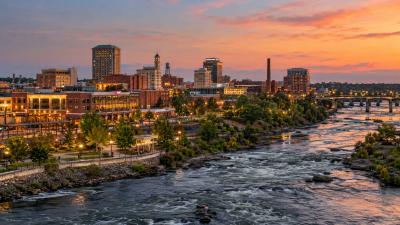
The RiverWalk on both the Columbus and Phenix City sides follows the stretch of the Chattahoochee where the fighting happened. Today's bridges have replaced the covered bridges Horace King built.
West Point
Fort Tyler, the earthen fort attacked the same day as Columbus, is in West Point, about 45 minutes north.
Did you know Columbus may have been the site of the last battle of the Civil War? Tell us in the comments what you'd like to learn about next in Columbus history.
Source: Wikipedia (Battle of Columbus (1865), Wilson's Raid, CSS Muscogee); National Civil War Naval Museum
News organizations may republish this story with credit. See our guidelines.
Know someone who'd want to read this? Email it to a friend.
Own a Columbus business? 60,000+ page views a month. Ads from $125/month. See ad optionsPlan your weekend with Columbus Times
Get This Weekend in Columbus every Thursday: the best local events, free things to do and family fun, plus each evening's local news. Free, and you can unsubscribe anytime.
Most read this week
- Georgia's 3 Amendments: Which Will Pass, Who's Against Them, and What Happens If They Fail
- Georgia's 3 Constitutional Amendments on the Nov. 3 Ballot, Explained in Plain English
- Early Voting in Columbus Starts Oct. 13: Every Site, the Hours, and What's on Your Ballot
- USDA Awards $3.3 Billion Loan for Georgia Power Plant to Meet Rising Electricity Demand
- Georgia Election Forecast 2026: Who Is Projected to Win Every Major Race?
More stories
 Local Columbus Holds On to No. 2 in Georgia by Just 172 People, and Grows for the First Time Since 2020
 Local Columbus Museum Announces Two October Events: Free Fall Festival and Roaring Twenties Mystery Night
 Local Columbus Drivers Spend 21 Minutes Getting to Work, 7 Fewer Than the Georgia Average
 Local What Would It Take to Make Columbus One of Georgia’s 5 Best Cities to Live In?
Comments
Be respectful. No personal attacks, hate speech, spam or anyone's private information. Every comment is reviewed before it appears. Comment rules
No comments yet. Be the first to share your thoughts.