Who Owns the Most Land in Columbus, Georgia? Records Reveal Major Landholders
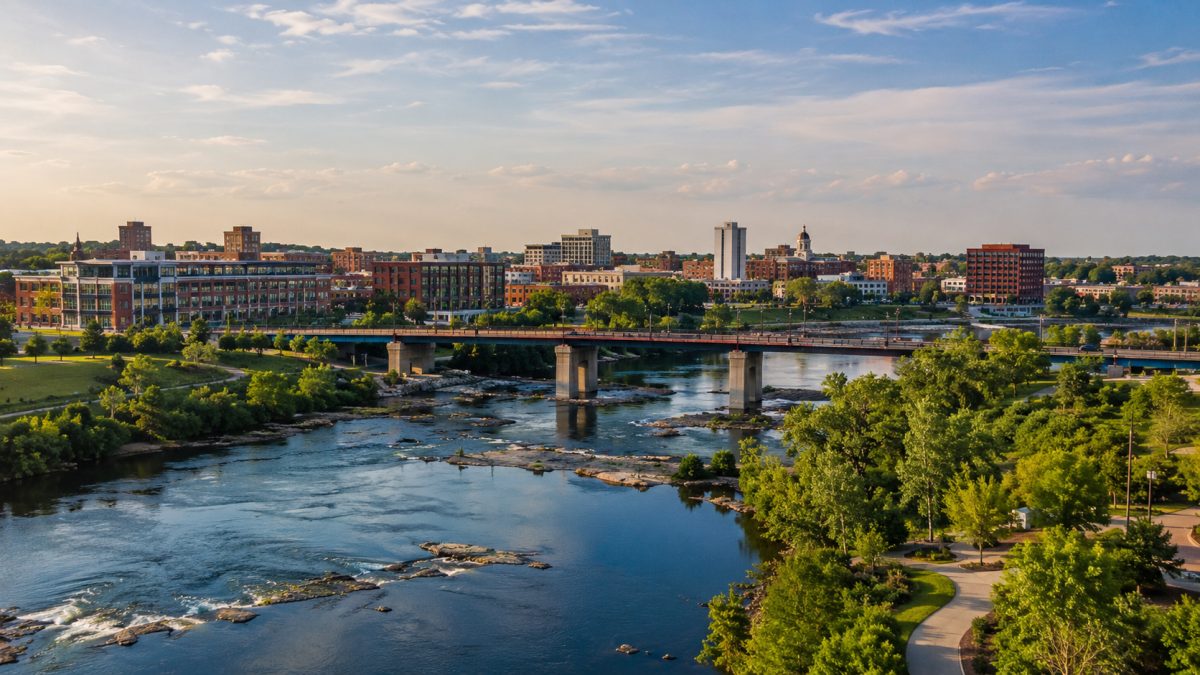
View of downtown Columbus from the sky.
Who actually owns Columbus, Georgia? Beyond the thousands of homeowners and small businesses scattered throughout Muscogee County, enormous amounts of land are controlled by the federal government, local agencies, corporations and private investors. Understanding who owns these properties helps explain why some neighborhoods continue expanding while other areas remain undeveloped.
A review of government reports, property records and development documents reveals one particularly significant finding: the U.S. military controls approximately 40% of the land within Columbus-Muscogee County. Other substantial landholders include local government agencies, educational institutions and private development companies. However, publicly available reports do not provide a verified ranking of every private landowner by total acreage.
1. The U.S. Government: Approximately 56,000 Acres
The largest clearly documented landholder in Columbus-Muscogee County is the federal government, primarily through Fort Benning. According to Georgia Tech’s 2025 Columbus Regional Housing Study, the military installation occupies approximately 56,000 acres within the consolidated government’s boundaries. That represents roughly 40% of the area’s land.
The installation itself covers more than 182,000 acres across portions of Georgia and Alabama, according to the U.S. Army. Much of that land lies outside Muscogee County, making the distinction important when comparing local ownership. The military property includes training grounds, housing, roads, operational facilities and large undeveloped areas.
This concentration of federal land significantly influences Columbus’s development opportunities. Unlike privately owned vacant property, military training areas generally cannot be converted into ordinary residential subdivisions or shopping centers. As a result, much of the city’s future growth must occur within its remaining developable areas.
2. Columbus Consolidated Government: Millions in Public Land
The Columbus Consolidated Government is another major property owner, controlling land used for public facilities, infrastructure, recreation and municipal operations. Its financial statements record substantial land assets, although these reports measure historical acquisition costs rather than total acreage. Government property includes parks, administrative facilities and other sites serving residents.
Public documents also show that city-owned property occasionally changes hands through exchanges or redevelopment agreements. In 2008, officials considered exchanging approximately 106 acres of city-owned land with Columbus Water Works. Such transactions demonstrate how public agencies can influence the location of future infrastructure and development.
Unlike most private property, government-controlled land is generally held to provide public services rather than generate investment returns. However, decisions about selling, exchanging or redeveloping these properties can significantly affect surrounding neighborhoods.
3. W.C. Bradley Company: A Major Private Real Estate Player
One of the most recognizable private property interests in Columbus is the W.C. Bradley Company. Founded in Columbus, the company has maintained a significant presence in manufacturing, real estate development and land management. Its real estate operations have helped shape commercial and residential development throughout the region.
Public planning records document the company’s ownership of a 14.68-acre property at 1201 Front Avenue in 2007. A separate 2013 agreement involved exchanging property near Front Avenue, Bay Avenue and 11th Street. These transactions illustrate the company’s longstanding involvement in downtown development.
W.C. Bradley also manages approximately 41,000 acres through its farming operations near Omaha, Georgia. However, that property is outside Muscogee County and should not be counted as Columbus acreage. Its exact total land ownership within Columbus could not be established from the public records reviewed.
4. Columbus Water Works: Land Needed for Essential Infrastructure
Columbus Water Works controls property associated with water treatment, wastewater processing and related infrastructure. These facilities require substantial space and can influence how surrounding land is developed. The utility also acquires property when new infrastructure projects become necessary.
In 2026, Columbus Water Works purchased approximately 144 acres for $2.8 million for a proposed wastewater treatment facility. The property, previously used as a clay mine, is located north of the existing South Water Reclamation Facility. The purchase illustrates how infrastructure needs can create demand for large undeveloped tracts.
Although the utility is an important institutional landholder, its total acreage across Muscogee County was not independently verified. Its holdings should therefore not be interpreted as placing it above or below other owners in a definitive ranking.
5. Muscogee County School District and Columbus State University
Educational institutions also control significant properties throughout Columbus. The Muscogee County School District maintains land associated with schools, athletic facilities, administrative buildings and other educational operations. Some properties are held for existing facilities, while others may become available for different uses.
Columbus State University operates a main campus covering approximately 132 acres, along with its RiverPark Campus in downtown Columbus. The university’s properties support academic buildings, student housing, athletic facilities and cultural institutions. These educational sites contribute to both employment and neighborhood development.
Neither institution’s complete countywide property holdings were established in this review. Their inclusion reflects documented ownership and institutional importance rather than a verified position among the county’s largest landowners.
6. Private Investors Are Acquiring Large Tracts
Large undeveloped properties are attracting interest from developers seeking locations for industrial facilities, data centers and other projects. One example is an approximately 865-acre tract in the Upatoi area of northeastern Muscogee County. The property became the focus of attention in 2026 because of a proposed large-scale data center development.
According to reporting by the Columbus Ledger-Enquirer, the property changed hands through transactions involving Rodgers Upatoi Holdings and Muscogee Property 1 LLC. Records examined by the newspaper also showed a connection to the Nana Family ownership name. The complicated transaction history demonstrates why identifying the actual parties behind large properties sometimes requires examining multiple companies and deeds.
An 865-acre property is significant within Columbus, but one transaction does not establish that its owner is among the county’s largest overall landholders. That determination requires comparing all parcels controlled by each ownership group.
Who Pays the Most Property Taxes in Columbus?
Land acreage is only one way to measure the scale of property ownership. A company occupying a relatively small industrial property may have a higher assessed value than an investor holding hundreds of acres of undeveloped land. Consequently, the largest property taxpayers are not necessarily the largest landowners.
Columbus’s fiscal year 2024 financial report identified Pratt & Whitney, Georgia Power, Aflac, TSYS and St. Francis among its major property taxpayers. W.C. Bradley Company also appeared in the government’s list of leading taxpayers. These figures include taxable property values and cannot be used to determine how many acres each company owns.
Why Land Ownership Matters for Columbus’s Future
With approximately 40% of Columbus-Muscogee’s land occupied by the military installation, the remaining property plays an especially important role in future development. Large private tracts may eventually become residential neighborhoods, industrial facilities or commercial centers. Government and institutional holdings also affect where infrastructure and public services can expand.
For residents, these ownership patterns can influence housing availability, traffic, employment opportunities and neighborhood property values. A single large development can change the character of a surrounding area for decades. Understanding who owns the land is an important first step toward understanding who may influence those changes.
How Residents Can Find Out Who Owns Property
The Muscogee County Tax Assessor’s Office maintains searchable property records that allow residents to investigate individual parcels. Searches can identify recorded owners, acreage, assessed values and transaction histories. Deeds filed with the Muscogee County Clerk of Superior Court provide additional information about property transfers.
A definitive ranking of Columbus’s largest private landowners would require combining those records, identifying properties held through related companies and calculating their total acreage. Until that analysis is completed, naming a single family or corporation as the city’s largest private owner would be speculative.
What the available evidence establishes is that public institutions control substantial portions of Columbus, while private businesses and investors own properties that could influence the city’s development for generations.
Source: Muscogee County Tax Assessor’s Office; Columbus Consolidated Government financial reports and property records; U.S. Army installation records; Georgi

News organizations may republish this story with credit. See our guidelines.
Know someone who'd want to read this? Email it to a friend.
Own a Columbus business? 60,000+ page views a month. Ads from $125/month. See ad optionsPlan your weekend with Columbus Times
Get This Weekend in Columbus every Thursday: the best local events, free things to do and family fun, plus each evening's local news. Free, and you can unsubscribe anytime.
Most read this week
- Georgia's 3 Amendments: Which Will Pass, Who's Against Them, and What Happens If They Fail
- Georgia's 3 Constitutional Amendments on the Nov. 3 Ballot, Explained in Plain English
- Early Voting in Columbus Starts Oct. 13: Every Site, the Hours, and What's on Your Ballot
- USDA Awards $3.3 Billion Loan for Georgia Power Plant to Meet Rising Electricity Demand
- Georgia Election Forecast 2026: Who Is Projected to Win Every Major Race?



Comments
Be respectful. No personal attacks, hate speech, spam or anyone's private information. Every comment is reviewed before it appears. Comment rules
No comments yet. Be the first to share your thoughts.