Emergency Responders Train in Columbus to Make Crash Scenes Safer and Reopen Roads Faster
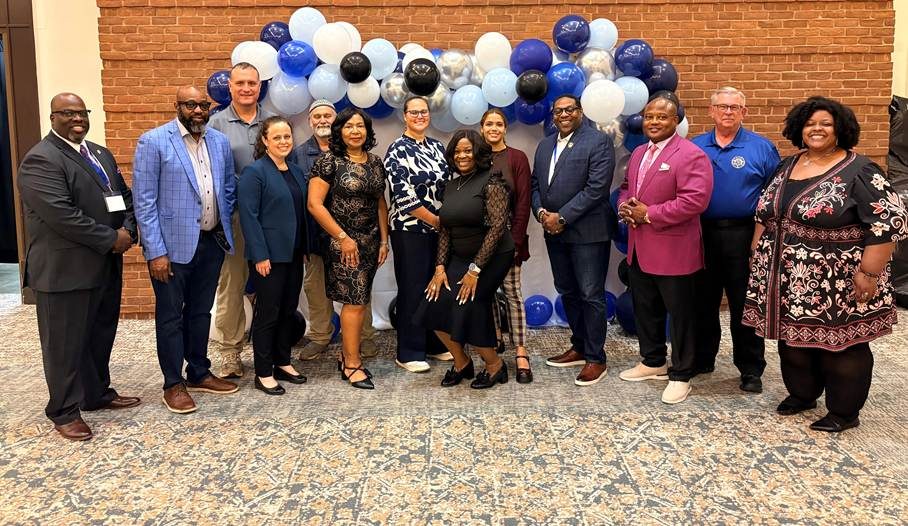
Emergency responders and transportation professionals from across Georgia gathered in Columbus October 4–7 for a statewide conference focused on making crash scenes safer, improving coordination among response teams, and reopening roads more quickly after traffic incidents.
The 2026 Georgia Traffic Incident Management Enhancement (TIME) Task Force Conference took place at the Columbus Georgia Convention & Trade Center. The event brought together law enforcement officers, firefighters, emergency medical services personnel, transportation officials, and towing and recovery professionals to exchange ideas and receive training on managing roadway emergencies.
The conference addressed several challenges facing emergency responders, including working safely alongside moving traffic, determining which personnel and equipment are needed at an incident, and using emerging technology to assess crash scenes before response teams arrive.
Organizers emphasized that improving traffic incident management can protect emergency workers and motorists while helping reduce the time roads remain blocked after collisions and other emergencies.
Drones Could Help Emergency Crews Assess Crashes Faster
One of the conference’s technology-focused presentations examined how drones can help public safety agencies evaluate traffic incidents before personnel reach the scene.
Brookhaven Police Sgt. Samuel Jones presented information about his department’s Drone as First Responder program. Jones leads the department’s innovation and technology efforts and discussed how aerial footage can help agencies identify traffic disruptions, determine the resources needed and assist with crash-scene reconstruction.
Drones can provide responders with an elevated view of an incident, potentially revealing traffic backups, hazards and conditions that may be difficult to assess from the ground.
That information could help dispatchers and incident commanders make more informed decisions about deploying officers, firefighters, medical personnel and other resources.
“Drone as First Responder technology gives public safety agencies timely, real-time awareness before officers and other responders arrive on scene,” Jones said.
He added that the technology could help agencies assess conditions more quickly while improving safety for emergency workers and the traveling public.
The presentation reflected a broader conference focus on using technology to improve coordination and reduce the risks associated with roadway emergencies.
GDOT Highlights Three Decades of Traffic Management
Georgia Department of Transportation officials also discussed the evolution of the state’s traffic management operations and initiatives intended to improve incident response.
Andrew Heath, GDOT’s deputy commissioner, delivered the conference’s keynote address, emphasizing the role of innovation and collaboration in managing Georgia’s transportation network.
“By embracing innovation and strengthening collaboration, we can improve operations, enhance responder safety and keep Georgia moving,” Heath said.
Christina Barry, GDOT’s assistant state traffic engineer, and Kim Williams, manager of the agency’s Traffic Management Center, reviewed approximately three decades of the center’s work and how its responsibilities have evolved alongside the state’s transportation needs.
Their presentation also covered recent GDOT initiatives and updates to the Towing Recovery and Incentive Program, known as TRIP.
The program supports coordinated efforts to clear qualifying traffic incidents and restore the movement of vehicles. Towing and recovery operators can play an important role in these efforts, particularly when commercial vehicles or other large vehicles are involved.
Barry said the tools and programs used by GDOT continue to evolve, but the agency’s focus remains on keeping responders informed and coordinating safe responses.
The presentations underscored the importance of communication between transportation officials, emergency services and private recovery companies when incidents disrupt traffic.
Truck Safety Training Demonstrates the Risks of Blind Spots
The conference also featured a commercial vehicle driving simulator operated by the Georgia Department of Public Safety.
The simulator gave participants an opportunity to experience scenarios involving large trucks, including the challenges created by blind spots, longer stopping distances and the space commercial vehicles need to maneuver safely.
Those characteristics can create serious risks when passenger vehicles travel too closely to trucks, cut in front of them or remain in areas where truck drivers have limited visibility.
The training also highlighted the importance of educating drivers who do not operate commercial vehicles, particularly younger motorists, about how large trucks behave on the road.
Understanding these limitations can help drivers make safer decisions when sharing highways with tractor-trailers and other heavy vehicles.
Although the simulator was part of a professional conference, the underlying safety message applies to everyday driving throughout Georgia: Drivers should leave adequate following distance, avoid lingering beside large trucks and allow commercial vehicles sufficient room to stop and turn.
Lithium Battery Hazards Add Another Challenge
Another conference topic involved lithium battery hazards associated with electric vehicles, electric bicycles and energy storage systems.
As these technologies become more common, emergency responders must be prepared for incidents involving damaged batteries, fires and other hazards that can complicate emergency operations.
Training on these risks can help responders recognize potential dangers and coordinate appropriate responses.
The conference also covered GDOT’s Coordinated Highway Assistance and Maintenance Program, known as CHAMP, along with the role district communications officers play in traffic coordination and public messaging during major incidents.
These efforts are important because a serious crash can require multiple agencies to manage emergency care, traffic control, vehicle removal, roadway cleanup and communication with motorists.
Without effective coordination, individual response activities can overlap or take longer than necessary, prolonging road closures and increasing exposure to passing traffic.
Towing Operators Play a Critical Role in Roadside Safety
Towing and recovery professionals were another focus of the conference.
Chris Welchel, co-owner of Welchel Enterprises, drew on 30 years of towing and recovery experience to discuss how the principles of Extreme Ownership apply to roadside operations.
Tow operators frequently work in dangerous conditions while recovering damaged vehicles, clearing disabled trucks and assisting other emergency responders.
Their work can place them close to moving traffic, making visibility, communication, positioning and coordination essential to reducing the risk of secondary collisions.
The conference brought these professionals together with transportation agencies and emergency services to strengthen relationships across the response system.
Tyrone McCord III, a TIME Task Force co-chair and manager of GDOT’s HERO and CHAMP incident response units, said traffic incident management depends on professionals from different disciplines working together.
He said the conference’s training and presentations were designed to strengthen coordination, improve response and protect both emergency personnel and motorists.
Columbus Conference Recognizes Georgia’s Top Responders
The conference also included an awards banquet recognizing individuals and teams for their contributions to traffic incident management across Georgia.
Seven awards were presented:
- HERO Operator of the Year: Calvin Foster
- Individual of the Year: Requel Williams
- Gary Millsaps Award: Bill Vorhies
- Rodney Pickle CHAMP Operator of the Year: Scott Thienes
- TIM Team of the Year: Spalding County
- TMC Operator of the Year: Shanquetia Peaco
- TRIP Tower of the Year: New Image Towing
The awards recognized work across several areas of traffic incident management, including emergency response, traffic operations and towing and recovery.
Capt. Ritchie Howard of the Georgia State Patrol, who also serves as a TIME Task Force co-chair, said the conference provides an opportunity for professionals to learn from one another and renew their commitment to responder safety and efficient roadway clearance.
What the Conference Means for Georgia Drivers
For motorists, the work discussed at the Columbus conference has practical implications beyond emergency response agencies.
When a crash blocks a highway, responders must protect injured people, manage traffic, investigate the incident and remove damaged vehicles. The longer those operations take, the longer drivers may face delays and the greater the opportunity for another collision near the scene.
Better communication, more effective resource deployment and appropriate use of technology can help agencies manage those challenges.
However, faster roadway clearance must never come at the expense of a proper investigation or the safety of injured people and emergency personnel.
Drivers also have a role to play. Slowing down when approaching emergency scenes, following instructions from responders and avoiding distractions can reduce risks for everyone working along the road.
Georgia’s TIME Task Force was founded in 2002 and expanded statewide in 2017. It brings together transportation agencies, law enforcement, fire and rescue services, emergency medical personnel, and towing and recovery providers to improve incident response.
Its work focuses on multiagency training, responder safety and safe, timely roadway clearance.
The 2026 conference in Columbus reinforced that mission by bringing professionals together to examine new technology, strengthen partnerships and share practical approaches to managing traffic incidents throughout the state.
For Georgia drivers, the intended result is safer crash scenes, better-coordinated emergency responses and roads that can reopen as soon as it is safe to do so.
For more information: Visit the Georgia TIME Task Force at timetaskforce.com.
News organizations may republish this story with credit. See our guidelines.
Know someone who'd want to read this? Email it to a friend.
Own a Columbus business? Reach 40,000+ monthly readers. Ads from $125/month. See ad optionsPlan your weekend with Columbus Times
Get This Weekend in Columbus every Thursday: the best local events, free things to do and family fun, plus each evening's local news. Free, and you can unsubscribe anytime.
More stories
 Community Columbus's Whitewater by the Numbers: 2.5 Miles, 45,000 Rafters a Year and 2 Dams That Came Down
 Community What's Open and Closed in Columbus on Columbus Day, Monday, Oct. 12
 Community Fort Benning Graduation in Columbus: Your Family's Guide to the Ceremony, the Gate, Hotels and Food
 Community Georgia Extends Gas Tax Suspension Through November 5: How Much Could Drivers Save?