$408 Million in New Investment. Is Columbus Growing in the Right Direction?
Columbus, Georgia, is entering an important period in its economic development. New manufacturing investments, plans for downtown redevelopment and expanding businesses are creating optimism about the city’s future. Yet behind the announcements of new jobs and millions of dollars in investment are questions that matter to the people who live here: Are wages improving? Are more people choosing to call Columbus home? Are neighborhoods benefiting from new development? And will the city’s economic progress translate into a better quality of life for the average resident?
The numbers reveal a city with genuine economic opportunities but also significant challenges. According to economic development announcements compiled by Choose Columbus, businesses announced more than $408 million in investments and over 1,230 jobs in 2025. At the same time, U.S. Census Bureau estimates show that Columbus’ population has declined since the 2020 census, while approximately 19% of residents live below the poverty line. These contrasting indicators raise an important question: Is Columbus growing in the right direction, or does the city need to rethink what successful growth should look like? (Choose Columbus GA)
More Than $408 Million in Business Investments
One of the strongest arguments for optimism is the level of investment businesses have announced in Columbus. In 2025, several companies committed to expanding existing operations or establishing new manufacturing and service facilities in the city. These projects have the potential to diversify the local economy, increase employment opportunities and strengthen Columbus’ position as a regional business center.
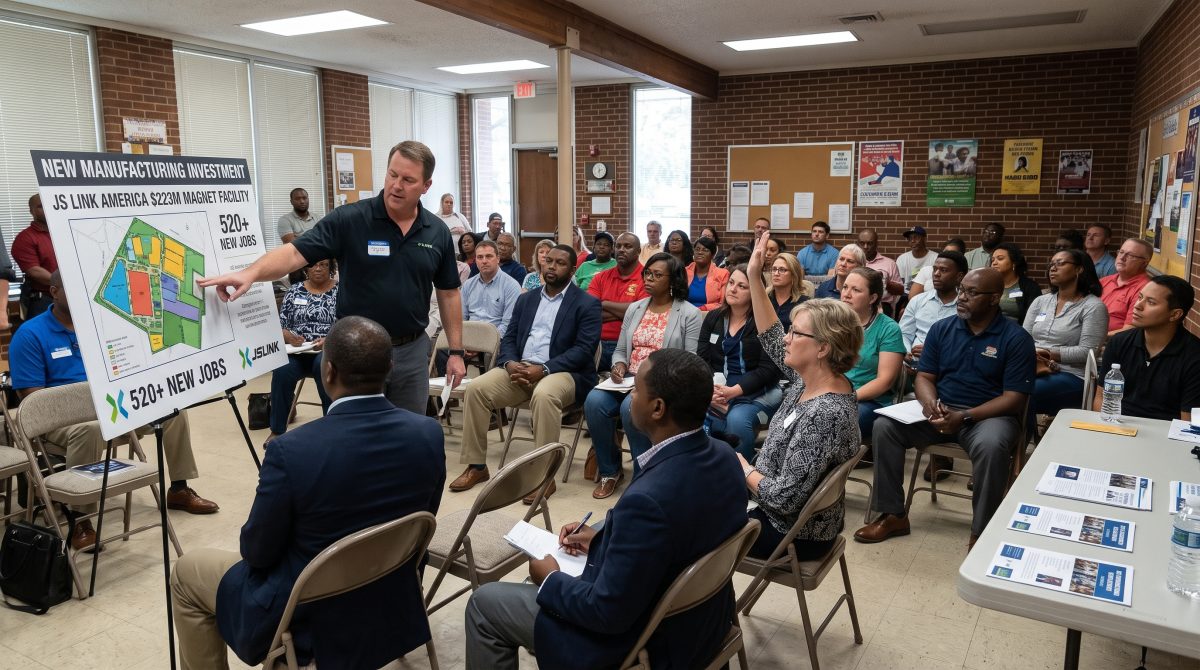
Among the largest announcements was JS Link America’s plan to invest approximately $223 million in a rare-earth permanent magnet manufacturing facility. The project is expected to create more than 520 jobs in Muscogee County, with operations planned for the Muscogee Technology Park. The facility would manufacture components used in industries such as automobiles, energy, electronics and defense. If completed as planned, the project could help Columbus attract additional advanced manufacturing businesses and provide opportunities for workers seeking careers beyond traditional manufacturing. (Georgia Governor’s Office)
Another significant announcement came from J.M. Smucker Co., which committed $120 million to expand its Columbus bakery operations. The expansion is expected to create 48 additional jobs while retaining more than 360 existing positions. Sigma Stretch Film of Georgia also announced a $39 million investment in a new manufacturing operation expected to create 100 jobs. Meanwhile, healthcare logistics company BioTouch announced a $12.5 million expansion expected to add 480 jobs over four years. Together, these announcements demonstrate that Columbus continues to attract investment across multiple industries. (Choose Columbus GA)
These developments matter because a healthy local economy needs businesses that create employment opportunities and generate tax revenue. However, announced investments should not be confused with completed projects or jobs already filled. The ultimate measure of success will be whether these businesses follow through on their plans, hire local residents, offer competitive wages and remain in Columbus for the long term.
The Population Question: Why Are Fewer People Living in Columbus?
Despite the encouraging investment announcements, Columbus faces a demographic challenge.
The U.S. Census Bureau estimated the city’s population at 202,171 on July 1, 2025. That represents a decline of approximately 2.3% from the population estimate base of 206,914 in April 2020. The 2020 decennial census counted 206,922 residents. In other words, Columbus has attracted substantial business investment while its estimated population has moved in the opposite direction. (Census.gov)
Population changes can have several causes, including people moving to other communities, changes in household formation and differences between births and deaths. The figures alone do not establish why Columbus has lost population, nor do they prove that residents are leaving because of economic conditions. Nevertheless, the trend deserves attention from city leaders and local businesses.
A growing population can support restaurants, retailers, housing construction and other services. When a city loses residents, some businesses may find it harder to attract customers, while employers may face challenges recruiting workers with the skills they need. Population decline does not automatically mean a community is struggling, but it makes attracting and retaining residents an important part of a long-term development strategy.
For Columbus, the challenge is to turn business investment into a reason for people to stay, return or move to the city. That means looking beyond the number of jobs announced and examining whether the local economy offers the wages, housing, educational opportunities and amenities that people need to build their lives here.
Are Columbus Residents Sharing in the Economic Progress?
Economic development is often measured in dollars invested, jobs created and buildings constructed. Those figures are important, but they do not necessarily reveal how ordinary residents are doing financially.
According to the Census Bureau’s 2020–2024 estimates, Columbus had a median household income of approximately $58,073, measured in 2024 dollars. The same data show that about 19% of residents lived in poverty. These figures suggest that a significant portion of the community faces financial challenges even as the city works to attract new businesses. (Census.gov)
The distinction between creating jobs and creating economic opportunity is particularly important. A new facility may employ hundreds of people, but the benefits depend partly on the types of positions available, the wages offered and whether local residents can qualify for those jobs. Entry-level positions can provide an important starting point, while technical, supervisory and professional roles can offer opportunities for workers to advance their careers.
Columbus also needs to ensure that residents have access to the education and training required by employers. Partnerships among businesses, Columbus Technical College, Columbus State University and workforce development organizations could help connect local workers with opportunities in advanced manufacturing, healthcare logistics, technology and other growing fields.
The city’s economic progress will be more meaningful if residents can see measurable improvements in their own lives. Higher household incomes, lower poverty rates, stronger career prospects and greater financial stability would provide evidence that investment is translating into broader prosperity.
Downtown Columbus Is Changing, but Will the Growth Last?
Downtown redevelopment is another important part of the city’s future. New apartments, renovated buildings, restaurants and entertainment options can help attract residents and encourage people to spend more time in the urban core.
Downtown Columbus reported that four residential projects were completed in 2025: the Continental Tower conversion, adding 409 units; Two Twenty Vine Apartments, adding 124 units; Pembroke Apartments, adding 164 units; and Elevate 340, adding 74 units. Combined, those projects represent 771 residential units delivered in downtown during the year. The district also reported 13,513 residents and an occupancy rate of 86.9% in its 2025 year-end report. (Downtown Columbus)
The addition of housing can help create a more active downtown, supporting restaurants, retailers and entertainment businesses. More residents living within walking distance of shops and services can also make the district feel less dependent on people driving in for work or special events.
However, building apartments is only one part of revitalization. Downtown needs a sustainable mix of residents, employers, small businesses, public spaces and attractions. Housing costs also matter. If new development serves only households with higher incomes, it may do little to address affordability concerns among existing residents.
The city’s Downtown 2030 planning initiative identifies housing, redevelopment, stronger connections to Mill Race Park and improvements to the pedestrian experience as important priorities. Its recommendations include strengthening the Fourth Street entertainment district, encouraging redevelopment along historic Washington Street and creating more residential and commercial opportunities along the Fifth Street corridor. (City of Columbus, Indiana)
The next challenge is implementation. Columbus will need to demonstrate that its downtown plans can produce lasting improvements, support locally owned businesses and create a district that residents across different income levels can enjoy.
Housing Affordability Could Become a Competitive Advantage
Columbus has an opportunity to distinguish itself from larger metropolitan areas by offering a combination of employment opportunities, relatively affordable housing and access to recreation and cultural attractions.
The Census Bureau’s 2020–2024 estimates put the median value of owner-occupied homes in Columbus at $193,900 and median gross rent at $1,106 per month. These figures provide a useful baseline for understanding the local housing market, although individual costs vary considerably by neighborhood, property type and condition. (Census.gov)
Relatively affordable housing can help employers recruit workers and allow households to keep more of their income for other expenses. It can also make homeownership more attainable for some first-time buyers than it would be in more expensive markets.
But affordability is not simply a matter of home prices. A household can struggle even in a relatively inexpensive housing market if wages are too low, employment is unstable or transportation and utility costs consume too much of its budget.
Columbus therefore needs to balance new housing construction with efforts to maintain existing homes, support neighborhood improvements and expand access to affordable housing. The city has identified affordable housing, homeowner assistance, homelessness prevention and small-business support among its development priorities. (Columbus.gov)
The goal should be to create a city where people can afford not only to move in but also to remain in their neighborhoods as the local economy changes.
What About the Neighborhoods Outside Downtown?
Downtown redevelopment often receives considerable attention because major projects are visible and can generate headlines. However, a city’s overall health cannot be judged by the condition of its urban core alone.
Columbus is a large consolidated city with neighborhoods that have different needs and economic circumstances. Residents may be more concerned with street maintenance, public safety, school quality, reliable infrastructure, access to grocery stores and the condition of nearby commercial areas than with a new apartment complex downtown.
Successful development should reach beyond a few high-profile locations. Neighborhoods need opportunities for small businesses to open and grow, property owners need access to resources that help maintain buildings, and residents need confidence that public investments will benefit their communities.
Locally owned businesses are particularly important because they help give neighborhoods their character. A thriving commercial district can provide convenient services, create jobs and keep more economic activity within the community. Supporting entrepreneurs through business assistance, training and access to capital can complement the recruitment of large corporations.
Columbus does not have to choose between attracting major employers and investing in established neighborhoods. A balanced strategy can pursue both goals, provided leaders track where investments occur and whether their benefits reach residents throughout the city.
Can Columbus Attract the Next Generation of Workers?
One of the biggest questions facing Columbus is whether it can retain younger residents and attract workers with the skills needed by emerging industries.
New manufacturing facilities and business expansions can create opportunities, but employers need a workforce prepared for changing technology and production requirements. Educational institutions, vocational programs and employer partnerships will play an important role in meeting that demand.
Columbus also has advantages that extend beyond employment. The city offers outdoor recreation along the Chattahoochee River, cultural institutions, live entertainment and access to a variety of recreational and historical attractions. Those amenities can contribute to the quality of life that helps a city attract and retain residents.
Still, attracting younger workers requires more than promoting attractions or announcing corporate investments. People considering a move often evaluate career advancement, housing, transportation, social opportunities and the availability of services for their families.
If Columbus wants to reverse its recent population decline, it will need to understand why people leave, what would encourage them to stay and what prospective residents want from the community. Reliable data on migration, employment, wages and housing can help city leaders develop policies that address those questions rather than relying on assumptions.
Five Numbers That Could Reveal Whether Columbus Is Moving Forward
Over the next several years, residents can evaluate Columbus’ progress by watching five key indicators.
1. Population growth. The Census Bureau’s 2025 estimate of 202,171 residents provides a starting point. Future estimates will help show whether the city’s population decline is continuing or reversing.
2. Actual jobs created. The more than 1,230 jobs announced in 2025 represent potential employment opportunities. The next step is determining how many positions are filled as projects become operational and how many go to local residents.
3. Household income and poverty. Median household income and the poverty rate can help show whether economic gains are reaching a broad share of the community.
4. Housing availability and affordability. New construction matters, but so do rental costs, homeownership opportunities, occupancy rates and the condition of existing housing.
5. Small-business growth and neighborhood investment. New storefronts, business survival rates, commercial occupancy and improvements across established neighborhoods can reveal whether development is spreading beyond a handful of major projects.
These measures should be evaluated together. A city can add jobs without experiencing population growth, construct housing without making it affordable and attract investment without significantly reducing poverty. Looking at several indicators provides a more complete picture than relying on a single headline number.
So, Is Columbus Growing in the Right Direction?
The answer depends on what residents expect growth to accomplish.
Columbus has legitimate reasons for optimism. More than $408 million in announced business investments during 2025, new manufacturing opportunities and hundreds of newly delivered downtown apartments indicate that businesses and developers see potential in the city. These developments could strengthen the local economy and improve the range of opportunities available to residents.
However, the population decline and poverty figures show why investment announcements cannot be the only measure of success. Columbus still needs to demonstrate that economic development can translate into higher household incomes, stronger neighborhoods, attainable housing and a more attractive environment for people who want to build their futures in the city.
The most important question is not simply how much money Columbus can attract. It is whether that investment creates a community where more people want to live, work, raise families and start businesses.
If the city can connect business recruitment with workforce development, neighborhood investment and opportunities for residents across income levels, its current economic momentum could become the foundation for more durable growth. If those connections fail to materialize, the city could continue announcing major projects without resolving some of the problems that affect residents’ daily lives.
Columbus is making moves that could strengthen its future. Whether it is growing in the right direction will ultimately depend on what happens after the announcements—and whether residents can see the benefits in their paychecks, neighborhoods and everyday lives.
News organizations may republish this story with credit. See our guidelines.
Know someone who'd want to read this? Email it to a friend.
Own a Columbus business? Reach 40,000+ monthly readers. Ads from $125/month. See ad optionsPlan your weekend with Columbus Times
Get This Weekend in Columbus every Thursday: the best local events, free things to do and family fun, plus each evening's local news. Free, and you can unsubscribe anytime.
More stories
 Business Are Local Wages Keeping Up With Housing Costs in 2026 in Columbus, Georgia?
 Business The Columbus Businesses People Would Hate to Lose
 Business What Does a $100,000 Salary Get You in Columbus, Georgia? Here’s the Breakdown
 Business Columbus Residents Have Millions in Unclaimed Money: How to Check Your Name in 2 Minutes