Georgia Extends Gas Tax Suspension Through November 5: How Much Could Drivers Save?
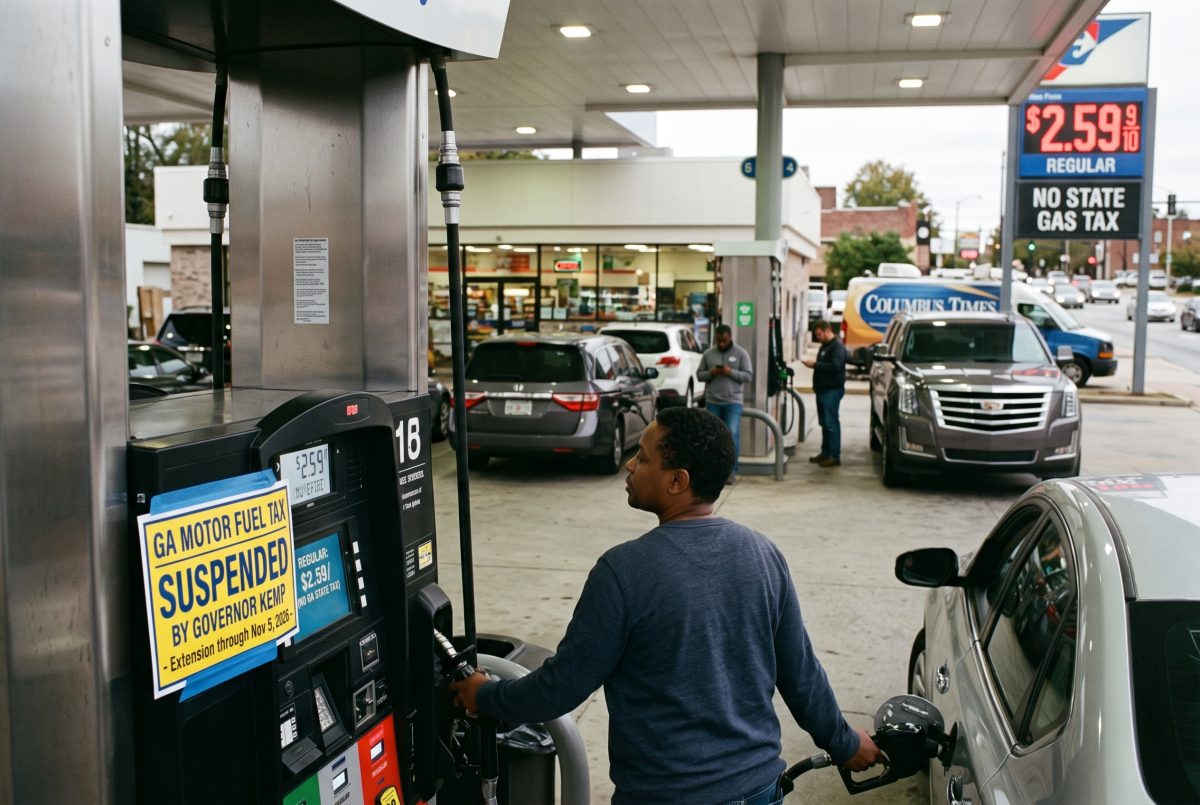
Georgia drivers will have more time to benefit from temporary tax relief at the gas pump after Gov. Brian Kemp extended the state’s motor fuel tax suspension through November 5, giving motorists, families and businesses additional breathing room as fuel prices remain volatile.
The extension, announced October 6, keeps the suspension in effect through 11:59 p.m. on November 5, unless the order is changed again. The original suspension was scheduled to expire October 29. According to the Georgia Department of Revenue, the state stopped collecting its motor fuel excise tax beginning September 29 in response to instability in global markets and petroleum supply disruptions.
For drivers in Columbus and throughout Georgia, the relief could mean several dollars saved each time they fill their tanks. The amount depends on how much fuel they purchase, how often they drive and how much of the tax reduction is reflected in retail gasoline prices. The governor’s office said October 6 that Georgia’s average price for regular gasoline had fallen by approximately 33 cents per gallon in the week following the suspension, while the average diesel price had dropped by more than 42 cents. Those figures were attributed to AAA.
How Much Could You Save at the Gas Pump? The potential savings can add up for drivers who purchase fuel regularly. Even a modest reduction per gallon can make a difference for households juggling groceries, utilities, housing expenses and other bills. Georgia’s motor fuel excise tax is normally collected at the distributor level, with the cost passed along to consumers. During the suspension, distributors are not required to remit the suspended state excise tax on qualifying fuel sales. https://dor.georgia.gov/2026-suspension-georgia-motor-fuel-taxes-faqs
The following examples illustrate the potential benefit if the full 33.3-cent-per-gallon gasoline tax reduction is reflected in the price paid by consumers.
Gallons purchased Potential savings per fill-up 5 gallons $1.67 10 gallons $3.33 12 gallons $4.00 15 gallons $5.00 20 gallons $6.66
These figures are estimates based on the suspended tax amount, not guaranteed discounts at every gas station.
For example, a driver who purchases 12 gallons of gasoline each week could see a theoretical savings of approximately $4 per fill-up. Over four weeks, that would amount to about $16.
A motorist who regularly purchases 15 gallons per week could see a theoretical savings of approximately $5 per fill-up, or $20 over four weeks.
Drivers who fill up multiple vehicles or commute long distances may see a larger cumulative benefit because they purchase more fuel.
However, these calculations assume that the full tax reduction is reflected in retail prices. Gasoline prices also respond to wholesale fuel costs, distribution expenses, station competition and other market conditions. The actual savings at the pump may therefore differ.
What Does the Tax Suspension Actually Change? Georgia’s motor fuel excise tax is a state tax imposed on qualifying motor fuels. The state calculates the tax annually using a formula established by law that considers the average fuel efficiency of Georgia-registered vehicles and adjustments for changes in fuel efficiency and the Consumer Price Index. The current suspension temporarily stops collection of that state excise tax on covered fuels. It does not eliminate every tax associated with purchasing gasoline or diesel.
The Georgia Department of Revenue specifically states that prepaid local sales taxes and other local taxes have not been suspended.
That distinction matters because drivers should not assume that every component of the price displayed on a gas station sign has been eliminated.
The suspension also does not guarantee that gasoline prices will remain at their current levels. If wholesale prices rise during the suspension, some or all of the tax benefit could be offset by other increases. For consumers, the best way to assess the practical benefit is to compare prices at nearby stations and track how much they pay per gallon over time.
Why the Extension Matters for Columbus-Area Drivers For residents of Columbus, the cost of gasoline affects more than the trip to the grocery store. Workers commuting between Columbus, Fort Moore, Harris County and surrounding communities may depend on their vehicles to reach jobs, schools, medical appointments and other essential destinations.
Families with multiple drivers can face particularly high fuel expenses, especially when work schedules, school activities and other responsibilities require frequent trips.
A temporary reduction in fuel costs may free up money for other household expenses. However, the amount saved will vary significantly from one family to another.
Consider three hypothetical driving patterns: A driver with a short commute: Someone who purchases 8 gallons of gasoline each week could see a theoretical savings of approximately $2.66 per fill-up. Across four weeks, that would be about $10.64. A regular commuter: A driver purchasing 12 gallons each week could see a theoretical savings of about $4 per week, or $16 over four weeks.
A high-mileage household: A driver purchasing 20 gallons each week could see a theoretical savings of approximately $6.66 per week, or $26.64 over four weeks.
These examples use the 33.3-cent-per-gallon assumption and are intended to illustrate the possible impact. They are not predictions of individual household savings or actual future gasoline prices. What About Diesel Prices and Trucking Costs? The tax suspension also covers qualifying clear diesel fuel, along with other fuels subject to Georgia’s motor fuel excise tax.
The governor’s October 6 announcement included additional relief for truckers and farmers, two groups that depend heavily on fuel to operate their businesses.
According to the governor’s office, the average price of diesel fuel in Georgia had decreased by more than 42 cents per gallon during the first week following the suspension.
That decline was larger than the gasoline price reduction reported during the same period. However, the price changes should not be interpreted as proof that the tax suspension alone caused every cent of the decline. Diesel prices can also move because of changes in crude oil prices, refining costs, supply and demand.
Lower transportation costs can potentially benefit businesses that move food, agricultural products, construction materials and other goods across the state.
Fuel is one component of the cost of moving products from farms, warehouses and manufacturers to retailers. If carriers spend less on fuel, they may have more room to manage other expenses. Whether consumers ultimately see lower prices for groceries and other goods depends on many additional factors. The extension also maintains the suspension of state weight limits on commercial vehicles for the duration of the emergency order, according to the governor’s office.
The order further authorizes the waiver of state penalties associated with selling, delivering or using off-road dyed diesel fuel on Georgia highways during the emergency period. This is a temporary state-level measure and should not be interpreted as a blanket exemption from federal fuel-tax rules or other applicable requirements.
Could the Tax Suspension Help Small Businesses? Small businesses that rely on vehicles may also benefit from the temporary suspension. Contractors, delivery services, landscapers, independent service providers and other businesses often use vehicles to travel between job sites or transport equipment and supplies.
For businesses with multiple vehicles, the cumulative effect of lower fuel costs can be more substantial than the savings experienced by a single driver. For example, a business that purchases 200 gallons of gasoline during the suspension could see a theoretical tax benefit of $66.60 if the full 33.3-cent reduction is reflected in its fuel costs.
A business purchasing 500 gallons could see a theoretical benefit of $166.50 under the same assumption.
Actual results will depend on fuel type, purchasing arrangements, the prices charged by suppliers and how the suspension affects retail prices. Small businesses should also remember that the measure is temporary. It should not be treated as a permanent reduction in operating costs when preparing budgets for the months ahead.
What Georgia Drivers Should Know About the November 5 Deadline
The state has extended the suspension through 11:59 p.m. on November 5, 2026.
Unless the governor issues another extension or changes the order, the temporary suspension will end at that time.
The Georgia Department of Revenue maintains an official motor fuel tax suspension FAQ explaining which fuels qualify, how the suspension works and which taxes remain in effect.
Drivers should keep several points in mind:
- The suspension is temporary. The current deadline is November 5, 2026, at 11:59 p.m.
- The tax relief applies to qualifying fuels. These include gasoline and clear diesel, as well as other covered motor fuels.
- Not every fuel-related tax has been suspended. Prepaid local sales taxes and other local taxes remain in effect.
- Pump prices can still change. The suspension does not prevent stations from adjusting prices in response to market conditions.
- Actual savings vary. The benefit depends on the amount of fuel purchased and the extent to which the tax reduction is reflected in retail prices.
Drivers can also use the state’s consumer resources to learn more about gasoline pricing or report suspected price-gouging through the Georgia Department of Law’s Consumer Protection Division. How Drivers Can Make the Most of the Temporary Relief
While the suspension remains in effect, drivers can take several practical steps to manage fuel expenses. Comparing prices at nearby stations can help motorists identify competitive options. Drivers should consider the distance required to reach a cheaper station, since a long detour can erase some of the savings.
Combining errands into fewer trips, keeping tires properly inflated and avoiding unnecessary idling can also help reduce fuel consumption. Households with multiple vehicles may benefit from planning trips together when practical. Businesses can review routes and schedules to reduce unnecessary mileage.
These measures will not eliminate fuel expenses, but they can help drivers stretch their budgets while the temporary suspension remains in effect. The Bottom Line Georgia’s extension of the motor fuel tax suspension gives drivers additional time to benefit from temporary tax relief through November 5.
For someone purchasing 12 gallons of gasoline each week, the theoretical benefit could be approximately $16 over four weeks if the full 33.3-cent-per-gallon reduction is reflected in retail prices. Drivers who purchase more fuel could see a larger cumulative benefit.
The extension also provides temporary relief for parts of Georgia’s transportation and agricultural industries, although its broader effects on shipping costs and consumer prices remain uncertain.
For Columbus-area residents, the practical impact will depend on how much they drive, how frequently they buy fuel and how prices change during the suspension period.
Motorists can check the latest details through the Georgia Department of Revenue and the Office of Gov. Brian Kemp as the November 5 deadline approaches.
News organizations may republish this story with credit. See our guidelines.
Own a Columbus business? Reach 40,000+ monthly readers. Ads from $125/month. See ad optionsPlan your weekend with Columbus Times
Get This Weekend in Columbus every Thursday: the best local events, free things to do and family fun, plus each evening's local news. Free, and you can unsubscribe anytime.