Clinic on Wheels: In L.A., Street Medicine Take Health Care to the Unhoused
By Marion Apio | Los Angeles News Observer Reported as a 2026 California Health Equity Fellow with the USC Annenberg Center for Health Journalism.
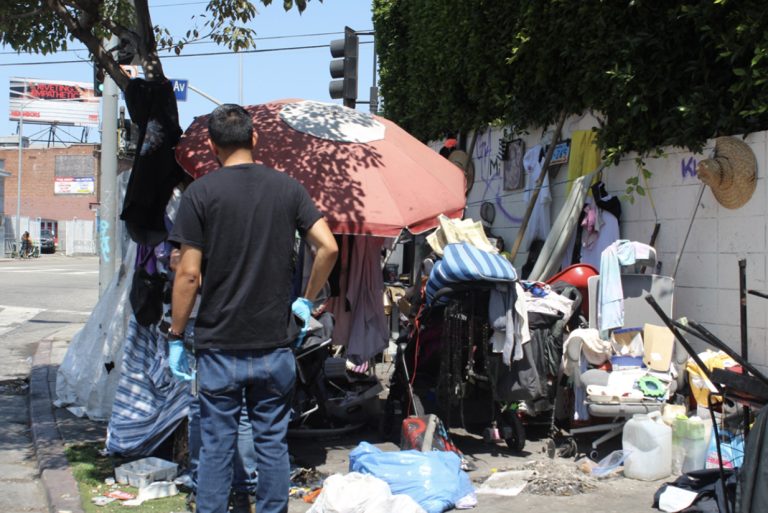
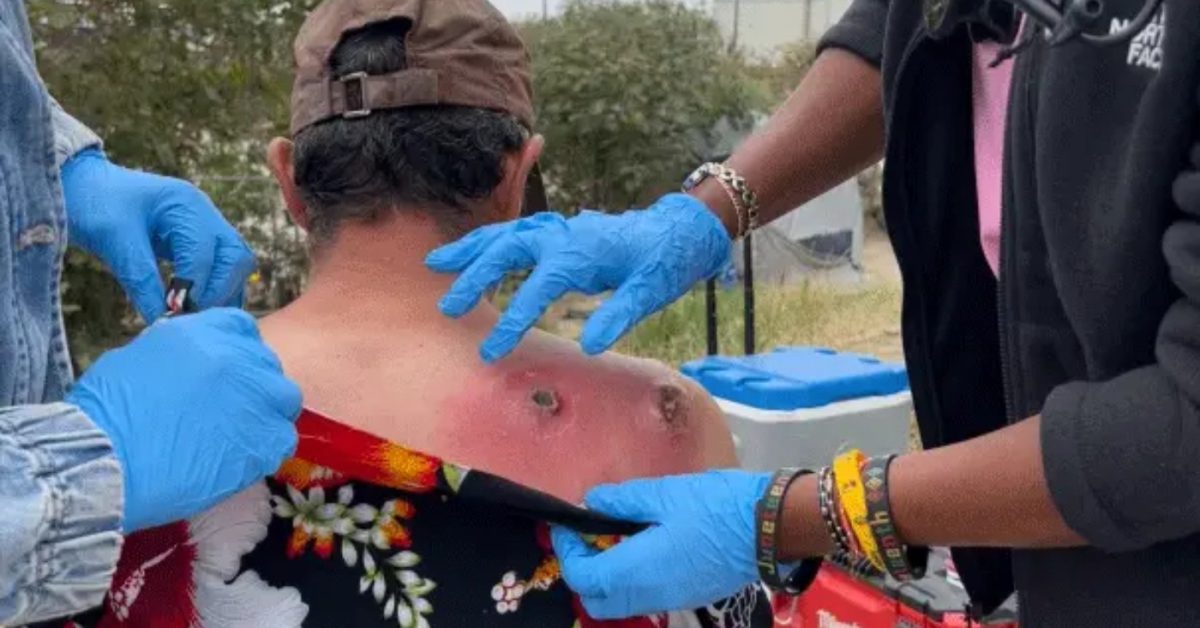
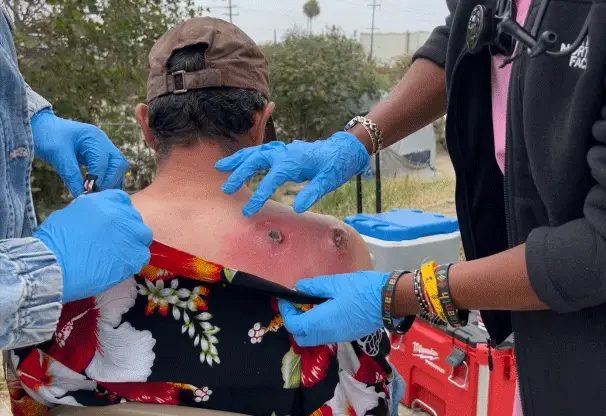
LOS ANGELES — By the time a street medicine team found Alfred Flores along the Los Angeles River last June, he had two spider bites on his back. They had gone untreated for three days and were swollen with infection.
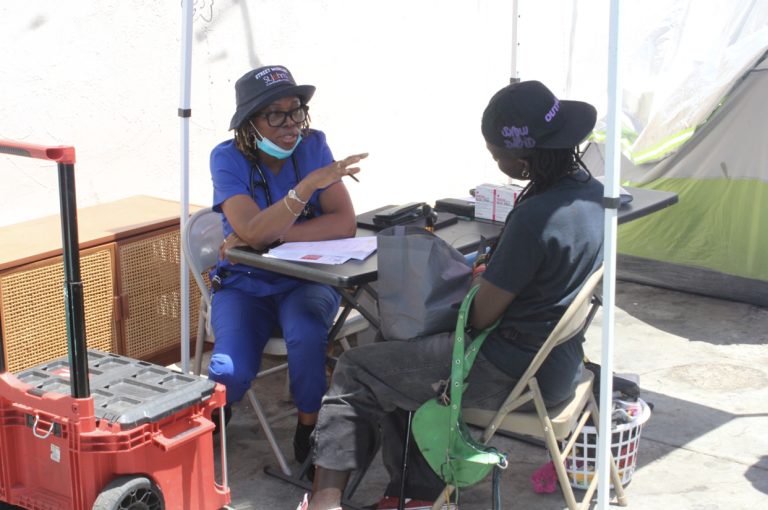
Flores, 53, has lived on the riverbank for three years with no car or phone, cut off from both doctors and housing programs. Nurse practitioner Bukola Olusanya of St. John's Community Health examined him on the spot and wrote him a prescription for antibiotics.
"My wound is infected," Flores said in Spanish through an interpreter. "It is normal to be bitten by a spider in this area but I need help finding a home."
Taking the clinic to the curb
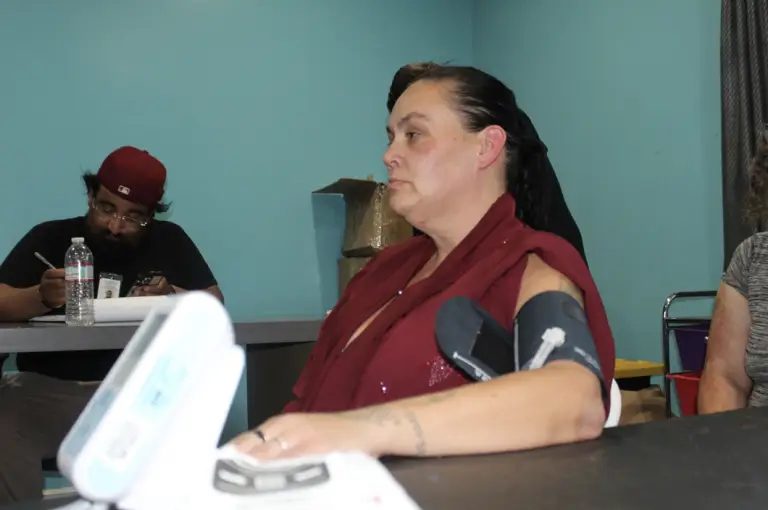
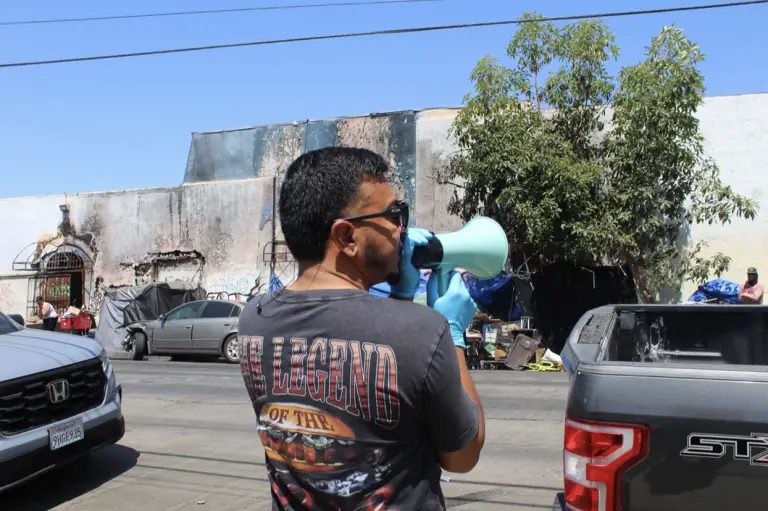
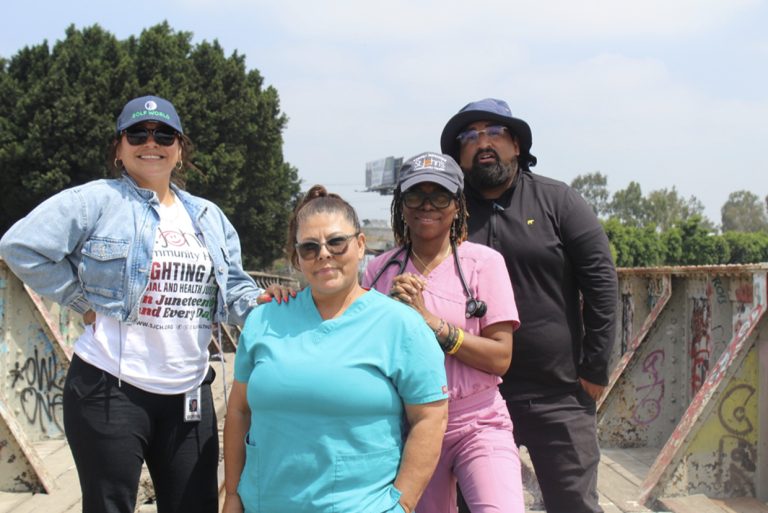
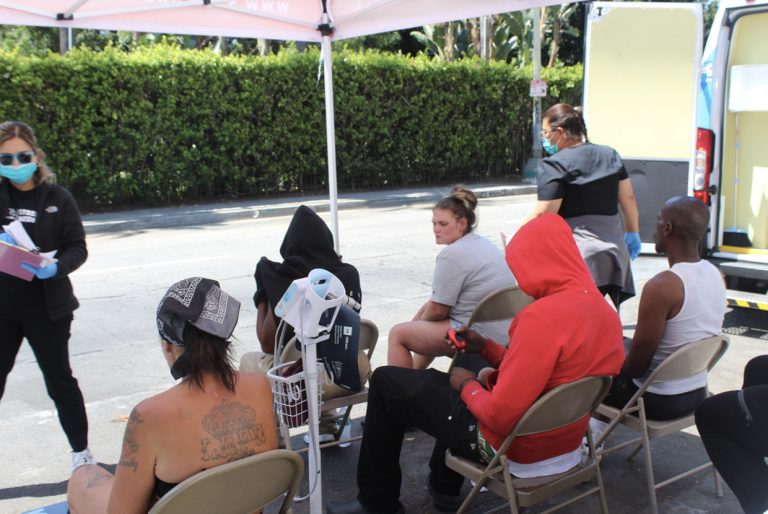
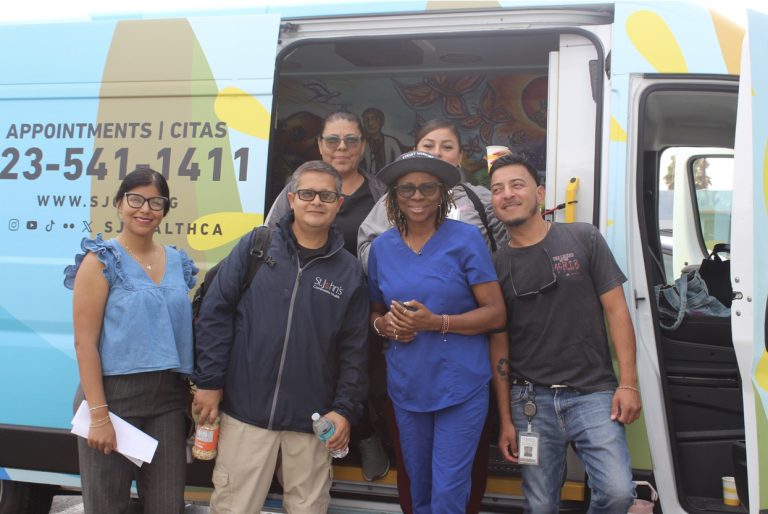
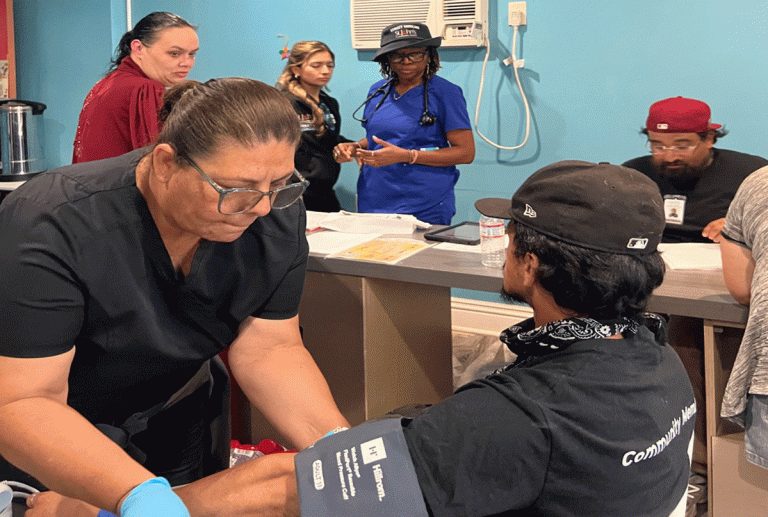
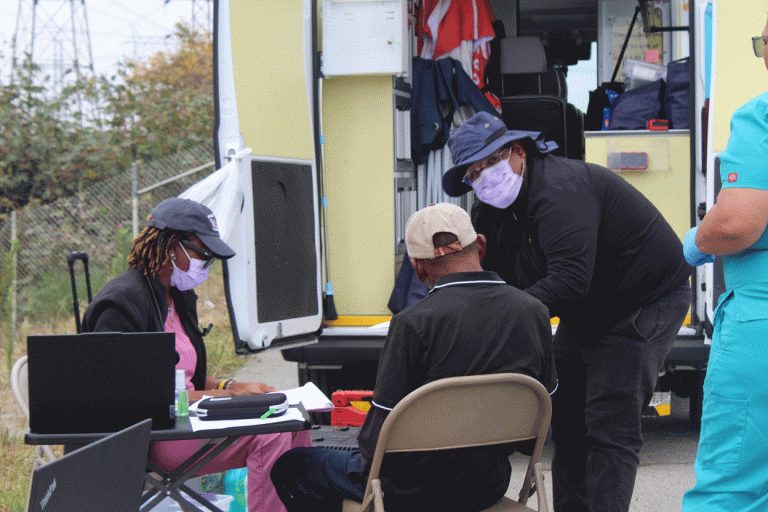
Since 2023, St. John's, a network of nonprofit community health centers, has sent mobile vans into Los Angeles staffed with a nurse practitioner, a medical assistant, a benefits counselor, a community health worker, a behavioral health clinician, a substance abuse counselor and a driver. The teams see about 320 patients a month. They treat wounds, help manage diabetes and high blood pressure, draw blood, hand out medicine and connect patients to housing.
The program is funded by about $965,000 a year in grants, plus billing to Medi-Cal, California's Medicaid program.
"Three years ago when we had just started street medicine it was with one team and one provider," Olusanya said. "But with the increasing demand—especially after COVID—the team doubled everything."
Care can't replace a home
Tanny Hernandez, 45, spent more than three years on the streets with diabetes and no refrigerator for her insulin. She also has seizures, and a bone disease that put her in a wheelchair.
"My sugar levels were crazy—I mean, in the 400 range," she said. The American Diabetes Association recommends 80 to 130 mg/dL before meals for most adults with diabetes.
"While it may be tempting to think that mental health disorders or substance use cause homelessness, there is stronger evidence that the reverse is true," said Kathryn Leifheit, an assistant professor of health policy at UCLA. "When rents are high relative to incomes, any economic shock, life event, sudden illness or major bill can put someone at risk of becoming homeless."
Black Angelenos hit hardest
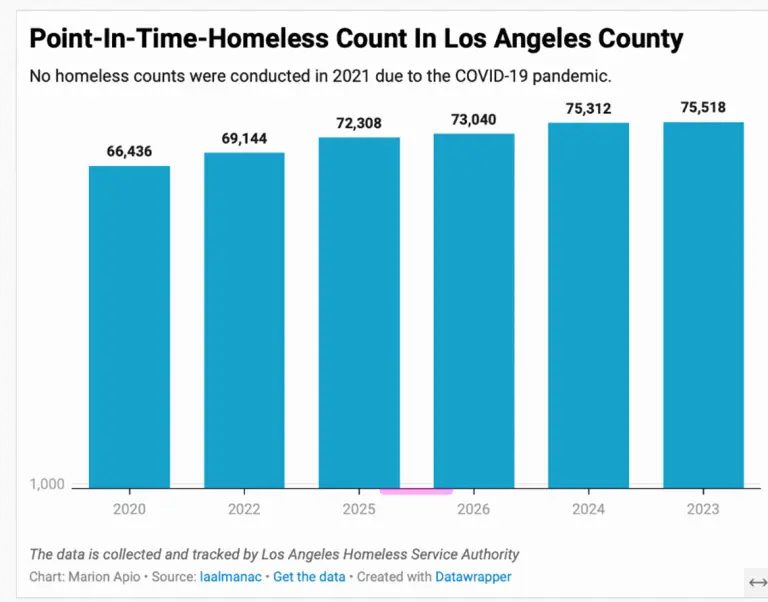
Black residents are less than 10% of Los Angeles County's population. Yet they were about one-third of the people counted as homeless in 2026, 21,822 people in all, according to the Los Angeles Homeless Services Authority.
"Black Americans have much lower family wealth and they're much less likely to own their house because of redlining," said Margot Kushel, director of the UC San Francisco Benioff Homelessness and Housing Initiative.
Rayshawn Whittenburg, 20, spent six months on the street during a high-risk pregnancy before Olusanya's team began caring for her. Her newborn spent two weeks in neonatal intensive care after breathing in amniotic fluid during delivery. Black mothers and babies in Los Angeles County face much higher rates of life-threatening complications than others.
The gaps that remain
Without phones or addresses, patients often drop out of care, especially when encampments are cleared. Even simple paperwork can be overwhelming.
"There are resources out there, but you have to speak a special language to fill out all these forms," said Carol Ross of The People Concern, a nonprofit that provides housing and support services. "It's like a full-time job."
Olusanya said cities need to do more: "Cities have a bigger role to play. They have to provide the safety net that is needed by residents."
"Street medicine doesn't end homelessness. It is trying to keep people alive and safe while they're homeless," Kushel said.
Tanny and her husband, Benwell, now live in temporary housing in downtown Los Angeles, and the team brings her medicine to her door. Her biggest fear is spending six months there and ending up back on the street.
"We were at the point of giving up, but this program saved us," she said.
This article was originally published by the Los Angeles News Observer and distributed via NNPA Newswire. It has been shortened.
SIDEBAR | What about Columbus? By Columbus Times staff
The problems in this story aren't only in Los Angeles.
Homelessness here hasn't improved in years. United Way of the Chattahoochee Valley's Home for Good program counted 303 people experiencing homelessness in Columbus-Muscogee County in 2025, the same number as in 2016. "We're actually at the same number," Pat Frey of United Way told the Columbus City Council. The number of families with children rose 218%. Rent has climbed fast. "The rent for the residents of Columbus, Georgia, have gone up 43% just since 2022," Frey said. New camping rules: in August 2025, the City Council voted 9-1 to ban camping on public property. People get an eight-day grace period after a warning so they can be connected with services first. Fewer people have insurance: Georgia is one of a handful of states that hasn't expanded Medicaid to all low-income adults. That leaves many unhoused people without the kind of coverage that helps pay for California's street medicine teams.
Local help:
Home for Good (United Way of the Chattahoochee Valley): the lead agency connecting people to housing in Muscogee and Russell counties. unitedcv.org/hfg New Horizons Behavioral Health: outreach and medical services. 2100 Comer Ave., 706-596-5500 Valley Rescue Mission: shelter, free meals and recovery programs. valleyrescuemission.org
