After North Georgia's Record Flood, What Flood Insurance Covers: $250,000 for a Home, $100,000 for Contents and a 30-Day Wait
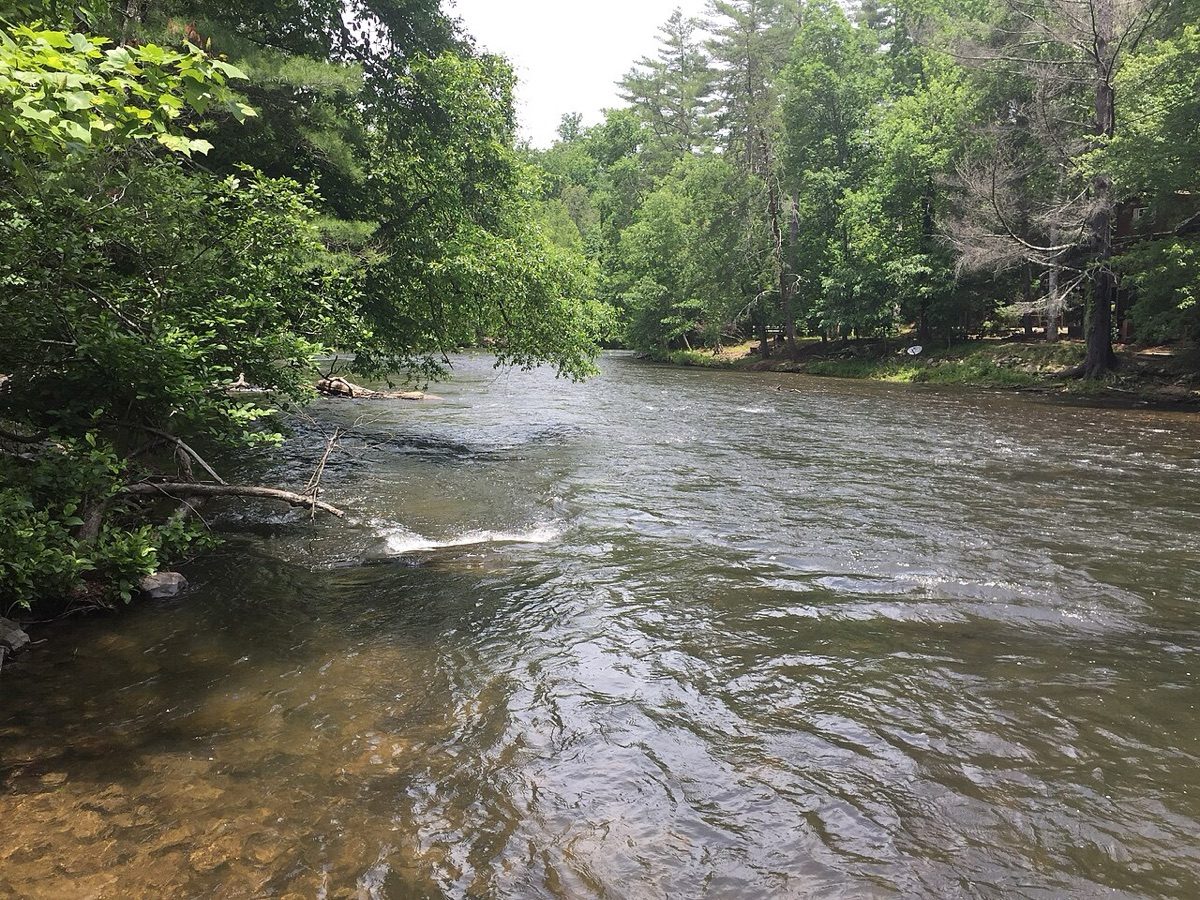
The Toccoa River in Fannin County, Georgia, in June 2017. Photo: Thomson200 / Wikimedia Commons (public domain)
COLUMBUS, Ga. - A flash flood that sent the Toccoa River to a record 18 feet in North Georgia on Nov. 4-5 is a reminder that most homeowners insurance policies do not pay for flood damage. According to WTVM, floodwaters in parts of downtown McCaysville reached 6 to 7 feet, and McCaysville Police Chief Michael Earley said crews made more than 30 water rescues with boats. The same questions come up after every flood, and the answers are set by the federal National Flood Insurance Program, or NFIP.
Columbus and Phenix City sit along the Chattahoochee River. Many Chattahoochee Valley households may never have checked whether their policy covers water rising from the ground up. This guide is meant to help with that check. This guide summarizes what the NFIP covers, what it leaves out and how long a new policy takes to start, based on WTVM's Nov. 5 explainer, which cites FEMA's guide to buying flood insurance.
What happened in North Georgia
WTVM reported that heavy rain caused flash flooding in Fannin and Gilmer counties, with flash flood warnings for Chatsworth, Ellijay and Blue Ridge. McCaysville, on the Georgia-Tennessee line, was placed under a state of emergency, and the National Weather Service issued a flash flood emergency for the city until 11 a.m. Thursday. Fannin and Gilmer schools canceled classes and Fannin County government offices closed.
Earley told WTVM he had "never seen flooding like this" in his life. Gov. Brian Kemp said the state and Tennessee were enlisting multiple agencies, including "aviation and boat assets," and urged residents to seek higher ground. A later WTVM headline said more than 80 people had been rescued and a curfew was in place.
Who sells it and how it works
Congress created the NFIP in 1968 because private insurers had largely stopped offering flood coverage, according to WTVM and FEMA. FEMA says about 4.7 million people hold NFIP policies nationwide, with nearly $1.3 trillion in coverage, across 22,600 participating communities. Private insurers sell and service the policies, but the federal government sets the rates and rules.
FEMA states that most homeowners insurance does not cover flood damage, so flood protection is a separate policy. Homes and businesses in high-risk flood areas that have mortgages from government-backed lenders must carry it. To buy, FEMA says to get a free quote at floodsmart.gov, share it with an agent, or call the NFIP at (877) 336-2627.
How much it covers
WTVM's explainer lists these NFIP limits. Rates are standardized federally, so the same coverage costs the same with any carrier. Building and contents limits are set separately.
| Policy holder | Building | Contents |
|---|---|---|
| Homeowners, condo and townhouse owners | Up to $250,000 | Up to $100,000 |
| Renters | Not applicable | Up to $100,000 |
| Business owners | Up to $500,000 | Up to $500,000 |
Building and contents coverage are usually bought separately and carry separate deductibles. Under the NFIP, a flood means an excess of water on normally dry land affecting at least two acres or two properties. Sewer backups are covered only when they directly result from flooding.
What is covered and what is not
Building coverage includes electrical and plumbing systems, furnaces and water heaters, foundations, built-in appliances, permanent cabinets and carpeting, and detached garages. Contents coverage includes clothing, furniture, electronics, washers and dryers, and portable or window air conditioners. High-value items such as original artwork and furs are covered up to $2,500.
- Not covered: cash, precious metals, stock certificates and valuable papers
- Not covered: vehicles and most self-propelled machines
- Not covered: personal property stored in basements
- Not covered: septic systems, decks, patios, fences, pools and landscaping
- Not covered: temporary housing, added living costs during repairs and business interruption
The 30-day wait
A new NFIP policy typically takes effect 30 days after purchase, according to FEMA and WTVM. There is no wait if the policy is bought with a mortgage transaction, such as making, increasing, extending or renewing a loan, or when changing coverage at a standard renewal. A one-day wait applies in two cases: a property newly placed in a high-risk zone when coverage is bought within 12 months of the map change, and flooding made worse by wildfire on federal land when coverage is bought within 60 days of containment.
Policies last one year, and a 30-day grace period after expiration still honors claims if the renewal premium is paid before it closes. That grace period is spelled out in the FEMA guide WTVM cited. It is not a reason to let a policy lapse. The practical lesson for anyone shopping after a storm is that a policy bought today will usually not cover a flood next week.
What it costs
Rates depend on where a property sits, how it was built and the cost to rebuild or replace it, according to WTVM. Because the rates are standardized federally, the same coverage costs the same no matter which carrier sells it. WTVM's article did not give dollar amounts, so the best way to learn a price is the free property quote at floodsmart.gov.
Premiums can be reduced by elevating utilities such as water heaters and electrical panels or by obtaining an Elevation Certificate, WTVM reported. FEMA says installment plans are available. Renters can buy contents-only coverage, which is the only NFIP option for people who do not own the building.
Source: WTVM/Atlanta News First (Nov. 5, 2026); FEMA National Flood Insurance Program page and floodsmart.gov guidance as cited by WTVM

News organizations may republish this story with credit. See our guidelines.
Know someone who'd want to read this? Email it to a friend.
Plan your weekend with Columbus Times
Get This Weekend in Columbus every Thursday: the best local events, free things to do and family fun, plus each evening's local news. Free, and you can unsubscribe anytime.
By signing up you agree to get the Columbus Times email newsletter. Unsubscribe anytime with one click.


Comments
Be respectful. No personal attacks, hate speech, spam or anyone's private information. Every comment is reviewed before it appears. Comment rules
No comments yet. Be the first to share your thoughts.